Horner Syndrome: Causes, Symptoms, Diagnosis, and Treatment
Comprehensive overview of Horner Syndrome, its causes, symptoms, diagnosis, and management options.
What is Horner Syndrome?
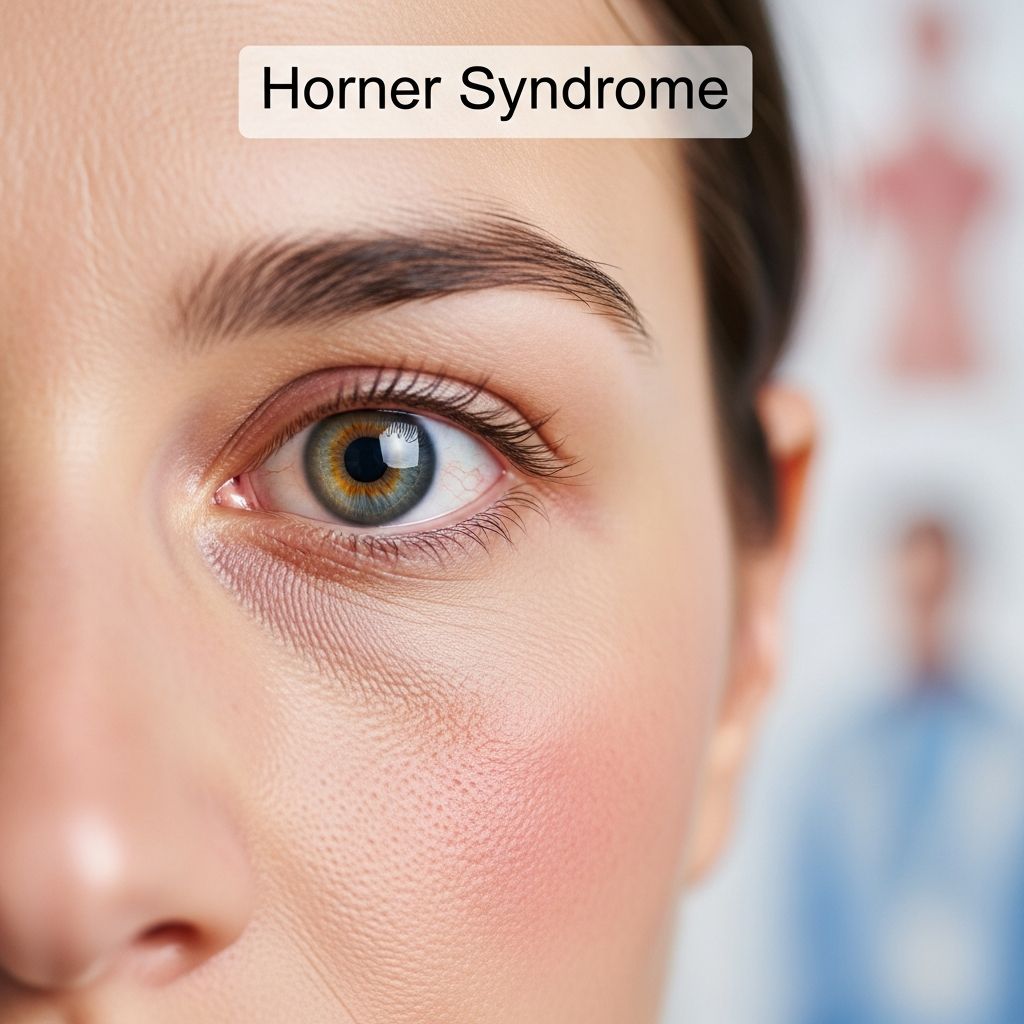
Horner syndrome is a rare neurological disorder characterized by a constellation of eye and facial symptoms typically occurring on one side of the face. It results from the disruption of the sympathetic nerves that connect the brainstem to the eye and face. These nerves control involuntary functions such as pupil dilation, eyelid elevation, and sweating on the face.
The symptoms of Horner syndrome arise when the sympathetic nerve pathway is damaged or blocked, leading to distinctive clinical features such as drooping eyelid (ptosis), constricted pupil (miosis), and decreased sweating (anhidrosis) on the affected side.
Causes of Horner Syndrome
Horner syndrome can result from numerous underlying medical conditions that disrupt the sympathetic nerve pathways. These pathways involve three neurons that travel from the brain to the eye:
- First-order (central) neurons: originate in the hypothalamus, travel down through the brainstem and spinal cord.
- Second-order (preganglionic) neurons: extend from the spinal cord through the chest (passing near the lungs) up the carotid artery in the neck.
- Third-order (postganglionic) neurons: travel from the superior cervical ganglion along the internal carotid artery into the skull and eye region.
Damage or blockage at any point along this path can cause Horner syndrome. Common causes include:
- First-order neuron damage: stroke, brainstem tumor, multiple sclerosis, spinal cord injury or syringomyelia.
- Second-order neuron damage: tumor of the lung apex (Pancoast tumor), chest trauma, thoracic outlet syndrome, or injury during surgery.
- Third-order neuron damage: carotid artery dissection or aneurysm, cluster headaches, carotid artery infections or inflammation, and cavernous sinus pathology.
Rarely, Horner syndrome can be congenital (present at birth), often due to birth trauma affecting the sympathetic nerves or carotid artery.
Symptoms and Clinical Features
Typical symptoms of Horner syndrome usually affect one side of the face and eye, including:
- Ptosis: drooping of the upper eyelid, often mild but noticeable.
- Miosis: constricted pupil that reacts poorly to dim light but normally to bright light.
- Anhidrosis: reduced or absent sweating on the affected side of the face.
- Apparent enophthalmos: the eye may appear sunken due to eyelid changes.
Other less common signs can include flushing of the affected side or subtle changes in iris color if the disorder is congenital.
Diagnosis of Horner Syndrome
Diagnosing Horner syndrome begins with a thorough clinical examination assessing pupil size and eyelid position. Important diagnostic steps include:
- Pharmacologic testing: Eye drops such as apraclonidine or hydroxyamphetamine can help localize the lesion causing Horner syndrome by evaluating pupil response.
- Imaging studies: MRI or CT scans of the brain, neck, chest, and carotid arteries to identify tumors, aneurysms, dissections, or other structural causes.
- Medical history and neurological exam: to uncover related symptoms such as headaches, neck pain, or trauma history.
Prompt evaluation is critical because some causes of Horner syndrome can be life-threatening, such as carotid artery dissection or tumors.
Related Stories



Treatment and Management
There is no direct treatment for Horner syndrome itself; instead, the focus lies on identifying and managing the underlying cause. Treatment approaches include:
- Medical or surgical intervention: Required if Horner syndrome is due to tumors, vascular abnormalities like carotid dissection, or other correctable causes.
- Pain management: In cases where pain is present, such as with cluster headaches, symptomatic relief is provided.
- Observation: Some cases, especially congenital or idiopathic, require no treatment as symptoms are stable and cause minimal functional problems.
- Cosmetic options: For ptosis, eyelid surgery or eye drops may be considered to improve appearance or function.
Because Horner syndrome can signal serious disease, collaboration between neurologists, ophthalmologists, radiologists, and other specialists ensures comprehensive management depending on the cause.
Prognosis
The outlook for Horner syndrome largely depends on the underlying cause. While the characteristic triad of symptoms typically does not affect vision or quality of life significantly, some causes may require urgent intervention. Early diagnosis and treatment of the underlying condition are crucial for optimal outcomes.
Frequently Asked Questions (FAQs)
Q: Can Horner syndrome affect both eyes?
A: Horner syndrome usually affects only one side of the face and eye due to localized nerve pathway disruption, so it rarely involves both eyes.
Q: Is Horner syndrome dangerous?
A: Horner syndrome itself is not harmful, but it may be a sign of serious conditions such as carotid artery dissection or tumors, which require prompt evaluation and treatment.
Q: How is Horner syndrome diagnosed with eye drops?
A: Pharmacologic tests use specific eye drops like apraclonidine or hydroxyamphetamine to assess pupil reactions, helping to localize where the nerve damage has occurred along the sympathetic pathway.
Q: Is Horner syndrome reversible?
A: Reversibility depends on the cause; some causes can be treated to restore nerve function, but if nerve damage is permanent, symptoms may persist.
Q: Can Horner syndrome be present at birth?
A: Yes, congenital Horner syndrome can occur due to birth trauma affecting sympathetic nerves or blood vessels. It may also rarely be inherited.
References
- Horner Syndrome – Symptoms, Causes, Treatment — Cleveland Clinic. 2025-04-15. https://my.clevelandclinic.org/health/diseases/17836-horners-syndrome
- Horner Syndrome – StatPearls — National Center for Biotechnology Information, U.S. National Library of Medicine. 2023-10-01. https://www.ncbi.nlm.nih.gov/books/NBK500000/
- Horner Syndrome – NORD — National Organization for Rare Disorders. 2024-01-10. https://rarediseases.org/rare-diseases/horners-syndrome/
- Horner Syndrome – Diagnosis and Treatment — Mayo Clinic. 2024-05-05. https://www.mayoclinic.org/diseases-conditions/horner-syndrome/diagnosis-treatment/drc-20373551
- Horner Syndrome – EyeWiki — American Academy of Ophthalmology. 2023-12-15. https://eyewiki.org/Horner_Syndrome
Similar Articles








Read full bio of medha deb