Horse Chestnut Extract: Benefits, Uses, Dosage, Safety
Explore the therapeutic uses, skin benefits, and safety of horse chestnut extract in dermatology and venous health.
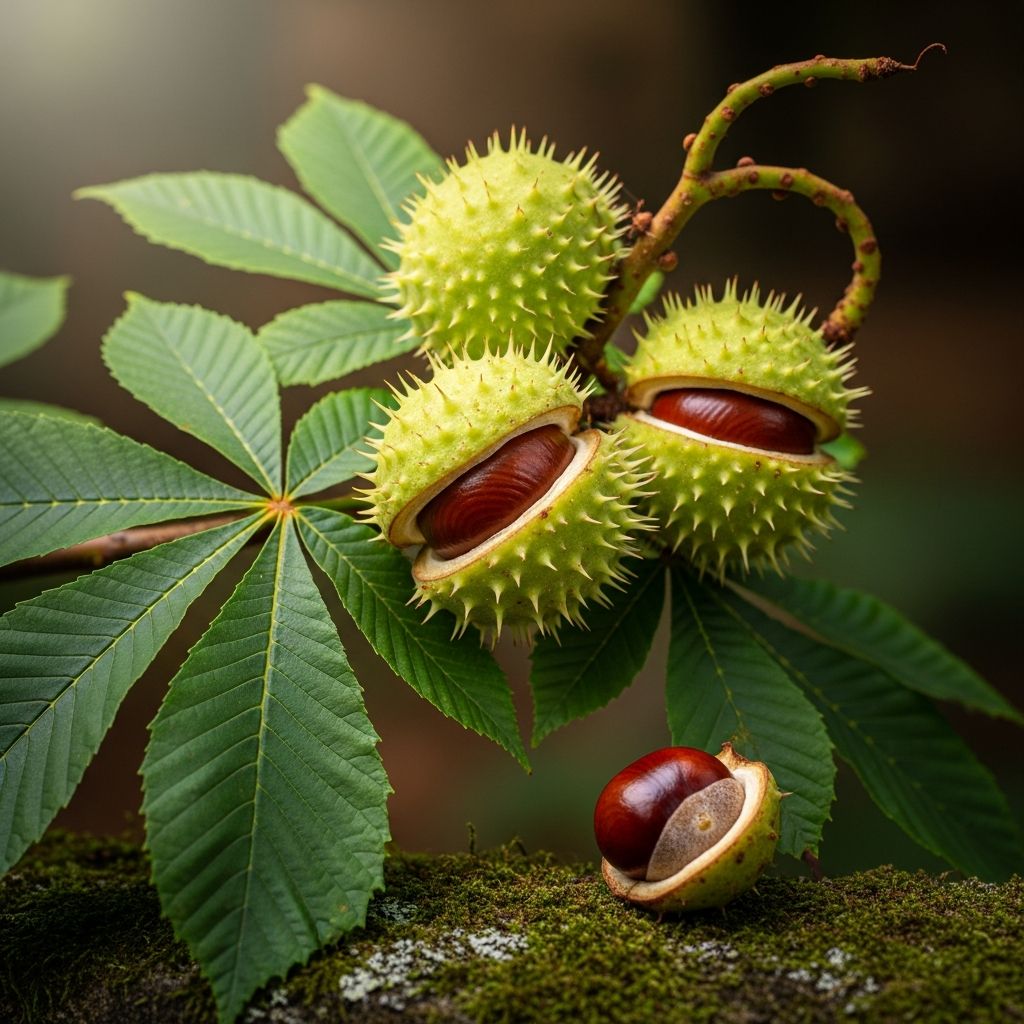
Horse chestnut extract, derived from the seeds of Aesculus hippocastanum, is a herbal remedy widely used for treating symptoms of
chronic venous insufficiency
(CVI) and certain skin conditions. Its primary active compound,aescin
(also known as escin), provides anti-inflammatory, venotonic, and antioxidant properties that improve circulation and reduce swelling.What is horse chestnut extract?
Horse chestnut (Aesculus hippocastanum) is a large deciduous tree native to parts of Europe and Asia, commonly planted ornamentally worldwide. The medicinal extract is prepared from its seeds, which contain bioactive triterpene saponins collectively termed aescin. Standardized extracts typically contain 50–150 mg of aescin per dose, ensuring consistent therapeutic efficacy. Unlike the nuts of sweet chestnut (Castanea sativa), horse chestnut seeds are toxic in raw form due to high levels of esculin and other glycosides, necessitating proper processing to remove these toxins.
Aescin works by stabilizing capillary membranes, reducing vascular permeability, and inhibiting hyaluronidase enzymes that degrade connective tissue. This mechanism underpins its use in managing venous disorders and inflammatory skin issues. Extracts are available in oral tablets, topical gels, creams, and ointments, often standardized to 16–20% aescin content for dermatological applications.
Pharmacology of horse chestnut extract
The key constituents of horse chestnut seed extract include:
- Aescin (escin): A mixture of triterpene glycosides (e.g., protoaescigenin, barringtogenol) responsible for venotonic and anti-oedematous effects. It decreases capillary filtration, improves venous tone, and exhibits anti-inflammatory activity by inhibiting leukocyte activation and cytokine release.
- Flavonoids (e.g., quercetin, kaempferol): Provide antioxidant protection against oxidative stress, neutralizing free radicals and supporting endothelial function.
- Tannins and coumarins: Contribute astringent and mild vasoconstrictive properties, aiding in skin toning and reducing permeability.
Pharmacokinetics show rapid absorption after oral intake, with peak plasma levels of aescin reached in 2–3 hours. It is metabolized in the liver and excreted renally, with a half-life of about 10 hours. Topically, aescin penetrates the stratum corneum to reach dermal capillaries, exerting local anti-inflammatory effects without systemic accumulation.
Uses of horse chestnut extract
Horse chestnut extract is primarily indicated for:
- Chronic venous insufficiency (CVI): Alleviates leg pain, heaviness, oedema, pruritus, and cramps. Multiple randomized controlled trials demonstrate superiority over placebo, with symptom improvements comparable to compression stockings or synthetic venotonics like hidrosmin.
- Post-thrombotic syndrome: Reduces residual oedema and discomfort following deep vein thrombosis.
- Haemorrhoids: Topical applications soothe inflammation and swelling.
- Cellulite and skin firmness: Improves microcirculation, reduces orange-peel appearance, and enhances skin tone, particularly in thighs and buttocks.
- Topical skin care: Addresses redness, spider veins, dark circles, and irritation due to anti-inflammatory and vasoconstrictive actions. It strengthens the skin barrier, boosts hydration by preserving hyaluronic acid, and offers antioxidant defence against environmental stressors.
In skincare, it benefits sensitive, mature, rosacea-prone, or acneic skin by calming inflammation, evening tone, minimizing breakouts, and lessening visible veins.
Dose and administration
Oral dosing for CVI: 300–600 mg standardized extract (50–150 mg aescin) daily, divided into 2 doses, for 4–12 weeks. Treatment courses may be repeated after breaks.
Topical use: Apply 2% aescin gel or cream 2–3 times daily to affected areas. Combine with gentle massage for cellulite. In eye creams, it reduces puffiness and dark circles.
Duration: Acute symptoms improve in 2–4 weeks; chronic conditions require 8–12 weeks. Consult a healthcare provider for prolonged use. Discontinue if no improvement after 4 weeks.
Related Stories



Clinical evidence and efficacy
Over 20 clinical trials support horse chestnut extract’s efficacy in CVI. A meta-analysis of 19 studies (n=2089) found significant reductions in leg volume, oedema, pain, and pruritus versus placebo (p<0.05). One head-to-head trial showed equivalence to 20 mg hidrosmin twice daily.
For cellulite, double-blind studies report 25–50% improvement in skin appearance after 12 weeks of topical 2% aescin gel combined with massage. Antioxidant scavenging ability ranks horse chestnut among top plant extracts, protecting skin from UV and pollution-induced damage.
In skincare, studies confirm reduced redness, enhanced barrier function, and anti-aging effects via collagen protection and hyaluronic acid preservation.
Summary of key trials
| Condition | Study Design | Dose | Outcome |
|---|---|---|---|
| CVI | Meta-analysis (19 RCTs) | 50–150 mg aescin/day | ↓ Leg volume -0.75 cm; ↓ Pain score 58% |
| Cellulite | DB-RCT (60 women) | 2% gel + massage | 41% improvement in dimpling |
| Haemorrhoids | Open trial (40 patients) | Topical 1–2% | ↓ Bleeding, pain in 3 days |
Adverse effects
Horse chestnut extract is generally well-tolerated. Common side effects (incidence <3%) include:
- Gastrointestinal upset (nausea, stomach pain)
- Dizziness, headache
- Pruritus or rash (rare, usually topical)
Serious reactions are exceptional. Raw seeds cause severe toxicity (nausea, vomiting, paralysis, death) due to esculin—only use processed extracts. Avoid in pregnancy, breastfeeding, renal/hepatic impairment, or bleeding disorders due to theoretical antiplatelet effects.
Interactions and contraindications
- Anticoagulants/antiplatelets (e.g., warfarin, aspirin): Potential increased bleeding risk.
- Diuretics: Monitor electrolytes; additive hypokalaemia possible.
- Hypoglycaemics: May enhance blood sugar lowering.
- Contraindicated in acute renal failure, gastric/duodenal ulcers.
Drug monitoring unnecessary with standardized extracts. Inform doctor before surgery (stop 2 weeks prior).
Precautions when using horse chestnut extract
- Use only standardized, esculin-free extracts from reputable sources.
- Start low dose to assess tolerance.
- Monitor for hypersensitivity.
- Not for children under 12.
- Store below 25°C, away from light.
Alternatives to horse chestnut extract
| Treatment | Mechanism | Evidence Level |
|---|---|---|
| Compression stockings | Mechanical support | High |
| Hidrosmin | Venotonic | High (equiv. to aescin) |
| Rutosides | Bioflavonoid | Moderate |
| Defibrotide | Fibrinolytic | Moderate |
| Topical centella asiatica | Collagen synthesis | Low-moderate (cellulite) |
Frequently asked questions
How long does horse chestnut extract take to work for CVI?
Symptom relief typically begins in 1–2 weeks, with optimal effects at 4–8 weeks.
Is horse chestnut extract safe for long-term use?
Safe for 12-week courses; longer use requires medical supervision.
Can it help with spider veins or varicose veins?
Improves appearance via microcirculation enhancement but does not eliminate veins medically.
Does it interact with blood thinners?
Possible additive effect; consult physician.
Is raw horse chestnut safe?
No—raw seeds are toxic; use only processed extracts.
References
- Horse Chestnut Seed Extract for Calm, Clear Skin — Nuebiome. 2023. https://www.nuebiome.com/blogs/natural-skincare-ingredients/explore-benefits-of-horse-chestnut-seed-extract
- Horse Chestnut Benefits for Skin — Botanika Life. 2023. https://botanika.life/blogs/news/horse-chestnut-benefits-for-skin
- The skin benefits of Horse Chestnut Extract — Reviva Labs. 2023. https://www.revivalabs.com/the-skin-benefits-of-horse-chestnut-extract/
- Horse Chestnut Seed Oil (Escin) for Skin: Benefits, How to Use — Fleur & Bee. 2023. https://fleurandbee.com/blogs/news/horse-chestnut-seed-oil-for-skin
- Horse chestnut extract — DermNet NZ (official dermatology resource). 2023-10-01. https://dermnetnz.org/topics/horse-chestnut-extract
- Horse Chestnut – Aesculus Hippocastanum: Potential Applications in… — PubMed (peer-reviewed). 2008-05-15. https://pubmed.ncbi.nlm.nih.gov/18503457/
- Horse Chestnut – Uses, Side Effects, and More — WebMD. 2025. https://www.webmd.com/vitamins/ai/ingredientmono-1055/horse-chestnut
Similar Articles








Read full bio of Sneha Tete