How Aldi Keeps Prices So Low: A Retailer’s Blueprint
Discover the operational secrets and strategies that enable Aldi to maintain the lowest grocery prices.
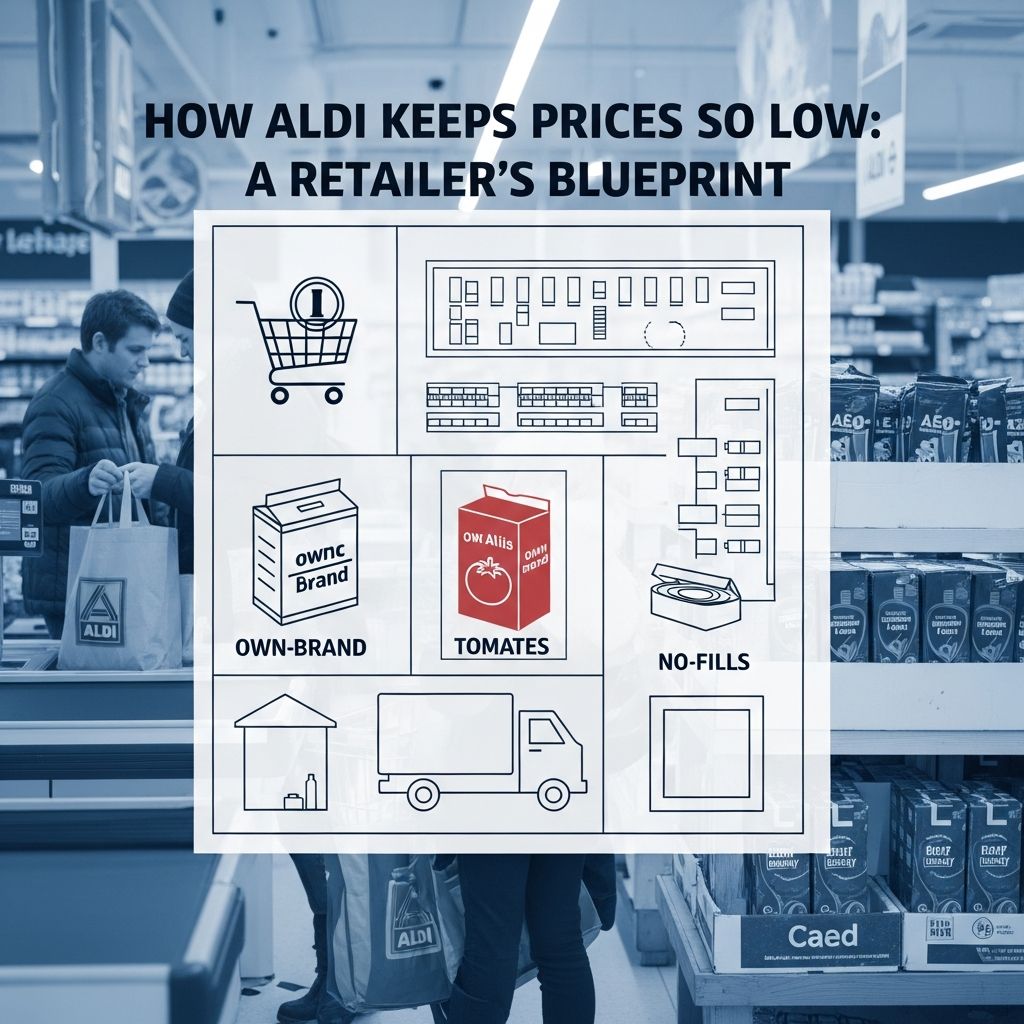
How Aldi Keeps Prices So Low: A Retailer’s Blueprint for Affordability
In an era of rising grocery costs and inflation, Aldi has emerged as a beacon of affordability, consistently offering customers significantly lower prices than traditional supermarkets. While many retailers have increased prices substantially in recent years—with Aldi’s own prices rising 17% since 2020—the discount grocer has managed to maintain competitive advantages through a meticulously designed business model.
Aldi’s approach to keeping prices low is not rooted in occasional promotions or seasonal sales, but rather in a fundamental reimagining of how grocery retail operates. Every aspect of the company’s strategy, from store design to supplier negotiations, is engineered to reduce costs and pass savings directly to customers.
The Foundation: Everyday Low Pricing (EDLP) Strategy
At the heart of Aldi’s pricing philosophy lies the Everyday Low Price (EDLP) strategy, which fundamentally differs from the promotional approach used by traditional supermarkets. Rather than relying on weekly sales, buy-one-get-one offers, or seasonal discounts, Aldi maintains consistently low prices across all products every single day.
This disciplined pricing approach eliminates the marketing costs associated with frequent promotions and advertising campaigns. Traditional supermarkets invest heavily in weekly circulars, digital ads, and in-store signage to promote temporary deals. Aldi sidesteps these expenses entirely, channeling those savings directly into lower baseline prices.
The EDLP strategy also creates predictability for customers. Shoppers know they will always find competitive prices, removing the need to hunt for deals or time their purchases around sales. This consistency builds customer loyalty and simplifies inventory management for the company.
Private Label Dominance: The 80% Solution
One of Aldi’s most powerful cost-reduction tools is its reliance on private label products. Approximately 80% of items sold in Aldi stores carry the retailer’s own brand rather than nationally recognized labels.
This strategy delivers substantial financial benefits. Private label products eliminate the costs associated with national brand marketing, packaging premiums, and middleman markups. As a result, Aldi’s own-brand items typically cost 30-50% less than equivalent national brands. In concrete terms, a 2-liter bottle of nationally branded cola might cost £1.79, while Aldi’s equivalent product costs just £0.49—a 75% savings.
Beyond cost reduction, private labels give Aldi complete control over pricing and quality standards. The company can adjust formulations, packaging, and sourcing without negotiating with third-party brand owners. This flexibility enables rapid responses to market changes and cost fluctuations in the supply chain.
Operational Efficiency: Designing Costs Out of the System
Aldi’s low prices are sustained through carefully engineered operational efficiencies that eliminate unnecessary expenses throughout the business.
Store Format and Design
Aldi operates smaller format stores—typically 10,000 to 12,000 square feet compared to 40,000+ for traditional supermarkets. These compact stores reduce real estate costs, utilities, staffing requirements, and maintenance expenses. The no-frills store design foregoes luxury finishes, elaborate displays, and extensive climate control, passing those savings to customers.
Related Stories



Products are displayed directly in the boxes they arrive in from suppliers, eliminating shelf-stocking labor and reducing handling costs. Aldi also charges customers 25 cents to use a shopping cart, a modest fee that encourages cart return and reduces labor for retrieval and maintenance.
Simplified Product Range
Aldi stocks approximately 1,400 products compared to 50,000+ items in conventional supermarkets. This limited selection dramatically simplifies logistics, reduces inventory holding costs, and increases stock turnover. Higher turnover means fresher products and less waste due to spoilage or expiration.
The streamlined range also strengthens Aldi’s negotiating position with suppliers. When buying massive quantities of fewer items, the company achieves greater economies of scale and can demand lower wholesale prices.
Lean Staffing and Efficient Checkout
Aldi operates with minimal staffing compared to traditional supermarkets. The simplified store design and product range require fewer employees for stocking and customer service. Fast, efficient checkout processes—often featuring just one or two cashiers—reduce labor overhead without compromising customer experience.
Self-Service Meat Counter
Unlike traditional supermarkets that maintain full-service butcher counters with skilled meat cutters, Aldi relies on self-serve merchandise with pre-packaged, vacuum-sealed meats. This eliminates the cost of skilled butchers and reduces food waste from trimming and special cuts. Products arrive from suppliers ready for direct placement in display cases, streamlining operations and maintaining affordability.
Supply Chain and Strategic Purchasing
Aldi’s supply chain efficiency represents another critical component of its pricing advantage.
Bulk Purchasing and Supplier Negotiations
The company leverages its significant purchasing volume to negotiate lower wholesale prices with suppliers. By committing to large, consistent orders of select products, Aldi achieves negotiating power that smaller retailers cannot match. These bulk discounts, combined with competitive bidding among suppliers, reduce product costs substantially.
Transportation and Distribution Optimization
Recent improvements in Aldi’s supply chain and transportation systems have generated significant cost relief. The company has rapidly converted these transportation savings into price reductions across hundreds of items, demonstrating its commitment to passing operational efficiencies to customers.
Seasonal Product Strategy
Aldi focuses on selling seasonal fruits and vegetables, reducing refrigeration costs and product waste while supporting lower prices. By aligning inventory with natural supply cycles, the company reduces storage and handling expenses.
Competitive Pricing Strategies
Beyond EDLP, Aldi employs targeted pricing tactics that reinforce its value positioning.
Unit Pricing Transparency
Aldi clearly displays unit pricing for all products, enabling customers to easily compare costs across brands and package sizes. This transparency empowers price-conscious shoppers and reinforces Aldi’s commitment to value.
Loss Leader Pricing
Aldi strategically prices certain non-food items and seasonal products at deep discounts to attract customers into stores. These loss leaders—sold below cost or at minimal margin—draw shoppers who then purchase groceries where the retailer maintains healthier margins. This traffic-driving tactic, paired with the company’s overall low-price positioning, builds customer loyalty.
Psychological Pricing
Aldi employs subtle psychological pricing tactics, pricing items at amounts like $3.78 instead of $4.00. These small price differentials create perceptions of significant savings, even when the actual difference is modest.
Market-Oriented Pricing
While maintaining its EDLP foundation, Aldi adjusts prices based on market factors including supply and demand, seasonal trends, and competitive activity. This flexibility allows the company to remain responsive to changing market conditions while preserving its value-oriented positioning.
Marketing Focused on Value Communication
Aldi’s marketing strategy emphasizes value and affordability rather than promoting temporary deals. Campaigns like the Cookout Kickback initiative showcase savings on sought-after items during key shopping periods—such as Fourth of July grilling essentials.
In 2023, Aldi rewarded 1,000 customers with $20.87 gift cards reflecting the average savings offered on barbecue essentials. This approach reinforces the message that customers can access quality products without sacrificing value. Marketing messaging consistently highlights that shoppers need not compromise quality for low prices.
Customer Impact and Growth Results
Aldi’s pricing strategy has proven highly effective in attracting customers. In 2022, the retailer welcomed approximately 9.4 million new customers and achieved double-digit year-over-year growth. As of April 2023, 5.3 million Americans had visited an Aldi store for the first time, including higher-income households previously focused on premium retailers.
This expansion demonstrates that Aldi’s value proposition transcends price-sensitive demographics, appealing to a broader audience seeking quality and affordability.
Challenges and Strategic Evolution
Despite its success, Aldi faces strategic challenges. While the company has maintained competitive pricing, it has gradually expanded its product assortment and enhanced quality to appeal to broader audiences. This evolution toward a value-oriented (rather than purely budget) positioning carries risks of diluting brand identity among core customers who prize affordability above all.
Additionally, inflationary pressures have challenged the model. Aldi’s prices have increased 17% since 2020, reflecting broader cost pressures. Sustaining EDLP amid rising input costs requires continuous operational innovation and discipline.
Key Takeaways: The Aldi Formula for Low Prices
- Everyday Low Pricing (EDLP): Consistent low prices eliminate promotional costs and build customer confidence.
- Private Label Focus: 80% of products carry Aldi’s own brand, reducing markups by 30-50% versus national brands.
- Operational Lean: Smaller stores, minimal staffing, and no-frills design reduce overhead.
- Limited Selection: Approximately 1,400 products streamline operations and increase negotiating power.
- Supply Chain Excellence: Bulk purchasing, optimized distribution, and strategic sourcing reduce costs.
- Efficient Store Operations: Self-serve meat, box displays, and streamlined checkout reduce labor.
- Value-Focused Marketing: Messaging emphasizes affordability and quality, not temporary promotions.
Frequently Asked Questions
Q: Why are Aldi prices so much lower than other supermarkets?
A: Aldi achieves low prices through a combination of strategies: 80% private label products eliminate brand markups, smaller store formats reduce overhead, limited product selection simplifies operations, and EDLP eliminates promotional expenses. These factors work together to create significant cost advantages passed directly to customers.
Q: Is Aldi’s private label quality comparable to national brands?
A: Yes. Aldi maintains strict quality standards for private label products. Many Aldi items are manufactured by the same companies that produce national brands, ensuring comparable quality at substantially lower prices.
Q: Does Aldi ever have sales or promotions?
A: Aldi occasionally offers limited-time deals on seasonal or special items, but these never overshadow its core EDLP strategy. The focus remains on consistently low everyday prices rather than fluctuating promotional pricing.
Q: How does the quarter cart charge help keep prices low?
A: The $0.25 cart deposit encourages customers to return carts, reducing labor costs for retrieval and maintenance. These savings contribute to lower overall operational expenses passed along in pricing.
Q: Why does Aldi limit product selection to just 1,400 items?
A: Limited selection reduces inventory costs, increases stock turnover, simplifies logistics, and strengthens negotiating power with suppliers. Higher turnover also means fresher products and less waste, further reducing costs.
References
- Aldi’s Marketing Mix (4Ps) & Marketing Strategy — MBA Skool. Accessed January 2026. https://www.mbaskool.com/marketing-mix/services/16807-aldi.html
- Aldi’s Marketing Mix (4P) Analysis — Panmore Institute. Accessed January 2026. https://panmore.com/aldi-marketing-mix-4p-4ps-strategy-analysis-case-study
- Inside Aldi’s Strategy to Slash Grocery Prices — Modern Retail. Accessed January 2026. https://www.modernretail.co/operations/inside-aldis-strategy-to-slash-grocery-prices/
- Everyday Low Pricing Strategy (EDLP): The Case Study of Aldi — Marketing with Thang. Accessed January 2026. https://marketingwiththang.com/everyday-low-pricing-strategy-the-case-study-of-aldi/
- Aldi Pricing Strategy and Market Positioning Analysis — Taylor Wells. Accessed January 2026. https://taylorwells.com.au/aldi-pricing-strategy/
Similar Articles








Read full bio of Sneha Tete