How Digestion Works: 7 Key Stages For Better Gut Health
Understand the complete digestive process from mouth to intestines and optimize your health.
How Digestion Works: Understanding Your Digestive System
Digestion is one of the most important processes your body performs every single day. It’s the mechanism by which your body breaks down the food you eat into smaller molecules that can be absorbed and used for energy, growth, and cell repair. Without proper digestion, your body cannot access the essential nutrients needed to function optimally. Understanding how digestion works can help you make better dietary choices and maintain better overall health.
The digestive process is a complex journey that begins the moment food enters your mouth and continues through various organs until waste is eliminated from your body. Each stage of this process plays a crucial role in ensuring that nutrients are properly extracted from the food you consume and that your body can use these nutrients efficiently.
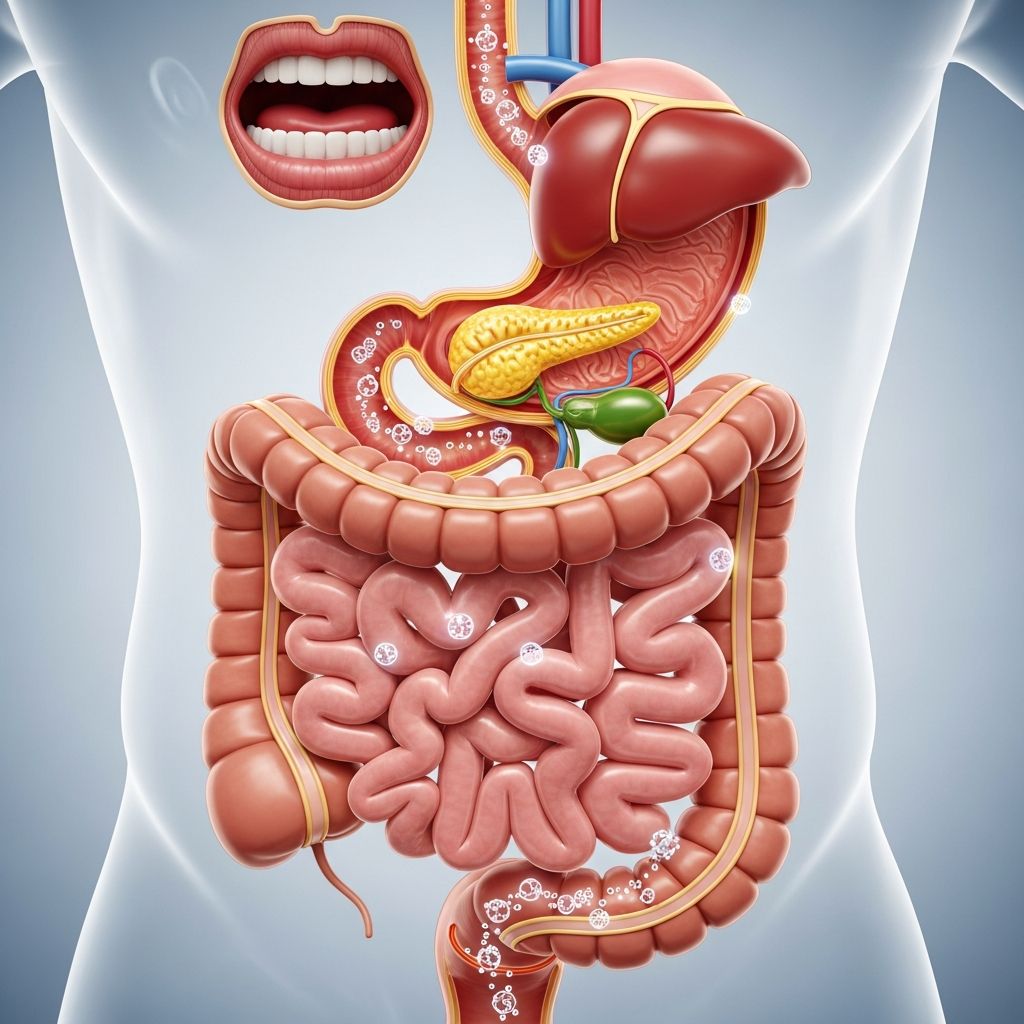
The Mouth: Where Digestion Begins
Digestion actually begins before food even reaches your stomach. When you see, smell, or think about food, your body begins preparing for digestion by producing saliva. Saliva contains important enzymes, particularly amylase, which begins to break down carbohydrates right in your mouth.
As you chew your food, you accomplish two important things: you mechanically break food into smaller pieces, increasing the surface area for enzymes to work on, and you mix the food with saliva. This combination of chewing and enzymatic action transforms solid food into a semi-liquid paste called bolus, which is much easier for your body to process. The act of chewing also sends signals to your brain that prepare your digestive system for the food that’s coming, a process called the cephalic phase of digestion.
Proper chewing is essential for good digestion. When you rush through meals without adequately chewing your food, you place additional burden on your stomach and the rest of your digestive tract. Taking time to chew thoroughly allows your body to begin the digestive process efficiently and can even help with weight management, as chewing signals satiety to your brain.
The Esophagus: The Food Tube
Once you’ve chewed your food and mixed it with saliva, you swallow it. The swallowing process is actually quite complex, involving more than thirty muscles and numerous nerves working in perfect coordination. When you swallow, your tongue pushes the bolus to the back of your mouth, triggering an involuntary swallowing reflex.
The bolus then enters the esophagus, a muscular tube approximately ten inches long that connects your mouth to your stomach. The esophagus doesn’t rely on gravity alone to move food down. Instead, it uses a series of wavelike muscular contractions called peristalsis. These contractions push the food downward toward the stomach, regardless of your body position. This is why you can swallow even while standing on your head or lying down.
The esophagus is protected by a special valve called the lower esophageal sphincter, which opens to allow food to pass into the stomach and then closes to prevent stomach acid from refluxing back up into the esophagus. Problems with this sphincter can lead to acid reflux and heartburn, common digestive complaints.
Related Stories



The Stomach: Mechanical and Chemical Digestion
The stomach is a J-shaped organ that serves as a temporary storage and mixing chamber for food. When food enters the stomach, several important things happen. The stomach secretes gastric juices containing hydrochloric acid and an enzyme called pepsin, which begin to break down proteins. The stomach’s muscular walls contract and relax in coordinated patterns, churning the food and mixing it with these gastric secretions.
This mechanical and chemical breakdown creates a thick, soupy substance called chyme. The stomach is remarkably adaptable—it can stretch to hold up to four liters of food and liquid, yet it can also empty efficiently when necessary. The rate at which your stomach empties depends on several factors, including the type of food consumed, your activity level, and your overall digestive health.
An interesting discovery from recent research reveals that your body position affects how quickly pills and food dissolve in your stomach. Studies show that lying on your right side can increase the dissolution rate of medication by up to 2.3 times faster compared to an upright posture, while lying on the left side significantly slows dissolution. This demonstrates that even postural changes can meaningfully impact digestive processes.
The stomach typically takes two to four hours to empty its contents into the small intestine, though this timeframe can vary. Fatty foods take longer to digest than carbohydrates or proteins, which is why a heavy meal can leave you feeling full for an extended period.
The Small Intestine: Where Nutrient Absorption Occurs
The small intestine is where the majority of digestion and nutrient absorption takes place. This narrow, muscular tube is approximately twenty feet long and is divided into three sections: the duodenum, jejunum, and ileum. Despite its name, the small intestine is actually where most of the work of digestion is accomplished.
When partially digested food enters the small intestine from the stomach, it triggers the release of several important hormones and substances. The pancreas secretes bicarbonate to neutralize stomach acid and enzymes to continue breaking down proteins, fats, and carbohydrates. The liver produces bile, which is stored in the gallbladder and released to help break down fats into smaller droplets that can be more easily digested.
The walls of the small intestine are lined with millions of tiny finger-like projections called villi, and each villus is covered with even smaller projections called microvilli. These structures dramatically increase the surface area available for nutrient absorption. Nutrients are absorbed through these intestinal walls into the bloodstream, where they are transported throughout your body to be used for energy and various metabolic functions.
The small intestine is an incredibly efficient organ. It can absorb most nutrients within just a few hours, allowing your body to access the energy and building blocks it needs from the food you consume. The movement of food through the small intestine is facilitated by peristalsis, the same wavelike muscular contractions that moved food through your esophagus.
The Pancreas and Liver: Essential Digestive Helpers
While the pancreas and liver aren’t technically part of the digestive tract itself, they play absolutely crucial roles in the digestive process. The pancreas is a gland that produces digestive enzymes and hormones that regulate blood sugar. These pancreatic enzymes break down fats, proteins, and carbohydrates in the small intestine, making them available for absorption.
The liver, your body’s largest internal organ, produces bile continuously. Bile helps break down dietary fats and also aids in the elimination of waste products from your body. The gallbladder stores and concentrates bile, releasing it when needed during digestion. Together, these organs ensure that all components of food can be properly broken down and processed.
The Large Intestine and Colon: Water Absorption and Waste Processing
After food has passed through the small intestine, whatever remains enters the large intestine, also called the colon. The large intestine is wider but shorter than the small intestine, measuring approximately five feet in length. By the time material reaches the large intestine, most nutrients have been absorbed, but important work remains.
The primary function of the large intestine is to absorb water and electrolytes from the remaining material. This helps concentrate waste and maintain your body’s fluid balance. The large intestine also contains trillions of beneficial bacteria that make up your gut microbiome. These bacteria ferment undigested carbohydrates and produce short-chain fatty acids that nourish your colon cells and contribute to overall health.
The material remaining in the large intestine gradually becomes more solid as water is absorbed. Through peristalsis, this waste material moves toward the rectum. The entire process from eating to elimination typically takes twenty-four to seventy-two hours, though individual variation is normal and depends on factors like diet, hydration, exercise, and individual physiology.
Understanding Digestive Health
Maintaining good digestive health is essential for overall wellness. Many people experience digestive problems such as bloating, gas, reflux, constipation, and other gastrointestinal issues that can significantly impact quality of life. Understanding how your digestive system works empowers you to make choices that support optimal digestion.
Several factors influence digestive efficiency. Diet plays a major role—consuming adequate fiber, staying hydrated, and eating a balanced diet rich in whole foods supports healthy digestion. Physical activity promotes intestinal motility and helps move food through your digestive tract. Stress management is also important, as chronic stress can negatively impact digestive function through the gut-brain connection.
Certain medical conditions can affect digestion. Gastroparesis, a condition where the stomach empties too slowly, can significantly impact how quickly food and medication are processed. Research shows that the effect of gastroparesis on drug dissolution is similar to the effect of poor posture, underscoring how significant digestive function is to overall health.
Frequently Asked Questions
Q: How long does the entire digestion process take?
A: The complete digestive process typically takes between twenty-four and seventy-two hours from the time you eat food until waste is eliminated from your body. However, this timeframe can vary based on individual factors, the types of food consumed, and overall digestive health.
Q: What role does the microbiome play in digestion?
A: Your gut microbiome consists of trillions of bacteria that help ferment undigested carbohydrates, produce beneficial short-chain fatty acids, support immune function, and contribute to overall digestive and systemic health. A diverse, healthy microbiome is essential for optimal digestion and wellness.
Q: How can I improve my digestive health?
A: You can improve digestive health by eating a balanced diet rich in fiber and whole foods, staying adequately hydrated, exercising regularly, managing stress, chewing food thoroughly, and avoiding excessive alcohol and processed foods. If you experience persistent digestive problems, consult a healthcare provider.
Q: Does body posture really affect digestion?
A: Yes, research shows that posture significantly affects how quickly food and medication dissolve in your stomach. Lying on your right side promotes faster dissolution compared to other positions, while lying on the left side slows the process considerably.
Q: What’s the difference between mechanical and chemical digestion?
A: Mechanical digestion involves physically breaking down food through chewing and stomach churning. Chemical digestion involves breaking down food using enzymes and acids. Both processes work together to ensure food is properly broken down and nutrients can be absorbed.
References
- The Best Way to Take a Pill, According to Science — Johns Hopkins University Hub. 2022-08-16. https://hub.jhu.edu/2022/08/16/the-best-posture-to-take-a-pill/
- The Importance of Gut Health — Hopkins Medical Group. https://www.phopkinsmd.com/gut-health/
Similar Articles








Read full bio of medha deb