How Gut Microflora Affects Mood, Focus and Brain Health
Discover the profound link between your gut bacteria and brain function, mood stability, focus, and overall mental well-being.
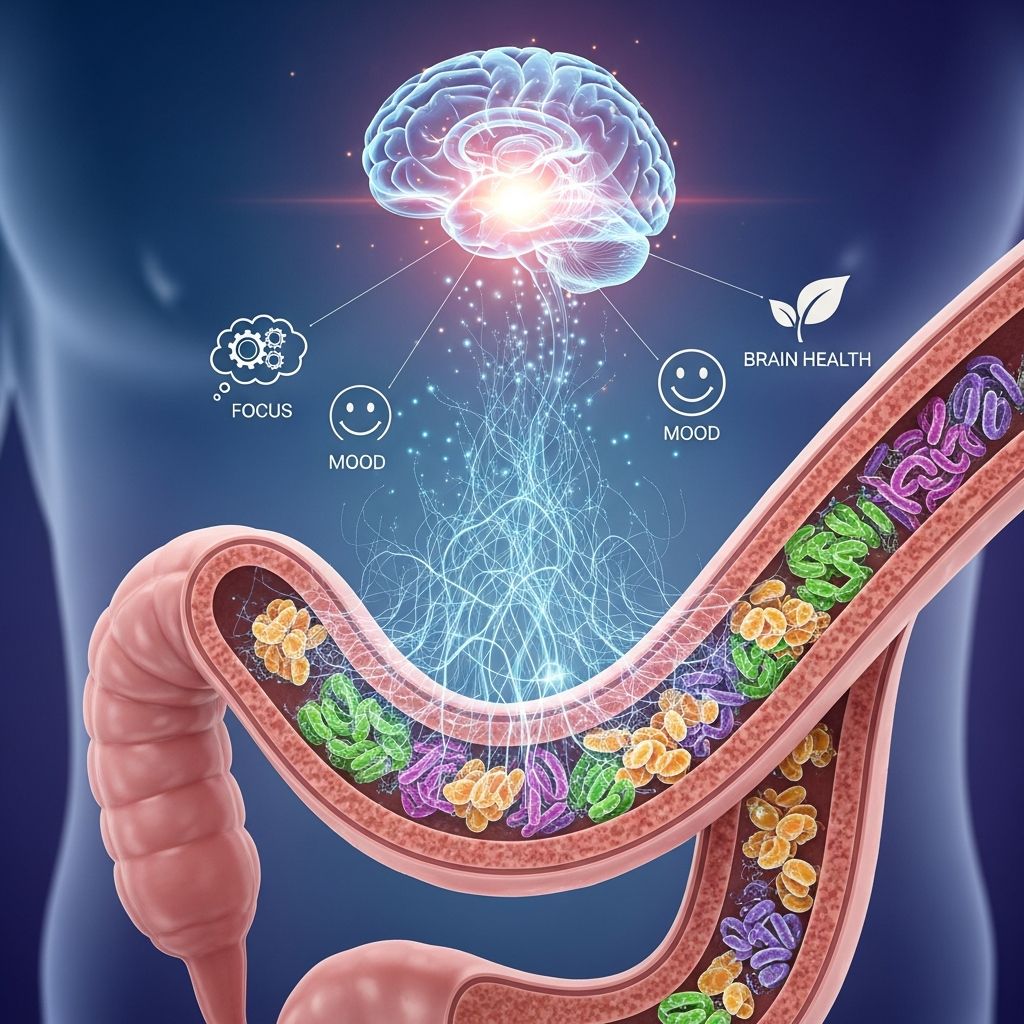
The human gut hosts trillions of microorganisms collectively known as the gut microbiome or microflora. These microbes play a crucial role beyond digestion, profoundly influencing brain health, mood regulation, cognitive focus, and emotional stability through the bidirectional gut-brain axis. Recent studies reveal how gut bacteria produce metabolites that modulate immune responses, neurotransmitter production, and neural development, potentially offering new avenues for mental health interventions.
What is the gut-brain axis?
The
gut-brain axis
represents a complex communication network linking the gastrointestinal tract to the central nervous system. It involves neural pathways like the vagus nerve, endocrine signaling via hormones, and immune modulation through cytokines. Gut microbes communicate with the brain by secreting neurotransmitters such as serotonin and dopamine precursors, neuromodulators, and short-chain fatty acids (SCFAs) like butyrate and acetate.This axis ensures the brain processes vast chemical signals from the gut efficiently. Disruptions in microbiota composition—dysbiosis—can alter these signals, leading to impaired mood, reduced focus, and exacerbated neurodegenerative conditions. For instance, germ-free mice lacking gut bacteria show altered hippocampal neurogenesis and myelination in the prefrontal cortex, regions critical for learning, memory, and executive function.
How does gut microflora influence the brain?
Gut microflora affects the brain via multiple mechanisms:
- Metabolite production: Bacteria ferment dietary fibers into SCFAs, which cross the blood-brain barrier or activate immune cells systemically. In mouse models predisposed to Alzheimer’s-like tau pathology, reduced SCFA levels from antibiotic-altered microbiomes protected against neurodegeneration, particularly in males.
- Neurotransmitter synthesis: Over 90% of serotonin is produced in the gut by microbes like Lactobacillus and Bifidobacterium, influencing mood and anxiety.
- Vagus nerve signaling: Probiotics such as Lactobacillus rhamnosus reduce stress-induced corticosterone via the vagus nerve, alleviating anxiety-like behaviors in rodents.
- Immune regulation: Microbiota shapes microglial function—brain immune cells. Dysbiosis promotes proinflammatory cytokines that heighten neuroinflammation, impairing focus and cognition.
Evidence from germ-free (GF) mice demonstrates these effects: GF animals exhibit heightened anxiety, altered dopamine turnover, and upregulated myelin-related genes in the prefrontal cortex, reversible upon microbiota recolonization. Human studies echo this, linking microbiota transfers from primates to mice with shifts in brain energy metabolism and learning pathways.
The role of gut bacteria in mood regulation
Gut microflora directly modulates mood through the production of neuroactive compounds. For example, SCFAs influence hypothalamic-pituitary-adrenal (HPA) axis activity, dampening stress responses. Antibiotic-induced dysbiosis in mice increases hippocampal brain-derived neurotrophic factor (BDNF), enhancing exploratory behavior but potentially destabilizing mood if chronic.
Clinical implications are promising: Probiotic supplementation with strains like Bifidobacterium longum has shown antidepressant effects in humans, improving mood scores via reduced inflammation and vagal signaling. Disruptions from poor diet or antibiotics can elevate proinflammatory states, contributing to depression and anxiety disorders. A balanced microbiome fosters resilience against stressors, stabilizing serotonin and GABA levels essential for calm focus.
| Microbe Strain | Mood Effect | Mechanism |
|---|---|---|
| Lactobacillus rhamnosus | Reduces anxiety | Vagus nerve, lowered corticosterone |
| Bifidobacterium longum | Antidepressant | SCFA production, anti-inflammatory |
| Faecalibacterium prausnitzii | Mood stabilization | Butyrate enhances BBB integrity |
Gut microflora and cognitive function/focus
Cognitive focus relies on prefrontal cortex integrity and hippocampal neurogenesis, both modulated by gut microbes. GF mice display increased adult hippocampal neurogenesis in the dorsal region, vital for spatial memory and attention. However, prefrontal myelin plasticity alterations suggest potential attention deficits akin to ADHD.
SCFAs from microbiota fuel brain energy metabolism. Recent primate-to-mouse microbiota transfers induced host-species-like brain patterns: large-brained primate microbes enhanced learning pathways, implying evolutionary roles in human cognition. Dysbiosis impairs microglial maturation, leading to foggy thinking and reduced focus, as seen in neurodegeneration models where antibiotic shifts curbed tau damage and immune overactivation.
Related Stories



Dietary interventions rich in prebiotics (e.g., inulin) boost SCFA producers, sharpening focus in stressed individuals by stabilizing neural circuits.
Gut health and neurodegenerative diseases
Emerging research implicates gut microflora in Alzheimer’s and Parkinson’s. In tauopathy mice, microbiome absence or antibiotic alteration slashed brain damage by limiting SCFA-driven immune activation. Feeding SCFAs to GF mice reactivated neuroinflammation, confirming causality.
Autism spectrum disorder (ASD) links are strong: Microbiota dysbiosis correlates with ASD behaviors, with GF models showing synaptic and microglial anomalies reversible by colonization. Variables like delivery mode, antibiotics, and diet shape early microbiota, influencing lifelong brain vulnerability. Manipulating the microbiome—via probiotics, fecal transplants, or diets—holds therapeutic promise for neurodegeneration.
Can diet influence your gut microbiome?
Diet profoundly shapes microflora composition. High-fiber diets promote SCFA producers like Faecalibacterium, enhancing gut-brain signaling. Fermented foods (yogurt, kimchi) deliver live probiotics, while prebiotics in onions, garlic, and bananas feed beneficial bacteria.
- Fiber-rich foods: Oats, legumes—boost butyrate for neuroprotection.
- Polyphenols: Berries, green tea—modulate microbiota diversity.
- Avoid excesses: Processed sugars feed pathogens, inducing dysbiosis.
Age, stress, and medications also alter microbiota; personalized diets targeting strains like Akkermansia may optimize brain health.
Practical tips to improve gut health for better brain function
Optimize your microbiome with these evidence-based strategies:
- Incorporate fermented foods: Daily kefir or sauerkraut introduces Lactobacillus.
- Eat diverse plants: 30+ types weekly for microbial richness.
- Limit antibiotics: Use probiotics post-treatment to restore balance.
- Exercise regularly: Boosts microbiota diversity, aiding vagal tone.
- Manage stress: Mindfulness reduces HPA dysregulation.
- Consider supplements: Multi-strain probiotics under medical guidance.
These steps foster a resilient microbiome, supporting sustained mood, sharp focus, and brain longevity.
Frequently Asked Questions (FAQs)
What is the gut-brain axis?
A bidirectional communication highway between the gut and brain involving nerves, hormones, and immune signals, modulated by microbiota.
Can gut bacteria cause depression?
Dysbiosis contributes via inflammation and altered serotonin; probiotics show mood benefits in trials.
How long to see brain benefits from diet changes?
Shifts in microbiota occur within days; cognitive/mood improvements may take weeks to months.
Are probiotics safe for everyone?
Generally yes, but consult a doctor for immunocompromised individuals or specific strains.
Does stress affect gut microflora?
Yes, it reduces diversity; gut changes exacerbate anxiety via the axis.
References
- Gut bacteria affect brain health, mouse study shows — Washington University School of Medicine. 2026-01-13. https://medicine.washu.edu/news/gut-bacteria-affect-brain-health-mouse-study-shows/
- Gut microbiota affects brain development and behavior — PMC (PMC10331547). 2023-07-01. https://pmc.ncbi.nlm.nih.gov/articles/PMC10331547/
- The gut–brain connection: microbes’ influence on mental health — Frontiers in Microbiomes. 2025. https://www.frontiersin.org/journals/microbiomes/articles/10.3389/frmbi.2025.1701608/full
- The secret to human intelligence? It might be in our gut — ScienceDaily (Northwestern University). 2026-01-05. https://www.sciencedaily.com/releases/2026/01/260105165806.htm
- The Gut Microbiome and the Brain — Johns Hopkins Public Health Magazine. 2021. https://magazine.publichealth.jhu.edu/2021/gut-microbiome-and-brain
Similar Articles








Read full bio of medha deb