Melanoma Removal: 4 Surgical Methods For Clear Margins
Comprehensive guide to surgical and advanced treatments for melanoma removal, from excision to lymph node procedures.
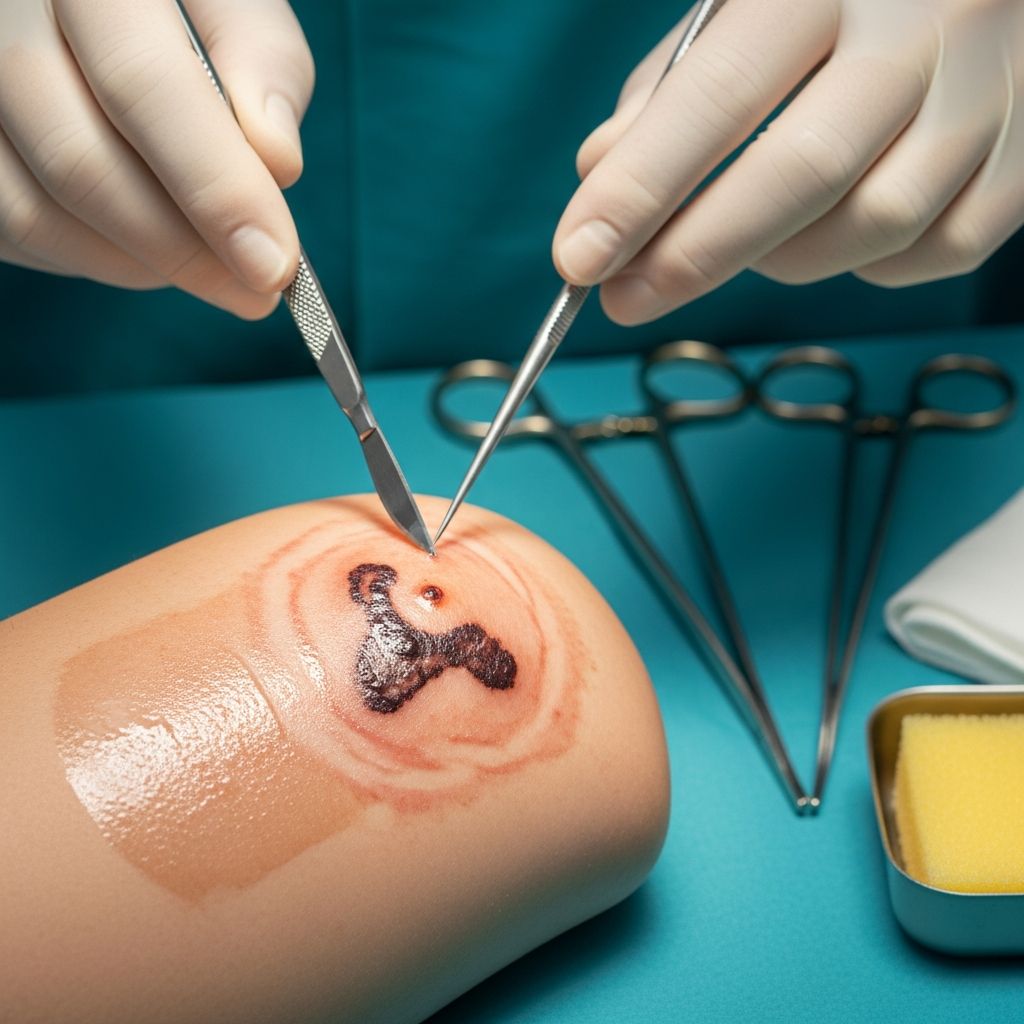
Melanoma, the most serious form of skin cancer, is primarily treated through surgical removal to excise the tumor and surrounding tissue, aiming for clear margins and cure in early stages.
What are the main methods of surgical removal for melanoma?
Surgery remains the cornerstone of melanoma treatment across all stages, with techniques tailored to tumor thickness, location, and stage. The primary methods include wide local excision for most cases, Mohs micrographic surgery for select early lesions, and lymph node procedures for staging and management.
- Wide local excision (WLE): The standard procedure removing the melanoma plus a margin of healthy skin.
- Mohs surgery: Layer-by-layer removal for precise margin control, ideal for facial or cosmetically sensitive areas.
- Sentinel lymph node biopsy (SLNB): Assesses spread to lymph nodes.
- Lymph node dissection: Removes affected regional nodes.
Wide local excision
Wide local excision is the most common surgery for melanoma, involving removal of the entire tumor and a predetermined margin of normal-appearing skin to ensure complete excision. This is often curative for early-stage (0-2) melanomas.
The margin width depends on tumor thickness: typically 0.5-1 cm for in situ or thin melanomas (<1 mm), 1-2 cm for intermediate (1-2 mm), and 2 cm for thicker tumors (>2 mm). Surgery uses local anesthesia on an outpatient basis, with the wound closed via sutures, sometimes requiring skin grafts for larger defects.
| Tumor Thickness | Recommended Margin | Source |
|---|---|---|
| In situ (0 mm) | 0.5 cm | |
| <1 mm | 1 cm | |
| 1-2 mm | 1-2 cm | |
| >2 mm | 2 cm |
Post-excision, pathology confirms clear margins; if positive, re-excision may be needed. For advanced cases, WLE pairs with systemic therapies like immunotherapy.
Mohs micrographic surgery
Mohs surgery, or micrographic surgery, is suitable for early-stage melanomas, particularly melanoma in situ or thin invasive ones in challenging locations like the face, ears, or hands. Performed by trained dermatologists, it removes tissue in thin layers, each examined microscopically until cancer-free.
This spares maximal healthy tissue, reducing recurrence and improving cosmetics. Though more common for basal/squamous cell cancers, it’s increasingly used for melanoma stage 0 and select thin invasives; wide excision remains standard for invasive melanoma.
- Process: Layer removal, freeze-section analysis, repeat until clear (may take hours).
- Best for: Lentigo maligna melanoma on face.
Sentinel lymph node biopsy (SLNB)
For melanomas thicker than 1 mm or with ulceration, SLNB identifies the first lymph node(s) draining the tumor site to check for microscopic spread. Using dye and/or radioactive tracer, the sentinel node is removed and examined.
If negative, no further nodal surgery; if positive, completion lymph node dissection is often recommended. SLNB aids staging and prognosis but its therapeutic benefit is debated.
Completion/comprehensive lymph node dissection
When SLNB is positive, completion lymph node dissection removes remaining regional nodes (e.g., groin for leg melanoma). This was standard but recent trials question routine use, favoring observation or adjuvant therapy for microscopic disease.
Related Stories



Risks include lymphedema; reserved for clinically node-positive cases.
Skin grafts and flaps for reconstruction
Large excisions may require reconstruction: primary closure for small defects, skin grafts (autograft from patient or allograft), or flaps for better function/cosmesis. Performed by plastic surgeons, these restore contour and mobility.
- Primary closure: Suturing edges together.
- Skin graft: Skin from donor site covers wound.
- Local flaps: Nearby tissue rotated to fill defect.
When is non-surgical treatment used?
Surgery is primary, but non-surgical options supplement advanced/metastatic disease: immunotherapy (e.g., checkpoint inhibitors), targeted therapy (BRAF/MEK inhibitors for mutated melanomas), and radiation (palliative or adjuvant).
Radiation rarely first-line but used if surgery impossible or for nodal basins.
Staged excision for melanoma in situ
For large lentigo maligna melanomas (melanoma in situ on sun-damaged skin), staged excision removes tissue incrementally with immediate margin control, similar to Mohs but using paraffin sections.
Frequently Asked Questions (FAQs)
What is the recovery time after wide local excision?
Most patients resume normal activities in 1-2 weeks; wounds heal in 2-4 weeks, longer with grafts.
Is Mohs surgery better than wide excision for melanoma?
Mohs offers tissue sparing for early melanoma in sensitive areas but wide excision is standard for invasive cases per NCCN guidelines.
Do all melanoma patients need lymph node biopsy?
No, only those with intermediate/thick primaries (>1 mm) or high-risk features.
Can melanoma be removed without surgery?
Early melanoma requires surgery; advanced cases use systemic therapies, but local control often needs excision.
What happens if margins are positive after excision?
Re-excision to achieve clear margins is standard.
References
- Melanoma Treatment – Best Treatment For Melanoma Skin Cancer Today — Miami Derm Center. 2025-07-04. https://www.miamidermcenter.com/2025/07/04/best-treatment-for-melanoma-skin-cancer-today/
- Wide Local Excision Surgery Treatment for Melanoma — Melanoma Research Alliance. Accessed 2026. https://www.curemelanoma.org/patient-eng/melanoma-treatment/options/wide-local-excision
- Melanoma Treatment – NCI — National Cancer Institute (cancer.gov). Updated 2025. https://www.cancer.gov/types/skin/patient/melanoma-treatment-pdq
- Surgery For Melanoma Skin Cancer — American Cancer Society. Updated 2025. https://www.cancer.org/cancer/types/melanoma-skin-cancer/treating/surgery.html
- Melanoma Treatments — UT Southwestern Medical Center. Accessed 2026. https://utswmed.org/conditions-treatments/melanoma/melanoma-treatments/
- Surgery for Melanoma — Memorial Sloan Kettering Cancer Center. Accessed 2026. https://www.mskcc.org/cancer-care/types/melanoma/treatment/surgery-melanoma
- Surgery to remove melanoma skin cancer — Cancer Research UK. Accessed 2026. https://www.cancerresearchuk.org/about-cancer/melanoma/treatment/surgery/surgery-remove-melanoma
Similar Articles








Read full bio of medha deb