How Much Protein Do You Need in Your 50s?
Discover optimal protein intake for adults over 50 to combat muscle loss, boost strength, and support healthy aging.
Turning 50 marks a pivotal shift in nutritional needs, particularly for
protein
, the essential building block for muscle maintenance, immune function, and overall vitality. While the standard Recommended Dietary Allowance (RDA) sits at 0.8 grams per kilogram of body weight, experts now recommend higher intakes for those over 50 to counteract age-related muscle decline known as sarcopenia. This comprehensive guide explores why protein matters more as we age, precise daily and per-meal targets, optimal food sources, distribution strategies, and when supplements make sense—all drawn from authoritative health research.Why Your Protein Needs Increase After 50
Starting around age 30, adults lose 1-2% of muscle mass annually, accelerating to 3-10% per decade after 50 due to anabolic resistance—a condition where muscles respond less efficiently to protein intake. This decline heightens risks of falls, fractures, frailty, hospitalization, and premature mortality. “As we age, we move less and eat less; without attention to protein and activity, frailty sets in,” notes Marily Oppezzo, PhD, MS, RDN from Stanford Lifestyle Medicine.
Anabolic resistance means muscles require a ‘louder signal’—more protein—to trigger synthesis. Protein supports not just muscles but brain, liver, immune, and gut functions; excess prioritizes organs over muscle if intake is low. Studies by Stuart Phillips highlight higher protein slowing sarcopenia, promoting longevity. For thriving—not just surviving—aim higher than the RDA.
How Much Protein Do You Need Daily?
The RDA of
0.8 g/kg body weight
prevents deficiency but falls short for optimal aging. For adults 50+, Stanford recommends1.2-1.6 g/kg (0.54-0.72 g/lb)
daily. A 165-pound (75 kg) person needs 90-120 grams—roughly double the federal baseline.Mayo Clinic aligns, suggesting 1-1.2 g/kg for those 40-50+ to combat sarcopenia, or 75-90 grams for 165 pounds. Active individuals or those over 65 may need 1.2-2.0 g/kg. Adjust for ideal body weight if overweight; consult a dietitian for precision.
| Group | Protein (g/kg/day) | Example: 165 lb (75 kg) Person |
|---|---|---|
| Sedentary Adult (RDA) | 0.8 | 60 g |
| Adults 50+ (Maintenance) | 1.2-1.6 | 90-120 g |
| Active/Strength Training | 1.1-1.7 | 83-128 g |
| Post-Surgery/Illness | Up to 2.0 | 150 g |
Protein should comprise 10-35% of calories (50-175 g on 2,000 kcal diet). Most Americans meet basic needs, but quality and distribution matter for 50+.
Protein Per Meal: Aim for 30-35 Grams
Spread intake across meals to overcome anabolic resistance. Younger adults synthesize muscle from 20 g/meal; 50+ need
30-35 g/meal
(0.4 g/kg/meal). For 165 pounds, that’s ~30 g three times daily.No strict upper limit exists for muscle utilization, but cap at 40 g/sitting for efficiency. Evening-heavy patterns are common; shift to breakfast for satiety. Post-workout: 30-35 g within 2 hours plus resistance training builds muscle past 50.
- Breakfast: 30 g (e.g., Greek yogurt parfait)
- Lunch: 30-35 g (e.g., grilled chicken salad)
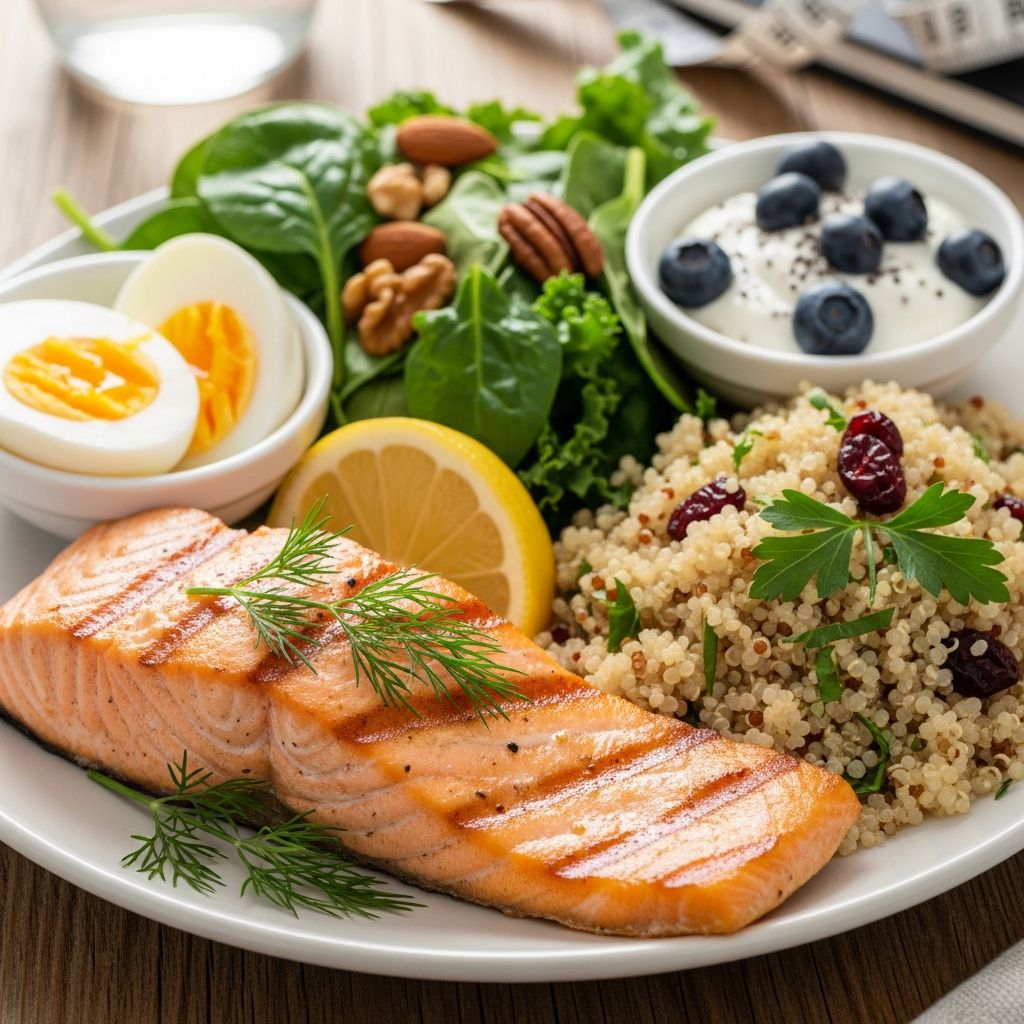
- Dinner: 30-35 g (e.g., salmon with quinoa)
- Snack (if needed): 15-20 g to hit total
Best Protein Sources for Adults Over 50
Prioritize leucine-rich foods (key for muscle synthesis, especially in older women). Whole foods outperform supplements for complete nutrition.
Animal Sources (High Leucine)
- Egg whites: 11 g per 3 whites
- Lean poultry/fish: 25-30 g per 3-4 oz (chicken breast, salmon, tuna)
- Low-fat dairy: Greek yogurt (20 g/cup), cottage cheese (25 g/cup)
Related Stories



Plant Sources (Combine for Completeness)
- Soy/tofu: 10-20 g per serving
- Beans/lentils: 15-18 g per cup cooked
- Nuts/seeds: 5-7 g per oz (almonds, chia)
Aim for deck-of-cards-sized portions at meals plus dairy.
Protein Supplements: When and What to Choose
Supplements suit restrictive diets, fasting, or high needs (e.g., post-surgery). Opt for:
- Whey: Leucine-packed, ideal for muscle
- Pea/plant-based: Vegan alternative
- Criteria: ≤2 g sat fat, ≤5 g sugar, ≤200 kcal/serving, no trans fats
Don’t rely solely; food first.
Protein and Exercise: The Dynamic Duo
Protein alone maintains; paired with weight training, it rebuilds. Adults 50+ doing resistance exercise need 1.2-1.7 g/kg. Combine 30-35 g post-workout for maximal synthesis.
Special Considerations
- Weight loss meds/diets: Risk muscle loss; eat protein at every meal
- Overweight: Use ideal weight for calculations
- Athletes/recovery: Upper range (1.6-2.0 g/kg)
Excess (>2 g/kg) rarely harms healthy kidneys but unnecessary.
Frequently Asked Questions (FAQs)
Are most people over 50 getting enough protein?
No—many undereat or skew intake poorly, despite meeting RDA. Focus on 1.2-1.6 g/kg evenly distributed.
Can you eat too much protein?
Most exceed needs safely; over 2 g/kg offers no extra muscle benefit.
Best time for protein?
Evenly across 3 meals, 30 g each; shift to breakfast for appetite control.
Do vegetarians/vegans get enough?
Yes, via soy, beans, pea protein; combine sources for leucine.
Does protein cause kidney issues?
No evidence in healthy adults; consult doctor if diseased.
References
- Protein Needs for Adults 50+ — Stanford Lifestyle Medicine, Marily Oppezzo, PhD, MS, RDN. 2023. https://lifestylemedicine.stanford.edu/protein-needs-for-adults-50/
- Are You Getting Too Much Protein? — Mayo Clinic Health System, Kristi Wempen, Dietitian. 2023. https://www.mayoclinichealthsystem.org/hometown-health/speaking-of-health/are-you-getting-too-much-protein
Similar Articles








Read full bio of medha deb