How Much Sugar a Day: Comprehensive Guide For Healthy Limits
Discover daily sugar limits, health risks, and practical tips to cut back on added sugars for better health.
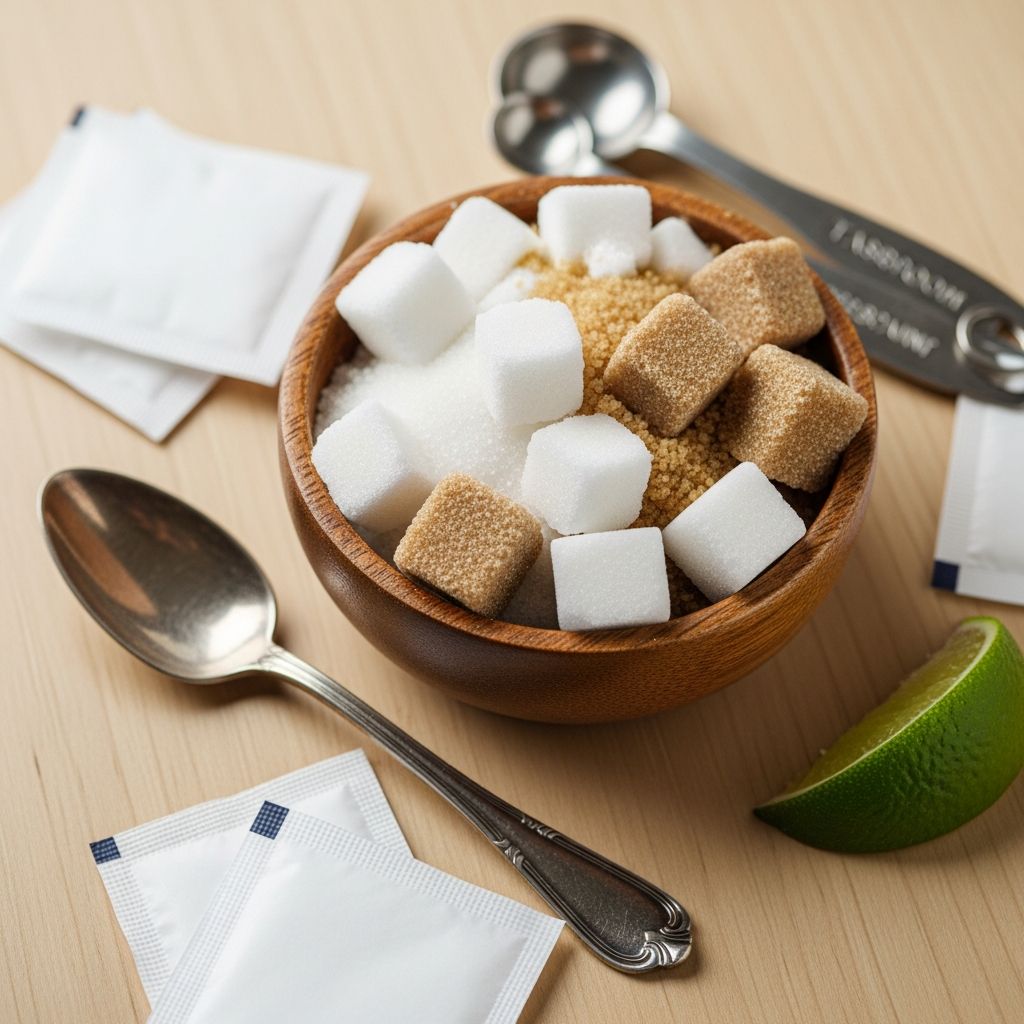
Added sugars contribute empty calories to your diet and exceed recommended limits for most people. Health organizations like the American Heart Association (AHA) and National Health Service (NHS) provide clear guidelines: women and girls should limit added sugars to no more than 6 teaspoons (25 grams or 100 calories) daily, while men and boys should cap it at 9 teaspoons (36 grams or 150 calories). The NHS specifies adults should not exceed 30 grams of free sugars per day, equivalent to about 7 sugar cubes.
What Is Added Sugar?
**Added sugars** are sugars and syrups incorporated into foods and drinks during processing or preparation, distinct from naturally occurring sugars in fruits, vegetables, and milk. These include high-fructose corn syrup, honey, maple syrup, and other sweeteners. Unlike natural sugars bound with fiber, added sugars cause rapid blood sugar spikes, leading to energy crashes and health issues.
The body absorbs added sugars quickly, unlike fiber-rich whole foods. For instance, a 12-ounce soda delivers 10 teaspoons (42 grams) of sugar, surpassing daily limits for women and nearly matching men’s. Free sugars, as defined by the NHS, encompass added sugars plus those in honey, syrups, and fruit juices, making up no more than 5% of daily calories.
How Much Added Sugar Should You Have Per Day?
Daily limits vary by age, sex, and organization, but consensus emphasizes moderation. The AHA’s recommendations stem from links between excess sugar and heart disease, obesity, and diabetes.
- Men: ≤9 tsp (36g/150 cal) added sugar/day
- Women: ≤6 tsp (25g/100 cal) added sugar/day
The NHS provides age-specific free sugar limits:
| Age Group | Max Free Sugars/Day | Sugar Cubes Equivalent |
|---|---|---|
| Adults | 30g | 7 |
| Children 7-10 | 24g | 6 |
| Children 4-6 | 19g | 5 |
| Children 2-3 | 14g | 3.5 |
| Children 1 | 10g | 2.5 |
| Babies <1 | Avoid added sugars | N/A |
These limits exclude natural sugars in whole fruits and dairy, focusing on free/added types.
Health Risks of Too Much Sugar
Excess sugar intake drives numerous health problems. Americans average 17 teaspoons daily—over twice the limit for women and 1.9 times for men—equating to 60 pounds yearly. The NHS warns that high free sugar consumption contributes to weight gain, increasing risks for heart disease, type 2 diabetes, and certain cancers.
- **Weight Gain:** Sugar adds calories without satiety, promoting overeating.
- **Heart Disease:** Linked to higher triglycerides and blood pressure.
- **Type 2 Diabetes:** Rapid absorption impairs insulin response.
- **Dental Issues:** Free sugars fuel tooth decay, especially in drinks.
- **Liver Strain:** Excess fructose from sugary drinks can lead to fatty liver.
Juices and smoothies release sugars, heightening decay risk despite natural origins; limit to 150ml daily.
Sources of Added Sugar
Added sugars hide in everyday foods. Beverages top the list at 24%, followed by desserts (19%).
Top Sources (Percentage of Added Sugar Intake):
- Sugar-sweetened beverages: 24% (soft drinks 16%, fruit drinks 5%, sports drinks 2%)
- Desserts/sweet snacks: 19% (cookies/brownies 6%, ice cream 5%, cakes/pies 4%)
- Candy: 9%
- Coffee/tea: 11%
- Other: 19% (sandwiches 7%, cereals/bars 7%, sweetened yogurt 4%)
Related Stories



A single cola can pack 9 cubes (35-40g), exceeding adult limits.
How to Read Nutrition Labels for Sugar
Check “Added Sugars” on Nutrition Facts labels, now mandatory, listing grams and % Daily Value. Aim for products under 5g/100g (low sugar) per NHS traffic light system: green (<5g/100g), amber (5-22.5g), red (>22.5g).
Scan ingredients for aliases:
- High-fructose corn syrup
- Dextrose, maltose
- Honey, agave nectar
- Maple/coconut/turbinado sugar
- Fruit juice concentrate
Yogurt may show 8g sugars/serving, but from milk (not free sugars). Reference Intake (RI) for total sugars is 90g, including 30g free sugars.
Tips to Cut Back on Sugar
Reducing sugar improves health without drastic changes. Start gradually to retrain taste buds.
- Swap Drinks: Choose water, lower-fat milk, or no-added-sugar options over soda/juice. Limit juice/smoothies to 150ml/day.
- Read Labels: Pick low-sugar versions; avoid high-sugar cereals/snacks.
- Cook Fresh: Use fruits for sweetness in meals; skip sweetened sauces.
- Portion Treats: Enjoy desserts occasionally, not daily.
- Boost Fiber: Whole fruits slow sugar absorption vs. juices.
Track intake via apps. Studies show label changes could prevent 1 million CVD/diabetes cases.
Sugar and Children
Kids consume excess sugar from drinks/snacks, risking obesity and decay. No added sugars for babies under 1; minimize for toddlers. Parents should model habits, offering water and whole fruits. Sugary drinks contribute most; a cola matches a child’s daily limit.
Frequently Asked Questions (FAQs)
Is sugar in fruit bad for you?
No, natural sugars in whole fruits are healthy due to fiber, vitamins, and slow absorption. Limit juices/smoothies.
What’s the difference between added and total sugars?
Total sugars include natural; added/free sugars are extra from processing/honey/juices. Focus on added.
Are artificial sweeteners better?
They help reduce calories but use sparingly; whole foods preferred.
How does sugar affect teeth?
Free sugars feed bacteria causing decay; released sugars in juices worsen it.
Can I have sugar in coffee/tea?
Moderately; it accounts for 11% of intake. Try reducing gradually.
This guide empowers better choices amid confusing info—68% of shoppers face conflicting nutrition data. Prioritize whole foods for sustained energy and health.
References
- How Much Sugar Is Too Much? — American Heart Association. 2023. https://www.heart.org/en/healthy-living/healthy-eating/eat-smart/sugar/how-much-sugar-is-too-much
- Sugar: the facts — National Health Service (NHS). 2023. https://www.nhs.uk/live-well/eat-well/food-types/how-does-sugar-in-our-diet-affect-our-health/
Similar Articles








Read full bio of Sneha Tete