How Much Sugar Per Day: Daily Limits and Health Guidelines
Understanding recommended daily sugar intake and how to make healthier choices.
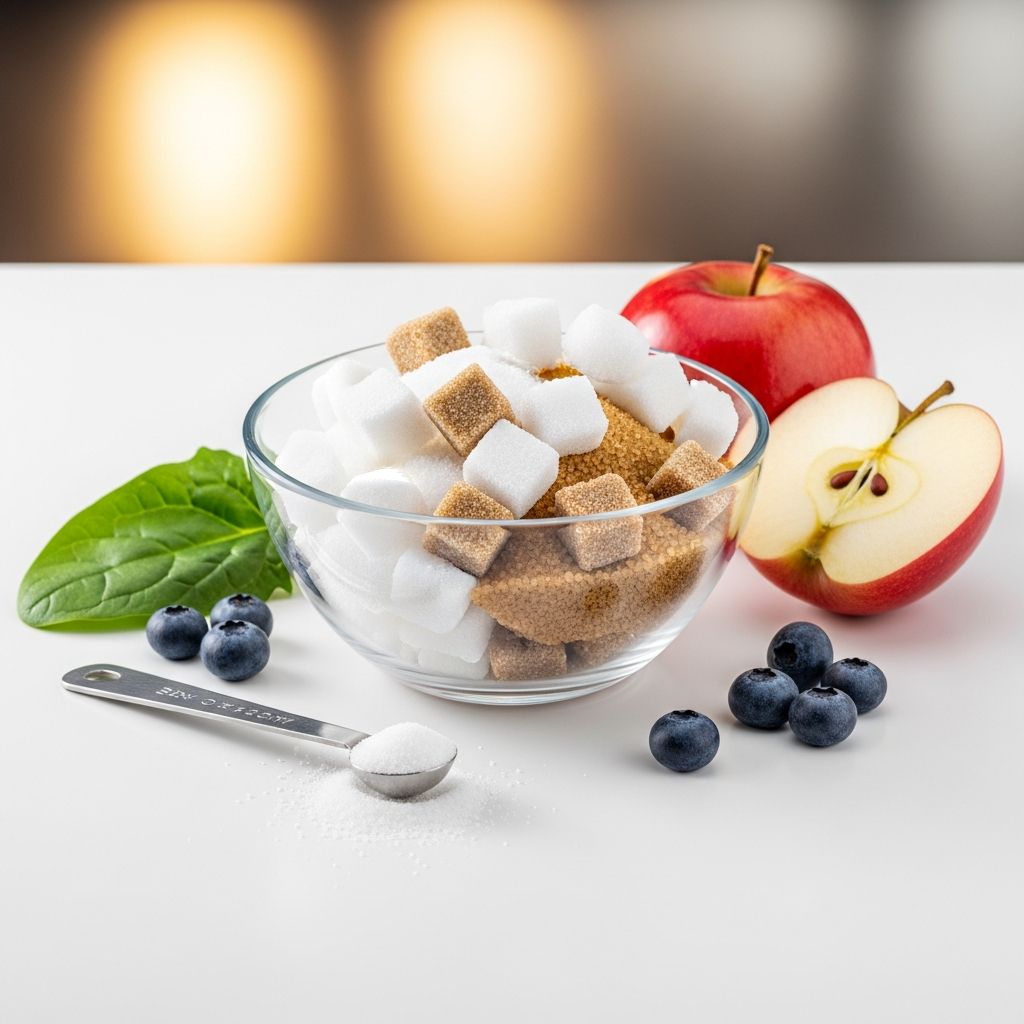
How Much Sugar Per Day: Understanding Recommended Daily Limits
Sugar consumption has become a significant public health concern in many developed nations. The average adult in the United States consumes far more added sugar than health organizations recommend, contributing to rising rates of obesity, type 2 diabetes, and cardiovascular disease. Understanding your daily sugar limits and how to identify hidden sources of sugar is essential for maintaining long-term health and preventing chronic disease.
Recommended Daily Sugar Intake by Age and Gender
Health organizations provide clear guidelines on how much added sugar adults and children should consume each day. These recommendations are based on decades of nutritional research and are designed to help prevent weight gain, tooth decay, and metabolic disorders.
For Adults
The American Heart Association recommends that men should consume no more than 9 teaspoons (36 grams or 150 calories) of added sugar per day, while women should limit intake to 6 teaspoons (25 grams or 100 calories) per day. The NHS aligns with these recommendations, advising that adults should have no more than 30g of free sugars daily, which is roughly equivalent to 7 sugar cubes.
The slight variation between American and British recommendations reflects different methodologies, but both point to similar targets: approximately 25-36 grams of added or free sugars per day for adults.
For Children
Children require lower sugar limits than adults due to their smaller body size and higher susceptibility to tooth decay. The NHS provides age-specific recommendations:
- Children aged 7 to 10: No more than 24g of free sugars per day (6 sugar cubes)
- Children aged 4 to 6: No more than 19g of free sugars per day (5 sugar cubes)
- Children aged 2 to 3: No more than 14g of free sugars per day (3.5 sugar cubes)
- Children aged 1: No more than 10g of free sugars per day (2.5 sugar cubes)
- Babies under 1: No added sugars; only breast milk or formula
These guidelines recognize that children’s developing bodies are particularly vulnerable to the negative effects of excess sugar, including dental problems and metabolic dysfunction.
How Much Sugar Are We Actually Consuming?
The gap between recommended and actual sugar consumption is alarming. Adults and young adults in the United States consume on average about 17 teaspoons of added sugar every day—more than 2 to 3 times the recommended daily allowance. This translates to approximately 60 pounds of added sugar consumed annually per person, equivalent to six 10-pound bowling balls.
This excessive consumption contributes significantly to preventable health conditions. A recent analysis found that improved labeling of added sugars could potentially prevent nearly 1 million cases of cardiovascular disease and Type 2 diabetes over the next two decades.
Major Sources of Added Sugar in the Diet
Understanding where added sugar comes from is crucial for making informed dietary choices. Most people don’t realize how much hidden sugar they consume through seemingly innocent food and beverage choices.
Beverages: The Largest Source
Sugar-sweetened beverages are the single largest contributor to added sugar intake, accounting for 24% of total consumption. Breaking this down further:
- Soft drinks: 16% of total added sugar intake
- Fruit drinks: 5%
- Sport and energy drinks: 2%
- Other beverage sources: 1%
A single 12-ounce can of soda contains 10 teaspoons (42 grams) of added sugar—nearly double the recommended daily amount for women and more than the total daily recommendation for men. The sugar in beverages is particularly problematic because it’s absorbed rapidly into the bloodstream without the fiber content found in whole foods.
Related Stories



Desserts and Sweet Snacks
Desserts and sweet snacks comprise 19% of added sugar consumption, including:
- Cookies and brownies: 6%
- Ice cream and frozen dairy desserts: 5%
- Cakes and pies: 4%
- Doughnuts, sweet rolls, and pastries: 3%
- Other sources: 1%
Other Common Sources
Beyond the obvious sugary treats, added sugar lurks in many everyday foods and beverages:
- Coffee and tea beverages: 11% of consumption
- Candy: 9%
- Sandwiches (often from condiments and bread): 7%
- Breakfast cereals and bars: 7%
- Higher-fat milk and sweetened yogurt: 4%
- Other sources: 19%
These percentages highlight how added sugar permeates the modern food supply, often in products consumers don’t typically associate with sweetness.
How Your Body Processes Sugar
The rate at which your body absorbs sugar significantly affects its metabolic impact. Not all sugars are created equal in terms of how quickly they enter your bloodstream and affect your blood glucose levels.
Your body spends considerably more time digesting an apple than consuming regular soda. An apple contains fiber, which slows down the absorption of natural sugars. In contrast, added sugar in beverages and processed foods hits your system all at once, causing rapid absorption and sharp spikes in blood glucose. These blood sugar spikes trigger corresponding insulin releases, which over time can contribute to insulin resistance and type 2 diabetes.
Understanding this difference is crucial because it explains why consuming 25 grams of sugar from whole fruits is metabolically different from consuming the same amount in a sugary beverage.
Health Risks Associated with Excessive Sugar Intake
Consuming too much added sugar increases the risk of numerous health problems. Excessive sugar contributes to weight gain by adding calories without providing satiety or nutritional value. Being overweight increases your risk of heart disease, certain cancers, and type 2 diabetes.
Sugar also damages dental health. While sugars naturally present in fruit and vegetables are less likely to cause tooth decay because they’re contained within the food structure, released sugars—such as those in fruit juices and smoothies—can damage teeth. This is why limiting fruit juice and smoothies to a maximum of 150ml (a small glass) per day and consuming them with meals is recommended.
Reading Labels: Identifying Hidden Sugars
Food manufacturers are now required to list the amount of added sugars on Nutrition Facts labels in grams and as a percentage of daily value. This transparency helps consumers make informed choices, but many people don’t know what to look for.
Understanding Nutrition Labels
Look for the “Carbohydrates of which sugars” figure on the nutrition label. Products are classified as follows:
- High in sugar: More than 22.5g of total sugars per 100g
- Medium: More than 5g but less than or equal to 22.5g per 100g
- Low in sugar: 5g or less of total sugars per 100g
Some front-of-package labels use color coding (red for high, amber for medium, green for low) to help shoppers quickly identify sugar content.
Hidden Sugar Names
Added sugar comes in many forms, and manufacturers sometimes use different names to make products appear healthier. Added sugar is added sugar no matter what it’s called. Watch for these ingredients on food labels:
- Honey
- Maple syrup
- Coconut sugar
- Turbinado sugar
- High fructose corn syrup
- Corn syrup
- Dextrose
Studies show that 68% of shoppers encounter conflicting nutritional information on social media, and 60% doubt their food choices for their families as a result. While alternative sugars like honey and maple syrup are often perceived as healthier, they provide the same metabolic effects as regular white sugar and count toward your daily sugar limit.
Natural vs. Added Sugars: Understanding the Difference
It’s important to distinguish between added sugars and naturally occurring sugars. Sugars found naturally in fruits, vegetables, and milk do not need to be limited. The fiber in whole fruits slows sugar absorption, and the vitamins, minerals, and phytonutrients in these foods provide nutritional benefits that justify their natural sugar content.
However, when fruits are juiced or blended into smoothies, the sugars are released from their cellular structure, making them act more like added sugars in terms of rapid absorption. This is why even unsweetened fruit juices should be limited to 150ml per day.
Practical Strategies to Reduce Sugar Intake
Beverage Choices
Since sugar-sweetened beverages are the largest source of added sugar, changing beverage habits has the most significant impact:
- Replace sugary fizzy drinks and sweetened squash with water, lower-fat milk, or sugar-free alternatives
- Limit fruit juice and smoothies to 150ml per day and consume with meals
- Choose unsweetened tea and coffee, adding natural sweeteners like stevia if needed
- Avoid energy and sports drinks unless you’re engaged in intense athletic activity
Reading Labels and Making Smart Choices
Before purchasing packaged foods, check both the Nutrition Facts label and the ingredients list. Aim for products with less than 5g of sugar per serving, and choose items with shorter ingredient lists that don’t contain multiple forms of added sugar.
Building a Balanced Diet
For a healthy, balanced diet, get most of your calories from other kinds of foods, such as whole-grain starchy foods and fruits and vegetables. Reserve foods high in added sugars for occasional treats, not daily staples.
Frequently Asked Questions
Q: Why do different organizations (American Heart Association vs. NHS) have slightly different sugar recommendations?
A: The American Heart Association focuses on “added sugars” (36g for men, 25g for women), while the NHS uses “free sugars,” a slightly broader category that includes added sugars plus sugars naturally found in honey, syrups, and unsweetened fruit juices. The recommendations are functionally similar: approximately 25-30g daily for adults.
Q: Does natural sugar from fruit count toward my daily sugar limit?
A: No. The recommended limits apply to added sugars and free sugars, not the natural sugars found in whole fruits and vegetables. Whole fruits contain fiber, which slows absorption and provides nutritional benefits that justify their sugar content.
Q: Are artificial sweeteners a good alternative to sugar?
A: Sugar-free and diet beverages containing artificial sweeteners contain no added sugar and can be appropriate alternatives to sugary drinks. However, water and unsweetened beverages remain the healthiest choices.
Q: How can I tell if a product has high sugar content?
A: Check the nutrition label for the “sugars” line. More than 22.5g per 100g is considered high. Additionally, examine the ingredients list for added sugar names like honey, maple syrup, and corn syrup.
Q: What’s the difference between total sugars and added sugars on a nutrition label?
A: Total sugars include both added sugars and naturally occurring sugars (from milk, fruit, etc.), while the added sugars line shows only sugars added during manufacturing. For example, plain yogurt may show 8g of total sugars but 0g of added sugars.
References
- How Much Sugar Is Too Much? — American Heart Association. 2024. https://www.heart.org/en/healthy-living/healthy-eating/eat-smart/sugar/how-much-sugar-is-too-much
- Sugar: the facts — National Health Service (NHS). 2024. https://www.nhs.uk/live-well/eat-well/food-types/how-does-sugar-in-our-diet-affect-our-health/
Similar Articles








Read full bio of medha deb