How the Ear Works: Understanding Hearing and Balance
Discover the intricate anatomy and fascinating mechanisms that enable hearing and balance.
How the Ear Works: A Complete Guide to Hearing and Balance
The human ear is a remarkable organ that serves two essential functions: hearing and maintaining balance. Despite its small size, the ear contains an intricate network of structures working in perfect harmony to capture sound waves from the environment and send them to the brain for processing. Additionally, specialized components within the ear continuously monitor your body’s position and movement, allowing you to maintain equilibrium in a three-dimensional space. Understanding how the ear works requires knowledge of its three main anatomical divisions: the outer ear, the middle ear, and the inner ear. Each section plays a vital role in the hearing and balance process.
The Three Main Parts of the Ear
Your ear is divided into three distinct anatomical regions, each with specialized structures and functions. These regions work sequentially to transform sound waves into signals your brain can interpret.
The Outer Ear: Gateway to Sound
The outer ear is your ear’s first line of contact with the world, serving as the initial gateway for sound collection and transmission. This visible portion of your auditory system performs the critical task of gathering sound waves from your environment and directing them inward toward the processing structures of your ear.
Components of the Outer Ear:
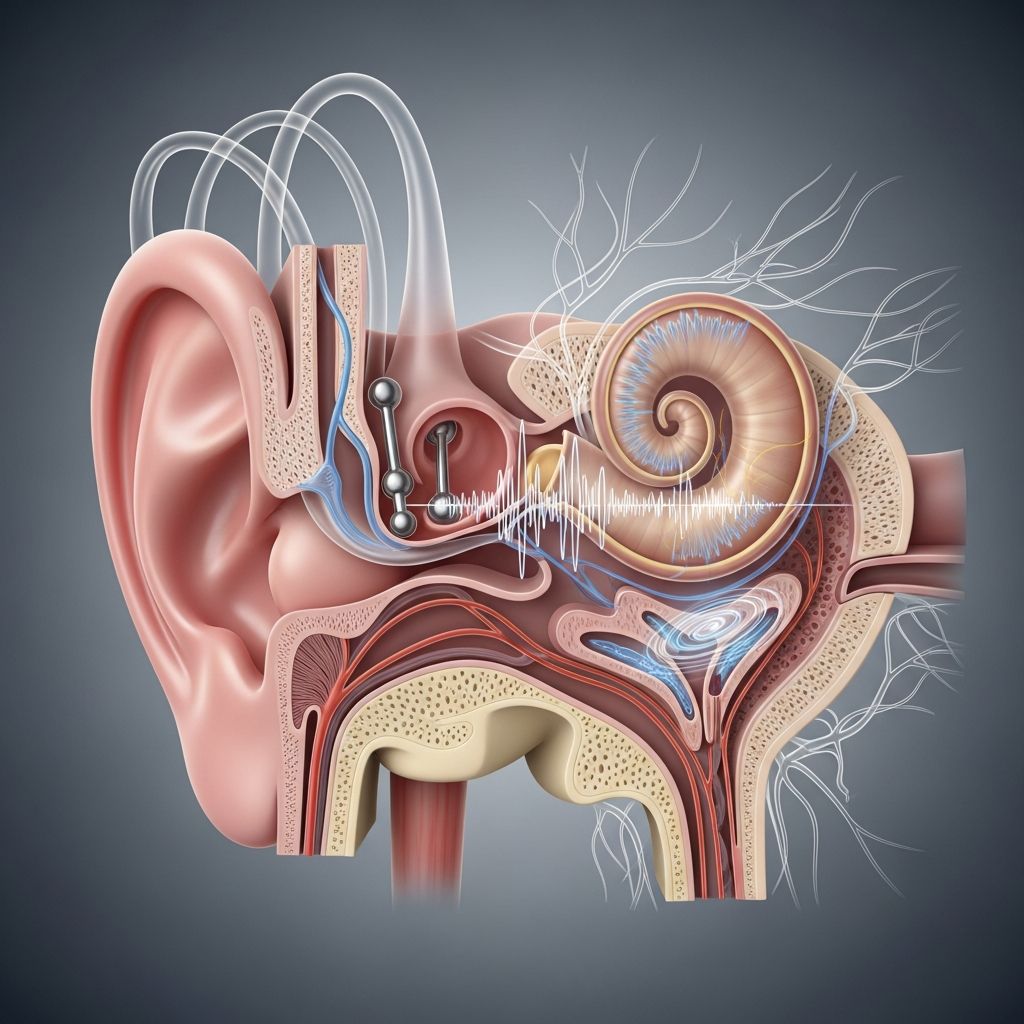
- The pinna (also called the auricle) – the visible cartilaginous structure on the side of your head
- The ear canal (also called the external acoustic meatus) – the pathway through which sound travels to the middle ear
The pinna is composed primarily of cartilage covered with skin and is uniquely shaped to funnel sound waves into the ear canal. Its distinctive form helps capture sound from various directions and provides some initial amplification of certain frequencies. The ear canal is a narrow tube approximately one inch long that serves as the conduit for sound waves traveling from the pinna to the eardrum.
Beyond its role in sound transmission, the ear canal also provides important protective functions. Specialized glands within the ear canal produce earwax, a waxy substance that serves multiple protective purposes. Earwax collects dust, debris, and potentially harmful microorganisms, preventing them from reaching the middle ear and inner ear structures. It also maintains the proper humidity level in the ear canal and has antimicrobial properties that help defend against infection.
The Middle Ear: Sound Amplification Chamber
Once sound waves pass through the ear canal, they encounter the eardrum, also known as the tympanic membrane, which separates the outer ear from the middle ear. The eardrum is a thin, semi-transparent membrane that vibrates in response to incoming sound waves. This vibration is the crucial link between the outer ear’s sound collection and the middle ear’s amplification process.
Key Structures in the Middle Ear:
- The tympanic cavity – the main air-filled chamber of the middle ear
- The eustachian tube – a canal connecting the middle ear to the nasal cavity
- The three auditory ossicles – the smallest bones in the human body
The three auditory ossicles are the malleus, incus, and stapes, collectively referred to as the ossicular chain. These tiny bones form a mechanical bridge that transmits and amplifies vibrations from the eardrum to the inner ear. The malleus (hammer) is attached directly to the eardrum and receives its vibrations. The incus (anvil) connects the malleus to the stapes, and the stapes (stirrup) is the final bone in the chain. Together, these bones amplify sound vibrations approximately thirty times, significantly increasing the signal strength before it reaches the inner ear.
Related Stories



The eustachian tube plays an equally important role in middle ear function. This narrow channel connects your middle ear to the back of your nasal cavity and opens briefly when you yawn, swallow, or sneeze. Its primary function is to equalize air pressure on both sides of the eardrum. When pressure differentials exist, such as during altitude changes or when you have a cold, eustachian tube dysfunction can occur, resulting in sensations of fullness, muffled hearing, or ear discomfort.
The Inner Ear: Sound Processing and Balance Control
The inner ear is the most complex and functionally sophisticated part of your auditory system. Located deep within the temporal bone of the skull, the inner ear contains the structures responsible for both hearing and balance. This region consists of a fluid-filled labyrinth of tubes and chambers that work together to transform mechanical vibrations into electrochemical signals understood by your brain.
Components of the Inner Ear:
- The cochlea – the hearing organ where sound is converted to neural signals
- The vestibule – the central chamber of the balance system
- The semicircular canals – fluid-filled tubes that detect head movement and rotation
- The cochlear nerve (auditory nerve) – transmits sound information to the brain
- The vestibular nerve – transmits balance information to the brain
The cochlea is a snail-shaped structure approximately one-third of an inch long that contains the specialized sensory receptors for hearing. Its spiral shape allows it to compress an remarkable amount of sensory tissue into a tiny space. Inside the cochlea, the fluid responds to vibrations from the stapes bone by moving in wave-like patterns. This fluid movement stimulates thousands of microscopic hair cells called stereocilia that line the cochlear duct.
When the stereocilia bend in response to fluid movement, they convert mechanical vibrations into electrical impulses through a process called transduction. These electrochemical signals travel along the auditory nerve to the auditory cortex of the brain, where they are processed and interpreted as sound. Different regions of the cochlea are sensitive to different sound frequencies, allowing the auditory system to distinguish between high and low pitches.
The Hearing Process: From Sound Waves to Brain Signals
Understanding how you hear requires knowledge of the sequential journey sound takes through your ear. The hearing process involves multiple steps of mechanical and biological transformation.
Step 1: Sound Collection – Sound waves enter the ear canal where they are funneled by the pinna toward the eardrum.
Step 2: Vibration Transmission – The sound waves strike the eardrum, causing it to vibrate. These vibrations are transmitted to the malleus bone, which is attached to the eardrum.
Step 3: Mechanical Amplification – The ossicular chain (malleus, incus, and stapes) amplifies the vibrations approximately thirtyfold before passing them to the inner ear.
Step 4: Fluid Movement – The vibrations of the stapes bone create movement in the fluid-filled cochlea of the inner ear. Sound enters through the oval window and exits through the round window, creating wave motion through the cochlear fluid.
Step 5: Hair Cell Stimulation – The movement of cochlear fluid bends the stereocilia of hair cells, opening ion channels and creating electrical signals.
Step 6: Signal Transmission – Electrochemical signals from the hair cells travel along the cochlear nerve (a branch of the vestibulocochlear nerve) to the brain.
Step 7: Brain Interpretation – The auditory cortex in the temporal lobe processes these signals and converts them into the perception of sound, allowing you to recognize speech, music, and environmental noises.
The Balance System: Maintaining Equilibrium
While hearing often receives primary attention, the ear’s role in maintaining balance is equally important to your daily function and safety. The vestibular system, located in the inner ear, continuously monitors your body’s position and movement in space.
The semicircular canals are three fluid-filled, loop-shaped structures arranged perpendicular to each other, allowing them to detect movement in all three dimensions. Each canal contains specialized sensory receptors called crista ampullaris, which are equipped with hair cells and supporting structures. When you move your head, the fluid inside these canals sloshes around, bending the hair cells and sending signals to the brain about the direction and speed of your head movement.
The vestibule, another component of the inner ear, works in conjunction with the semicircular canals to provide additional balance information. It contains two fluid-filled sacs (the utricle and saccule) that detect linear acceleration and changes in head position relative to gravity. Hair cells in these structures sense tilting and vertical movement.
When your inner ear detects changes in position or movement, it immediately transmits this information through the vestibular nerve to your brain. The brain processes this sensory data and automatically sends signals to your muscles to adjust your posture and maintain balance. This system works so effectively that you can walk, run, and perform complex movements without consciously thinking about maintaining your equilibrium.
Common Ear Conditions and Disorders
Understanding ear anatomy helps explain various conditions that can affect hearing and balance. Several disorders can disrupt normal ear function:
Ear Infections (Otitis Media) – Bacterial or viral infections that develop when pathogens become trapped in the middle ear, most commonly affecting children. Treatment typically involves antibiotics, with ear tubes sometimes necessary in severe or recurrent cases.
Eustachian Tube Dysfunction – Occurs when the eustachian tube becomes clogged, preventing proper pressure equalization. Symptoms include tinnitus, muffled hearing, and a sensation of fullness in the ear.
Otosclerosis – An abnormal bone remodeling process in the middle ear that causes the ossicles to harden and stop vibrating properly, resulting in hearing loss. Surgery is typically required to address this condition.
Swimmer’s Ear (Otitis Externa) – An infection of the outer ear canal often caused by water exposure and bacterial growth.
Frequently Asked Questions About Ear Function
Q: How does the eustachian tube help with ear pressure?
A: The eustachian tube opens when you yawn, swallow, or sneeze, allowing air to flow between your middle ear and nasal cavity. This equalizes pressure on both sides of the eardrum, preventing discomfort during altitude changes or when you have congestion.
Q: Why are the ear bones so small?
A: The three ossicles are the smallest bones in the human body. Their small size and lightweight construction allow them to vibrate rapidly in response to sound waves, while their mechanical arrangement amplifies vibrations approximately thirty times before they reach the inner ear.
Q: Can you lose your sense of balance if your inner ear is damaged?
A: Yes, damage to the semicircular canals or vestibular nerve can result in dizziness, vertigo, and balance problems. The brain can sometimes compensate for mild inner ear damage through vestibular rehabilitation, but significant damage may cause persistent balance issues.
Q: What is the purpose of earwax?
A: Earwax protects your ear canal by collecting dust and debris, preventing them from reaching deeper ear structures. It also has antimicrobial properties that help defend against infection and maintains proper humidity levels in the ear canal.
Q: How do hair cells in the cochlea convert vibrations to electrical signals?
A: When stereocilia (hair-like structures on cochlear hair cells) bend in response to fluid movement, they open ion channels that allow charged particles to flow into the cell. This movement of ions creates electrical impulses that travel along the auditory nerve to the brain.
Q: Why do we have two ears instead of one?
A: Having two ears enables binaural hearing, which allows your brain to determine the direction from which sound is coming. The slight differences in timing and intensity of sounds reaching each ear help with sound localization and provide better overall hearing clarity.
Protecting Your Hearing and Balance
Understanding how your ear works emphasizes the importance of protecting this delicate sensory system. Exposure to loud noises, earwax impaction, infections, and head trauma can all damage ear structures and result in hearing loss or balance problems. Regular ear hygiene, use of hearing protection in noisy environments, prompt treatment of ear infections, and avoiding inserting objects into the ear canal are essential practices for maintaining long-term ear health and function.
References
- Anatomy of the Ear — AudioCardio. 2024. https://audiocardio.com/hearing-loss/anatomy-of-the-ear/
- Ear: Anatomy, Facts & Function — Cleveland Clinic. 2024. https://my.clevelandclinic.org/health/body/24048-ear
- Superior Canal Dehiscence Syndrome Symptoms — Johns Hopkins Medicine. https://www.youtube.com/watch?v=i7zkb30-d50
- The Ear Book — Johns Hopkins University Press. Balkany, T.J. & Brown, K.D. https://www.press.jhu.edu/books/title/11270/ear-book
- Historical Aspects of Inner Ear Anatomy and Biology that Underlie Modern Hearing Research — The Anatomical Record. 2015. https://anatomypubs.onlinelibrary.wiley.com/doi/10.1002/ar.22598
Similar Articles








Read full bio of Sneha Tete