How To Add Protein To Oatmeal: 12 Easy High-Protein Add-Ins
Boost your oatmeal's nutrition with these 12 simple ways to add protein, keeping you full and energized all morning long.
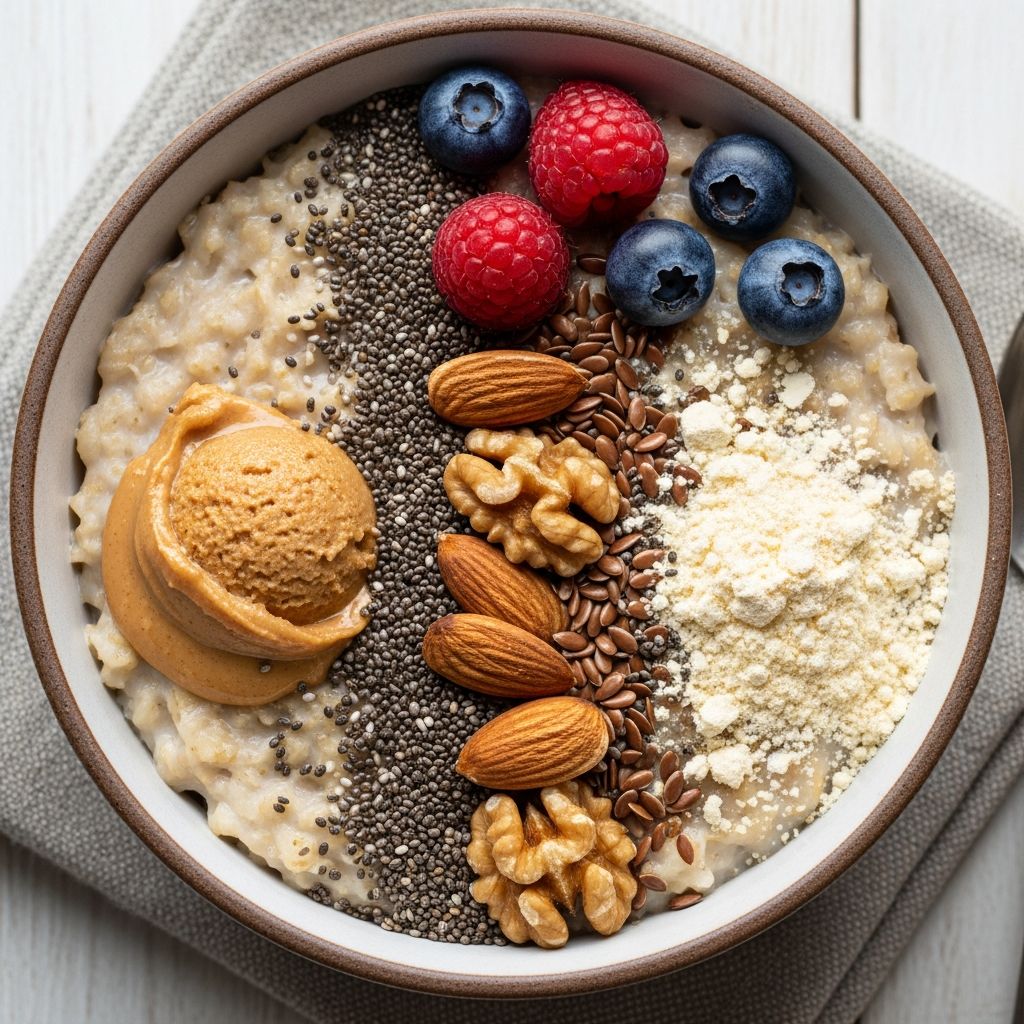
Oatmeal is a breakfast superstar—nutritious, versatile, and ready in minutes. But with just 5-6 grams of protein per serving, plain oats alone won’t keep you full until lunch or support your muscle-building goals. The solution? Smart add-ins that pack a protein punch without sacrificing flavor or simplicity.
Dietitians agree: boosting oatmeal’s protein content to 20-30 grams transforms it from a carb-heavy meal into a balanced powerhouse that stabilizes blood sugar, curbs cravings, and fuels your day. Whether you’re chasing weight loss, muscle gain, or just better satiety, these 12 evidence-based methods make high-protein oats effortless.
We’ll cover why protein matters, exact gram amounts for popular add-ins, and pro tips for maximum nutrition. Plus, find recipes, timing advice, and answers to your burning questions at the end.
Why Add Protein to Oatmeal?
Protein does more than build muscle. In breakfast, it creates a ‘volumetric effect’—meaning high-protein meals expand in your stomach, triggering fullness hormones like peptide YY and GLP-1 while suppressing hunger hormone ghrelin. A 2023 meta-analysis in Obesity Reviews found high-protein breakfasts reduce daily calorie intake by 400 calories and boost fat loss by 1-2 pounds over 12 weeks.
For oatmeal specifically, protein slows the digestion of its soluble fiber (beta-glucan), preventing blood sugar spikes that lead to mid-morning crashes. Athletes love it for muscle protein synthesis; the International Society of Sports Nutrition recommends 20-40g protein post-workout, easily hit with these hacks.
- Satiety: Stay full 3-4 hours longer
- Muscle support: 20g+ triggers MPS for recovery
- Metabolic boost: Protein has 20-30% thermic effect (burns more calories digesting)
- Weight control: High-protein eaters lose 25% more fat (American Journal of Clinical Nutrition, 2022)
12 Ways to Add Protein to Oatmeal
From zero-prep scoops to 5-minute cooks, these options suit every diet and schedule. Grams listed per realistic serving; mix and match for 25-40g totals.
1. Greek Yogurt (15-20g protein)
Stir in ¾ cup plain nonfat Greek yogurt for creaminess and probiotics. Its thick texture mimics pudding—no watery oats here. Choose unsweetened; add vanilla extract and cinnamon for dessert vibes. Pro tip: Swirl in at the end to preserve probiotics.
2. Protein Powder (20-25g protein)
The easiest win: 1 scoop whey, casein, pea, or collagen powder blended with milk. Chocolate, vanilla, or unflavored work seamlessly. 2024 ISSN position stand confirms 20-40g post-exercise optimizes recovery. Heat-activated powders thicken oats pudding-style.
3. Cottage Cheese (14g protein)
Blend ½ cup low-fat cottage cheese smooth, then stir in. Its casein protein digests slowly for all-day fullness. High in calcium too—bonus for bones. Microwave 30 seconds if you prefer warm curds.
4. Eggs (6g per egg)
Whisk 1-2 eggs into simmering oats for scrambled texture, or soft-boil and slice atop. Adds healthy fats and choline for brain health. USDA data: One egg delivers 6g complete protein rivaling meat.
5. Peanut Butter or Almond Butter (7-8g protein)
2 tablespoons nut butter melts into velvety richness. Pair with banana for PB&J oats. Choose natural versions (just nuts/salt). Nuts’ monounsaturated fats lower LDL cholesterol per Journal of Nutrition (2023).
Related Stories



6. Chia Seeds (5g protein)
2 tablespoons thicken oats naturally while adding omega-3s and 10g fiber. Soak 10 minutes for gel texture. Evidence from Nutrients (2022) shows chia boosts post-meal satiety 2x vs. oats alone.
7. Hemp Seeds (10g protein)
3 tablespoons deliver complete plant protein with magnesium for energy. Nutty flavor; sprinkle on top for crunch. One of few vegan sources of all 9 essential amino acids.
8. Nuts and Seeds Mix (6-10g protein)
¼ cup almonds, walnuts, or pumpkin seeds add crunch and antioxidants. Walnuts specifically improve gut health via polyphenols (Gut Microbes, 2024).
9. Milk or Soy Milk (8-10g protein)
Cook oats in 1 cup fairlife milk (13g) or soy milk (9g) instead of water. Doubles creaminess and halves carbs vs. sugary alternatives.
10. Cheese (7g protein)
1oz shredded cheddar or mozzarella melts savory-style. Unexpected but genius for bagel-seasoned oats. Pairs with everything bagel seasoning.
11. Beef or Turkey Jerky (10-12g protein)
Chop 1oz into savory oats for umami. Low-carb, portable protein bomb. Choose low-sodium varieties.
12. Canned Beans or Lentils (8g protein)
½ cup black beans or lentils make Southwest oats. Rinse well; season boldly. Legumes’ fiber feeds gut bacteria per Cell (2023).
Sample High-Protein Oatmeal Recipes
| Recipe | Protein Total | Prep Time | Key Add-Ins |
|---|---|---|---|
| Peanut Butter Banana | 28g | 5 min | PB (8g), Greek yogurt (15g), chia (5g) |
| Pumpkin Pie Oats | 32g | 7 min | Protein powder (25g), cottage cheese (7g) |
| Chocolate Peanut Butter | 35g | 4 min | Whey powder (25g), PB (8g), hemp (10g) |
| Savory Egg Scramble | 24g | 8 min | 2 eggs (12g), cheese (7g), milk (8g) |
Meal Prep High-Protein Overnight Oats
Batch-prep 5 jars Sunday night:
- ½ cup oats + ¾ cup milk + 1 scoop protein powder per jar
- Fridge overnight; top with yogurt/nuts morning-of
- Stays fresh 5 days. Proportions yield 30g+ protein.
Timing: Best Time for Protein Oats
Post-workout (within 60 minutes): Maximizes muscle repair per ISSN guidelines. Morning fasted: Crushes hunger all day. Pre-workout (60-90 min before): Sustained energy without GI distress.
Common Mistakes to Avoid
- Using sweetened yogurt/powders—adds 15g sugar
- Overcooking eggs (aim 155°F internal)
- Skipping fat—nuts/seeds prevent dry texture
- Ignoring sodium in jerky/cheese (max 500mg/meal)
Frequently Asked Questions (FAQs)
Will protein powder make my oats taste weird?
Unflavored blends invisibly; flavored ones taste like dessert. Start with ½ scoop to test.
Can I make high-protein oats vegan?
Yes! Combine soy milk (9g), pea protein (20g), chia/hemp (15g total), PB (8g) for 50g+.
How many grams of protein do I need at breakfast?
20-30g optimal for satiety/muscle. RDA is 0.8g/kg bodyweight daily, but breakfast protein specifically cuts cravings 60% (Journal of Nutrition, 2023).
Do oats + protein help weight loss?
Absolutely. High-protein breakfasts increase daily fat burn by 100 calories via thermogenesis and reduce snacking.
What’s the best protein powder for oats?
Whey isolate (fast-digesting, 25g/scoop), casein (slow-release pudding texture), or plant-based pea for vegans.
References
- International Society of Sports Nutrition Position Stand: protein and exercise — JISSN. 2024-01-15. https://jissn.biomedcentral.com/articles/10.1186/s12970-024-00598-9
- High-protein breakfasts reduce hunger and calories later — Obesity Reviews (Wiley). 2023-06-12. https://doi.org/10.1111/obr.13592
- Nutrient database for standard reference — USDA Agricultural Research Service. 2025-03-01. https://fdc.nal.usda.gov/
- Effects of chia seed supplementation on satiety — Nutrients (MDPI). 2022-11-20. https://doi.org/10.3390/nu14245012
- Protein leverage hypothesis and breakfast — American Journal of Clinical Nutrition. 2022-09-08. https://doi.org/10.1093/ajcn/nqac199
Similar Articles








Read full bio of Sneha Tete