How to Check Your Heart Rate: A Complete Guide
Learn manual and digital methods to accurately monitor your heart rate for better health.
Understanding Your Heart Rate: Why It Matters
Your heart rate is one of the most fundamental vital signs that reflects your cardiovascular health and overall fitness level. The number of heartbeats per minute (bpm) can reveal important information about your physical condition, stress levels, and potential health concerns. Regular heart rate monitoring has become increasingly important as people seek to maintain optimal health and catch potential cardiovascular issues early.
Your resting heart rate—the number of heartbeats per minute while you’re at rest—should typically range from 60 to 100 beats per minute. However, this varies among individuals, and what’s normal for one person may differ from another. Understanding your personal baseline is crucial for recognizing when something might be wrong. An unusually high or low resting heart rate or an irregular heartbeat can be a sign that something requires medical attention.
Why You Should Check Your Heart Rate Regularly
Medical professionals recommend that all adults measure their resting heart rate at least once a week to establish a baseline and track trends over time. For those older than 60, daily assessment is advisable, as age-related changes in cardiovascular function become more pronounced. Additionally, anyone interested in their overall fitness level can benefit from measuring heart rate during or after physical activity to gauge cardiovascular response and recovery.
Regular heart rate monitoring serves multiple purposes: it helps you understand what’s normal for your body, allows you to detect irregularities, and provides valuable data for discussions with your healthcare provider about your cardiovascular health.
How to Measure Your Heart Rate Manually
The traditional method of checking your heart rate involves finding your pulse and counting beats over a specific time period. This method requires no equipment and can be performed anywhere, making it an accessible option for everyone.
Finding Your Pulse
There are two primary locations where you can easily find your pulse:
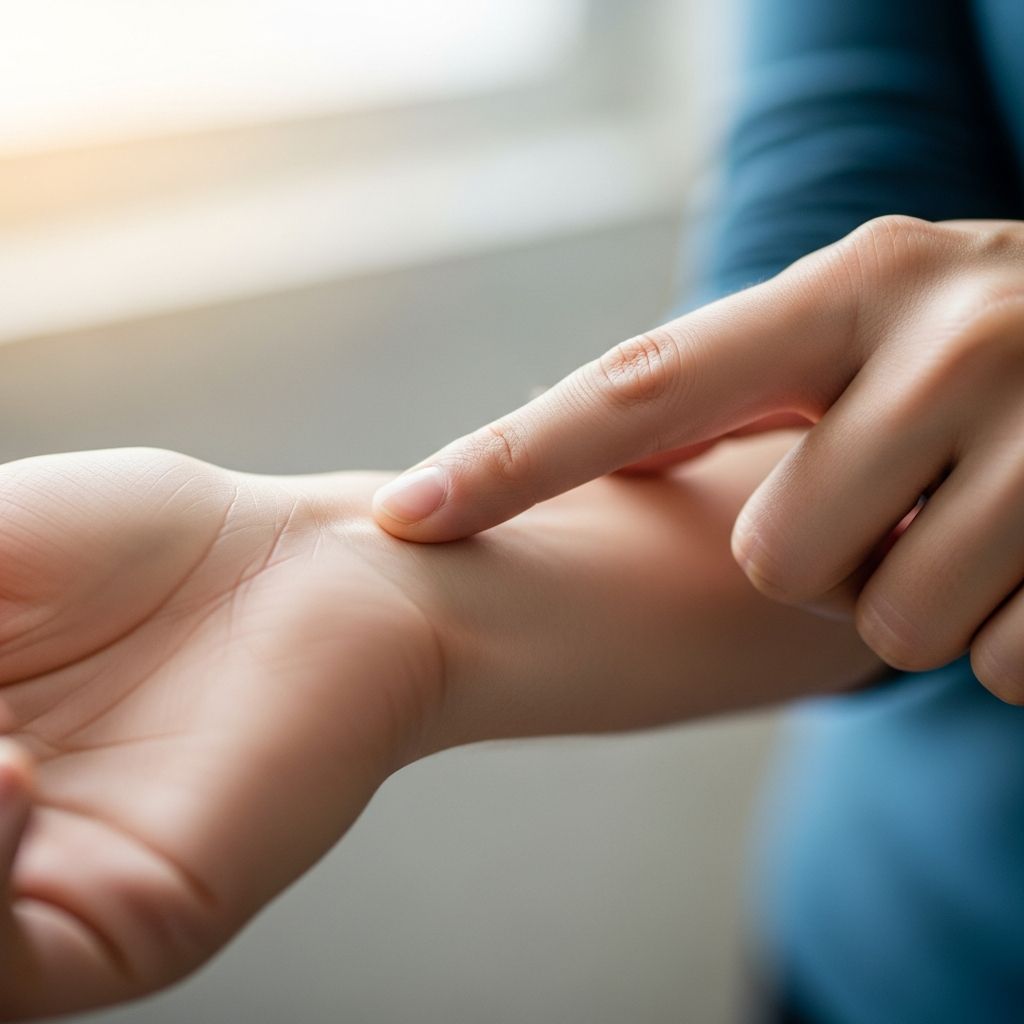
Wrist pulse (radial artery): Place two fingers—typically your index and middle finger—on the inside of your wrist, just below the thumb. Press gently until you feel the pulse. This is often the easiest location for most people.
Neck pulse (carotid artery): Place two fingers on the side of your neck, between the collarbone and jawline. Press gently to locate the pulse. Be careful not to apply too much pressure on both sides simultaneously.
Counting Your Heartbeats
Once you’ve located your pulse, you have several options for timing your count:
Full minute count: Count the number of beats for a complete 60 seconds. This provides the most accurate measurement since you get the direct bpm reading without multiplication.
15-second count: Count the beats for 15 seconds and multiply by 4. For example, if you count 20 beats in 15 seconds, multiply 20 by 4 for a total of 80 beats per minute.
Related Stories



6-second count: Count for just 6 seconds and multiply by 10. According to cardiologists, this might be the easiest and quickest way to get an accurate calculation equal to 60 seconds. This method is particularly useful when you’re pressed for time or find it difficult to maintain focus for longer periods.
Medical experts note that sometimes people lose track, cannot focus for a whole minute, or count erroneously. That’s why shorter counting intervals with multiplication are often recommended as practical alternatives.
Using Devices to Check Your Heart Rate
Modern technology has made heart rate monitoring more convenient and accessible than ever before. Most people now have devices that automatically measure heart rate, such as smartwatches, fitness bands, or smartphone applications that use your phone’s camera to sense the pulse in your finger.
Advantages of Heart Rate Monitoring Devices
Digital devices offer several significant advantages:
Automatic timing: Devices handle the timing automatically, eliminating the risk of human error in counting or timing.
Continuous tracking: Wearable devices track heart rate over extended periods, showing changes and trends that help you understand your cardiovascular patterns throughout the day.
Convenience: It’s much easier to use a device, and the technology is getting more accurate over time. You can check your heart rate without thinking about proper technique or timing.
Data logging: Many devices store historical data, allowing you to review patterns, compare measurements over weeks or months, and identify significant changes.
Device Accuracy Considerations
While heart rate monitoring devices are increasingly reliable, they are not perfect. Devices provide good estimates, but variations can occur due to factors like movement quality, skin tone, and device fit. If you’re unsure whether your device is accurate, cardiologists suggest taking your heart rate by hand and comparing the numbers to verify consistency.
Understanding Normal Heart Rate Ranges
Heart rate varies based on numerous factors, and understanding different ranges helps you interpret your measurements:
| Heart Rate Category | Typical Range (bpm) | Meaning |
|---|---|---|
| Resting Heart Rate | 60-100 | Normal range while at complete rest |
| Athletic Resting | 40-60 | Common in trained athletes with excellent cardiovascular fitness |
| Moderate Activity | 100-130 | During light to moderate exercise |
| High Intensity | 140-180+ | During vigorous exercise or maximum effort |
Factors That Influence Your Heart Rate
Your heart rate fluctuates throughout the day and in different situations. Several factors can cause variations from your baseline:
Physical activity: Exercise increases heart rate as your body demands more oxygen. The intensity of activity directly correlates with how much your heart rate rises.
Emotional stress: Anxiety, excitement, or stress triggers your sympathetic nervous system, causing your heart to beat faster.
Caffeine and stimulants: Coffee, energy drinks, and other caffeinated beverages can elevate your resting heart rate.
Temperature: Heat causes your heart to work harder to cool your body, increasing your heart rate. Cold temperatures have the opposite effect.
Body position: Your heart rate may be slightly higher when standing compared to sitting or lying down.
Medications: Certain medications can affect heart rate as a side effect.
Health conditions: Illness, fever, or underlying cardiovascular conditions can significantly alter your heart rate.
Age: Maximum heart rate generally decreases with age, and resting rates may vary across different age groups.
When to Be Concerned About Your Heart Rate
While heart rate naturally varies, certain patterns warrant medical attention. You should talk to your primary care provider if you notice:
Persistently high resting heart rate: A consistently elevated resting rate above 100 bpm may indicate underlying health issues such as thyroid problems, anemia, or heart disease.
Abnormally low resting heart rate: While athletes may have lower rates, a resting heart rate below 60 bpm in non-athletic individuals could signal heart problems or medication effects.
Irregular heartbeat: Skipped beats, fluttering sensations, or an erratic rhythm requires medical evaluation.
Sudden changes: A significant change from your normal baseline warrants investigation.
Heart rate that doesn’t recover: If your heart rate remains elevated long after exercise stops, it may indicate cardiovascular concerns.
Symptoms accompanying changes: Chest pain, shortness of breath, dizziness, or fainting along with heart rate changes requires immediate medical attention.
Heart Rate and Overall Health Metrics
Recent research has highlighted the importance of combining heart rate data with other health metrics for a more comprehensive assessment of cardiovascular fitness. The Daily Heart Rate to Physical activity Step Score (DHRPS) combines average daily heart rate with average daily step count to provide a better health indicator than steps alone.
To calculate your DHRPS, divide your heart rate by your step count. For instance, if your heart rate is 80 bpm and you take 4,000 steps, divide 80 by 4,000 to get 0.0200.
Research has categorized DHRPS results into three groups: A score of 0.0081 or lower indicates the best cardiovascular fitness with low disease risk, a score between 0.0081 and 0.0147 represents medium cardiovascular fitness, and a score of 0.0147 or higher suggests higher disease risk and indicates a need for improved cardiovascular health through increased activity and fitness.
Tips for Accurate Heart Rate Measurement
Be calm and rested: Measure your resting heart rate when you’re truly at rest—ideally first thing in the morning before getting out of bed, after sitting quietly for at least five minutes, or before any physical activity.
Use consistent timing: Measure at the same time each day to establish reliable baseline comparisons.
Keep records: Write down your measurements to track patterns and share data with your healthcare provider.
Avoid stimulants before measurement: Skip coffee or other caffeinated beverages for at least an hour before measuring your resting heart rate.
Compare devices occasionally: If using a device, periodically verify accuracy by counting your pulse manually.
Consider multiple readings: Take several measurements throughout the day and over multiple days to establish a reliable average.
Frequently Asked Questions
Q: What is a normal resting heart rate?
A: A normal resting heart rate for most adults ranges from 60 to 100 beats per minute. However, individual variation is normal, and athletes may have lower rates between 40-60 bpm. What’s important is understanding your personal baseline and noticing significant changes.
Q: How often should I check my heart rate?
A: Medical professionals recommend that all adults measure their resting heart rate at least once weekly. Individuals over 60 years old should check it more frequently, ideally daily, as cardiovascular changes become more significant with age.
Q: Can I measure heart rate from my wrist without a device?
A: Yes, the wrist is an excellent location for manual pulse measurement. Place your index and middle finger on the inside of your wrist, just below the thumb, apply gentle pressure until you feel the pulse, and count the beats using your preferred timing method.
Q: What’s the quickest way to calculate heart rate?
A: Counting for 6 seconds and multiplying by 10 is often the fastest method. This approach is easy, quick, and provides accurate results equivalent to a full 60-second count.
Q: Are fitness trackers accurate for measuring heart rate?
A: Modern fitness trackers and smartwatches are increasingly accurate and provide good estimates. However, no device is perfect. If you’re unsure about accuracy, compare your device’s reading with a manual pulse count taken simultaneously.
Q: Should I measure my heart rate during or after exercise?
A: You can measure heart rate both during and after exercise. Heart rate during exercise shows your cardiovascular response to activity, while measuring immediately after exercise and during recovery can indicate your fitness level and cardiovascular efficiency.
Q: What does an irregular heartbeat feel like?
A: An irregular heartbeat may feel like skipped beats, fluttering, racing, or pounding sensations in your chest. If you experience these symptoms, contact your healthcare provider for evaluation.
References
- Use of Heart Rate Monitors for the Harvard Step Test — Clinical Case Reports International. 2023. https://www.clinicalcasereportsint.com/open-access/use-of-heart-rate-monitors-for-the-harvard-step-test-9667.pdf
- How to Check Your Heart Rate (Manually and Using a Device) — Mass General Brigham. 2024. https://www.massgeneralbrigham.org/en/about/newsroom/articles/how-to-check-your-heart-rate
- Harvard Step Test — Physiopedia. 2024. https://www.physio-pedia.com/Harvard_Step_Test
- Harvard Study Warns: Your Heart Rate, Not Steps, Could Be the Hidden Danger to Your Health — Times of India. 2024. https://timesofindia.indiatimes.com/life-style/health-fitness/health-news/harvard-study-warns-your-heart-rate-not-steps-could-be-the-hidden-danger-to-your-health/articleshow/124821755.cms
Similar Articles








Read full bio of medha deb