How to Choose the Best Sunscreen for Your Skin
Expert guide to selecting the right sunscreen: SPF, broad-spectrum protection, skin types, and application tips for optimal UV defense.
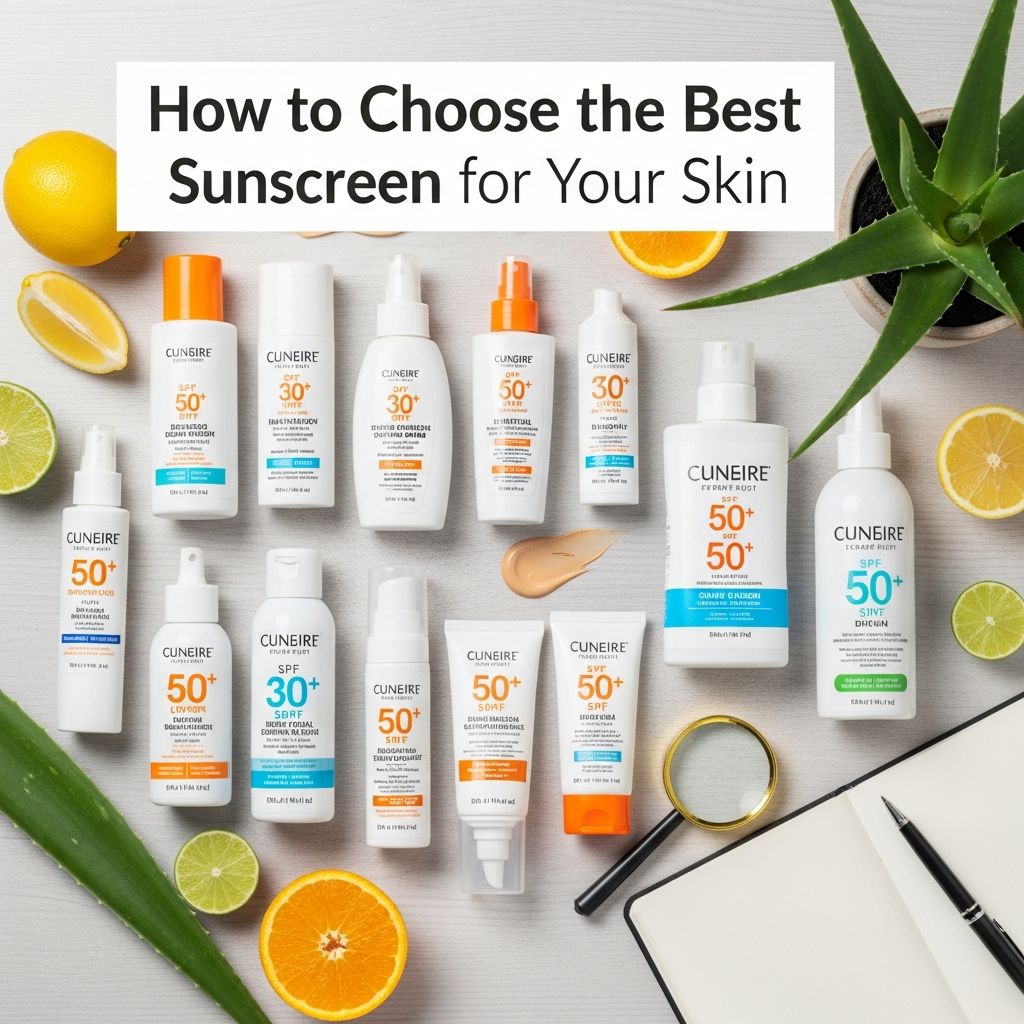
Sunscreen is your primary defense against ultraviolet (UV) radiation, which causes most skin cancers and premature aging. Selecting the right product involves understanding SPF ratings, UV protection types, formulations suited to your skin type, and proper application methods. This guide breaks down key factors to help you make informed choices for everyday and outdoor use.
Why Sunscreen Matters
UV exposure is the leading preventable cause of skin cancer, including melanoma. The Skin Cancer Foundation emphasizes daily use of sunscreen with SPF 30 or higher and broad-spectrum protection to block both UVA (aging rays) and UVB (burning rays). Even on cloudy days, up to 80% of UV rays penetrate the atmosphere, making consistent application essential.
Beyond cancer prevention, sunscreen shields against sunburn, hyperpigmentation, wrinkles, and loss of skin elasticity. Dermatologists recommend integrating it into your morning routine year-round, regardless of weather or location.
Understanding Key Sunscreen Labels
Labels provide critical information, but terms can be confusing. Here’s what to look for:
- SPF (Sun Protection Factor): Measures UVB protection. SPF 30 blocks ~97% of UVB rays; SPF 50 blocks ~98%. Higher isn’t exponentially better, but choose at least SPF 30 for daily use.
- Broad-Spectrum: Indicates protection against both UVA and UVB. FDA requires this labeling for products meeting UVA standards.
- Water-Resistant: Specifies duration (40 or 80 minutes) before reapplication is needed during swimming or sweating.
- Non-Nano vs. Nano Minerals: Refers to particle size in mineral sunscreens; non-nano particles sit on skin surface.
Avoid products without ‘broad-spectrum’ designation, as they may only protect against UVB.
Broad-Spectrum Protection: UVA and UVB Explained
UVB rays cause sunburn and contribute to skin cancer; UVA rays penetrate deeper, causing aging and also cancer risk. Broad-spectrum sunscreens use filters like avobenzone or zinc oxide for UVA coverage. The FDA’s critical wavelength test ensures adequate UVA protection—look for products passing this.
Consumer Reports testing shows top sunscreens excel in both UVA and UVB blocking, with chemical formulas often outperforming minerals in comprehensive protection.
Mineral vs. Chemical Sunscreens
| Aspect | Mineral (Physical) | Chemical |
|---|---|---|
| Active Ingredients | Zinc oxide, titanium dioxide | Avobenzone, octinoxate, oxybenzone |
| How It Works | Reflects/scatters UV rays | Absorbs UV and converts to heat |
| Best For | Sensitive skin, reefs | Lightweight feel, oily skin |
| Drawbacks | White cast, thicker texture | Potential irritation, absorption concerns |
| Protection Level | Excellent broad-spectrum if formulated well | Often superior in lab tests |
Mineral sunscreens are gentler for reactive skin, while chemical ones feel invisible. Recent Consumer Reports data indicates chemical sunscreens top ratings for UVA/UVB efficacy, though high-quality minerals score well (18-55/100).
Choosing Sunscreen for Your Skin Type
Dry Skin
Opt for creams or lotions with moisturizers like hyaluronic acid, glycerin, or ceramides. Avoid gels that can dehydrate. Examples include hydrating formulas with SPF 30+ that double as moisturizers.
Oily/Acne-Prone Skin
Select gels, fluids, or mattifying formulas labeled non-comedogenic. Lightweight chemical sunscreens or tinted minerals prevent breakouts. Look for niacinamide or oil-absorbing ingredients.
Sensitive Skin
Choose fragrance-free, hypoallergenic mineral sunscreens. Avoid chemical actives like oxybenzone that may irritate. Tinted versions blend seamlessly without white cast.
Related Stories



Combination Skin
Lotions or serums balance hydration and control. Broad-spectrum SPF 30-50 with antioxidants like vitamin C enhance protection.
Dark Skin Tones
Tinted or sheer formulas prevent ashy residue. High SPF prevents hyperpigmentation from UV-triggered melanin production.
SPF Levels: What You Need to Know
No SPF is 100% protective—rely on shade, clothing, and hats too. Daily: SPF 30. Beach/Outdoor: SPF 50+. SPF doesn’t extend time in sun linearly; SPF 30 allows ~30x longer exposure before burning.
- SPF 15: 93% UVB block
- SPF 30: 97%
- SPF 50: 98%
- SPF 100: 99%
Tested products like Neutrogena Ultra Sheer SPF 70 perform reliably.
Water Resistance and Reapplication
Water-resistant claims last 40-80 minutes. Reapply every 2 hours, or immediately after swimming/toweling. Sprays/mists need thorough rubbing for even coverage.
Formulations: Lotion, Spray, Stick, Powder
- Lotions/Creams: Best coverage for body/face.
- Sprays: Convenient but ensure 1 oz application; good for kids/sports.
- Sticks: Precise for face, lips, ears.
- Powders: Makeup-friendly reapplication.
Consumer preference leans toward sprays for ease, but lotions offer superior protection if applied correctly.
Sunscreen for Face vs. Body
Face: Lightweight, non-greasy, often with antioxidants/niacinamide. Body: Affordable lotions with higher SPF for extended exposure. Dual-use products like Supergoop! Unseen work for both.
Application Tips for Maximum Protection
Apply 1 oz (shot glass) for body, 1/4 tsp for face—most use half enough. Wait 15 minutes before sun exposure. Layer under makeup. Reapply liberally.
Common Mistakes to Avoid
- Skipping daily use.
- Using less than recommended amount.
- Not reapplying.
- Ignoring expiration dates (typically 3 years).
- Relying solely on SPF clothing.
Sunscreen for Children and Babies
Under 6 months: Shade/clothing preferred. Over 6 months: SPF 30+ mineral-based, water-resistant. Apply 30 minutes prior.
Frequently Asked Questions (FAQs)
What’s the difference between UVA and UVB protection?
UVB causes burns; UVA causes aging/cancer. Broad-spectrum covers both.
Do I need sunscreen on cloudy days?
Yes, UV penetrates clouds.
Is higher SPF always better?
Marginal gains above SPF 50; application matters more.
Are mineral sunscreens safer?
Gentler for sensitive skin, but chemical ones can be effective.
How much sunscreen per application?
1 oz body, dime-sized face.
Can I use body sunscreen on face?
Better to use face-specific to avoid irritation/pilling.
References
- 10 Best Face & Body Sunscreens for 2026 — The Betty Edit. 2026. https://thebettyedit.com/10-best-face-body-sunscreens-for-2026/
- Your 2026 Essential Guide to Sunscreen — RMS Beauty. 2026. https://www.rmsbeauty.com/blogs/news/your-essential-guide-to-sunscreen
- Best and Worst Sunscreens of 2026 — Consumer Reports. 2026. https://www.consumerreports.org/health/sunscreens/best-sunscreens-of-the-year-a7763432372/
- 2026 Sun Care Guide — Dermstore. 2026. https://www.dermstore.com/blog/how-to/sun-care/
- Sunscreen Drug Products for Over-the-Counter Human Use — U.S. Food and Drug Administration (FDA). 2021-06-10. https://www.fda.gov/regulatory-information/search-fda-guidance-documents/sunscreen-drug-products-over-counter-human-use
Similar Articles








Read full bio of Sneha Tete