How to Clean Retainers: Daily Care & Deep Cleaning
Master retainer maintenance with safe cleaning methods, products, and expert tips.
How to Clean Retainers: A Complete Guide to Daily and Deep Cleaning
Retainers are essential orthodontic devices that help maintain your smile after braces are removed. However, many people underestimate the importance of proper retainer care. Like any dental appliance that spends time in your mouth, retainers can accumulate bacteria, plaque, and debris that compromise both the appliance and your oral health. Understanding how to clean your retainer correctly ensures it lasts longer, remains hygienic, and continues to protect your investment in straightened teeth.
A clean retainer is fundamental to maintaining good oral hygiene. Retainers can harbor dangerous bacteria if not properly maintained, potentially leading to infections or unpleasant odors. By establishing a consistent cleaning routine and using the right products, you can keep your retainer fresh, functional, and effective for years to come.
Why Cleaning Your Retainer Matters
Your retainer sits directly against your teeth and gums for extended periods, making it a prime location for bacterial growth. When food particles and saliva accumulate on the surface, they create an ideal environment for harmful microorganisms to thrive. This bacterial buildup can lead to bad breath, tooth decay, and gum disease if left unchecked.
Additionally, unclean retainers may develop visible discoloration, unpleasant odors, and structural damage over time. Regular cleaning not only keeps your retainer looking good and smelling fresh but also protects your oral health and extends the device’s lifespan significantly. This is especially important since quality retainers represent a significant financial investment.
Daily Retainer Cleaning Routine
Establishing a daily cleaning habit is the foundation of proper retainer care. Your goal is to remove debris and prevent bacterial growth before problems develop.
Step-by-Step Daily Cleaning Process
- Remove your retainer promptly: Clean your retainer as soon as you remove it from your mouth while it’s still wet. This makes it much easier to brush off debris before it hardens and becomes difficult to remove.
- Rinse with lukewarm water: Rinse your retainer under lukewarm water each time you remove it. This initial rinse removes loose food particles and surface debris.
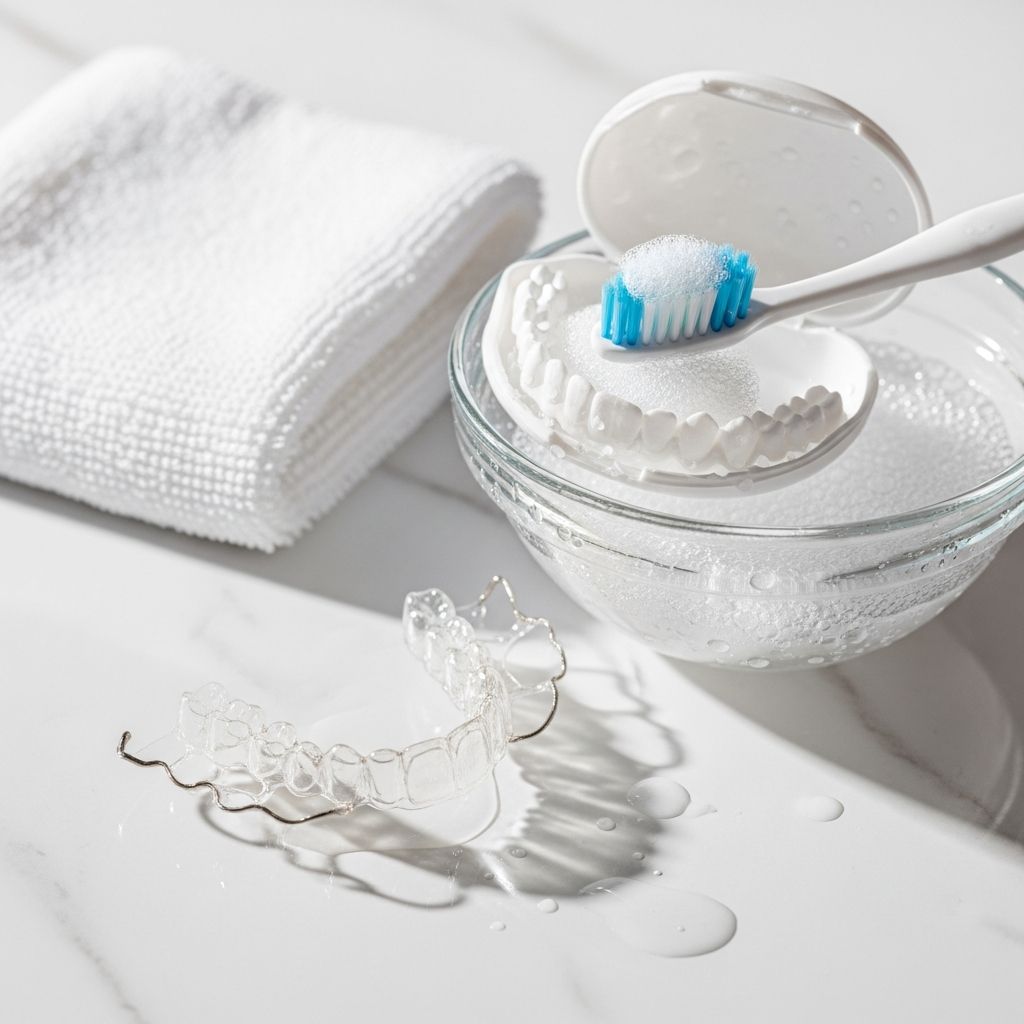
- Brush gently: Use a soft-bristled toothbrush to gently brush your retainer. Avoid vigorous scrubbing, which can damage the material. Brush both the inside and outside surfaces thoroughly.
- Use appropriate soap: Apply mild dish soap or special retainer soap to the toothbrush. Mild, unscented hand soap also works well for daily cleaning.
- Rinse thoroughly: Rinse the retainer completely under lukewarm water to remove all soap residue.
- Air dry completely: Place your retainer on a clean cloth and allow it to air dry completely before storing it. This prevents bacterial growth that thrives in moist environments.
- Store properly: Keep your retainer in a clean, dry case when not in use. Never wrap it in tissues or napkins, as this can cause damage or loss.
Tips for Maintaining Daily Cleaning Habits
- Clean your retainer every single day without exception
- Brush your teeth before reinserting your retainer to minimize transferring bacteria
- Consider brushing your retainer after each meal, especially after eating sticky or sugary foods
- Keep a small, portable cleaning kit with you when traveling
- Set a daily reminder on your phone until cleaning becomes automatic
Deep Cleaning Methods for Weekly Maintenance
While daily brushing removes surface debris, weekly deep cleaning eliminates stubborn buildup and disinfects your retainer more thoroughly. Here are the most effective methods:
White Vinegar Soak
White vinegar is one of the most popular and effective home remedies for retainer cleaning. The acidity in vinegar helps dissolve mineral deposits, removes odors, and kills bacteria naturally.
Related Stories



- Mix equal parts white vinegar and cool water in a clean container
- Submerge your retainer in the solution
- Soak for 15–20 minutes, or longer for heavier buildup
- Gently brush with a soft toothbrush to remove loosened debris
- Rinse thoroughly with distilled water before use
Important note: If your retainer contains metal components (such as Hawley retainers), limit vinegar soaks to shorter periods, as prolonged exposure to vinegar can corrode metal parts. For these retainers, consider alternative deep cleaning methods.
Baking Soda Solution
Baking soda is exceptionally safe and effective at removing bacteria and debris buildup. It’s gentler than commercial tablets while being highly effective.
- Mix equal parts baking soda and room-temperature water to form a paste, or dissolve 1 tablespoon of baking soda in a cup of water
- For a paste consistency: Apply to your retainer and gently scrub with a soft toothbrush
- For a soak: Submerge your retainer in the solution for approximately 15 minutes
- Gently brush to remove any remaining particles
- Rinse thoroughly with water
- Air dry completely
Castile Soap Method
Castile soap is a non-abrasive, plant-based cleanser that provides an effective clean without harsh chemicals. Many users appreciate the fresh, clean scent it imparts.
- Add a small amount of castile soap to water
- Soak your retainer in the solution or apply directly with a soft toothbrush
- Gently brush your retainer to clean all surfaces
- Rinse thoroughly with water
- Allow to air dry completely before storing
Effervescent Cleaning Tablets
Retainer-specific cleaning tablets (such as Retainer Brite) are formulated specifically for dental appliances and can be convenient for weekly deep cleaning.
- Fill a container with lukewarm water
- Drop in a cleaning tablet according to package instructions
- Submerge your retainer in the solution
- Let soak for the recommended time (typically 15–30 minutes)
- Remove and gently brush with a soft toothbrush
- Rinse thoroughly before use
Safe and Unsafe Cleaning Products
Not all cleaning products are appropriate for retainers. Using the wrong products can damage your appliance, harm your oral health, or reduce cleaning effectiveness.
| Safe Products | Unsafe Products |
|---|---|
| Mild dish soap | Bleach or harsh detergents |
| Retainer-cleaning tablets or solutions | Alcohol or alcohol-based mouthwash |
| Baking soda | Toothpaste (contains abrasives) |
| White vinegar | Hot water (can warp plastic retainers) |
| Mild, unscented hand soap | Scented or colored soaps |
| Castile soap | Strong chemicals |
| Diluted hydrogen peroxide | Abrasive scrubbing pads |
Products to Avoid and Why
- Toothpaste: Contains abrasive particles that can scratch and gouge retainer material, creating spaces where bacteria can hide and multiply
- Hot water: Can warp or damage plastic and acrylic retainers. Always use lukewarm water instead
- Bleach: Far too harsh and can damage both the retainer material and your mouth
- Alcohol-based mouthwash: Can degrade retainer materials and is unnecessarily harsh
- Scented soaps: May leave residue and affect taste; stick to unscented options
Caring for Your Retainer Case
Your retainer case is equally important to maintain, as it can harbor bacteria and mold that transfer back to your clean retainer.
Retainer Case Cleaning Steps
- Daily: Rinse your case with warm water each time you remove your retainer
- Two to three times per week: Wash thoroughly with hand soap and water
- Weekly disinfection: Soak the case in white vinegar or use a retainer cleaning tablet solution for 15–20 minutes
- Air dry: Always allow your case to dry completely before storing your retainer inside
A clean, dry case prevents bacterial and mold growth that could contaminate your freshly cleaned retainer. Replace your case every 1–2 years or sooner if it becomes damaged or discolored.
Different Retainer Types and Their Care
Various retainer types have slightly different care requirements. Understanding your specific retainer type helps you clean it most effectively.
Hawley Retainers
Hawley retainers feature a wire frame with an acrylic base. They’re durable but require careful handling due to their metal components.
- Brush gently to avoid bending the wire
- Avoid prolonged vinegar soaks to protect metal parts
- Use mild soap and soft bristles for daily cleaning
Clear Plastic Retainers (Essix/Vivera)
These transparent retainers are popular due to their discreet appearance but require gentle care to prevent clouding and warping.
- Avoid hot water, which can warp the plastic
- Use lukewarm water only
- Gentle brushing prevents scratching
- Baking soda or vinegar soaks work well for these retainers
Bonded Retainers
These are permanently cemented to your teeth and cannot be removed for cleaning. Your dentist must clean them during regular checkups.
- Maintain excellent oral hygiene through brushing and flossing around the retainer
- Use a water flosser for difficult-to-reach areas
- Visit your dentist regularly for professional cleaning
How Often Should You Replace Your Retainer?
Even with excellent care, retainers eventually need replacement. Clear plastic retainers typically last 1–2 years, while Hawley retainers can last 5–10 years with proper maintenance. Bonded retainers may last several years but may break or loosen over time. Regular dental visits help monitor your retainer’s condition and determine when replacement is necessary.
Common Retainer Problems and Solutions
Understanding common issues helps you address problems before they worsen:
Bad Odor
Solution: Soak in white vinegar for 15–20 minutes weekly to eliminate odor-causing bacteria. Ensure your retainer and case dry completely before storing.
Visible Buildup or Discoloration
Solution: Use baking soda paste or an effervescent tablet soak weekly. For stubborn stains, gentle brushing with baking soda may help.
Cloudiness (Clear Retainers)
Solution: Mineral deposits cause cloudiness. Soak in a white vinegar solution or use a commercial retainer cleaner designed to remove mineral buildup.
Damaged or Cracked Retainer
Solution: Contact your orthodontist immediately. Wearing a damaged retainer can harm your teeth, and your orthodontist can provide a replacement.
Frequently Asked Questions
Q: Can I clean my retainer with regular toothpaste?
A: No, toothpaste contains abrasive particles that scratch and damage retainer materials, creating crevices where bacteria can hide. Use mild dish soap or retainer-specific products instead.
Q: Is it safe to use vinegar on metal retainers?
A: White vinegar can corrode metal components over time. If you have a Hawley retainer, limit vinegar soaks to 10–15 minutes or choose alternative cleaning methods like baking soda or mild soap.
Q: How long should I soak my retainer?
A: Most effective soaking times range from 15–30 minutes for deep cleaning solutions. Shorter soaks (5–10 minutes) can be used for quick daily maintenance. Follow product-specific instructions for commercial cleaning tablets.
Q: Can I use boiling water to clean my retainer?
A: Never use boiling or hot water, as high temperatures can warp and damage plastic and acrylic retainers. Always use lukewarm water for cleaning and rinsing.
Q: What should I do if my retainer smells bad?
A: Bad smells indicate bacterial growth. Perform a weekly white vinegar soak for 15–20 minutes, ensure your retainer dries completely before storing, and consider upgrading to a new retainer case, which may harbor odor-causing bacteria.
Q: Is an ultrasonic cleaner safe for retainers?
A: Yes, ultrasonic cleaners specifically designed for dental appliances can be effective for deep cleaning. Always follow manufacturer instructions and combine with gentle brushing for best results.
Q: How do I keep my retainer moist when traveling?
A: Keep your retainer in a small container with distilled water when not wearing it. Pack your retainer case with a travel-sized cleaning solution. Avoid leaving retainers exposed to air or wrapped in tissues.
Q: Can I use hand sanitizer on my retainer?
A: Hand sanitizer is not recommended for retainers. Use mild soap and water or retainer-specific cleaning products instead, as hand sanitizer may contain harsh chemicals that damage the appliance.
References
- Image Orthodontics – How to Clean Retainers — Image Orthodontics. https://imageorthodontics.com/how-to-clean-retainers/
- Central Coast Orthodontics – The Best 4 Ways to Clean Your Retainer — Central Coast Orthodontics. https://centralcoastorthodontics.com.au/the-best-4-ways-to-clean-your-retainer/
- ProSmiles Orthodontics – 5 Easy Tips To Keep Your Retainer Clean — ProSmiles Orthodontics. https://prosmilesortho.com/keep-retainers-clean/
- Healthline – How to Clean Retainers: Tips and Tricks — Healthline. 2019-03-08. https://www.healthline.com/health/dental-and-oral-health/how-to-clean-retainers
- Great Lakes Family Dental Group – How to Clean a Retainer at Home — Great Lakes Family Dental Group. https://www.greatlakesfamilydentalgroup.com/resources/articles/how-to-clean-retainers
- American Association of Orthodontists – Retainer Care 101 — American Association of Orthodontists. https://aaoinfo.org/whats-trending/taking-care-of-retainers/
- Damon Orthodontics – How To Clean Your Retainer — Damon Orthodontics. https://damon-orthodontics.com/how-to-clean-your-retainer/
Similar Articles








Read full bio of Sneha Tete