How to Dehydrate Fruits and Vegetables for a Healthy Snack
Learn simple steps to dehydrate fruits and veggies at home for nutritious, portable snacks that preserve flavor and nutrients.
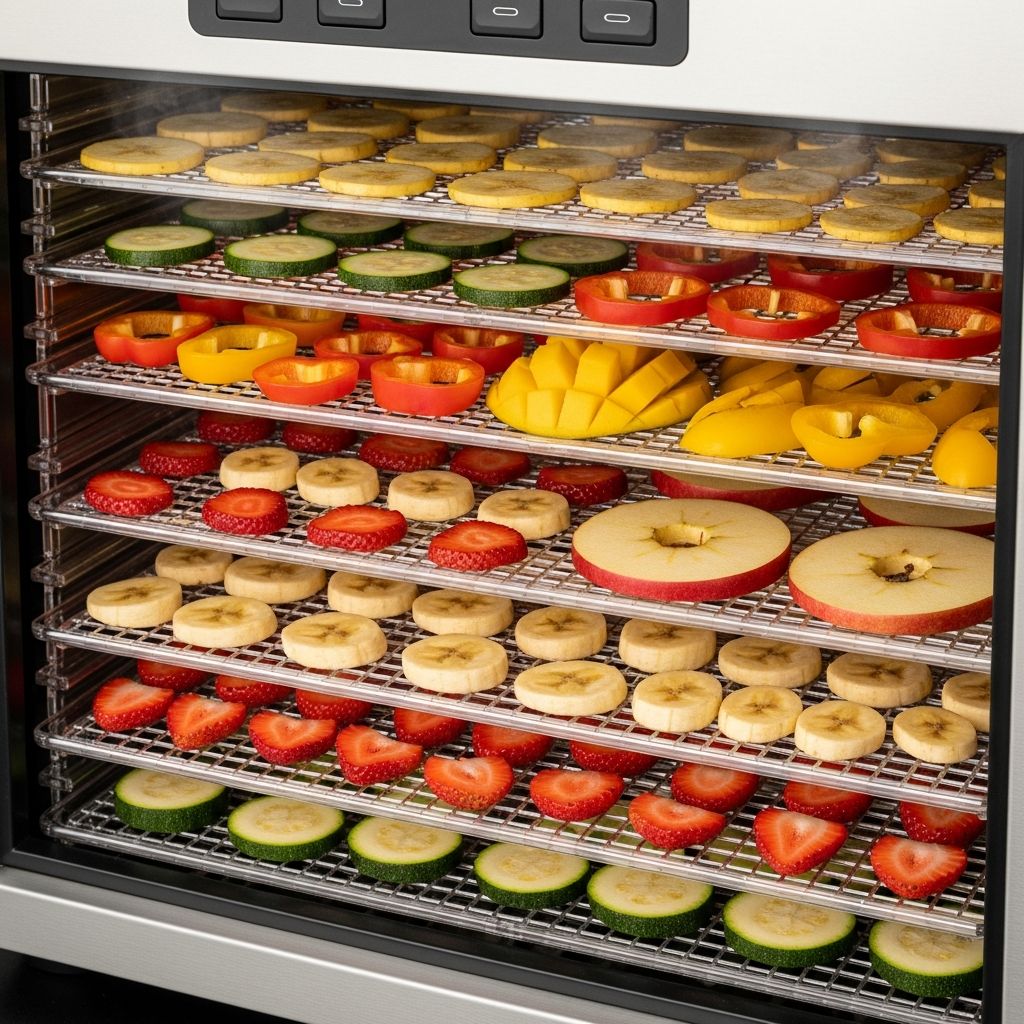
Dehydrating fruits and vegetables is an easy, effective way to create nutrient-packed snacks that last for months without refrigeration. By removing moisture, you concentrate flavors and preserve vitamins, making these treats ideal for on-the-go eating, hiking, camping, or emergency food storage. This method reduces food waste by transforming ripe or excess produce into shelf-stable goodies.
Why Dehydrate Fruits and Vegetables?
Dehydrated produce offers concentrated nutrition in a lightweight, portable form. Fruits retain natural sugars for sweet snacks, while veggies provide savory crunch without added oils or salts. Unlike canning or freezing, dehydration requires no preservatives and keeps most antioxidants intact, such as flavonoids in fruit skins. It’s cost-effective, using seasonal produce at peak ripeness for superior taste and value. Health benefits include steady energy from fiber and low-calorie options that curb cravings for processed junk food.
Common uses span snacks like apple chips or zucchini crisps, to ingredients in trail mix, salads, or rehydrated meals. Properly dried items store for 6-12 months in cool, dark places, far outlasting fresh counterparts.
Equipment You’ll Need
A food dehydrator is the gold standard for even drying, circulating hot air uniformly across trays. Look for models with adjustable thermostats (95°F-165°F) and timers. Entry-level units start affordably, while stackable trays handle bulk batches. Alternatives include:
- Oven method: Use lowest setting (140°F-170°F) with door cracked for airflow. Place racks on parchment-lined sheets; rotate pans midway.
- Air drying: Suitable for herbs or low-humidity climates, but slower and riskier for produce.
- Accessories: Mandoline slicer for uniform cuts, parchment paper or mesh liners, cooling racks, airtight jars for storage.
Invest in quality: Top dehydrators ensure no hot spots, reducing drying time by hours.
Preparation Steps
Success starts with prime produce. Select firm, ripe fruits and veggies in season—avoid bruised or overripe items, as flaws intensify during drying.
- Wash thoroughly: Rinse under cool water; scrub organics. Pat dry to prevent steaming.
- Peel or not? Optional—skins toughen but retain nutrients like flavonoids. Peel starchy veggies if texture bothers you.
- Slice uniformly: Aim for 1/8 to 1/4-inch thickness using a mandoline or sharp knife. Thinner = faster drying; consistent size prevents uneven results. Cut small fruits (berries, grapes) in half to crack skins.
- Pretreat to prevent browning: Dip oxidation-prone fruits (apples, bananas, pears) in lemon juice-water mix (1:1 ratio, 10 minutes) or ascorbic acid solution (2.5 tbsp per quart water).
- Blanch veggies: For starchy types like sweet potatoes or snap peas, boil 1-2 minutes then ice bath to set color and kill enzymes.
Prep tip: Work in small batches to load dehydrator quickly, minimizing air exposure.
Dehydrating Fruits
Fruits dry at
135°F (57°C)
for most varieties, yielding leathery or crisp textures. Times vary by moisture content, slice thickness, and humidity—check hourly after halfway.| Fruit | Prep Tips | Drying Time | Texture |
|---|---|---|---|
| Apples | Core, slice quarters crosswise; lemon dip | 8-12 hours | Pliable, slightly chewy |
| Bananas | Peel, slice crosswise; optional lemon | 8-12 hours | Chip-like or leathery |
| Apricots | Halve, pit, slice lengthwise then crosswise | ~11 hours | Flat, pliable |
| Strawberries | Halve or slice | 6-10 hours | Leathery |
| Mangoes | Peel, slice around pit | 8-12 hours | Chewy |
| Pineapple | Fresh: ring-slice then thin; canned OK | 8-12 hours | Pliable |
| Lemons/Limes | Thin crosswise slices, low temp | 4-6 hours at 115°F | Brittle |
Related Stories



Arrange in single layers, no overlapping. Rotate trays if needed. Fruits shrink 50-75%.
Dehydrating Vegetables
Vegetables dry at
125°F (52°C)
to preserve enzymes. Blanching enhances color and texture for many. Expect 4-12 hours; test by snapping—should crack without moisture.| Vegetable | Prep Tips | Drying Time | Texture/Uses |
|---|---|---|---|
| Carrots | Peel, slice diagonally 1/8-inch | 6-10 hours | Brittle; rehydrate for soups |
| Zucchini | Slice lengthwise thin | 4-8 hours | Crispy chips |
| Sweet Potatoes | Blanch, slice 1/4-inch | 8-12 hours | Chewy snacks |
| Snap Peas | Blanch whole or halved | 5-10 hours | Crunchy |
| Beets | Peel, thin slices | 8-12 hours | Chewy, earthy |
| Cauliflower | Florets or slices | 6-10 hours | Brittle bits |
Season lightly post-drying with herbs or spices for flavor boosts.
Drying Times and Temperatures
Optimal ranges: Fruits 135°F, veggies 125°F. Factors affecting time:
- Humidity: High ambient moisture extends drying—use dehumidifier if needed.
- Load size: Overcrowding slows process.
- Testing doneness: Cool fully; bend (flexible OK for fruit) or snap (brittle for veggies). No condensation in bags after 24 hours.
Oven proxy: Prop door 2 inches, use fan. Full dehydration prevents mold.
Storage and Shelf Life
Cool completely before packing to avoid trapped moisture. Use airtight glass jars, vacuum bags, or mylar with oxygen absorbers. Store in cool (below 70°F), dark pantry. Label with date.
- Shelf life: 6-12 months optimal; up to 2 years if vacuum-sealed.
- Check periodically: Shake container; if clumping, re-dry 1-2 hours.
- Rehydrate: Soak in water 10-30 min for cooking; eat dry as snacks.
Pro tip: Condition by shaking jars daily for a week to equalize moisture.
Best Fruits and Vegetables to Dehydrate
Choose high-water, flavorful options:
- Fruits: Apples, bananas, berries, citrus, stone fruits, pineapple, mango.
- Veggies: Leafy greens (kale chips at 110°F), roots (carrots, beets), squash, peppers, tomatoes, green beans.
Seasonal picks maximize savings and taste.
Tips and Tricks
- Start overnight for 8+ hours uninterrupted.
- Flavor boost: Cinnamon on apples, chili on veggies post-dry.
- Fruit leather: Puree, spread thin, dry 6-8 hours.
- Troubleshoot case hardening (hard outside, moist inside): Lower temp, thinner slices.
- Scale up: Dehydrate in batches; freeze extras if needed.
Experiment safely—always ensure full dryness.
Frequently Asked Questions (FAQs)
Can I dehydrate without a dehydrator?
Yes, use your oven at lowest temp with door ajar for airflow. Results are good but less even than a dedicated unit.
How thin should I slice?
1/8 to 1/4 inch for balance of speed and texture. Uniformity is key.
Do I need to pretreat everything?
No—only browning fruits benefit from lemon/ascorbic dips. Blanch starchy veggies optionally.
How do I know when it’s done?
No moisture when torn; fruits pliable, veggies brittle. Condition in jars 4-10 days.
What’s the shelf life?
6-12 months in cool, dark storage; longer vacuum-sealed.
Can I season before or after drying?
After for best adhesion; light sprays or tosses work well.
References
- Dehydrating Vegetables for Snacks – A Simple Guide — Bessie Roaming. 2023. https://bessieroaming.com/home/dehydrating-vegetables-for-snacks-a-simple-guide
- How To Dehydrate Fruits and Vegetables to Make a Healthy Snack — Tavazo. 2024. https://tavazo.us/blogs/news/how-to-dehydrate-fruits-and-vegetables-to-make-a-healthy-snack
- Dehydrating Fruit Guide — Backpacking Chef. 2023. https://www.backpackingchef.com/dehydrating-fruit.html
- Food Dehydration: Waste Less Food, Create Healthy Snacks — Integrative Media Iowa. 2024. https://www.integrativemediowa.com/blog/food-dehydration-waste-less-food-create-healthy-snacks-and-try-something-new
Similar Articles








Read full bio of medha deb