How To Disinfect A Thermometer: 5 Expert Hygiene Tips
Essential steps to clean and disinfect thermometers safely at home or in clinical settings for accurate readings and germ prevention.
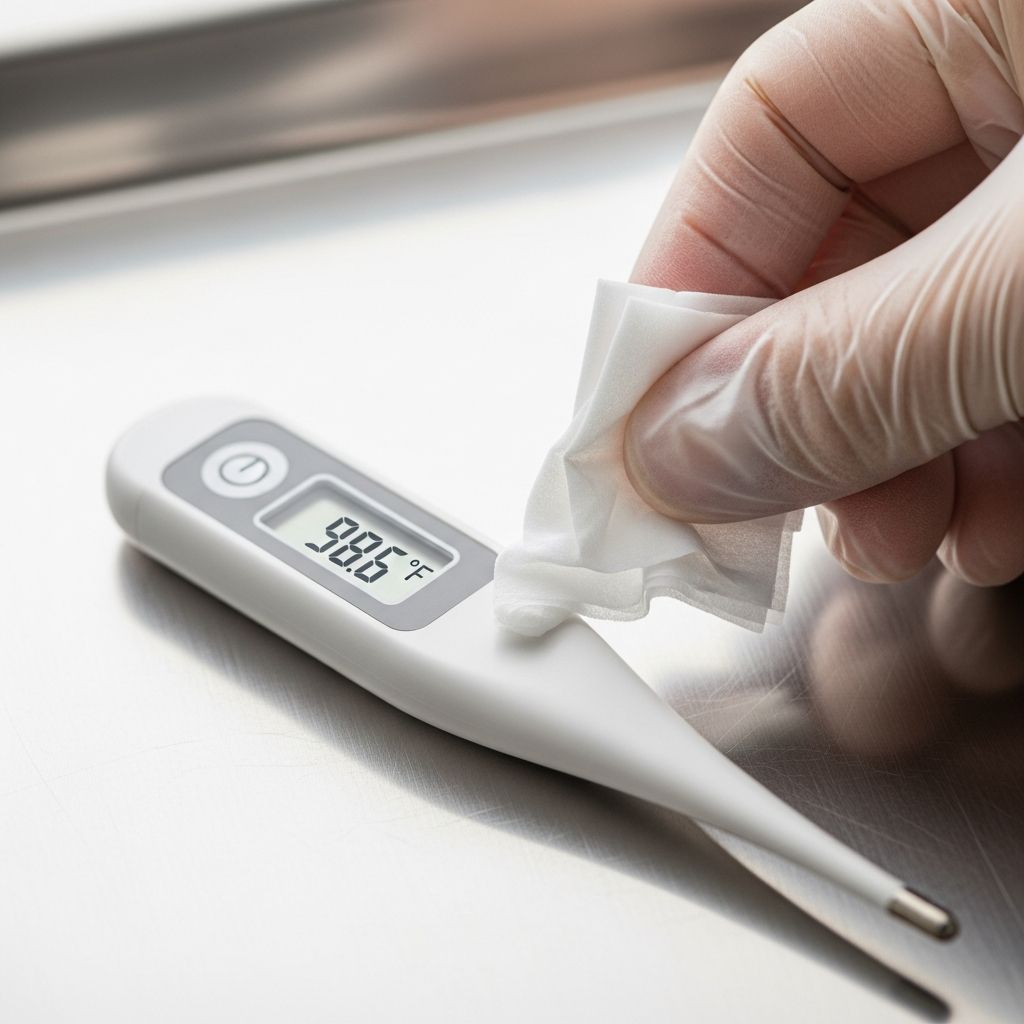
Cleaning and disinfecting a thermometer after each use is vital to prevent the spread of bacteria, viruses, and other pathogens, ensuring accurate temperature readings and protecting household members or patients.
Why Disinfecting Your Thermometer Matters
Thermometers frequently contact skin, saliva, or mucus, turning them into potential vectors for infections like influenza or strep throat. In homes, this risks family illness; in clinics, it enables cross-contamination among patients. Regular disinfection eliminates up to 99.9% of germs, maintaining device reliability and hygiene.
According to CDC guidelines, semicritical devices like thermometers require high-level disinfection after cleaning to kill microbes such as Mycobacterium tuberculosis and viruses including HIV or herpes simplex. Neglecting this can lead to inaccurate readings from residue buildup or health risks during flu seasons.
General Cleaning Steps for All Thermometers
Follow these universal steps before type-specific methods:
- Wash hands thoroughly with soap for 20 seconds before and after handling.
- Rinse under cool water to remove visible debris, avoiding hot water that could damage electronics.
- Apply disinfectant: Use 70% isopropyl alcohol, bleach solution, or manufacturer-recommended agents.
- Rinse residue with clean water, especially for oral/rectal use.
- Air dry completely on a clean towel to prevent bacterial growth in moisture.
Always consult the user manual to avoid warranty voidance or damage.
How to Disinfect Oral and Rectal Thermometers
These glass or digital probe thermometers demand thorough cleaning due to mucosal contact.
- Preclean: Wash with dish soap and warm water using a soft cloth. For glass types, soak if fully immersible.
- Disinfect: Wipe with 70% isopropyl alcohol-soaked cotton ball, focusing on the tip for 30 seconds. Alternatively, use a 1:10 bleach-water solution (1/3 cup bleach per gallon water) for 6 minutes contact time.
- Rinse well: Use cool tap water to remove all chemicals, preventing irritation or taste issues.
- Dry and store: Pat dry with lint-free cloth; store in a protective case.
Pro Tip: For rectal thermometers, dedicate one per person to minimize risks.
Cleaning Digital Thermometers
Digital models offer precision but are sensitive to liquids unless waterproof.
- Power off and remove batteries if non-waterproof to protect circuits.
- Wipe exterior and probe with alcohol-dampened cloth; avoid soaking.
- No submersion: Electronics can short-circuit; use wipes for sensors.
- Air dry fully before reassembly (10-15 minutes).
CDC recommends against immersing non-immersible probes, opting for alcohol wipes or hydrogen peroxide for 5-10 minutes.
How to Disinfect Ear (Tympanic) Thermometers
Tympanic thermometers use disposable covers, but the probe needs regular care.
- Remove cover and discard after single use.
- Clean probe with alcohol wipe or soft cloth soaked in 70% isopropyl alcohol.
- Avoid excess liquid near sensor; wipe dry immediately.
- Check for buildup: Use mild soap if needed, then disinfect.
Related Stories



Videos from manufacturers like Cardinal Health emphasize gentle wiping to preserve accuracy in Genius 3 models.
Cleaning Forehead (Temporal Artery) and Non-Contact Thermometers
Non-contact infrared models reduce contamination risks significantly.
- Wipe sensor and body with alcohol wipe or soft cloth; no immersion required.
- Focus on lens: Use lint-free cloth to avoid scratches.
- Less frequent deep cleans: Daily wipes suffice due to no probe contact.
Advantages include IP22-rated durability for disinfectant exposure and minimal germ transfer, ideal for clinics and homes.
Bleach vs. Alcohol: Best Disinfectants Compared
| Method | Pros | Cons | Contact Time | Source |
|---|---|---|---|---|
| 70% Isopropyl Alcohol | Fast-drying, effective on viruses/bacteria, safe for most surfaces | Flammable, evaporates quickly | 30 seconds-2 minutes | |
| Bleach Solution (1/3 cup/gallon) | Kills COVID-19 virus, inexpensive | Corrosive, strong odor, needs rinsing | 6 minutes | |
| Hydrogen Peroxide (3%) | No residue, effective for tonometers/probes | Slower acting | 5-10 minutes |
Select based on thermometer material; alcohol suits plastics, bleach for glass.
Expert Tips for Thermometer Hygiene
- Frequency: Disinfect after every use, especially shared devices.
- Hand hygiene first: Reduces initial contamination.
- Storage: In dry, dust-free cases; avoid bathrooms.
- Replace if damaged: Cracks harbor germs.
- Clinical protocols: Follow FDA-validated methods; immerse immersible parts in high-level disinfectants.
Common Mistakes to Avoid
- Using hot water on plastics (warps them).
- Skipping rinse after bleach (causes irritation).
- Storing wet (promotes mold).
- Ignoring manuals (risks damage).
FAQs
Can I use hand sanitizer to clean a thermometer?
No, hand sanitizer often contains gels that leave residue; use pure 70% isopropyl alcohol instead.
How often should I disinfect a shared thermometer?
After every use to prevent cross-contamination.
Is it safe to submerge digital thermometers?
Only if labeled waterproof; otherwise, wipe only.
What if I don’t have alcohol or bleach?
Use 3% hydrogen peroxide for 5-10 minutes per CDC.
Do non-contact thermometers need disinfection?
Yes, wipe sensor regularly though less intensely.
Choosing the Right Thermometer for Easy Hygiene
Opt for non-contact models like TRITEMP for reduced cleaning needs, fast reads, and durability. They minimize physical contact, aligning with modern hygiene standards.
In summary, proper disinfection safeguards health. Implement these routines for peace of mind.
References
- How to Disinfect a Thermometer — TriMedika. 2023. https://trimedika.com/how-to-disinfect-a-thermometer/
- How to Clean & Disinfect a Thermometer — Clorox. 2023-01-13. https://www.clorox.com/learn/how-to-clean-disinfect-a-thermometer/
- Disinfection of Healthcare Equipment — CDC. 2008 (updated relevance for protocols). https://www.cdc.gov/infection-control/hcp/disinfection-sterilization/healthcare-equipment.html
- Disinfecting the Clinical Thermometer — PMC/NIH. 2007. https://pmc.ncbi.nlm.nih.gov/articles/PMC1843884/
- Cleaning Your Cardinal Health™ Genius™ 3 Tympanic Thermometer — YouTube/Cardinal Health. 2023. https://www.youtube.com/watch?v=N5eWXplg8d8
Similar Articles








Read full bio of medha deb