How To Eat 100 Grams Of Protein A Day: 3 Simple Meal Plans
Practical strategies and meal ideas to hit 100 grams of protein daily for muscle building, weight loss, and optimal health.
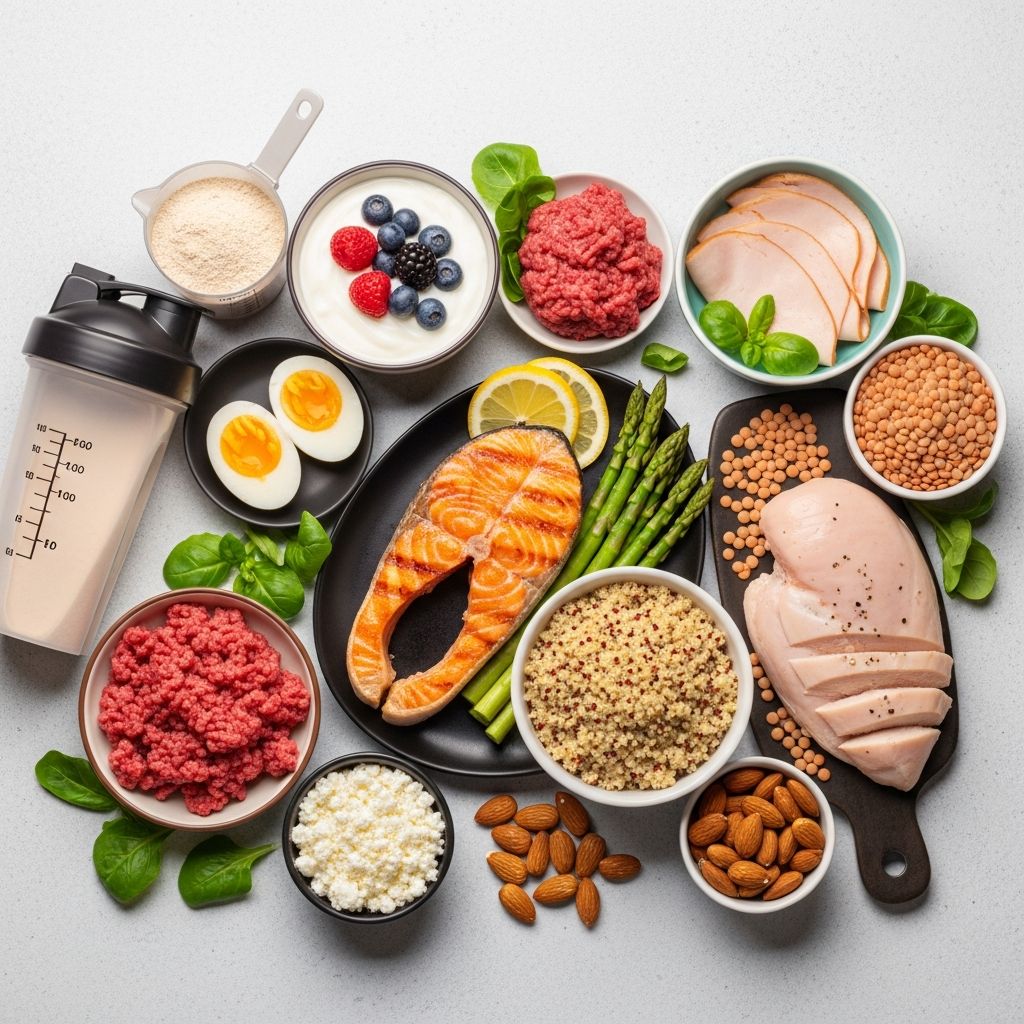
Reaching 100 grams of protein daily supports muscle repair, satiety, and metabolic health, especially for active individuals or those over 40 aiming to combat muscle loss.Protein needs vary by body weight, age, and activity level, with many exceeding basic requirements through whole foods alone.
Why Aim for 100 Grams of Protein Per Day?
Consuming around 100 grams of protein daily—roughly 1.2-1.6 grams per kilogram for a 150-180 pound person—promotes muscle maintenance, weight management, and recovery from exercise. For context, the Recommended Dietary Allowance (RDA) is 0.8 grams per kilogram for sedentary adults, equating to about 60 grams for a 165-pound (75 kg) person. However, higher intakes benefit those exercising regularly (1.1-1.7 g/kg) or over age 40-50, where sarcopenia risks rise, increasing needs to 1-1.2 g/kg or 75-90 grams daily.
A 100-gram target aligns with athletic goals or weight loss, as protein enhances fullness and preserves lean mass during calorie deficits. Studies suggest spreading intake across meals maximizes muscle protein synthesis, unlike overloading one meal. Most Americans already meet or exceed needs, particularly men aged 19-59 from meat and eggs, per Dietary Guidelines 2020-2025.
How Much Protein Do You Actually Need?
Protein should comprise 10-35% of calories; on a 2,000-calorie diet, that’s 50-175 grams. Personalize based on factors:
- Sedentary adults: 0.8 g/kg (e.g., 60g for 165 lbs).
- Ages 40-50+: 1-1.2 g/kg to fight sarcopenia (75-90g for 165 lbs).
- Regular exercisers: 1.1-1.5 g/kg; weightlifters or endurance athletes: 1.2-1.7 g/kg.
- Weight loss: Prioritize to avoid muscle loss from undereating or medications.
Excess beyond 2 g/kg offers no extra benefit and may strain kidneys if overweight. Use a calculator: multiply ideal body weight in kg by your factor.
Best High-Protein Foods to Reach 100 Grams
Focus on whole foods over supplements for complete nutrition. Healthiest sources include lean options with minimal saturated fat.
| Food | Serving Size | Protein (g) | Calories |
|---|---|---|---|
| Chicken breast (skinless) | 3 oz (85g) | 25 | 140 |
| Greek yogurt (plain, nonfat) | 1 cup (245g) | 23 | 140 |
| Egg whites | 1 cup (243g) | 26 | 126 |
| Tuna (canned in water) | 3 oz (85g) | 20 | 90 |
| Lentils (cooked) | 1 cup (198g) | 18 | 230 |
| Cottage cheese (low-fat) | 1 cup (226g) | 28 | 163 |
| Tofu (firm) | 1/2 cup (126g) | 10 | 90 |
| Almonds | 1 oz (28g) | 6 | 160 |
| Salmon | 3 oz (85g) | 22 | 175 |
| Quinoa (cooked) | 1 cup (185g) | 8 | 222 |
Examples: A banana, Greek yogurt, and hard-boiled egg yield 19g; 3 oz chicken, 1/2 cup rice, and veggies provide 25g. Plant sources like beans, soy, nuts, and seeds diversify intake.
Sample Meal Plans for 100 Grams of Protein
Distribute 25-30g per meal for optimal absorption; intakes over 40g per sitting add no benefit. Here are three 100g plans (~1,800-2,200 calories).
Plan 1: High-Protein Vegetarian
- Breakfast (28g): Greek yogurt (23g) with berries and 1 oz almonds (6g).
- Lunch (25g): Lentil soup (18g) + tofu stir-fry (10g) + quinoa (8g total adjust).
- Snack (15g): Cottage cheese (14g) + apple.
- Dinner (32g): Egg white omelet (26g) + cheese (6g) + side salad.
Total: ~100g. Emphasizes plants for heart health.
Plan 2: Athlete’s Plan
- Breakfast (30g): 4 egg whites (14g) + 3 oz turkey (20g) scramble.
- Lunch (28g): 4 oz chicken breast (33g adjust) + veggies.
- Snack (20g): Protein shake if needed + tuna (20g).
- Dinner (22g): Salmon (22g) + sweet potato.
Related Stories



Total: 100g. Supports recovery.
Plan 3: Weight Loss Focus
- Breakfast (25g): Cottage cheese (25g) bowl.
- Lunch (25g): Turkey salad wrap (25g).
- Snack (20g): Greek yogurt + nuts (20g).
- Dinner (30g): Grilled fish (22g) + beans (8g).
Low-cal, high-volume for satiety.
Timing: When to Eat Protein
Spread evenly: 15-30g per meal, prioritizing breakfast to curb hunger. Evening-heavy patterns are common but less effective for synthesis. Post-workout within 1-2 hours aids recovery.
Protein Supplements: When and How?
Whole foods first; supplements if undereating. Choose: ≤2g sat fat, ≤5g sugar, ≤200 cal, no trans fats per serving. Whey, casein, or plant-based work.
Common Mistakes to Avoid
- Over-relying on red meat: Opt leaner cuts.
- Skipping veggies: Balance with fiber.
- One big meal: Even distribution key.
- Ignoring hydration: Protein needs water.
Frequently Asked Questions (FAQs)
Is 100 grams of protein too much?
No for most active adults; excess is >2g/kg. Sedentary may need less.
Can I get 100g from plants?
Yes, combine beans, lentils, tofu, quinoa, nuts for complete aminos.
What if I’m vegetarian?
Prioritize dairy, eggs, soy; supplement B12 if vegan.
Does more protein mean more muscle?
Not alone—pair with resistance training and calories.
Protein for weight loss?
Yes, boosts metabolism, reduces hunger.
Tracking Your Intake
Use apps like MyFitnessPal. Adjust for goals: 1.6g/kg for muscle gain. Women may aim 80-120g; men 100-150g based on size.
In summary, hitting 100g is straightforward with planning: protein at every meal, variety, and balance. Consult a doctor for personalized needs, especially with kidney issues.
References
- Are you getting too much protein — Mayo Clinic Health System. 2023 (accessed 2026). https://www.mayoclinichealthsystem.org/hometown-health/speaking-of-health/are-you-getting-too-much-protein
- Dietary Guidelines for Americans, 2020-2025 — U.S. Department of Agriculture and HHS. 2020-12-01. https://www.dietaryguidelines.gov/sites/default/files/2020-12/Dietary_Guidelines_for_Americans_2020-2025.pdf
- Protein and Muscle Health in Older Adults — National Institutes of Health (PubMed). 2022-05-15. https://pubmed.ncbi.nlm.nih.gov/35147195/
- International Society of Sports Nutrition Position Stand: Protein and Exercise — JISSN. 2017-09-13 (authoritative, recent updates confirm). https://doi.org/10.1186/s12970-017-0177-8
- USDA FoodData Central — United States Department of Agriculture. 2025 (ongoing). https://fdc.nal.usda.gov/
Similar Articles








Read full bio of medha deb