How to Increase Protein Intake: Benefits and Guidelines
Discover evidence-based strategies to boost protein consumption for better health, muscle strength, and sustainable weight management.
How to Increase Protein Intake: A Comprehensive Guide
Protein is a fundamental macronutrient that serves as a critical building block for your cells, tissues, and organs. While the Dietary Guidelines for Americans 20202025 recommend that adult females consume at least 46 grams of protein per day and adult males 56 grams daily, emerging research suggests that many people could benefit from higher protein intake depending on their lifestyle, fitness goals, and overall health objectives. Understanding how to strategically increase your protein consumption can unlock numerous health benefits, from improved weight management to stronger muscles and better metabolic function.
Understanding Protein Requirements
The recommended dietary allowance (RDA) for protein in healthy adults with minimal physical activity is 0.8 grams per kilogram of body weight per day. However, this baseline is designed primarily to prevent protein deficiency rather than optimize health and performance. To meet specific functional needs such as promoting skeletal-muscle protein accretion and physical strength, higher intakes are recommended based on activity level.
- Minimal physical activity: 1.0 g protein per kg body weight per day
- Moderate physical activity: 1.3 g protein per kg body weight per day
- Intense physical activity: 1.6 g protein per kg body weight per day
For individuals focused on weight management and muscle preservation, research suggests consuming approximately 1.38 grams of protein per kilogram of body weight per day provides long-term benefits in minimizing fat tissue while maximizing lean muscle mass.
Reduces Appetite and Hunger Levels
One of the most compelling reasons to increase protein intake is its powerful effect on appetite regulation. Eating more protein may help reduce your appetite and manage hunger levels, potentially allowing you to consume fewer total calories without feeling deprived.
Protein’s satiety effects operate through multiple mechanisms involving hunger-controlling hormones. A 2020 review found that protein reduced levels of ghrelin, commonly known as the “hunger” hormone. Simultaneously, protein increased levels of cholecystokinin and glucagon-like peptide-1 (GLP-1), two hormones responsible for digestion and signaling fullness to your brain. This multi-hormonal approach to appetite control makes protein particularly effective for managing food intake and cravings.
Research demonstrates the practical impact of these mechanisms. An older 2010 study in men with overweight showed that increasing protein to 25% of total calories reduced cravings by 60% and the desire to snack at night by half. Similarly, a 2014 study in adolescent girls with overweight found that eating a high-protein breakfast reduced late-night cravings and snacking behaviors. These benefits may be mediated by improvements in dopamine function, one of the main brain hormones involved in cravings and addiction.
Increases Muscle Mass and Strength
Protein is essential for building and maintaining lean muscle tissue. When combined with resistance exercise, adequate protein intake stimulates muscle protein synthesis—the process by which your body builds new muscle fibers. This becomes increasingly important as you age, as muscle naturally declines without intentional effort.
The type and timing of protein matter significantly. Research indicates that a combination of whey protein (rapidly digested) with casein (slowly digested) is an effective formula for skeletal-muscle protein synthesis after exercise. Additionally, distributing adequate protein across each meal of the day provides greater advantage for supporting skeletal-muscle mass and function compared to consuming large amounts of protein in a single meal.
Related Stories



Animal-source proteins demonstrate particular effectiveness for muscle building. Studies show that ingestion of 17.5 to 40 grams of animal-source protein from whey, skimmed milk, or beef stimulated skeletal-muscle protein synthesis to a greater extent than the same amount of soy protein under both resting and post-exercise conditions.
Boosts Metabolism and Energy Expenditure
Protein has a significantly higher diet-induced thermogenesis (DIT)—the energy required to digest food—compared to carbohydrates and fats. This means your body burns more calories simply digesting protein, contributing to a higher overall metabolic rate.
A 2018 review found that a high-protein intake can boost your basal metabolic rate (BMR), which is the number of calories your body uses to perform basic functions such as breathing and maintaining organ function. Protein also contributes to a higher sleeping metabolic rate, increasing the calories you burn during sleep. Over time, these metabolic improvements can meaningfully impact weight management and overall energy balance.
Research on resting energy expenditure (REE) reveals another mechanism. While subjects following both high-protein and standard-protein diets experience some REE reduction during weight loss, those consuming higher protein maintain a higher REE—approximately 142 additional kilocalories per day. This preservation of metabolic rate occurs because high-protein diets prevent the loss of lean muscle mass that typically accompanies weight loss.
Supports Weight Loss and Body Composition
Multiple clinical trials demonstrate that consuming more protein than the recommended dietary allowance not only reduces body weight but also enhances body composition by decreasing fat mass while preserving fat-free mass. This distinction is crucial: you’re losing fat, not muscle.
The mechanisms driving weight loss with higher protein intake operate through multiple pathways:
- Increased satiety: Elevation of blood amino acid concentration and hunger-inhibiting hormones reduces overall calorie intake
- Higher energy expenditure: Diet-induced thermogenesis and preserved resting energy expenditure burn more calories
- Metabolic advantage: Ketone body production and improved hepatic gluconeogenesis support fat loss
- Body composition preservation: Resistance of lean mass loss maintains muscle tissue during calorie restriction
Fairly long-term clinical trials spanning 612 months demonstrate that a high-protein diet provides sustained weight-loss effects and can prevent weight regain after initial weight loss. For individuals exercising regularly, combining exercise training with higher protein intake (particularly from dairy sources) results in loss of body fat and preservation of muscle mass.
Protects and Strengthens Bones
While calcium and vitamin D receive considerable attention for bone health, protein plays an equally critical role. Protein is a structural component of bone and is essential for bone matrix formation and strength. Increasing your protein intake supports skeletal health, particularly when combined with adequate micronutrient intake and physical activity.
Practical Strategies for Increasing Protein Intake
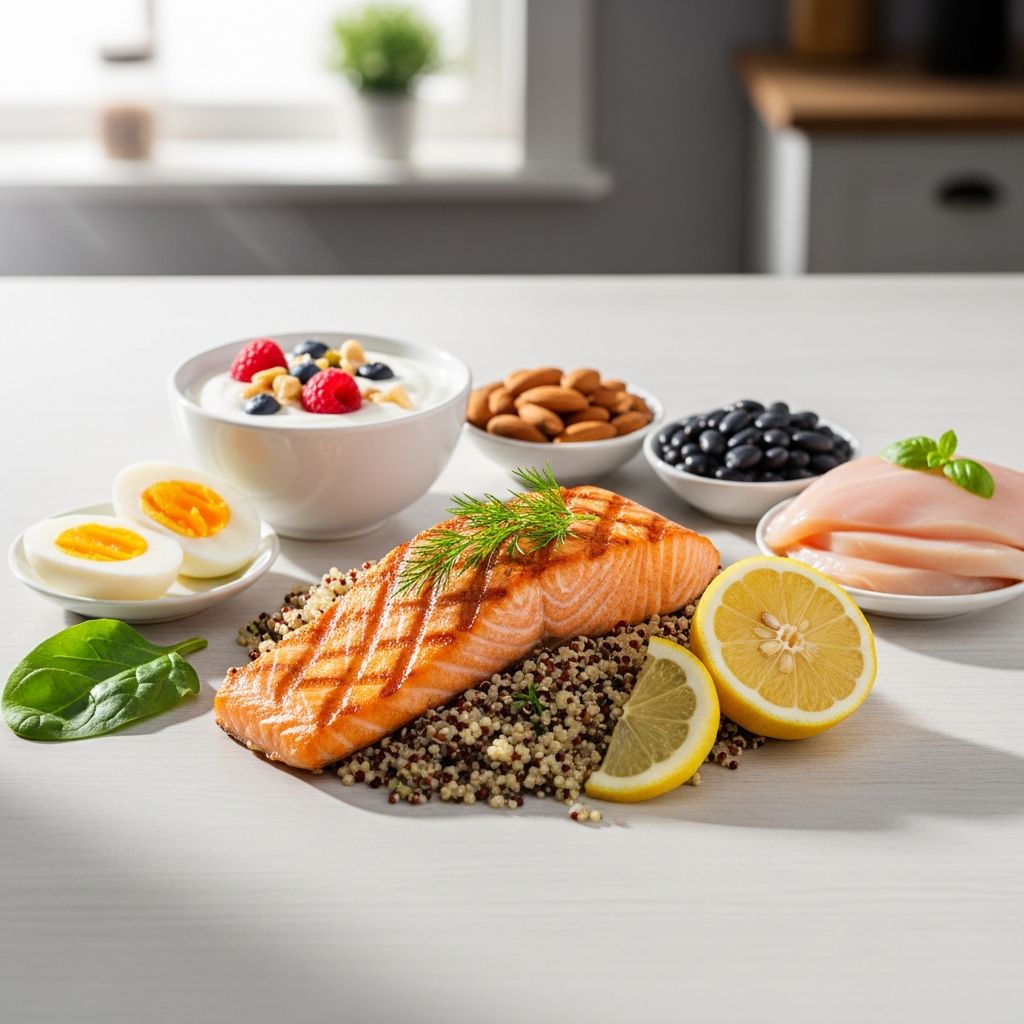
If you’re aiming to increase protein consumption, incorporate these high-quality protein sources into your daily meals:
- Lean meats: Chicken breast, turkey, lean beef, and pork
- Fish and seafood: Salmon, tuna, cod, and shellfish (also provide omega-3 fatty acids)
- Eggs: Complete protein source containing all essential amino acids
- Dairy products: Greek yogurt, cottage cheese, milk, and cheese
- Plant-based options: Legumes, beans, lentils, tofu, tempeh, and nuts
- Whole grains: Quinoa, buckwheat, and oats
To maximize muscle protein synthesis, aim to distribute protein evenly across meals rather than consuming it all at once. This approach provides consistent amino acid availability throughout the day to support ongoing protein synthesis.
Optimal Protein Distribution
For weight loss and metabolic optimization, consider a macronutrient distribution of:
- Protein: 20% to 30% of daily calories
- Carbohydrates: 5% to 10% of daily calories
- Fats: 0% to 3% of daily calories
However, individual needs vary based on activity level, body composition goals, and metabolic health. Current dietary guidelines recommend that adults consume 10% to 35% of their calories from protein, which is sufficient to prevent protein deficiency.
Is There Such a Thing as Too Much Protein?
Most research suggests that healthy adults should consume no more than 2 grams of protein per kilogram (2.2 pounds) of body weight per day. This represents an upper threshold beyond which additional protein may not provide additional benefits and could potentially strain kidneys in susceptible individuals.
For perspective, a 154-pound (70-kilogram) person would need to consume around 84 to 112 grams of protein per day under updated recommendations, compared to 56 grams under older guidelines. Most people following balanced, whole-food diets naturally remain within safe limits when intentionally increasing protein intake.
Preventing Age-Related Muscle Loss
Increasing protein intake is one of the most effective ways to reduce age-related muscle deterioration and prevent sarcopenia—the progressive loss of muscle mass and strength with age. Aim for at least 1 to 1.2 grams of protein per kilogram of body weight daily, and combine this with resistance exercise or weight lifting for optimal results. Staying physically active remains crucial alongside adequate protein intake to maintain muscle tissue throughout life.
When to Seek Professional Guidance
While increasing protein intake benefits most people, individual needs vary based on age, sex, activity level, kidney function, and specific health conditions. Speaking with a registered dietitian is advisable if you’re finding it difficult to incorporate enough protein into your diet or if you have underlying health concerns. A registered dietitian can help develop a personalized plan that aligns with your specific health goals and nutritional needs.
Frequently Asked Questions
Q: What is the minimum amount of protein I should consume daily?
A: The Dietary Guidelines for Americans recommend at least 46 grams for adult females and 56 grams for adult males daily. However, individuals with moderate to intense physical activity should aim for 1.3 to 1.6 grams per kilogram of body weight per day.
Q: Can I get enough protein from plant-based sources alone?
A: Yes, though combinations of plant-based proteins are often more effective than individual sources. Combining high-quality plant-based proteins can stimulate muscle anabolism similarly to animal proteins. Legumes, nuts, seeds, and whole grains provide adequate protein when consumed in appropriate combinations.
Q: When is the best time to eat protein for muscle building?
A: Distributing adequate protein across each meal throughout the day provides greater advantage for supporting skeletal-muscle mass and function compared to consuming large amounts in a single meal. Post-exercise timing also matters—consuming protein shortly after resistance training optimizes muscle protein synthesis.
Q: Will eating more protein harm my kidneys?
A: In healthy individuals with normal kidney function, protein intake up to 2 grams per kilogram of body weight per day is generally considered safe. Individuals with pre-existing kidney disease should consult healthcare providers before significantly increasing protein intake.
Q: Can high-protein diets help with weight loss even without exercise?
A: Yes, high-protein diets reduce body weight and improve body composition even in standard-calorie diets. However, combining protein increases with resistance exercise produces superior results for fat loss and muscle preservation.
References
- 10 Science-Backed Reasons to Eat More Protein — Healthline. 2024. https://www.healthline.com/nutrition/10-reasons-to-eat-more-protein
- Clinical Evidence and Mechanisms of High-Protein Diet-Induced Weight Loss — National Center for Biotechnology Information (PMC). 2020. https://pmc.ncbi.nlm.nih.gov/articles/PMC7539343/
- Dietary Protein Intake and Human Health — Royal Society of Chemistry Publishing. 2016. https://pubs.rsc.org/en/content/articlehtml/2016/fo/c5fo01530h
- Is There Such a Thing as ‘Too Much’ Protein? — Live Science. 2024. https://www.livescience.com/health/food-diet/is-there-such-a-thing-as-too-much-protein
- How Much Protein Is Too Much? — Medical News Today. 2024. https://www.medicalnewstoday.com/articles/322825
Similar Articles








Read full bio of medha deb