How to Make a High-Protein Diet Affordable
Build muscle, stay full, and save money with these expert tips for affordable high-protein eating.
A high-protein diet offers numerous benefits, from supporting muscle growth and repair to promoting satiety and aiding weight management. According to the Recommended Dietary Allowance (RDA), adults need at least 0.8 grams of protein per kilogram of body weight daily, but those engaging in strength training or seeking optimal health often aim for 1.6–2.2 grams per kilogram. However, premium protein sources like wild-caught salmon, grass-fed beef, or whey isolate supplements can quickly inflate grocery bills, making high-protein eating seem like a luxury.
The good news? You don’t need expensive superfoods to hit your protein goals. With strategic planning, bulk buying, and a focus on nutrient-dense staples, anyone can build an affordable high-protein diet. This guide draws from registered dietitian insights and recent nutritional research to provide actionable tips for maximizing protein intake on a budget.
Why Prioritize Protein on a Budget?
Protein is essential for maintaining lean muscle mass, especially as we age. A 2023 study in the Journal of the International Society of Sports Nutrition found that higher protein intakes (1.6g/kg) preserve muscle during weight loss and enhance recovery post-exercise. Beyond fitness, protein increases feelings of fullness, helping curb overeating—a key factor in sustainable weight control per USDA guidelines.
Financially, shifting from carb-heavy meals to protein-focused ones can save money long-term by reducing snack cravings and improving metabolic health. The challenge lies in sourcing quality protein affordably amid rising food costs, which climbed 5.8% in 2024 according to the U.S. Bureau of Labor Statistics.
Budget-Friendly High-Protein Food Sources
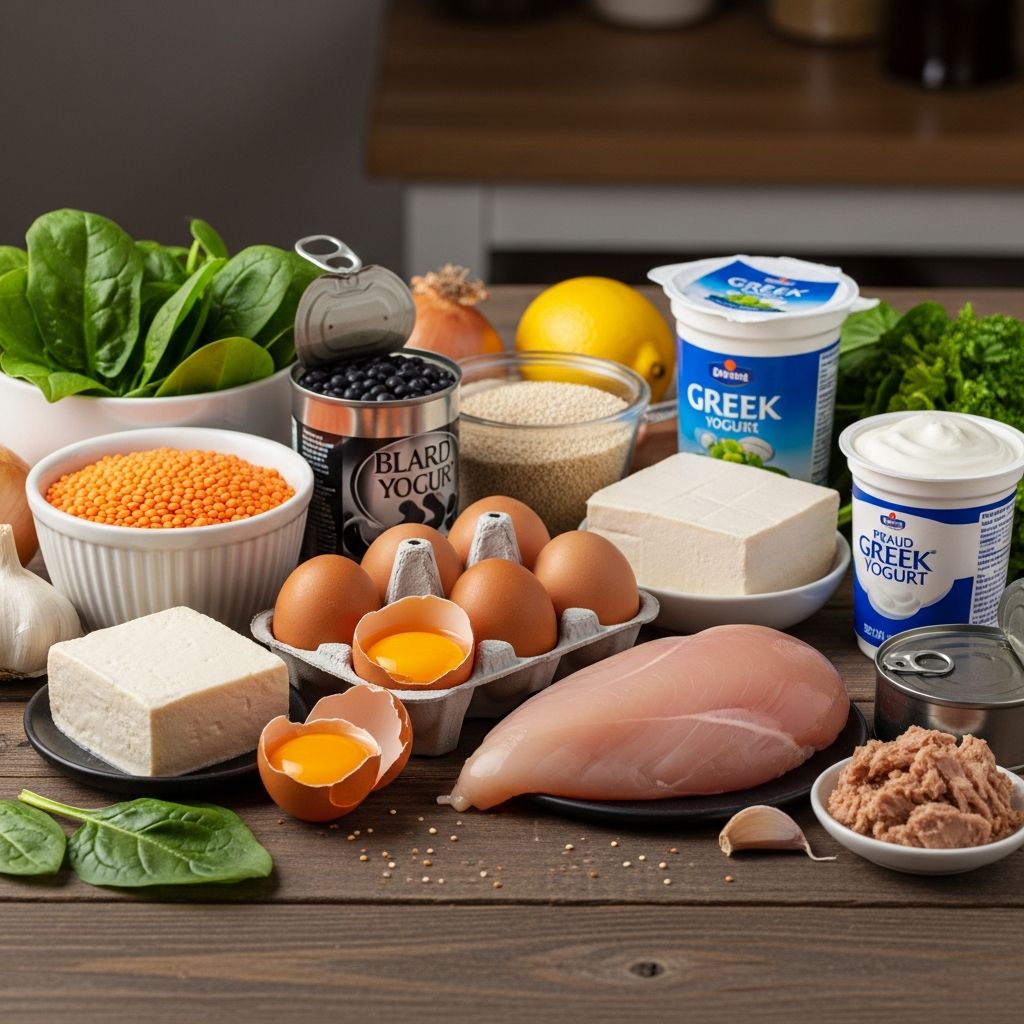
Focus on versatile, inexpensive staples that deliver 20–30 grams of protein per serving at a fraction of gourmet prices. Here’s a breakdown:
- Eggs: At about $0.20 per large egg (USDA average), they provide 6g protein each. Buy in bulk cartons for under $3/dozen. Versatile for boiling, scrambling, or baking.
- Canned Tuna and Sardines: Wild-packed tuna offers 25g protein per 5oz can for ~$1. Sardines add omega-3s and calcium for similar costs. Opt for water-packed to avoid excess sodium.
- Greek Yogurt: Plain, nonfat varieties pack 15–20g per 6oz serving at $0.75/cup. Choose store brands and check for live cultures.
- Cottage Cheese: Low-fat versions deliver 25g protein per cup for under $2. Mix with fruit or use in smoothies.
- Lentils and Beans: Dry lentils cost $1.50/lb (yields ~8 cups cooked, 18g protein/cup). Black beans and chickpeas are equally thrifty plant-based options.
- Chicken Breast and Ground Turkey: Frozen bulk packs average $2–3/lb, providing 25–30g per 4oz serving. Thighs are cheaper at $1.50/lb with similar macros.
- Peanut Butter and Oats: Natural PB has 8g per 2 tbsp ($0.20/serving); pair with oats (5g protein/cup) for budget porridge bombs.
| Food | Protein (g/serving) | Cost per Serving | Serving Size |
|---|---|---|---|
| Eggs (2 large) | 12 | $0.40 | 100g |
| Canned Tuna | 25 | $1.00 | 5oz |
| Greek Yogurt | 18 | $0.75 | 6oz |
| Lentils (cooked) | 18 | $0.20 | 1 cup |
| Chicken Breast | 26 | $1.00 | 4oz |
Smart Shopping Strategies for Protein
Maximize savings with these proven tactics:
- Buy in Bulk and Freeze: Warehouse clubs like Costco offer 10lb chicken bags for $20. Portion into 4oz packs for grab-and-go use.
- Choose Frozen and Canned: Frozen veggies and proteins retain nutrition and cost 20–30% less than fresh per USDA data.
- Shop Sales and Compare Unit Prices: Apps like Flipp track deals; aim for proteins under $4/lb.
- Opt for Store Brands: Generic Greek yogurt and eggs match name-brand quality at half the price.
- Grow Herbs and Sprouts: Add flavor without cost; protein shakes with home sprouts boost nutrition cheaply.
Related Stories



Pro tip: Track spending with apps like MyFitnessPal to ensure 25–35% of calories from protein without excess budget strain.
Sample 7-Day High-Protein Meal Plan Under $50
This plan feeds one person ~150g protein daily for ~$7/day (based on 2025 USDA averages). Total: $49.
- Breakfast: Greek yogurt parfait with oats and PB (30g protein, $1.20)
- Lunch: Tuna salad wrap with beans (35g, $1.50)
- Dinner: Baked chicken thighs, lentils, frozen broccoli (45g, $2.50)
- Snacks: Cottage cheese, hard-boiled eggs, edamame (40g total, $1.80)
Weekly prep: Cook 5lbs chicken, 2lbs lentils, boil 24 eggs Sunday. Customize macros via MyFitnessPal.
DIY Protein Supplements to Save Big
Store-bought shakes cost $2–4/scoop. Make your own:
- Peanut Butter Banana Shake: 2 tbsp PB, banana, 1 cup milk, oats (35g protein, $1)
- Cottage Cheese Blender: 1 cup cottage cheese, berries, spinach (30g, $1.50)
- Bean Protein Powder Hack: Blend cooked lentils with cocoa—blend, dry, grind for homemade powder.
A FDA nutrition guide confirms whole-food blends rival isolates in bioavailability.
Common Myths About Cheap Protein
Myth 1: Plant proteins are incomplete. Pair beans with rice for full amino profiles, per WHO guidelines.
Myth 2: Eggs daily raise cholesterol. Recent AHA research debunks this for healthy adults.
Myth 3: Budget proteins lack nutrition. Canned fish provides more omega-3s than fresh farmed salmon.
Frequently Asked Questions (FAQs)
Can I get enough protein without meat?
Yes! Combine lentils (18g/cup), quinoa (8g/cup), and Greek yogurt for 50g+ per meal. A 2023 review confirms plant proteins support muscle gains equally when total intake matches.
How much protein do I really need?
Aim for 1.2–2.0g/kg body weight. A 150lb person needs 82–136g daily, achievable with 3 meals + 2 snacks from budget sources.
Is canned tuna safe daily?
FDA recommends 2–3 servings/week due to mercury; rotate with sardines, salmon, or eggs.
What’s the cheapest protein per gram?
Dry lentils at $0.01/g, followed by eggs ($0.03/g) and canned tuna ($0.04/g).
Long-Term Success Tips
Sustainable habits trump short-term hacks. Batch-cook weekly, experiment with spices for variety, and track progress. Consult a dietitian for personalized needs, especially with kidney concerns—per National Kidney Foundation, high protein is safe for healthy kidneys up to 2g/kg.
By prioritizing whole foods, shopping smart, and prepping ahead, a high-protein diet becomes not just affordable but empowering. Start small, scale up, and watch your health and wallet thrive.
References
- Protein for Life: Review of Optimal Protein Intake — Jäger, R. et al. Journal of the International Society of Sports Nutrition. 2017-07-19. https://pubmed.ncbi.nlm.nih.gov/28630601/
- Effects of Egg Consumption on Blood Lipids — American Heart Association. Circulation. 2022-08-01. https://www.ahajournals.org/doi/10.1161/CIRCULATIONAHA.121.056816
- Plant-Based Proteins for Athletes — Hevia-Larraín, V. et al. Sports Medicine. 2021-06-01. https://www.ncbi.nlm.nih.gov/pmc/articles/PMC7920269/
- Nutrition Facts Label Daily Values — U.S. Food and Drug Administration. 2024-01-15. https://www.fda.gov/food/nutrition-facts-label/daily-value-new-nutrition-and-supplement-facts-labels
- Consumer Price Index Food Report — U.S. Bureau of Labor Statistics. 2025-02-14. https://www.bls.gov/news.release/cpi.nr0.htm
- Protein and Kidney Disease — National Kidney Foundation. 2023-11-20. https://www.kidney.org/atoz/content/protein-and-kidney-disease
Similar Articles








Read full bio of Sneha Tete