How to Marinate Safely: Essential Food Safety Tips
Master safe marinating techniques to prevent foodborne illness and ensure delicious, healthy meals.
How to Marinate Safely: A Complete Food Safety Guide
Marinating is a popular cooking technique that enhances flavor and tenderness in meat, poultry, and seafood. However, improper marinating practices can significantly increase the risk of foodborne illness. Understanding safe marinating procedures is essential for protecting your family’s health while enjoying delicious, well-prepared meals. This comprehensive guide covers all critical aspects of safe marinating, from temperature control to proper container selection and storage practices.
Why Temperature Control Matters in Marinating
Always marinate food in the refrigerator, never at room temperature. This is one of the most critical food safety rules for marinating. When meat, poultry, or seafood sits at room temperature, it enters the “danger zone” between 40°F and 140°F, where harmful bacteria multiply rapidly and can reach dangerous levels within just two hours. Bacteria present in raw meat can proliferate exponentially in this temperature range, significantly increasing your risk of foodborne illness.
Some older recipes may call for marinating at room temperature. Do not follow these outdated instructions. Instead, when you encounter such recipes, adjust your method by increasing the marinating time in the refrigerator to achieve similar tenderness and flavor development. Modern food safety standards and scientific research consistently demonstrate that refrigeration is the only safe approach to marinating raw proteins.
Maintaining proper refrigerator temperature is equally important. Keep your refrigerator at 40°F or below to ensure that bacteria growth remains minimal while your food marinates. Additionally, place marinated meat on the bottom shelf of your refrigerator to prevent any potential drips or leaks from contaminating other foods stored below.
Choosing the Right Containers for Marinating
The type of container you use for marinating directly impacts both food safety and the quality of your final dish. Container selection requires careful consideration of material and design.
Avoid Metal Containers
Never marinate in metal containers. The acidic components commonly found in marinades—such as vinegars, citrus juices, and tomato-based liquids—react chemically with metal surfaces. This reaction can cause metallic flavors to transfer to your food and may even damage the container. Additionally, this chemical interaction can compromise the structural integrity of the container over time.
Use Glass or Plastic Containers
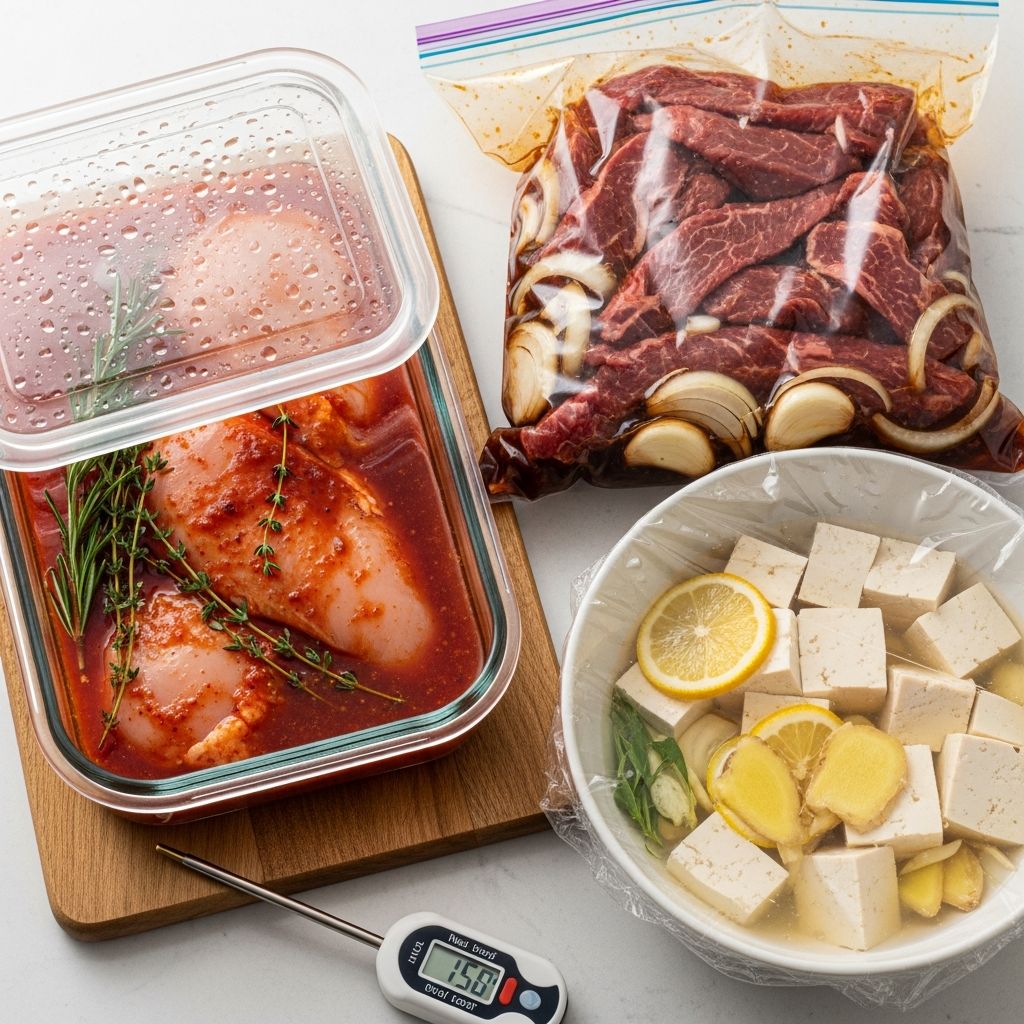
The safest choices for marinating containers are food-safe glass or plastic options. Glass containers are durable, non-reactive, and easy to clean. They allow you to monitor the marinating process visually and are suitable for reuse with proper sanitization. Plastic containers, particularly those designed specifically for food storage, are lightweight and convenient. However, plastic containers require more careful handling during cleaning to avoid scratches that might harbor bacteria.
Plastic Bag Method
Many home cooks prefer using sealable plastic bags for marinating. This method offers several advantages: it saves refrigerator space, ensures even coating of the marinade, and allows easy turning of the meat. Simply place meat in a plastic food bag, pour in your marinade, seal securely, and refrigerate. Turn the bag occasionally—approximately every few hours—to ensure all sides of the meat contact the marinade evenly. After marinating, discard the plastic bag and do not reuse it for raw meat.
If you choose to use silicone bags, designate one specific bag for marinating raw meat only. Ideally, use separate silicone bags for different types of meat (red meat, poultry, and fish) to prevent cross-contamination. Clean these bags thoroughly with hot, soapy water and sanitize them properly after each use.
Related Stories



Marinade-to-Meat Ratios and Container Coverage
Proper coverage ensures even flavor development throughout your protein. A general guideline is to use approximately one-half cup of marinade per pound of meat. This ratio typically provides sufficient liquid to coat all surfaces while remaining efficient. Ensure that the marinade completely covers the meat for consistent seasoning and tenderizing. If using a container with a lid, cover it with plastic wrap or a fitted lid to prevent contamination and minimize evaporation. If using a plastic bag, seal it completely after adding the marinade.
Marinating Time Guidelines by Protein Type
Different proteins require different marinating durations based on their density, cut, and size. Following appropriate time guidelines prevents both underflavoring and texture degradation.
Beef and Pork
Denser meats such as pork and steak can marinate for 24 hours or even longer. Thicker cuts and tougher muscles benefit from extended marinating periods that allow the acidic components and enzymes to penetrate deeply and break down connective tissue. However, be cautious about exceeding recommended timeframes, as extended marinating can sometimes cause undesirable texture changes. A good rule of thumb is to keep marinating time under 24 hours for optimal results, as marinades can begin breaking down meat fibers after two days, potentially causing mushiness.
Poultry
A lighter meat like chicken can marinate between 2 hours and 24 hours. Chicken, being more delicate than beef or pork, requires less time to absorb marinade flavors. Two hours provides noticeable flavor enhancement, while 24 hours represents the maximum safe marinating duration. Most recipes for marinating poultry recommend between six and 24 hours for optimal results.
Seafood
Seafood marinating times range from 15 to 60 minutes. Fish and shellfish are delicate proteins that require significantly shorter marinating periods than poultry or beef. Marinating seafood too long can result in a mushy texture as the acid in the marinade denatures the proteins too extensively. Some recipes may only require 15 to 30 minutes before cooking. Do not prepare marinated seafood and wait several days to cook it; prepare it shortly before cooking for best results.
Vegetables
Vegetables should only be marinated for short periods, ranging from a few minutes to a few hours, depending on the vegetable’s density and size.
Understanding Marinade Ingredients
Balanced marinade composition affects both flavor and food safety. Understanding the role of each component helps you create effective marinades.
Acids
Acids are essential marinade components that tenderize meat by breaking down proteins. Commonly used acids include vinegars (white vinegar, balsamic, apple cider), citrus juices (lemon, lime, orange), and tomato-based products. However, adding too much acid to a marinade can dry out and toughen meats and seafood, so balance is crucial. Aim for proper proportions that tenderize without compromising texture quality.
Oils
Oils moisten meat and contribute flavor. Red meat marinades may not require oil since beef and pork already contain sufficient fat. Leaner proteins like chicken and fish benefit significantly from oil in the marinade, which adds moisture and prevents drying during cooking.
Special Ingredients
Marinades containing dairy, fresh garlic, or other perishable items have a shorter safe-use window and require strict temperature control. These marinades are more prone to bacterial growth and should not be left at room temperature under any circumstances. Refrigerate these special marinades immediately after preparation.
Sweeteners
Marinades that contain sweeteners like sugar or honey will burn quicker, so keep a careful eye on the food while cooking. Reduce heat if you notice excessive browning or charring, and consider adjusting cooking times accordingly.
Cross-Contamination Prevention
Preventing cross-contamination is vital for food safety when marinating. Raw meat juices can transfer harmful bacteria to other foods if proper precautions are not taken.
Separate Marinade for Serving
If you plan to use marinade as a sauce or glaze, reserve a portion of fresh marinade before it comes into contact with raw meat. Store this separate batch in a covered container in the refrigerator until ready to serve. This approach eliminates any risk of bacterial contamination from raw meat juices.
Treating Used Marinade
If you forgot to set aside marinade before it touched raw meat, you can still use it safely by heating it properly. Bring the marinade to a rolling boil in a saucepan for one minute, stirring constantly, before using it for basting or serving as a sauce. This high-temperature treatment kills harmful bacteria that may have multiplied during marinating. Do not reuse marinades that have contacted raw meat without this boiling step.
Never Reuse Marinating Liquid
Never reuse brines or marinades. Raw proteins contain bacteria that will mix with your marinade as meat soaks. As marinades age, bacteria multiply and become more dangerous. Adding new proteins to old marinade transfers this existing bacteria to the fresh product, creating a significant food safety hazard.
Plate Separation
Never serve cooked meat on the same plate that held raw meat. Bacteria in raw juices can transfer to cooked food, causing illness. Use separate, clean plates for raw and cooked proteins.
Safe Marinating Storage and Dating
Always date marinades with the date the marinade was created and the date the food product began to marinate. This practice helps you track how long food has been marinating and ensures you cook proteins before they exceed safe storage times. The longer a piece of meat sits in a marinade, the more time bacteria have to grow.
Raw meat and poultry can typically marinate safely in the refrigerator for up to 24 hours. If you prepare marinated meat and need to store it longer before cooking, verify that your refrigerator maintains 40°F or below. Do not leave marinated proteins on the counter, even for short periods. If marinating times extend beyond recommended durations, err on the side of caution and cook the protein immediately upon reaching the time limit.
Cleaning and Sanitizing Containers
Proper container cleaning prevents bacterial cross-contamination between marinating sessions. Different container materials require different cleaning approaches.
Metal and Glass Containers
Clean metal and glass containers that held raw meat and marinade with soap and water. To sanitize these containers thoroughly, fill a basin with one teaspoon of regular, unscented household bleach for every four cups of water. Add the container and lid, and soak for 30 seconds. Remove and allow to air dry completely.
Plastic Bags and Containers
Do not clean and reuse food-safe plastic bags that held raw meat and marinade. Use these bags only one time for marinating; discard them after use. Single-use plastic bags are cost-effective and eliminate any risk of residual bacterial contamination from incomplete cleaning.
Silicone Bags
While silicone bags are reusable, pick one bag to use exclusively for marinating raw meat. Preferably, use only one bag for each type of meat (red meat, poultry, fish) to prevent cross-flavor and cross-contamination issues. Clean silicone bags with soap and hot water and sanitize them using the same bleach solution method as for metal and glass containers.
USDA Safe Minimum Internal Temperatures
Proper cooking temperatures ensure that any remaining bacteria are eliminated. Always verify that your food reaches these USDA recommended safe minimum internal temperatures:
- Steaks and roasts: 145°F
- Fish: 145°F
- Pork: 160°F
- Ground beef: 160°F
- Poultry (including chicken): 165°F
- Egg dishes: 160°F
Use a food thermometer to check doneness accurately. Insert the thermometer into the thickest part of the meat without touching bone, fat, or gristle. Compare your reading to the safe minimum temperatures above to determine if your food has reached a safe temperature. Clean your food thermometer with hot, soapy water before and after each use.
Key Marinating Safety Practices Summary
- Always marinate in the refrigerator at 40°F or below, never at room temperature
- Use food-safe glass or plastic containers, never metal
- Reserve fresh marinade before it contacts raw meat if you plan to use it as a sauce
- Use approximately one-half cup of marinade per pound of meat
- Follow appropriate marinating times based on protein type: beef/pork (up to 24 hours), poultry (2-24 hours), seafood (15-60 minutes)
- Avoid exceeding marinating times, as this can result in tough or mushy texture
- Never reuse marinade that has contacted raw meat unless it is brought to a rolling boil
- Place marinated meat on the bottom refrigerator shelf to prevent contamination of other foods
- Turn meat occasionally for even coating of marinade
- Never serve cooked meat on plates that held raw meat
- Cook marinated proteins to USDA safe minimum internal temperatures
- Date all marinades and track marinating duration
- Clean and sanitize containers properly between uses
- Balance marinade ingredients, particularly limiting acid to prevent texture degradation
- Keep special marinades with dairy or fresh garlic refrigerated at all times
Frequently Asked Questions About Marinating Safely
Q: Can I marinate meat at room temperature to save refrigerator space?
A: No. Marinating at room temperature causes meat to enter the danger zone (40-140°F) where bacteria multiply rapidly. Always marinate in the refrigerator. If space is limited, use plastic bags instead of containers to maximize your refrigerator’s capacity.
Q: How long can I safely keep meat in a marinade?
A: Marinating times vary by protein type. Beef and pork can marinate up to 24 hours, poultry 2-24 hours, and seafood 15-60 minutes. Do not exceed 24 hours for most proteins, as extended marinating can result in mushy or tough texture.
Q: Can I reuse marinade from raw meat?
A: No, do not reuse marinade that has contacted raw meat. However, you can boil it at a rolling boil for one minute while stirring constantly to kill bacteria, then use it as a sauce. Alternatively, reserve a portion of fresh marinade before adding raw meat if you plan to use it as a serving sauce.
Q: What container should I use for marinating?
A: Use food-safe glass containers or sealable plastic bags. Never use metal containers, as the acidity in marinades reacts with metal, potentially affecting flavor and the container’s integrity. Plastic bags are particularly convenient for even marinating and space efficiency.
Q: How much marinade do I need?
A: Use approximately one-half cup of marinade per pound of meat. This ratio typically provides sufficient liquid to coat all surfaces evenly while remaining cost-effective.
Q: Can I marinate vegetables the same way as meat?
A: No. Vegetables require much shorter marinating times—typically just a few minutes to a few hours—compared to meat and poultry. Marinating vegetables too long can result in excessively soft texture.
Q: What internal temperature indicates that marinated meat is safely cooked?
A: Safe minimum internal temperatures vary by meat type: 145°F for steaks, roasts, and fish; 160°F for pork and ground beef; and 165°F for poultry. Use a food thermometer inserted into the thickest part of the meat to verify doneness.
Q: Why shouldn’t I serve cooked meat on the same plate that held raw meat?
A: Bacteria present in raw meat juices can transfer to cooked food through cross-contamination. Always use separate, clean plates for raw and cooked proteins to prevent foodborne illness.
Q: Can I add fresh garlic or dairy to my marinade?
A: Yes, but be aware that marinades containing dairy, fresh garlic, or other perishable ingredients have a shorter safe-use window and require strict refrigeration. Never leave these marinades at room temperature.
Q: How often should I turn meat while marinating?
A: Turn meat occasionally—approximately every few hours when using bags or containers—to ensure all sides receive even coating from the marinade and consistent flavor development.
References
- Tips for Safe Meat Marination — Nassau Foods, Inc. https://nassaufoods.com/resources/tips-for-safe-meat-marination/
- Marinating Meat Safely — Utah State University Extension. https://digitalcommons.usu.edu/cgi/viewcontent.cgi?article=1307&context=extension_curall
- Marinating — Illinois Extension (University of Illinois). https://extension.illinois.edu/meat-safety/marinating
- A Guide to ServSafe MN Standards for Your Minnesota Food License: Marinades — Minnesota Food Safety Training. https://minnesota.safefoodtraining.com/servsafe-mn/servsafe-mn-guide-to-marinades/
- Marinating and Preparing Food Ahead of Time — North Carolina State University Cooperative Extension. https://brunswick.ces.ncsu.edu/2023/09/marinating-and-preparing-food-ahead-of-time/
Similar Articles








Read full bio of Sneha Tete