How To Pick A Cantaloupe: Essential Tips For Ripe Fruit
Expert tips on selecting, storing, and enjoying ripe cantaloupes for maximum flavor and nutrition.
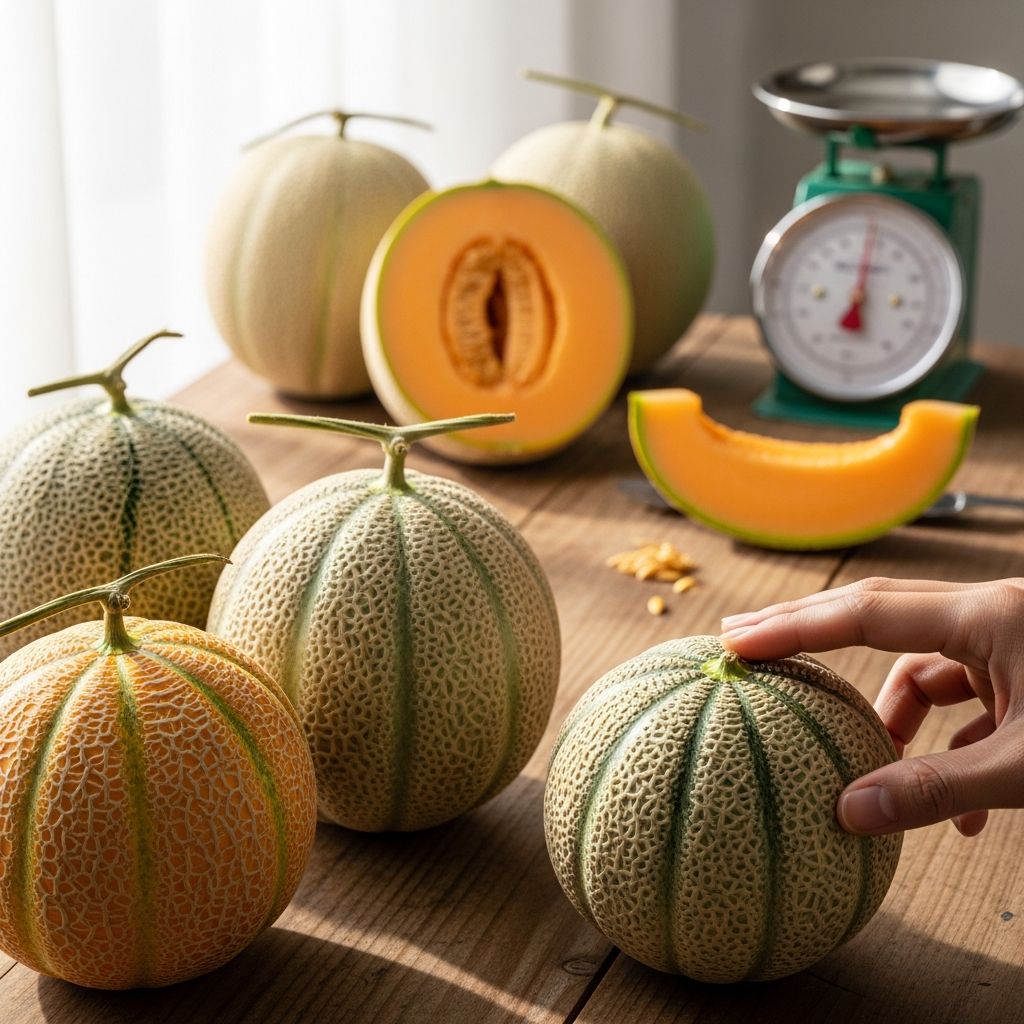
Ripe cantaloupes deliver sweet, juicy flavor packed with nutrients, but selecting the right one requires knowing key ripeness indicators like color, texture, weight, and aroma. This guide covers everything from visual cues and sensory checks to storage, preparation, health benefits, and common questions to ensure you always choose the best melon.
What to Look For When Picking a Cantaloupe
When shopping for cantaloupe, start with the exterior appearance. A ripe cantaloupe features a golden yellow or creamy beige rind, not green, which signals immaturity. The skin should display a prominent, well-defined netted pattern—raised, rough ridges that are beige or tan against the underlying gold color. Avoid melons with green hues peeking through the netting or smooth, untextured skin, as these are underripe.
Inspect for uniformity: the rind should be even in color without large soft spots, bruises, or cracks. A slight softness at the blossom end (opposite the stem) is ideal, but mushiness indicates overripeness. The stem end, if present, should be clean and smooth with no attached stem remnant, confirming proper harvest timing.
- Color: Golden yellow or cream, fully transitioned from green.
- Netting: Prominent, thick webbing covering most of the surface.
- Surface: Tan/beige net on gold background; no major blemishes.
Feel and Weight Checks
Beyond looks, heft the cantaloupe. A ripe one feels heavy for its size, indicating juicy flesh inside. Gently press the blossom end—it should yield slightly to thumb pressure without collapsing, a sign of peak ripeness. The edges where rind meets net should feel slightly separated or raised, not flush and smooth.
For garden-picked melons, check the stem attachment: at ‘full slip,’ it detaches easily with minimal force, unlike store-bought ones harvested earlier at ‘half slip’ for shipping. Heavy weight and subtle give distinguish prime specimens from lighter, firmer unripe ones.
Smell Test: The Ultimate Ripeness Indicator
The most reliable cue is scent. Sniff the blossom end or base—a strong, sweet, musky aroma like ripe fruit confirms readiness. No smell means it’s unripe; fermented or alcoholic odors suggest it’s past prime. This floral, cantaloupe-specific fragrance guarantees flavor-packed flesh.
Pro tip: In stores, bring it close without touching your face. Garden-fresh melons often carry an even stronger, sun-warmed perfume right off the vine.
How to Tell If a Cantaloupe Is Ripe in the Garden
Home growers time harvest 80-90 days post-seeding or 35 days after pollination, depending on variety, climate, and sunlight. Look for full slip: the melon separates from the vine effortlessly. Combine with gold rind, deep netting, soft blossom end, and musky scent. Harvest at half slip for storage, allowing 3 days to fully ripen indoors.
Related Stories



Start seeds indoors in early spring for robust plants suited to long, hot seasons. Pick promptly to avoid pests or splitting from overripeness.
Storing Cantaloupe Properly
Whole ripe cantaloupes store at room temperature for up to 5 days. Refrigerate uncut to extend to 10-14 days, but serve at room temp for best flavor. Once cut, wrap tightly in plastic or store in an airtight container in the fridge for 3-5 days. Avoid freezing whole; cubed flesh freezes well for smoothies.
Key safety: Wash rind under running water before cutting to remove bacteria from the porous netted surface. Pat dry, then slice—never use soap, as it absorbs into the rind.
Preparing Cantaloupe Safely
Wash thoroughly with cool water, scrubbing the rind gently. Use a sharp knife to halve, scoop seeds, and cube or ball the flesh. Clean all surfaces post-prep to prevent cross-contamination. Peak season runs April to December for optimal freshness.
Health Benefits of Cantaloupe
Cantaloupe is nutrient-dense: high in vitamins A and C for immunity and vision, plus fiber for digestion and folate for cell growth. One cup provides over 100% daily vitamin A, 60% vitamin C, with low calories (about 50 per cup). Its water content (90%) aids hydration; antioxidants combat inflammation.
| Nutrient | Per 1 Cup (177g) | % Daily Value |
|---|---|---|
| Vitamin A | 2710 IU | 54% |
| Vitamin C | 36.7 mg | 61% |
| Fiber | 1.6 g | 6% |
| Folate | 37 mcg | 9% |
| Calories | 54 | 3% |
Enjoy in salads, smoothies, or fresh slices for summer refreshment.
Frequently Asked Questions (FAQs)
Does cantaloupe ripen after picking?
Yes, somewhat—picked at half slip, it ripens further off-vine in 3 days at room temp (70°F+). Fully green ones won’t develop flavor.
What if I pick cantaloupe too early?
Early-picked melons soften but lack sweetness. Store warm to encourage ripening, though results vary.
How can I tell if store-bought cantaloupe is ripe?
Golden rind, heavy weight, soft blossom end, musky smell, and full netting.
Is cantaloupe safe to eat if the rind is dirty?
Wash thoroughly before cutting to avoid transferring bacteria to flesh.
When is cantaloupe in season?
Peak April-December; California produces top-quality ones.
Common Mistakes to Avoid
Don’t choose by size alone—focus on ripeness cues. Skip greenish or stem-attached melons. Overripe ones bruise easily; underripe lack taste.
References
- 3 Simple Tips for Picking Ripe Cantaloupe — Western Gardens (Wendy Pettit). 2022. https://westerngardens.com/3-tips-for-picking-ripe-cantaloupe/
- How & When To Pick Cantaloupe For Perfectly Ripe Melons — Gardening Know How. 2023. https://www.gardeningknowhow.com/edible/fruits/cantaloupe/harvesting-cantaloupe.htm
- How To Pick A Cantaloupe And A Comprehensive Guide — California Grown. 2024. https://californiagrown.org/blog/cantaloupe-nutrients/
- All About Cantaloupe – How to Pick, Prepare & Store — Healthy Family Project. 2023. https://healthyfamilyproject.com/produce-tips/cantaloupe/
- How to Pick a Cantaloupe: Tips for Buying Fresh Cantaloupe — MasterClass. 2022-01-13. https://www.masterclass.com/articles/how-to-pick-a-cantaloupe
- Picking, Preparing, and Storing Cantaloupe — YouTube (Eat. Move. Save.). 2023. https://www.youtube.com/watch?v=EiD6v–7vbM
Similar Articles








Read full bio of Sneha Tete