How To Strengthen Your Pelvic Floor: 5 Essential Exercises
Expert guide to pelvic floor exercises: Kegels, bridges, squats, and more for better bladder control, sexual health, and overall wellness.
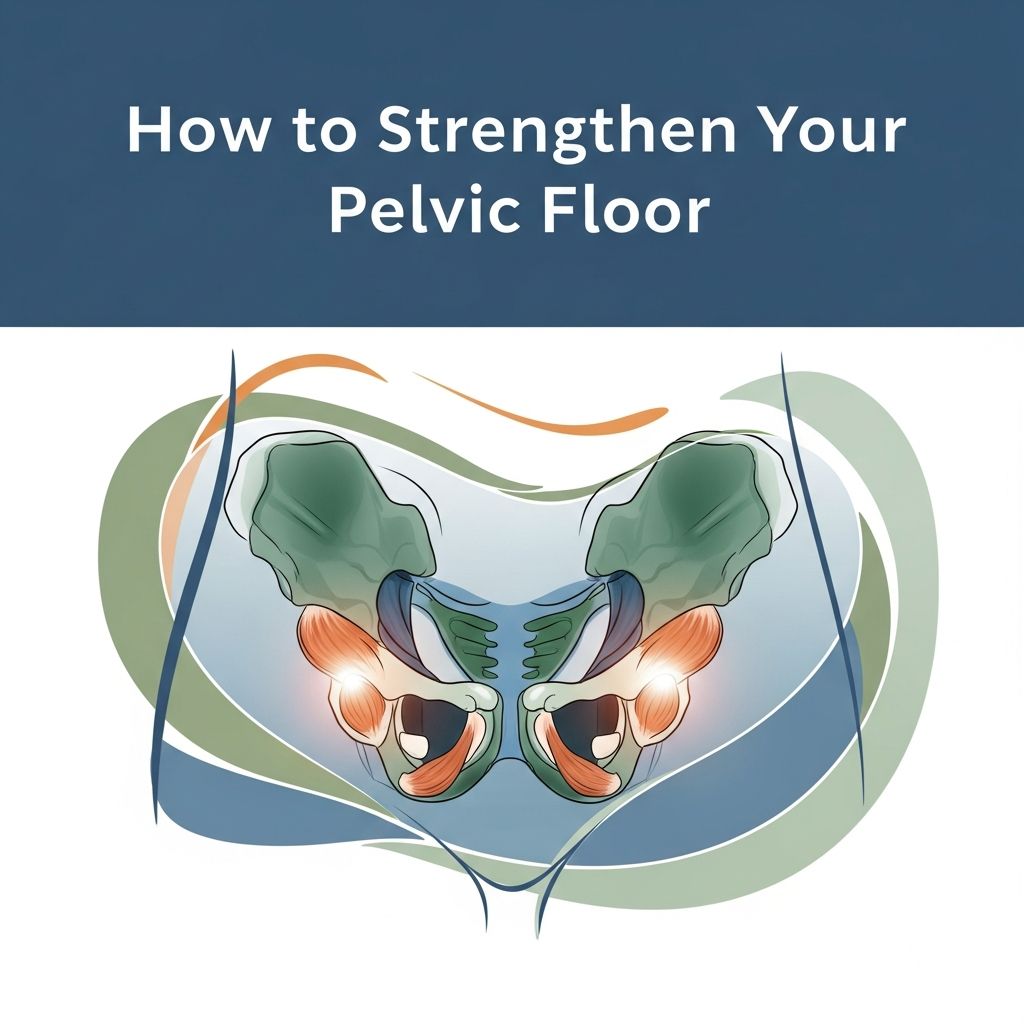
The pelvic floor consists of muscles and tissues that form a supportive hammock at the base of the pelvis, holding organs like the bladder, bowel, uterus (in women), and prostate (in men) in place. These muscles are essential for continence, sexual function, and core stability. Weakness can lead to urinary incontinence, fecal incontinence, pelvic organ prolapse, and sexual dysfunction. Strengthening them through targeted exercises can significantly improve symptoms and quality of life.
Pelvic floor muscle training is recommended for women with stress urinary incontinence, men post-prostate surgery, and anyone with fecal incontinence. Studies show pelvic floor muscle training (PFMT) effectively enhances quality of life, particularly for stress urinary incontinence, with regimens lasting at least 12 weeks yielding optimal results.
What Is the Pelvic Floor?
The
pelvic floor
refers to the group of muscles and connective tissues that span the bottom of the pelvic cavity. These muscles support pelvic organs, control urination and defecation, and contribute to sexual sensation and function. Key muscles include the levator ani (pubococcygeus, iliococcygeus, puborectalis) and coccygeus, along with sphincters around the urethra and anus.Weak pelvic floor muscles often result from pregnancy, childbirth, menopause, obesity, chronic coughing, heavy lifting, or aging. Symptoms include urine leakage during coughing or sneezing (stress incontinence), urgency, pelvic pressure, or reduced sexual satisfaction. Both men and women benefit from strengthening, as men experience issues post-prostatectomy.
Strengthening the pelvic floor improves organ support, reduces incontinence episodes by 29-59%, and enhances sexual function through better muscle hypertrophy and blood flow. It typically takes 12-16 weeks of consistent practice to notice improvements.
Why Strengthen Your Pelvic Floor?
- Prevent and treat incontinence: PFMT reduces urinary leakage and improves bladder control, especially stress and mixed incontinence.
- Support postpartum recovery: Parous women have weaker pelvic floors; training boosts strength and quality of life.
- Enhance sexual health: Stronger muscles increase sensation, arousal, and orgasm intensity for both sexes.
- Avoid prolapse: Better support prevents organs from descending into the vaginal canal.
- Improve core stability: Engages with glutes, abs, and back for better posture and injury prevention.
Research confirms PFMT’s noninvasive benefits, with yoga and Pilates as complementary options. Men gain improved erectile function and ejaculatory control via Kegels.
How to Find Your Pelvic Floor Muscles
Identifying the correct muscles is crucial to avoid straining abs, buttocks, or thighs. Try these methods:
- Stop urination midstream: The squeezing sensation is your pelvic floor contracting. Do this only once to locate, not as routine.
- Women: Insert a clean finger into the vagina; tighten as if holding urine. Feel muscles lift and clamp.
- Men: Insert a finger into the rectum; squeeze as if preventing gas passage.
- Imagine lifting: Visualize drawing the perineum (area between anus and genitals) upward like an elevator.
Related Stories



Relax completely between contractions. If unsure, consult a pelvic floor physical therapist for biofeedback or manual guidance.
Pelvic Floor Exercises
Incorporate these exercises 3-5 times daily, starting with 10 reps per set. Progress by increasing hold time or reps. Aim for 12 weeks minimum.
Kegel Exercises
The gold standard, named after Dr. Arnold Kegel. Contract pelvic floor for 5-10 seconds, relax equally. Avoid breath-holding.
- Empty bladder.
- Sit, stand, or lie down comfortably.
- Squeeze and lift pelvic floor; hold 10 seconds.
- Relax 10 seconds.
- Repeat 10 times, 3-5 sessions/day.
Progress to quick flicks (1-second contracts) and longer holds. Use vaginal weights for resistance.
Bridge Pose
Targets pelvic floor, glutes, and core.
- Lie on back, knees bent, feet hip-width.
- Arms at sides, palms down.
- Inhale, lift hips while squeezing pelvic floor.
- Hold 10-15 seconds; lower slowly.
- 10-15 reps, 3 sets.
Squats
Strengthens lower body and pelvic floor.
- Feet shoulder-width, toes slightly out.
- Lower as if sitting in chair, chest up.
- Squeeze pelvic floor on ascent.
- 3 sets of 10-15.
Pelvic Tilts
Stabilizes lower back and pelvis.
- Lie on back, knees bent.
- Tighten abs, tilt pelvis to flatten back.
- Hold 5 seconds; repeat 10-15 times.
Bird Dog
Builds balance and pelvic stability.
- On hands and knees, core engaged.
- Extend opposite arm and leg.
- Hold 5-10 seconds; alternate.
- 10 reps/side.
Combine with yoga or Pilates for variety; Iyengar yoga improved strength and QoL in studies.
Sample Pelvic Floor Workout Routine
| Exercise | Sets/Reps | Frequency |
|---|---|---|
| Kegels | 3×10 (10-sec hold) | 3-5x/day |
| Bridge | 3×12 | 3x/week |
| Squats | 3×15 | 3x/week |
| Pelvic Tilts | 3×15 | Daily |
| Bird Dog | 3×10/side | 3x/week |
Perform daily Kegels anywhere; strength exercises 2-3x/week. Track progress.
When Will You See Results?
Initial improvements in 4-6 weeks; major changes in 3 months with consistency. Full strength in 12-16 weeks. Parous women see faster symptom relief.
Who Should Avoid Pelvic Floor Exercises?
- Acute pelvic pain or infection.
- Post-surgery without clearance.
- Overactive pelvic floor (tightness causing pain).
Consult a doctor or pelvic PT if pain, heavy bleeding, or no improvement.
Frequently Asked Questions (FAQs)
Can men do pelvic floor exercises?
Yes, Kegels benefit men with post-prostate incontinence and sexual issues.
How often should I do Kegels?
3-5 times daily, 10 reps each.
Are Kegels safe during pregnancy?
Yes, they prepare for delivery; consult your provider.
What if I feel pain during exercises?
Stop and see a pelvic floor specialist; you may be over-tightening.
Can yoga replace Kegels?
It complements; Iyengar yoga strengthens similarly.
In summary, consistent pelvic floor training transforms health. Start today for lasting benefits.
References
- Five exercises to strengthen your pelvic floor — UT Health San Antonio Cancer Center. 2023. https://cancer.uthscsa.edu/news-and-stories/five-exercises-strengthen-your-pelvic-floor
- Effectiveness of Pelvic Floor Muscle Training on Quality of Life — National Library of Medicine (NIH). 2023-07-01. https://pmc.ncbi.nlm.nih.gov/articles/PMC10301414/
- Pelvic floor muscle training exercises — MedlinePlus (NIH). 2024. https://medlineplus.gov/ency/article/003975.htm
- Kegel Exercises: Benefits, How To & Results — Cleveland Clinic. 2023. https://my.clevelandclinic.org/health/articles/14611-kegel-exercises
- Pelvic floor: What it is and how to keep it healthy — UCLA Health. 2023. https://www.uclahealth.org/news/article/important-web-muscles-often-goes-overlooked
- Kegel exercises for men: Understand the benefits — Mayo Clinic. 2023. https://www.mayoclinic.org/healthy-lifestyle/mens-health/in-depth/kegel-exercises-for-men/art-20045074
Similar Articles








Read full bio of medha deb