How To Tell If Chicken Is Bad: 9 Signs To Spot Spoilage
Learn key signs like color changes, foul odors, and slimy textures to spot spoiled chicken and prevent foodborne illness.
Chicken is a staple in many kitchens, prized for its versatility and nutrition. However, improper storage can lead to spoilage, risking foodborne illnesses like salmonellosis from bacteria such as Salmonella and Campylobacter. Knowing how to spot bad chicken through visual cues, odors, and textures is essential for safety. This guide covers signs for raw, cooked, and frozen chicken, storage best practices, and FAQs to help you confidently determine if your poultry is safe to eat.
Why Chicken Spoils and Why It Matters
Chicken spoils due to bacterial growth, especially in the ‘danger zone’ of 40°F to 140°F (4°C to 60°C), where pathogens multiply rapidly. Raw chicken often harbors germs, and even cooked meat can spoil if not refrigerated promptly. According to the CDC, chicken causes about 1 in 8 foodborne illnesses in the U.S., emphasizing the need for vigilance. Early detection prevents waste and protects health, as consuming spoiled chicken can cause nausea, vomiting, diarrhea, and severe complications.
Spoilage indicators include chemical changes from oxidation and microbial activity, altering color via pigments like oxymyoglobin to metmyoglobin, producing off odors from volatile compounds, and creating slimy films from bacterial exopolysaccharides. Always err on the side of caution: when in doubt, throw it out.
Signs Your Raw Chicken Has Gone Bad
Raw chicken is highly perishable. Fresh raw chicken appears light pink with white fat, has minimal odor, and feels moist but not sticky. Spoilage manifests quickly if not stored below 40°F (4°C).
Color Changes
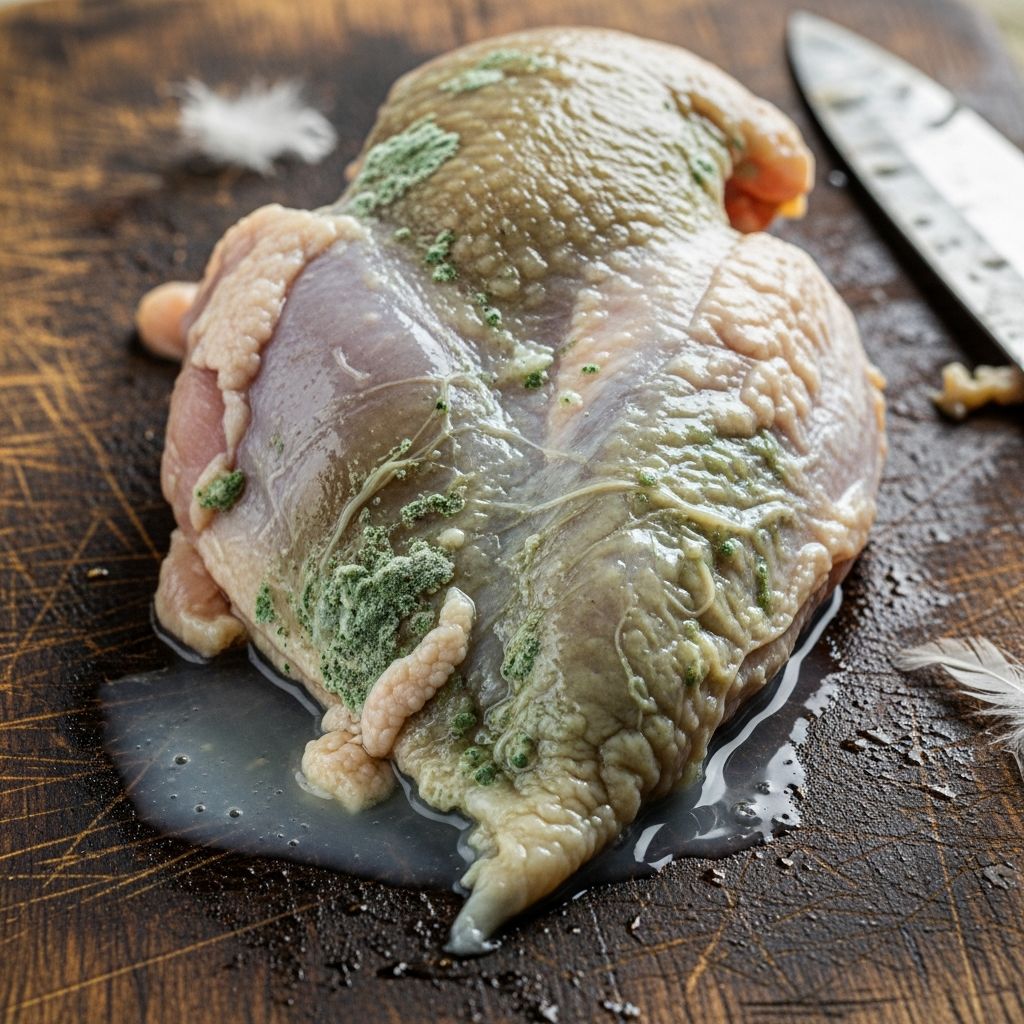
Inspect raw chicken closely before cooking. Healthy raw chicken has pale pink flesh and creamy white fat. Discard if you see:
- Gray, green, or dull brown flesh, indicating bacterial breakdown.
- Yellow fat, a sign of rancidity from lipid oxidation.
- Dark spots or iridescent sheen on the skin, often from handling or age.
Mild darkening near the edges is normal from oxygen exposure but signals the chicken is less fresh—cook or freeze within 1-2 days. Mold, visible as fuzzy spots, means immediate disposal; unlike cheese, you cannot trim it from chicken.
Smell Test
Fresh raw chicken smells neutral or faintly meaty. Spoiled chicken emits a sour, ammonia-like, or sulfurous rotten-egg odor from hydrogen sulfide produced by bacteria. If the smell is prominent upon opening the package, do not proceed—though smell alone isn’t foolproof, as some people have reduced olfactory sensitivity.
Texture and Touch
Touch raw chicken with clean hands. It should feel glossy, slightly moist, and springy. Warning signs include:
- Slimy or sticky residue coating your fingers, from bacterial biofilms.
- Tacky or dry, leathery surface[6 from 1].
If handling leaves a slimy film, wash hands thoroughly for 20 seconds with soap and discard the chicken to avoid cross-contamination. Never rinse raw chicken, as this spreads bacteria via splashes.
How to Tell If Cooked Chicken Is Bad
Cooked chicken lasts longer but spoils faster than raw if not chilled quickly. Refrigerate leftovers within 2 hours of cooking at 40°F (4°C) or below, consuming within 3-4 days. Reheat to 165°F (74°C) internally.
Related Stories



Visual Inspection
Fresh cooked chicken is opaque white or golden-brown, juicy without pink hues (which indicate undercooking). Spoiled cooked chicken shows:
- Grayish, greenish, or dull discoloration.
- Mold spots (black, green, white fuzzy growth)—toss the entire batch.
- Excessive dryness or rubbery appearance from prolonged storage.
Sauces or seasonings can mask changes, so rely on other senses.
Odor Detection
Cooked chicken should smell savory. Bad cooked chicken develops a sour, cheesy, or putrid aroma, stronger than raw spoilage due to faster bacterial proliferation on cooked surfaces. Sniff before reheating—if off, discard.
Texture Changes
Good cooked chicken is firm yet tender. Spoiled versions feel:
- Slimy or mushy, with liquid pooling that’s not just condensation.
- Excessively soft or stringy, indicating protein breakdown.
Avoid taste-testing suspicious chicken, as even a small amount can cause illness.
Frozen Chicken: Detecting Spoilage After Thawing
Freezing halts bacterial growth at 0°F (-18°C), extending shelf life indefinitely for safety, though quality declines over time. Thaw in the fridge, cold water, or microwave—never at room temperature. Check thawed chicken as you would fresh raw.
- Freezer Burn: Grayish-white patches or ice crystals signal dehydration, affecting taste/texture but not safety if cooked promptly. Trim burned areas.
- Post-Thaw Signs: Sour smell, sliminess, or discoloration mean discard, as freeze-thaw cycles accelerate spoilage.
- Storage Limit: Use within 1-2 days of thawing. Refreezing thawed chicken reduces quality.
Chicken Storage Guidelines
Proper storage is key to preventing spoilage. Follow USDA timelines:
| Type | Fridge (40°F/4°C) | Freezer (0°F/-18°C) | Room Temp Max |
|---|---|---|---|
| Raw Chicken | 1-2 days | 9-12 months | 2 hours |
| Cooked Chicken | 3-4 days | 4 months | 2 hours |
Store in airtight containers or bags on the bottom fridge shelf to prevent drips. Check ‘use-by’ dates and discard if exceeded. Power outages? If fridge >40°F for >4 hours, cook/freeze or toss perishable items.
Preventing Food Poisoning from Chicken
The CDC reports raw chicken contaminates 1 million Americans yearly with food poisoning. Minimize risks:
- Cook to 165°F (74°C) using a thermometer.
- Wash hands, utensils, surfaces after contact.
- Avoid cross-contamination with ready-to-eat foods.
- Thaw safely in fridge.
Symptoms of illness include diarrhea, fever, cramps—seek medical help if severe.
Frequently Asked Questions (FAQs)
Can I eat chicken that’s slightly discolored?
Mild edge darkening is often safe if no other signs (smell, slime) and within storage times, but cook immediately.
How long can cooked chicken sit out?
No more than 2 hours (1 hour if >90°F ambient). Bacteria double every 20 minutes in danger zone.
Is slimy thawed chicken safe?
No—sliminess post-thaw indicates bacterial growth during improper handling; discard.
What if chicken smells fine but is past date?
Dates are quality guides; use senses and storage history. Better safe than sorry.
Can I refreeze thawed chicken?
Yes, if thawed in fridge and still fresh, but texture suffers.
Bottom Line
Spotting bad chicken safeguards your health. Prioritize color (no gray/green), smell (no sour/rotten), texture (no slime), and timelines. Safe handling prevents most issues—enjoy chicken confidently with these tips.
References
- How to Tell if Chicken Is Bad: Signs and What to Look For — Healthline. 2023-05-15. https://www.healthline.com/nutrition/how-to-tell-if-chicken-is-bad
- How to Tell If Chicken Is Bad: A Guide — Pillsbury. 2024-02-10. https://www.pillsbury.com/how-to/how-to-tell-if-chicken-is-bad-guide
- How to Tell if Cooked Chicken is Bad — Laura Fuentes. 2023-08-22. https://www.laurafuentes.com/tell-cooked-chicken-bad/
- Chicken and Food Poisoning | Food Safety — CDC (.gov). 2025-01-10. https://www.cdc.gov/food-safety/foods/chicken.html
Similar Articles








Read full bio of Sneha Tete