How To Treat A Burn: 3 Essential First Aid Steps
Expert guidance on identifying burn severity, immediate first aid steps, home care tips, and when to seek emergency medical attention for optimal healing.
Burns are common injuries affecting approximately 500,000 patients annually in the United States, with most treated as outpatients. Proper treatment depends on the burn’s degree, size, location, and cause, aiming to minimize damage, prevent infection, control pain, and promote healing.
What Is a Burn?
A burn occurs when skin or underlying tissues are damaged by heat, chemicals, electricity, friction, or radiation. Thermal burns from flames, hot liquids, or steam are most common across all ages. Severity is classified by depth: first-degree (superficial), second-degree (partial-thickness), and third- or fourth-degree (full-thickness). Even small burns can cause significant pain, infection risk, and scarring if mishandled.
Burn Degrees: First-, Second-, and Third-Degree Burns
Burns are categorized by layers of skin affected, influencing treatment and healing time.
- First-degree burns affect only the outer epidermis, appearing red, dry, and painful like a mild sunburn. They heal in 3-6 days without scarring.
- Second-degree burns involve the epidermis and dermis, causing blisters, swelling, and severe pain. Superficial partial-thickness types heal in 1-3 weeks; deeper ones may scar and require surgery.
- Third- and fourth-degree burns destroy all skin layers into fat, muscle, or bone, appearing leathery, white, black, or charred with little pain due to nerve damage. These demand immediate hospital care.
| Burn Degree | Skin Layers Affected | Appearance | Pain Level | Healing Time |
|---|---|---|---|---|
| First-degree | Epidermis | Red, dry | Painful | 3-6 days |
| Second-degree (superficial) | Epidermis + upper dermis | Red, blistered, moist | Severe | 1-3 weeks |
| Second-degree (deep) | Epidermis + deep dermis | White/red, thick | Less painful | >3 weeks, may scar |
| Third/fourth-degree | All layers + deeper tissues | Leathery, charred | Little/none | Months, grafting needed |
Depth can progress within 48 hours if untreated, worsening outcomes.
Burn First Aid: Stop, Cool, and Cover
Immediate first aid halts damage and eases pain. Act within 3 hours for best results.
- Stop the burning process: Remove from heat source, smother flames with water or blanket, and remove tight items like rings before swelling.
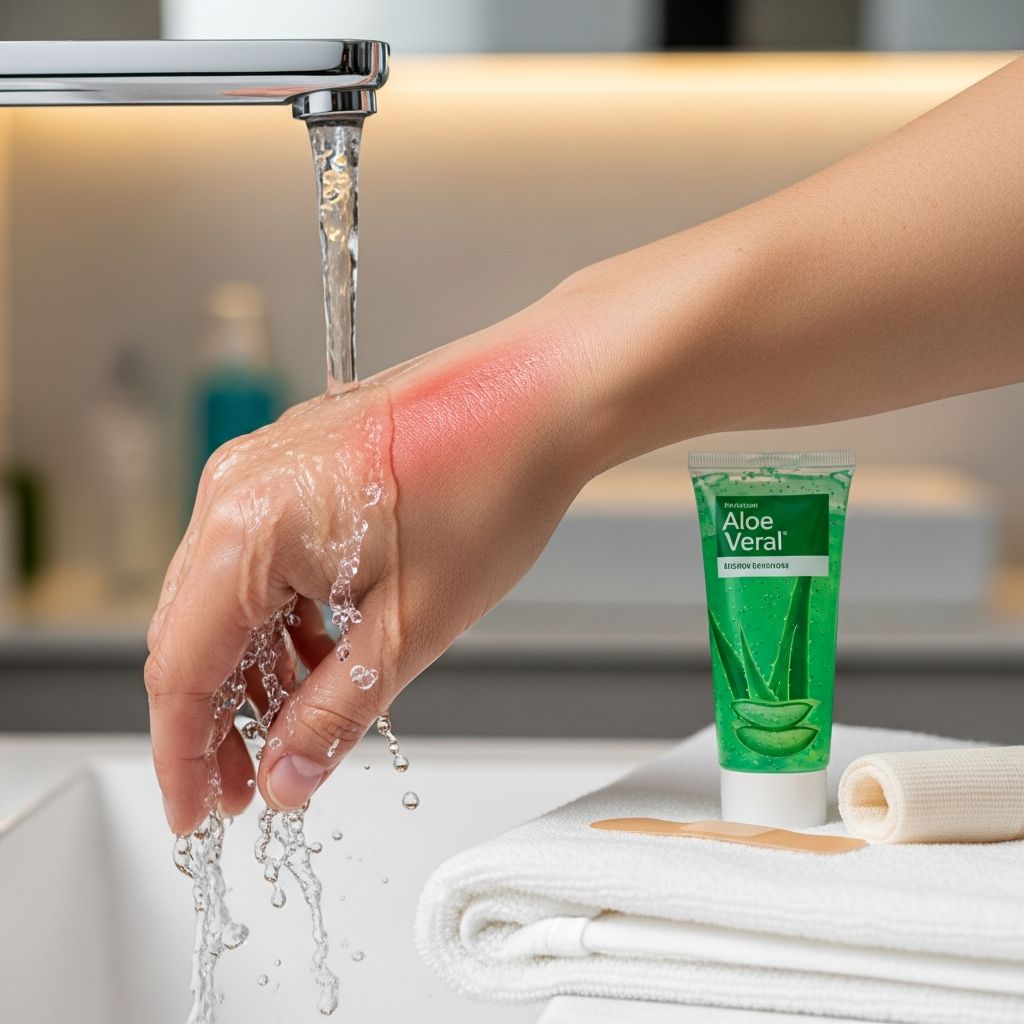
- Cool the burn: Run cool (not ice-cold) tap water over it for 10-20 minutes to reduce temperature, pain, and swelling. Avoid ice, which damages tissue.
- Cover loosely: Apply sterile non-stick gauze or clean cloth. Do not pop blisters or use butter, oils, or adhesive bandages.
For chemical burns, flush with water for 20+ minutes; electrical burns need professional evaluation for hidden damage.
Cool the Burn: Why and How Long?
Cooling with running tap water for at least 20 minutes constricts vessels, limits burn progression, and provides analgesia. Whirlpool baths may aid debridement in medical settings. Continue until pain subsides, but limit to avoid hypothermia, especially in children or large burns.
Should You Cover a Burn or Leave It Uncovered?
Most burns benefit from covering to protect from infection, reduce pain, and maintain moisture. Superficial burns may air out briefly, but use moist gauze for partial-thickness to promote reepithelialization. Change dressings daily or if soiled; elevate limbs to reduce swelling.
How to Treat Minor Burns at Home
Minor burns (<10% body surface area, first- or superficial second-degree) can be managed outpatient.
- Clean gently with mild soap and water.
- Apply antibiotic ointment like bacitracin if no allergies.
- Moisturize with aloe vera or petroleum jelly post-cooling to prevent drying.
- Take OTC pain relievers: ibuprofen or acetaminophen.
- Bandage loosely; change daily.
Related Stories



Avoid home remedies like toothpaste or eggs, which increase infection risk.
When to See a Doctor for a Burn
Seek immediate care for:
- Second-degree+ burns, or first-degree >3 inches.
- Burns on face, hands, feet, genitals, joints, or covering >10% body (palm size ≈1%).
- Signs of infection: increased pain, pus, fever, red streaks.
- Chemical/electrical/inhalation injuries.
- Children, elderly, or those with health conditions.
Burn center referral criteria include full-thickness burns, critical areas, or >20% TBSA in adults.
Treating Major Burns
Major burns require hospital care at specialized centers for IV fluids, pain control (morphine), infection prevention (silver sulfadiazine), and wound care. Treatments include:
- Wound care: Debridement, dressings, topical antimicrobials.
- Supportive: Fluids to prevent shock, tetanus prophylaxis, nutrition via feeding tube.
- Surgery: Escharotomy for circulation, skin grafts using patient/donor skin.
- Therapy: Physical/occupational to maintain mobility.
Healing may take months with emotional support.
Frequently Asked Questions (FAQs)
What should you not put on a burn?
Avoid ice, butter, oils, toothpaste, or cotton balls, as they trap heat, irritate skin, or introduce bacteria.
Should you put Neosporin on a burn?
Yes, for minor burns if no allergy; it prevents infection. Use bacitracin or silver sulfadiazine medically.
Can you shower with a burn?
Yes, after initial cooling; use lukewarm water and pat dry. Keep dressings dry or shower post-removal.
How long should you leave a burn uncovered?
Briefly for superficial burns, but cover promptly to protect. Moist dressings aid healing.
Do burns heal faster covered or uncovered?
Covered with moist dressings for partial-thickness; promotes faster reepithelialization vs. dry exposure.
Burn Prevention Tips
Prevent burns by:
- Setting water heaters <120°F.
- Using pot holders; turn handles inward.
- Keeping children from kitchens during cooking.
- Installing smoke detectors; fire extinguishers.
- Supervising grills, irons, and chemicals.
Post-healing, use sunscreen and moisturizer to minimize scarring.
References
- Burns – Diagnosis and treatment — Mayo Clinic. 2023-10-12. https://www.mayoclinic.org/diseases-conditions/burns/diagnosis-treatment/drc-20370545
- How to Treat a Burn at Home — University Health. 2024-05-15. https://www.universityhealth.com/blog/how-to-treat-a-burn
- Burns Injuries: Treat at Home or Go to ER? — Orlando Health. 2023-08-20. https://www.orlandohealth.com/content-hub/burns-injuries-treat-at-home-or-go-to-er/
- Outpatient Burn Care: Prevention and Treatment — American Academy of Family Physicians (AAFP). 2020-04-15. https://www.aafp.org/pubs/afp/issues/2020/0415/p463.html
- Learn About Burn Care — NIH News in Health. 2021-09-01. https://newsinhealth.nih.gov/2021/09/learn-about-burn-care
- Burn Treatment & Prevention Tips for Families — American Academy of Pediatrics (HealthyChildren.org). 2023-11-10. https://www.healthychildren.org/English/health-issues/injuries-emergencies/Pages/Treating-and-Preventing-Burns.aspx
Similar Articles








Read full bio of medha deb