How To Treat Sunburn At Home: Expert Tips For Fast Relief
Effective home remedies and self-care tips to soothe sunburn pain, reduce inflammation, and promote healing safely.
Sunburn is a common skin injury caused by excessive ultraviolet (UV) radiation exposure, leading to inflammation, pain, redness, and sometimes blisters. While it cannot be reversed, home treatments effectively manage symptoms, promote healing, and prevent complications like infection or dehydration.
What is sunburn and why does it happen?
Sunburn occurs when UV rays from the sun overwhelm the skin’s melanin pigment, which normally protects against damage. This triggers inflammation as the body responds to the injury, resulting in hot, red, painful skin. Factors like fair skin, high altitude, reflective surfaces (e.g., water or snow), and certain medications increase susceptibility. Mild cases resolve in days, but severe ones may cause peeling, blisters, fever, or nausea.
Symptoms of sunburn
Sunburn symptoms typically appear 4-6 hours after exposure and peak at 24-36 hours. Common signs include:
- Redness and warmth to the touch
- Pain or tenderness, ranging from mild sting to severe burn
- Swelling, especially on face, ears, or shoulders
- Blisters in moderate to severe cases
- Itching or peeling as skin heals
- Systemic symptoms like headache, fever, chills, nausea, or confusion in severe ‘sun poisoning’
Seek immediate medical help for extensive blistering, high fever (>101°F/38.3°C), severe pain unrelieved by over-the-counter meds, or signs of infection like pus or increased swelling.
Immediate steps after sunburn
Act quickly to minimize damage:
- Get out of the sun immediately and into a cool, shaded area.
- Remove tight clothing to avoid friction.
- Avoid hot showers or further heat exposure.
How to cool sunburnt skin
Cooling reduces inflammation and pain. Mayo Clinic recommends several methods:
- Cool baths or showers: Take a cool (not ice-cold) bath or shower for 10 minutes, several times a day. Add 2 ounces (60g) baking soda or colloidal oatmeal for extra soothing.
- Cool compresses: Apply a clean towel soaked in cool tap water to affected areas for 10-15 minutes, repeating as needed.
- Avoid ice: Direct ice can damage skin further; use cool water instead.
Gently pat skin dry afterward to retain moisture.
Pain relief for sunburn
Over-the-counter pain relievers are first-line for discomfort and swelling:
- NSAIDs like ibuprofen (Advil, Motrin): Reduce pain and inflammation; take as soon as symptoms start.
- Acetaminophen (Tylenol): For pain if NSAIDs are unsuitable.
- Avoid aspirin in children due to Reye’s syndrome risk.
For itching during peeling, an oral antihistamine like diphenhydramine (Benjhistamine) may help.
Moisturizing sunburnt skin
Moisturizers restore the skin barrier and ease tightness:
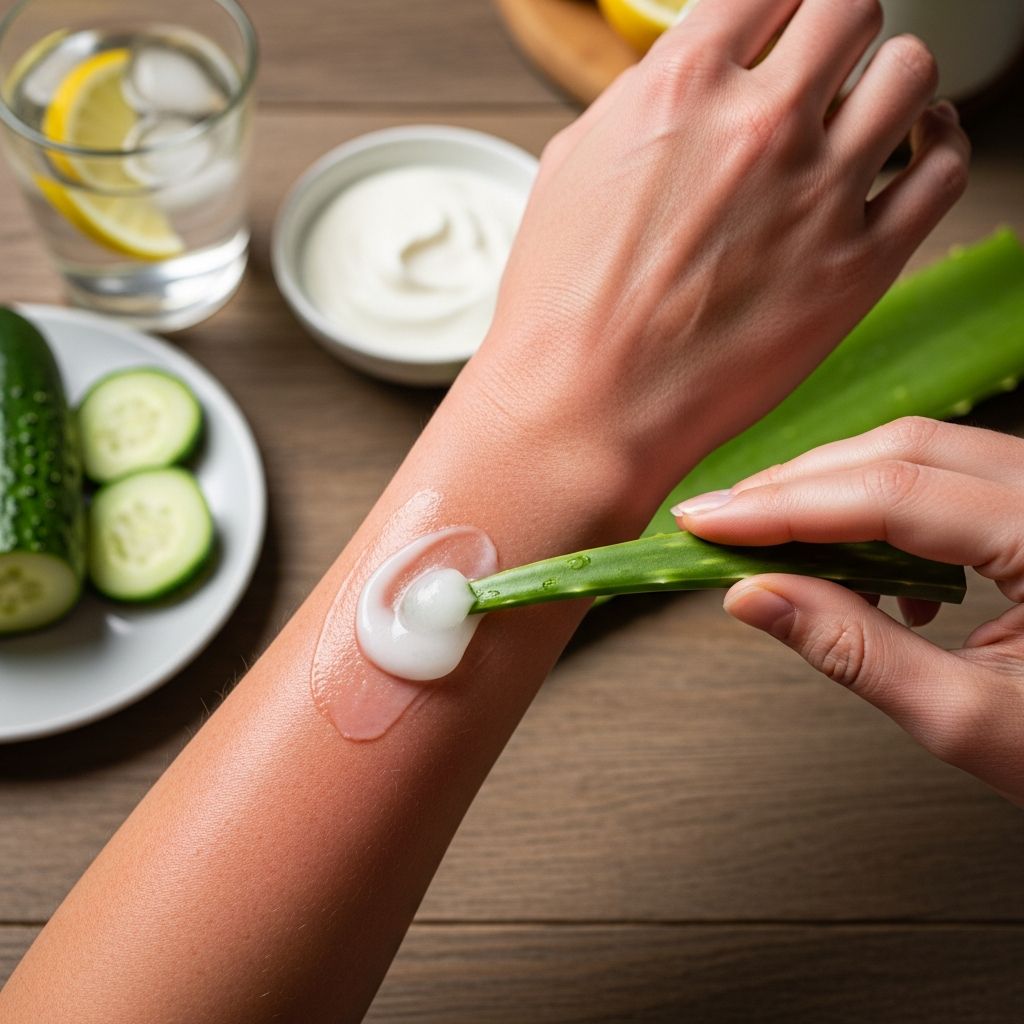
- Aloe vera gel or lotion: Soothes and has anti-inflammatory aloin; refrigerate for cooling effect. Avoid alcohol-based products.
- Calamine lotion: Relieves itching.
- Hydrocortisone 1% cream: Apply sparingly 3 times daily for 3 days on mild-moderate burns.
- Emollients: Fragrance-free options like those with vitamins C and E may limit cell damage.
Apply while skin is damp post-cool bath for better absorption. Continue until peeling resolves.
Protecting blisters from sunburn
Blisters indicate second-degree burns; handle carefully to prevent infection:
- Leave intact blisters alone—they protect underlying skin.
- If broken: Trim dead skin with clean scissors, wash with mild soap/water, apply antibiotic ointment, and cover with nonstick bandage.
- Cover with cool, damp compresses; use aloe vera moisturizer.
- Avoid popping, petroleum jelly, alcohol, or oils, which trap heat or irritate.
Wear loose clothing; monitor for infection (pus, fever).
Hydration and diet tips
Sunburn draws fluid to the skin, risking dehydration:
- Drink extra water: Aim for 8-10 glasses daily or more if blistered.
- Electrolytes: Oral rehydration solutions if nauseous or vomiting.
- Eat anti-inflammatory foods like fruits, vegetables; avoid alcohol/caffeine.
Related Stories



Treating peeling skin after sunburn
Peeling starts 3-8 days post-burn as damaged skin sheds:
- Gently moisturize to minimize discomfort.
- Avoid scrubbing or picking to prevent scarring/infection.
- Use antihistamines for itch.
New skin is sensitive—protect with sunscreen.
Sunburned eyes and lips
Eyes: Apply cool compresses; avoid contacts/rubbing until healed. Sunglasses help.
Lips: Use petroleum-free balm; hydrate internally.
When to see a doctor for sunburn
Home care suffices for most, but seek care if:
- Blisters cover >20% body or large areas.
- Fever >101°F, chills, confusion, rapid heartbeat.
- Severe swelling/pain not relieved by OTC meds.
- Signs of infection: pus, warmth, streaking.
- Repeated sunburns or history of skin cancer.
Providers may prescribe steroids or admit for severe cases.
Preventing sunburn in the future
Prevention is key to avoid cumulative damage and skin cancer risk:
| Strategy | Details |
|---|---|
| Sunscreen | SPF 30+ broad-spectrum; apply generously 15-30 min before sun, reapply every 2 hours, after swimming/sweating. |
| Clothing | Long sleeves, pants, wide-brim hats, UV-protective fabrics, sunglasses. |
| Timing | Avoid peak sun 10am-4pm; seek shade. |
| Medications | Check for photosensitivity (e.g., antibiotics, retinoids). |
Children and fair-skinned individuals need extra vigilance.
Frequently Asked Questions (FAQs)
What is the fastest way to heal sunburn?
Cool the skin, take NSAIDs, moisturize with aloe, and stay hydrated. Healing takes 3-7 days for mild cases.
Is coconut oil good for sunburn?
No—oils trap heat and increase infection risk. Stick to water-based aloe or lotions.
Can sunburn make you sick?
Yes, severe cases cause ‘sun poisoning’ with fever, nausea, dehydration. Drink fluids and monitor symptoms.
How long does sunburn pain last?
Pain peaks at 24-36 hours and fades in 3-5 days with treatment.
Does aloe vera really help sunburn?
Yes, its anti-inflammatory compounds soothe and moisturize effectively.
Conclusion
Effective home treatment of sunburn involves cooling, pain relief, moisturizing, and protection while healing. Consistent sun safety prevents recurrence and long-term risks like skin cancer. Consult professionals for severe symptoms.
References
- Sunburn – Diagnosis and treatment — Mayo Clinic. 2023-10-15. https://www.mayoclinic.org/diseases-conditions/sunburn/diagnosis-treatment/drc-20355928
- Sun and Sunburn: Risks, Treatment, and Protection — Patient.info. 2024-05-20. https://patient.info/skin-conditions/sun-and-sunburn
- How to treat sunburn blisters at home — Patient.info. 2024-03-12. https://patient.info/features/skin-conditions/how-to-treat-sunburn-blisters
- Sunburn: Causes, Symptoms, and Treatment — Patient.info Doctor. 2023-11-08. https://patient.info/doctor/dermatology/sunburn
- The best ways to treat a sunburn — UCLA Health. 2023-07-19. https://www.uclahealth.org/news/article/the-best-ways-to-treat-a-sunburn
- Sunburn — MedlinePlus Medical Encyclopedia. 2024-01-10. https://medlineplus.gov/ency/article/003227.htm
- Sunburn — NCBI Bookshelf StatPearls. 2023-07-17. https://www.ncbi.nlm.nih.gov/books/NBK534837/
Similar Articles








Read full bio of Sneha Tete