How Travel Affects Your Period: Causes and Solutions
Understanding why travel disrupts your menstrual cycle and how to manage it effectively.
How Travel Affects Your Period: Understanding the Connection
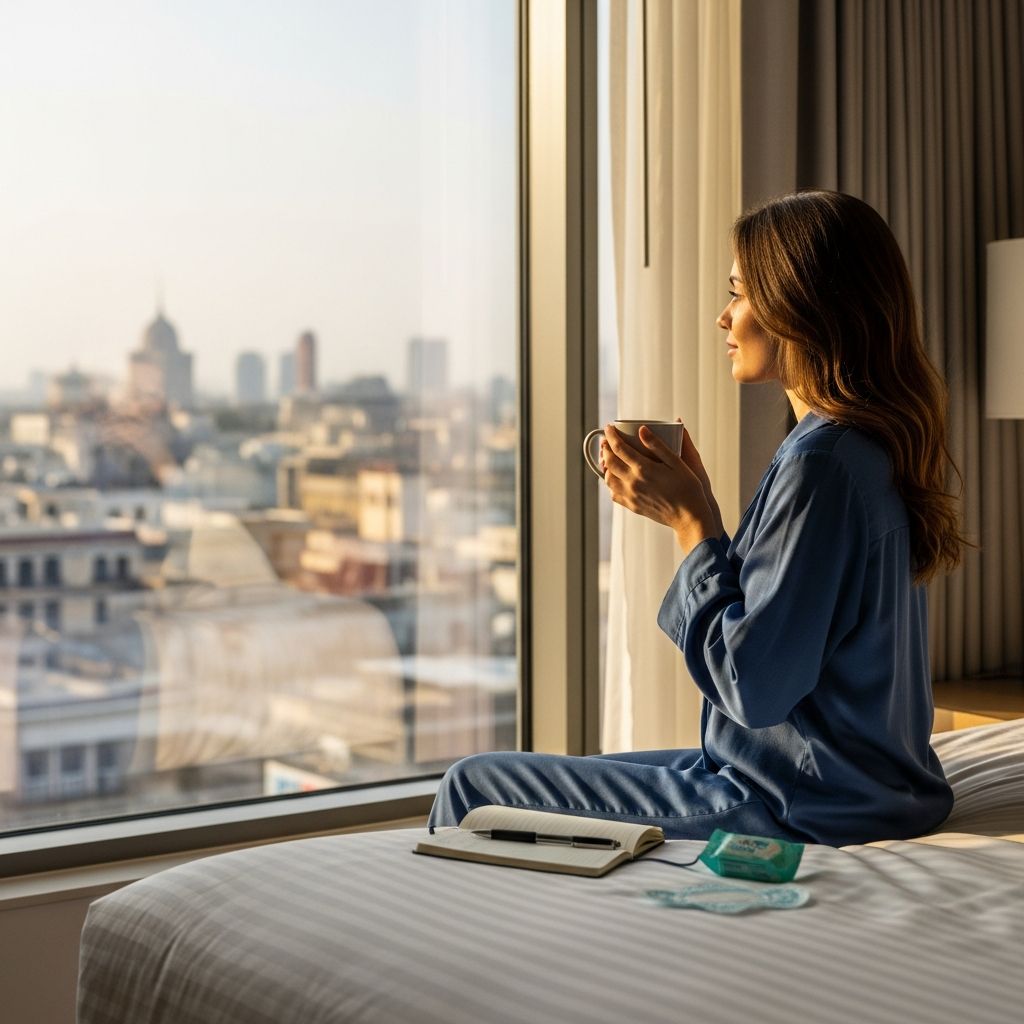
Travel can significantly disrupt your menstrual cycle, causing periods to arrive late, early, or with unexpected changes in flow and symptoms. While this can be concerning, understanding the science behind travel-related cycle changes can help you prepare and manage symptoms with confidence. Your menstrual cycle operates on a roughly 28-30 day rhythm, regulated by complex hormonal signals that are surprisingly sensitive to disruptions in your body’s natural routines.
The Science Behind Period Disruption During Travel
Your body maintains two overlapping biological rhythms: your menstrual cycle and your circadian rhythm. Your circadian rhythm controls sleep-wake patterns, appetite, body temperature, and hormone release throughout each 24-hour period. When you travel, especially across time zones, both rhythms can become desynchronized, triggering cascading effects on your reproductive hormones.
The hypothalamus, a crucial part of your brain, releases gonadotropin-releasing hormone (GnRH), which signals your pituitary gland to release follicle-stimulating hormone (FSH) and luteinizing hormone (LH). These hormones then travel to your ovaries to orchestrate ovulation and menstruation. When your circadian rhythm gets disrupted during travel, the timing and amount of these hormone releases can change, potentially delaying ovulation or altering your cycle length.
How Jet Lag Disrupts Your Menstrual Cycle
Traveling across time zones creates jet lag, a condition that extends beyond mere tiredness. Jet lag symptoms include trouble falling and staying asleep, daytime sleepiness, loss of concentration, fatigue, disorientation, and digestive issues. These symptoms are usually stronger when traveling west to east, and can last over twice as long because your body finds it harder to adjust to a shorter day.
The menstrual cycle disruption from jet lag occurs because your reproductive hormones are tightly linked to your circadian rhythms. When you suddenly change time zones, your body’s internal clock becomes misaligned with external environmental cues like sunlight and meal times. This misalignment directly impacts the timing of hormone releases that control ovulation and menstruation.
The Role of Stress in Travel-Related Period Changes
Even when having fun on vacation, your body may experience significant stress. Not all stress feels negative emotionally, but physiologically, your body responds to any major change in routine or environment as a stressor. Stress ranks among the most well-documented factors that can disrupt menstrual cycles.
When you’re stressed, your body releases cortisol from your adrenal glands. Elevated cortisol has downstream effects on reproductive hormones including estrogen and progesterone. These hormonal changes can lead to delayed or early periods, changes in flow, and intensified PMS or PMDD symptoms. The combination of jet lag, sleep disruption, dietary changes, and excitement can elevate cortisol for the duration of your trip and even for days afterward as you readjust.
Scientists explain this response with the body’s survival strategy: stress signals that your body is under distress and not in a safe environment. In some cases, a mechanism to prevent pregnancy activates in the form of period delay, as your body interprets the uncertain travel environment as unsuitable for reproduction.
Related Stories



Additional Factors That Influence Your Cycle During Travel
Beyond jet lag and stress, several other travel-related factors can affect your menstrual cycle:
- Sleep disruption: Changes in sleep patterns interfere with melatonin production and circadian rhythm regulation, affecting hormone release.
- Dietary changes: Different foods, meal times, and eating patterns can influence your body’s metabolic processes and hormone balance.
- Reduced physical activity: Prolonged sitting during flights or road trips can impact circulation and may intensify menstrual cramps and discomfort.
- Dehydration: Travel often leads to decreased fluid intake, which can affect hormone concentration and menstrual symptoms.
- Alcohol consumption: Increased alcohol intake during vacation can stress your body and disrupt hormonal balance.
Common Changes in Your Menstrual Cycle During Travel
Travel can cause various changes to your menstrual cycle, depending on multiple factors including the timing of your travel, the severity of disruption, and your individual sensitivity to environmental changes.
| Type of Change | Description | Likelihood |
|---|---|---|
| Delayed Period | Your period arrives 3-7 days late, or up to 2 weeks in some cases | Most common |
| Early Period | Your period arrives a few days before expected | Common |
| Skipped Period | Your period does not arrive during the expected cycle | Less common |
| Changes in Flow | Heavier, lighter, or different duration than usual | Common |
| Symptom Intensification | Increased cramping, mood changes, or other PMS symptoms | Common |
When Your Cycle Phase Matters Most
The timing of your travel relative to your menstrual cycle phase significantly influences whether and how your period will be affected:
- Traveling before ovulation: If you travel right before you would normally ovulate, you’re more likely to experience delays because ovulation represents the most hormonally sensitive event of the cycle. Stress-induced cortisol elevation can disrupt the precise hormonal surge needed for ovulation.
- Traveling after ovulation: If you travel after ovulation has already occurred, your luteal phase resists change more effectively, typically lasting 14 days regardless of external stressors. Your period may arrive closer to schedule.
- Traveling during the luteal phase: If you’re in the late luteal phase (the week or so before your period) when you travel, increased stress hormones may cause the corpus luteum to break down faster than usual, potentially bringing your period a few days early.
Short Trips vs. Long Journeys
Travel duration significantly affects the likelihood and severity of menstrual cycle disruption. Short trips, such as weekend getaways, can affect your period even though the effect usually feels less pronounced than with longer journeys or multiple time zone changes. A weekend getaway can still involve stress, sleep disruption, dietary changes, and excitement—all factors that influence your hypothalamus and pituitary gland.
Longer trips force your body to undergo more extensive adaptation, which can prolong the disruption. If you’re traveling for weeks or constantly moving between time zones, the cumulative stress and circadian misalignment can cause more significant cycle changes that take longer to normalize.
Does Birth Control Protect Your Cycle During Travel?
If you’re on hormonal birth control, traveling typically won’t affect your period timing because hormonal birth control suppresses your natural cycle. Birth control pills, patches, rings, and hormonal IUDs work by providing steady levels of synthetic hormones that prevent ovulation and keep hormone levels relatively constant. Since your cycle isn’t responding to the natural hormonal fluctuations that travel disrupts, external stressors have less impact on your scheduled bleeding.
Managing Your Period While Traveling
Several practical strategies can help you manage your period effectively during travel:
- Track your cycle: Use a period tracker or menstrual calendar to predict when your period should arrive during your trip, so you won’t be caught off guard.
- Pack supplies: Bring more period products than you expect to need, as your preferred brands may not be available at your destination.
- Maintain hydration: Drink plenty of water throughout your journey to support hormonal balance and reduce cramping.
- Prioritize sleep: Gradually adjust your sleep schedule before traveling to help your body adapt to new time zones.
- Manage stress: Practice relaxation techniques like meditation, deep breathing, or yoga to help minimize cortisol elevation.
- Stay active: Take breaks from sitting to improve circulation and reduce the intensity of menstrual cramps.
- Maintain healthy eating: Try to eat balanced meals and avoid excessive alcohol, which can intensify hormonal disruption.
- Consider timing: If possible, schedule important activities after your expected period date to avoid planning around uncertainty.
When to Be Concerned About Period Changes
While travel-related period changes are usually temporary, certain situations warrant professional medical attention. You should consult a healthcare provider if:
- Your period ends up more than 2 weeks late after traveling and you’ve ruled out pregnancy
- You experience severe symptoms like heavy bleeding that soaks through multiple products per hour
- You have extreme pain that isn’t relieved by over-the-counter pain medication
- You experience other unusual signs like fever, foul-smelling discharge, or signs of infection
- Your cycle remains consistently irregular for more than two months after returning home
For most women, traveling affects periods temporarily, and cycles return to normal within one or two months of returning home. However, consistently irregular cycles should be addressed with a healthcare professional, as long-term disruptions can impact bone density, heart health, and risk of certain diseases.
Frequently Asked Questions
Q: Can traveling affect your period even on short trips?
Yes, traveling can affect your period even on short trips, though the effect usually feels less pronounced than with longer journeys or multiple time zone changes. Even a weekend getaway can involve stress, sleep disruption, dietary changes, and excitement—all factors that influence your hypothalamus and pituitary gland.
Q: Can traveling make your period come early instead of late?
Yes, traveling can make your period come early, though delayed periods are more common. If you’re in the late luteal phase when you travel, increased stress hormones may cause the corpus luteum to break down faster, triggering menstruation a few days early. Alternatively, if stress caused you to ovulate a few days earlier than usual, your period would also arrive early since menstruation occurs approximately 14 days after ovulation.
Q: Does birth control prevent travel from affecting your period?
If you’re on hormonal birth control, traveling typically won’t affect your period timing because hormonal birth control suppresses your natural cycle and provides steady levels of synthetic hormones that prevent ovulation and keep hormone levels relatively constant.
Q: How long does it take for your cycle to return to normal after traveling?
Cycles usually return to normal within one or two cycles after returning home. Most travel-related delays involve delays of 3-7 days, though delays up to 2 weeks can occur. If you tracked your cycle before travel, you may have noticed ovulation was late or unusual.
Q: Can road trips specifically affect your period?
While road trips don’t directly cause missed or irregular periods, prolonged sitting can impact circulation and intensify menstrual cramps and discomfort. Additionally, changes in diet and hydration practices while traveling can also influence your menstrual cycle through stress-related hormonal imbalances.
Q: What should I do if my period is more than 2 weeks late after traveling?
If your period is more than 2 weeks late after traveling and pregnancy tests are negative, consult a healthcare provider. While travel-related delays are typically temporary, persistent disruption beyond this timeframe may require professional evaluation.
References
- Does Traveling Affect Your Period? Jet Lag & Cycle Science — Samphire Neuro. https://www.samphireneuro.com/en-us/blog/does-traveling-affect-your-period
- How travel and jet lag can affect your period — Clue app. https://helloclue.com/articles/cycle-a-z/how-travel-jet-lag-can-affect-your-period
- Can Traveling Affect Your Period? If Yes, in What a Way? — Flo Health. https://flo.health/menstrual-cycle/health/period/traveling-on-your-period
- Handling Your Period on a Road Trip — Thinx. https://www.thinx.com/blogs/periodical/period-on-road-trip
- Traveling on Your Period? How to Care for Your Body and Stay — Pixie Cup. https://pixiecup.shop/blogs/blog/traveling-on-your-period
Similar Articles








Read full bio of Sneha Tete