HPV (Human Papillomavirus): Causes, Symptoms & Treatment
Understanding HPV: Learn about causes, symptoms, screening, and treatment options for cervical health.
Understanding HPV (Human Papillomavirus)
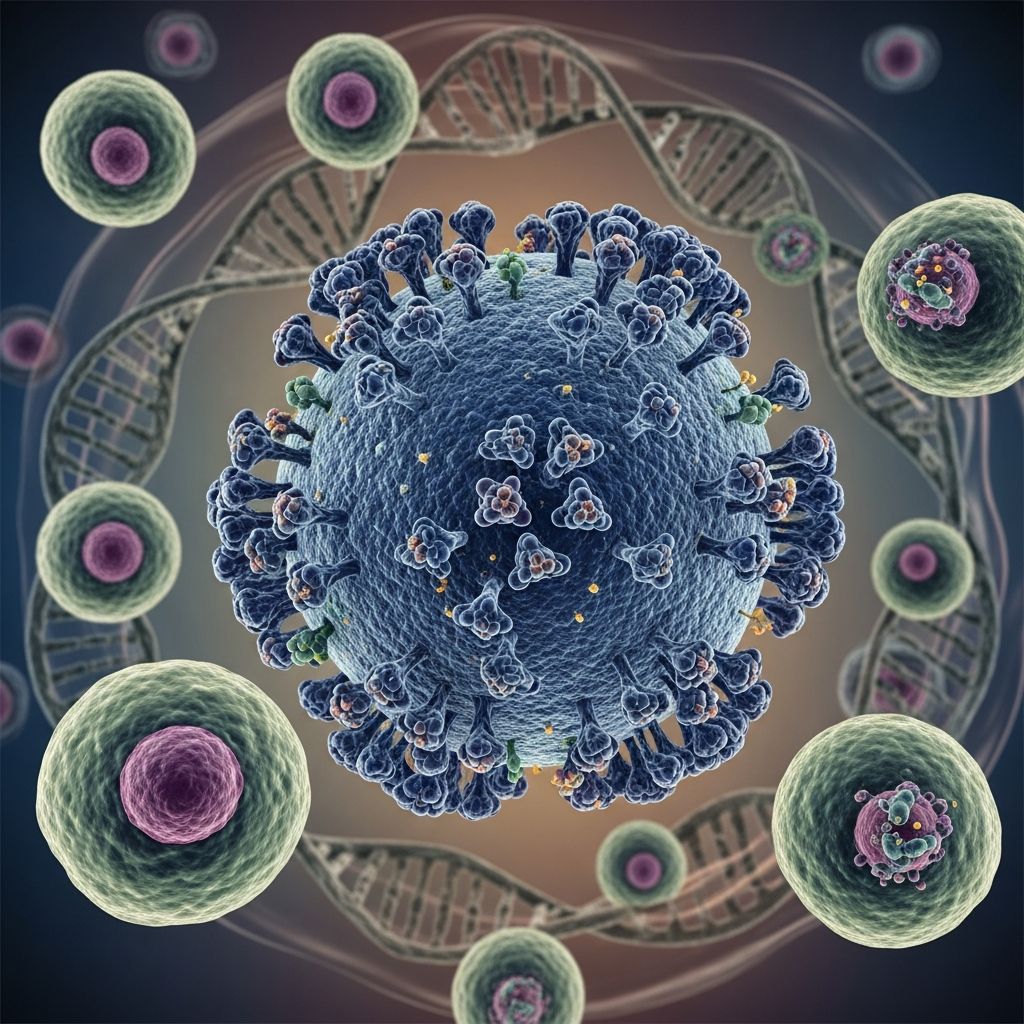
The human papillomavirus (HPV) is one of the most common sexually transmitted infections, affecting millions of people worldwide. HPV is a small, non-enveloped virus that can infect the genital tract and other areas of the body. While most people associate HPV with cervical cancer, it’s important to understand that not all strains of this virus are dangerous. In fact, the vast majority of HPV infections are low-risk and resolve on their own without causing any serious health problems. However, certain high-risk strains can lead to serious complications, including cervical cancer and other malignancies.
Understanding HPV, its transmission, risk factors, and prevention strategies is crucial for maintaining optimal reproductive and overall health. This comprehensive guide covers everything you need to know about this common infection.
What Is HPV?
HPV belongs to the Papillomavirus family and is considered a non-enveloped virus with a genome of approximately 8,000 nucleotides. The virus affects individuals by causing both benign and malignant lesions, depending on the specific strain involved. There are more than 100 different types of HPV identified, with approximately 40 types capable of infecting the human anogenital mucosa.
Among these numerous types, only about 14 are considered high-risk for the development of cervical cancer and its precursor lesions. The most clinically significant high-risk types are HPV-16 and HPV-18, which together account for approximately 70% of cervical cancers and precancerous cervical lesions worldwide.
HPV Transmission and Risk Factors
HPV is primarily transmitted through sexual contact, making it a sexually transmitted infection. The virus can spread through vaginal, anal, or oral sex with an infected partner. Skin-to-skin contact with genital areas can also facilitate transmission, even in the absence of penetrative sexual activity.
Several risk factors increase the likelihood of HPV acquisition and persistence, including:
- Early onset of sexual activity
- Multiple sexual partners
- Sexual contact with partners who have HPV
- Weakened immune system
- Smoking
- Poor nutrition
- Long-term use of oral contraceptives
- History of sexually transmitted infections
Types of HPV: High-Risk vs. Low-Risk
HPV strains are classified into two main categories based on their cancer risk potential: high-risk and low-risk types.
Low-Risk HPV Types: These strains typically cause benign conditions such as genital warts and rarely progress to cancer. They are generally self-limiting and resolve with immune system support.
High-Risk HPV Types: Approximately 14 HPV types are considered high-risk for malignant transformation. The most significant are types 16 and 18, which are responsible for the majority of HPV-related cancers. Other high-risk types include 31, 33, 35, 39, 45, 51, 52, 56, 58, 59, 66, and 68.
High-risk HPV infections can establish persistent infections that may lead to precancerous changes and, if left untreated, progress to cervical cancer. The development of cancer from high-risk HPV typically takes years or even decades, providing opportunities for early detection and prevention.
HPV and Cervical Cancer Risk
Persistent infection with high-risk HPV strains is the principal cause of cervical cancer and its precursor condition, cervical intraepithelial neoplasia (CIN). HPV is present in greater than 99% of cervical cancers worldwide, establishing it as the primary etiological agent.
Certain high-risk HPV strains, particularly types 16 and 18, can cause changes in the cells of your cervix through the action of viral oncoproteins E6 and E7. These proteins aid in tumor formation, contribute to genomic instability, and participate in other cancer-related activities. This condition, called cervical dysplasia, represents abnormal cell growth that can progress to invasive cervical cancer if left untreated.
Related Stories



The good news is that early detection through screening can identify precancerous changes before they develop into cancer. When precancerous cells are detected and treated promptly, the development of cervical cancer can usually be prevented.
Symptoms and Clinical Manifestations
Many people with HPV infection experience no symptoms at all, which is why regular screening is so important for early detection. However, depending on the HPV strain and individual factors, some people may experience:
- Genital warts (from low-risk HPV types)
- Abnormal vaginal bleeding
- Unusual vaginal discharge
- Pelvic pain or discomfort
- Pain during intercourse
In cases where HPV affects the throat or other areas, symptoms may include persistent sore throat, difficulty swallowing, or hoarseness. Many HPV infections remain completely asymptomatic, with the virus detected only through screening tests.
Immune Response and Natural Clearance
For most people with a healthy immune system, HPV resolves on its own through natural immune clearance. Studies indicate that approximately 85-90% of HPV infections are spontaneously cleared by the body within 12 to 24 months. The immune system recognizes the infected cells and eliminates both the virus and the abnormal cells it has created.
However, when the immune system cannot effectively clear the infection, persistent HPV infection can occur, increasing the risk of precancerous changes and cancer development. Factors that may impair immune clearance include chronic stress, nutritional deficiencies, smoking, and immunosuppressive conditions.
During persistent infection, the viral genome stays in the epithelium’s basal layer, where infected cells continue to differentiate, triggering high-level replication of the virus and gene expression. This ongoing presence of the virus creates an environment conducive to malignant transformation over time.
HPV Screening and Testing
Early detection through screening is one of the most effective strategies for preventing cervical cancer. Several screening methods are available:
Pap Smear Test: This traditional screening method involves collecting cells from the cervix and examining them under a microscope to detect abnormal changes. Pap smears can identify precancerous cells before they become cancerous.
HPV Testing: HPV tests detect the presence of high-risk HPV DNA in cervical cells. HPV testing is more sensitive than Pap smears at identifying infections with high-risk strains. The test uses qualitative real-time PCR methodology to detect and differentiate between HPV types, particularly distinguishing types 16 and 18 from other high-risk types.
Co-Testing: Current screening guidelines recommend co-testing with both cervical cytology (Pap smear) and HPV testing for patients 30 years and older, providing complementary information about cancer risk.
Primary HPV Screening: For patients 25 years and older, first-line primary cervical cancer screening using HPV testing is FDA-approved and increasingly recommended.
The FDA has also approved HPV testing as reflex testing from ASCUS (Atypical Squamous Cells of Undetermined Significance) cervical cytology results for patients 21 years and older.
HPV Vaccination: Prevention Strategy
HPV vaccination represents a major breakthrough in cervical cancer prevention. The vaccines are prophylactic, meaning they prevent infection with specific HPV types before exposure occurs. Current HPV vaccines protect against the high-risk types most commonly associated with cervical cancer.
Vaccine Effectiveness: HPV vaccines are highly effective at preventing infection when administered before sexual exposure. Evidence shows that 85.6% of vaccinated men are protected from HPV infection, with similar protection rates observed in vaccinated women.
Vaccination Recommendations: The CDC recommends HPV vaccination for:
- All adolescents ages 11-12 years (can start at age 9)
- All people through age 26 years not previously vaccinated
- Adults ages 27-45 years may also benefit from vaccination
The vaccine is administered as a series of injections, and different vaccine formulations protect against different numbers of HPV types. The bivalent vaccine protects against 2 types, the quadrivalent vaccine against 4 types, and the nonavalent vaccine against 9 types.
Treatment Options
Treatment for HPV infection focuses on managing health problems caused by the infection, particularly the treatment of genital warts and cervical precancerous lesions. No antiviral medication can eliminate HPV from the body, so treatment is directed at the lesions created by the virus.
Treatment for Genital Warts: Low-risk HPV types that cause genital warts can be treated with:
- Topical medications (imiquimod, podofilox, sinecatechins)
- Cryotherapy (freezing)
- Laser therapy
- Surgical removal
- Chemical peels
Treatment for Cervical Dysplasia: When precancerous changes are detected, treatment options include:
- Loop Electrosurgical Excision Procedure (LEEP)
- Cone biopsy
- Cryotherapy
- Laser conization
These procedures remove the abnormal tissue while preserving cervical function. After treatment, close follow-up with repeat Pap smears or HPV testing is essential to ensure complete removal of abnormal cells and detect any recurrence early.
Prognosis and Outlook
The outlook for HPV infection is generally very good and depends significantly on several factors. If you have a lower-risk strain of HPV and you’re in good health, your body will likely clear the infection within 12 to 24 months without intervention.
For high-risk strains, the prognosis depends on early detection and appropriate management. Key prognostic factors include:
- Specific HPV strain (types 16 and 18 carry higher cancer risk)
- Immune system function
- Smoking status
- Adherence to screening recommendations
- Timeliness of treatment if precancerous changes are detected
Early detection of high-risk strains and appropriate follow-up screenings, such as frequent Pap tests, can prevent HPV from causing cervical cancer in the vast majority of cases.
Prevention Strategies
Several approaches can reduce HPV infection risk and its complications:
- HPV Vaccination: The most effective prevention strategy, particularly when administered before sexual debut
- Safe Sexual Practices: Using condoms and limiting number of sexual partners reduces transmission risk
- Regular Screening: Following recommended cervical cancer screening guidelines enables early detection
- Smoking Cessation: Quitting smoking improves immune function and reduces cancer risk
- Healthy Lifestyle: Proper nutrition, exercise, and stress management support immune function
- Partner Communication: Discussing sexual health history with partners facilitates informed decision-making
Beyond Cervical Cancer: HPV-Related Cancers
While cervical cancer is the most well-known HPV-related malignancy, high-risk HPV strains are associated with several other cancers. HPV is the leading cause of anal cancer and oropharyngeal cancer (cancer of the back of the throat). HPV is also responsible for approximately half of vulvar and vaginal cancers. These associations highlight the importance of understanding HPV as a systemic health concern beyond cervical health alone.
Frequently Asked Questions
Q: Can HPV be cured?
A: While there is no cure that eliminates HPV from the body, the immune system can clear most HPV infections naturally within 12-24 months. Treatment focuses on managing complications like genital warts and cervical precancerous lesions.
Q: Is HPV only transmitted sexually?
A: HPV is primarily transmitted through sexual contact, including vaginal, anal, and oral sex. Skin-to-skin genital contact can also transmit the virus, though transmission through non-sexual contact is rare.
Q: Can men get cervical cancer from HPV?
A: Men cannot develop cervical cancer, as they lack a cervix. However, men can contract HPV and develop other HPV-related cancers, including anal and oropharyngeal cancers.
Q: Should I be vaccinated against HPV if I’m already sexually active?
A: If you’re between 27-45 years old and sexually active, discuss HPV vaccination with your healthcare provider. Vaccination can still provide protection against HPV types you haven’t yet encountered.
Q: How often should I get screened for cervical cancer?
A: Screening recommendations depend on age, HPV status, and previous test results. Generally, screening begins at age 21 and continues through age 65. Discuss your individual screening schedule with your healthcare provider.
Q: Can I transmit HPV to my partner if I’ve been treated?
A: Even after treatment, HPV can persist in the body. Use protection during sexual activity and inform partners about your HPV status to allow them to make informed decisions about their health.
References
- High Risk Human Papilloma Virus (HPV), PCR for Detection and Genotyping — Cleveland Clinic Laboratories. 2024. https://clevelandcliniclabs.com/test/high-risk-human-papilloma-virus-hpv-pcr-for-detection-and-genotyping/
- Human Papillomavirus and Its Association With Cervical Cancer — National Center for Biotechnology Information (NCBI/NIH). 2024. https://pmc.ncbi.nlm.nih.gov/articles/PMC11063572/
- HPV (Human Papillomavirus): Causes, Symptoms & Treatment — Cleveland Clinic. 2024. https://my.clevelandclinic.org/health/diseases/11901-hpv-human-papilloma-virus
- Human Papillomavirus (HPV) Test: Results & Interpretation — Cleveland Clinic. 2024. https://my.clevelandclinic.org/health/diagnostics/22163-human-papillomavirus-hpv-test
- Does HPV Go Away? — Cleveland Clinic Health. 2024. https://health.clevelandclinic.org/does-hpv-go-away
- An Update on Cervical Cancer Prevention and Screening Guidelines — Cleveland Clinic Journal of Medicine. 2024. https://www.ccjm.org/content/86/3/173
- 7 Things You Probably Don’t Know About HPV — Cleveland Clinic Health. 2024. https://health.clevelandclinic.org/7-surprising-things-need-know-hpv-cancer
Similar Articles








Read full bio of Sneha Tete