HPV Overview: Symptoms, Causes, Vaccine, Treatment
Comprehensive guide to human papillomavirus: transmission, risks, prevention via vaccines, screening, and cancers it causes worldwide.
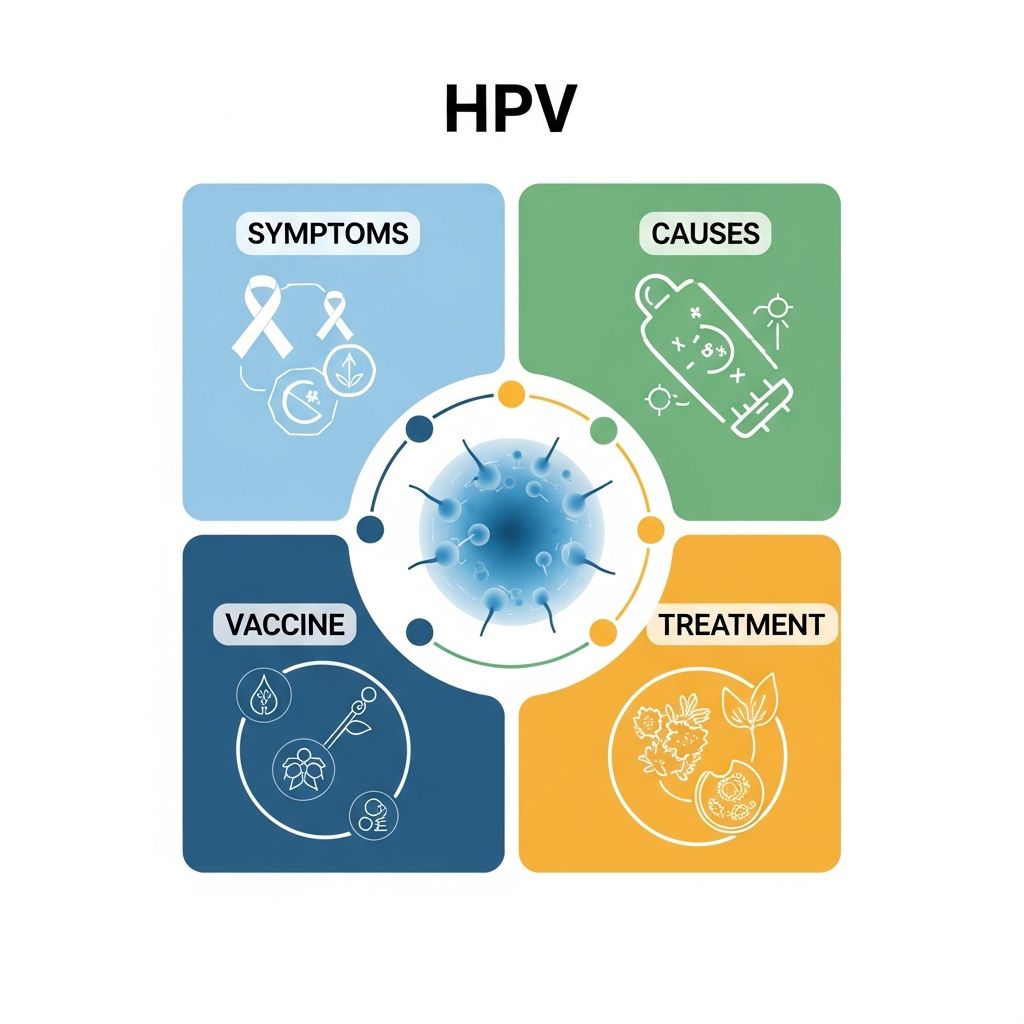
Human papillomavirus (HPV) is the most common sexually transmitted infection (STI) worldwide, affecting nearly all sexually active individuals at some point. While most infections resolve spontaneously within two years, persistent high-risk HPV types can lead to genital warts or cancers including cervical, anal, oropharyngeal, vulvar, vaginal, and penile.
What Is HPV?
HPV refers to a group of over 200 related viruses, categorized into low-risk and high-risk types based on their potential to cause disease. Low-risk types like HPV 6 and 11 primarily cause benign genital warts, while high-risk types such as HPV 16, 18, 31, and 45 are responsible for nearly all HPV-related cancers. The virus is non-enveloped with double-stranded DNA and was first linked to cervical cancer by Harald zur Hausen, earning him the Nobel Prize in 2008.
Most HPV infections (about 90%) clear on their own without symptoms or treatment, as the immune system controls them. However, persistent infection with high-risk strains upregulates viral oncoproteins E6 and E7, which inactivate tumor suppressors p53 and Rb, leading to cellular changes that can progress to precancerous lesions and cancer over 15-20 years.
Symptoms of HPV
HPV is often asymptomatic, earning it the nickname ‘silent infection.’ When symptoms appear, they depend on the HPV type:
- Genital warts: Small, flesh-colored or cauliflower-like bumps on genitals, anus, or throat, caused by low-risk types. They may itch or bleed but are not cancerous.
- Common/plantar warts: Rough growths on hands or feet from non-genital HPV strains.
- Cancer-related signs: Early precancers cause no symptoms. Advanced cervical cancer may present with abnormal vaginal bleeding, discharge, or pelvic pain. Oropharyngeal cancer symptoms include sore throat, ear pain, or lumps.
In women, cervical changes from HPV are detected via screening before symptoms arise. Men rarely show signs unless warts or anal issues develop.
HPV Causes and Risk Factors
HPV spreads primarily through skin-to-skin contact during vaginal, anal, or oral sex. Condoms reduce but do not eliminate risk since they don’t cover all skin. Other transmission routes include perinatal (mother-to-child) or rare non-sexual contact.
Risk factors include:
- Multiple sexual partners or partner with HPV.
- Early sexual debut.
- Weakened immune system, e.g., HIV (twice the acquisition rate, half clearance).
- Smoking, which impairs clearance.
| Risk Factor | Impact on HPV |
|---|---|
| HIV co-infection | 86% prevalence in HIV+ women vs. 59% in HIV- (Uganda study) |
| Sexual activity | >80% lifetime exposure in sexually active adults |
| Immunosuppression | Decreased clearance (HR 0.31) |
How Common Is HPV?
Nearly all sexually active people contract HPV at least once. Globally, HPV caused 620,000 women’s and 70,000 men’s cancer cases in 2019; cervical cancer alone led to 660,000 new cases and 350,000 deaths in 2022, ranking fourth in women. In the US, HPV causes 36,000 cancers yearly.
Prevalence: 90% of cervical/anal, 70% vulvar/vaginal/oropharyngeal, 60% penile cancers are HPV-linked. High-risk HPV persists in reserve cells of transformation zones (cervix, anus), driving metaplasia to cancer.
Types of HPV
Over 170 genotypes exist; key categories:
- Low-risk (e.g., 6, 11): Warts (genital, respiratory papillomatosis).
- High-risk (12+ types): Cancer-causing; HPV16/18 cause 70% cervical cancers.
Oropharyngeal cancer mechanism differs, involving tonsillar crypts permissive to abortive infections.
HPV Transmission
Related Stories



Primarily sexual: skin-mucosal contact. Oral sex spreads to throat; anal sex to anus. Non-sexual: rare vertical or fomites. Incubation: weeks to years for warts; decades for cancer.
HPV and Cancer
Persistent high-risk HPV causes:
- Cervical (90%+): Leads cause of cancer death in women globally.
- Anal (90%), Oropharyngeal (70%): Rising in men.
- Vulvar/Vaginal (70%), Penile (60%): Less common but significant.
Carcinogenesis: E6/E7 disrupt cell cycle in transformation zones. HIV+ individuals face 5.8% of global cervical cases despite low population share.
HPV in Men
Men experience asymptomatic infections, genital warts, or penile/anal/oropharyngeal cancers. Vaccination protects against these.
HPV Vaccine
Prophylactic vaccines (Gardasil 9) target high-risk (16/18) and low-risk (6/11) types, preventing 90%+ of HPV cancers/warts. Safe, no live virus; given ages 9-45, ideally pre-sexual activity (2-3 doses). CDC: Routine for 11-12 year-olds.
- Benefits: Prevents cervical precancers, genital warts.
- Not therapeutic for existing infections.
HPV Testing and Screening
Women 21-29: Pap every 3 years. 30-65: Pap + HPV co-test every 5 years or HPV alone. Early detection treats precancers (CIN) via colposcopy, LEEP. No routine male screening; anal for high-risk groups.
HPV Treatment
No cure for the virus; body clears most. Treatments target manifestations:
- Warts: Cryotherapy, topical acids, laser.
- Precancers: Excision (cone biopsy, LEEP).
- Cancer: Surgery, radiation, chemo.
Prevention Tips
- Vaccinate early.
- Use condoms consistently.
- Limit partners; regular screening.
- Avoid smoking.
Frequently Asked Questions (FAQs)
What is HPV and is it dangerous?
HPV is a common STI with 200+ types; high-risk ones cause cancers if persistent, but 90% clear naturally.
Can HPV be cured?
No direct cure, but immune system clears most; symptoms/cancers are treatable.
At what age should you get the HPV vaccine?
Ideally 11-12, up to 45; protects against key cancer/wart-causing types.
Does HPV cause cancer in men?
Yes, anal, penile, oropharyngeal cancers; vaccination prevents.
How do you get HPV without having sex?
Rare: perinatal or non-sexual skin contact, but sexual transmission dominant.
Can you have HPV for years without symptoms?
Yes, often decades before cancer develops; screening detects early.
References
- Human Papillomavirus and Associated Cancers: A Review — PMC/NCBI. 2024. https://pmc.ncbi.nlm.nih.gov/articles/PMC11125882/
- Human papillomavirus and cancer — World Health Organization (WHO). 2024-06-28. https://www.who.int/news-room/fact-sheets/detail/human-papilloma-virus-and-cancer
- Human Papillomavirus (HPV) — Centers for Disease Control and Prevention (CDC). 2025. https://www.cdc.gov/hpv/index.html
- HPV infection – Symptoms & causes — Mayo Clinic. 2024. https://www.mayoclinic.org/diseases-conditions/hpv-infection/symptoms-causes/syc-20351596
Similar Articles








Read full bio of medha deb