HRCT: High-Resolution Computed Tomography
Comprehensive guide to HRCT imaging: procedure, benefits, risks, and clinical applications.
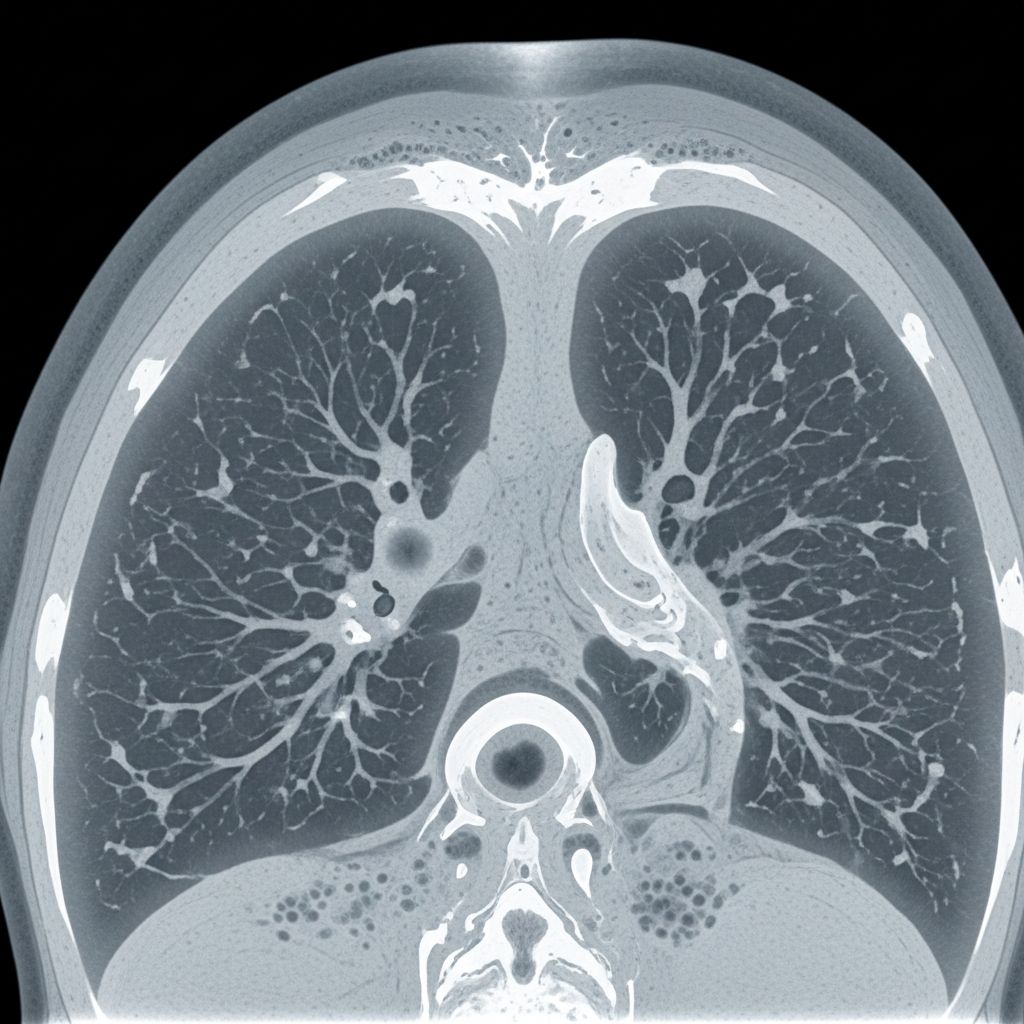
What is High-Resolution Computed Tomography (HRCT)?
High-Resolution Computed Tomography, commonly referred to as HRCT, is a specialized type of computed tomography scan that uses advanced imaging techniques to produce detailed, high-quality cross-sectional images of the lungs and other body structures. Unlike conventional chest X-rays or standard CT scans, HRCT employs specific technical parameters designed to maximize spatial resolution and detect even subtle abnormalities within lung tissue.
HRCT represents a significant advancement in diagnostic imaging technology, offering clinicians the ability to visualize intricate details of lung parenchyma with exceptional clarity. This imaging modality has become the gold standard for evaluating various pulmonary conditions and is particularly valuable in identifying early-stage disease when intervention is most effective.
How HRCT Works
HRCT utilizes specialized imaging parameters that distinguish it from conventional CT scanning. The fundamental principle involves using a conventional CT scanner but optimizing specific technical settings to enhance image resolution and detail.
Key technical components of HRCT include:
– Thin slice thickness, typically 1-2 millimeters, allowing for detailed cross-sectional views- High-frequency spatial resolution reconstruction algorithms that enhance image clarity- Minimized field of view to reduce pixel size and improve detail resolution- Optimized focal spot settings prioritizing resolution over scan speed- Volume coverage that can encompass the entire lung tissue when needed
The scanning technique may vary depending on the suspected diagnosis. For certain conditions, images are captured during both inspiration (breathing in) and expiration (breathing out) phases. Inspiratory images are typically obtained with the patient in a prone position, while expiratory HRCT images are acquired in a supine position. This dual-phase approach helps identify specific patterns of disease and air trapping within the lungs.
When HRCT is Indicated
HRCT serves multiple diagnostic purposes and is recommended for numerous clinical scenarios where detailed lung assessment is essential. The procedure is particularly valuable for both acute and chronic lung conditions.
Common indications for HRCT include:
– Idiopathic pulmonary fibrosis and other interstitial lung diseases- Suspected pneumoconiosis, including asbestosis and silicosis- Chronic obstructive pulmonary disease (COPD) assessment- Evaluation of recurrent or persistent respiratory infections- Detection and characterization of lung nodules- Assessment of drug-induced lung injury- Evaluation of hypersensitivity pneumonitis and occupational lung diseases- Monitoring disease progression in known lung conditions- Investigation of unexplained dyspnea or chest symptoms- Post-operative evaluation following lung procedures
HRCT’s sensitivity to small details makes it exceptionally valuable for detecting early-stage disease manifestations. When subtle abnormalities are identified on conventional imaging, HRCT can provide definitive diagnostic information and help guide treatment planning.
Preparation for HRCT
Related Stories



HRCT is a non-invasive imaging procedure that requires minimal patient preparation, making it convenient and accessible for most individuals. Unlike some medical procedures, HRCT does not involve the injection of contrast material or require extensive fasting.
Preparation guidelines for HRCT:
– No special dietary restrictions are necessary; patients may eat and drink normally- Continue taking regular medications as prescribed- Inform the radiology staff about any allergies or adverse reactions to contrast agents- Remove all metallic objects, jewelry, and electronic devices before entering the scanning room- Wear comfortable, loose-fitting clothing without metal fasteners or zippers- Arrive 10-15 minutes early to complete necessary paperwork and registration- Inform technicians about any implanted medical devices or metallic implants
In rare cases, patients may be asked to fast for a few hours before the procedure, depending on specific clinical circumstances or facility protocols. However, this is not routine for standard HRCT chest imaging.
The HRCT Procedure
Understanding what to expect during an HRCT scan can help reduce anxiety and ensure patient cooperation throughout the imaging process.
Step-by-step HRCT procedure:
Positioning: The patient lies down on a comfortable scanning table in a supine position, typically with both arms positioned above the head. This positioning provides optimal access to the chest and lungs while maintaining patient comfort.
Scanner positioning: The scanning table slides smoothly into a large, donut-shaped CT machine. The patient remains visible to technicians at all times through an intercom system, allowing continuous communication.
Image acquisition: Once properly positioned, the technician instructs the patient to remain perfectly still and hold their breath during the actual scanning sequence. This breath-holding prevents motion artifacts that could compromise image quality.
Scan duration: The actual scanning process typically takes less than 5 minutes once the patient is inside the scanner, making HRCT a quick and efficient imaging procedure. Most patients find the experience tolerable and manageable.
Post-scan activities: Immediately after the scan is completed, patients can resume normal activities, eat, and drink without restrictions. The procedure causes no lingering effects or side effects.
Understanding HRCT Results
HRCT images reveal specific patterns and findings that help radiologists and clinicians identify various lung diseases and conditions. Trained radiologists interpret these images using a systematic approach that considers pattern recognition, distribution of abnormalities, and clinical context.
Common HRCT patterns include:
– Reticular patterns characterized by irregular, net-like lines suggesting fibrosis or scarring- Nodular patterns showing small rounded opacities distributed throughout lung tissue- Ground-glass opacities appearing as hazy increases in lung density without obscuring blood vessels- Consolidation patterns representing areas of fluid-filled or collapsed lung tissue- Cystic changes showing air-filled cavities within lung tissue- Air trapping indicating regions where air becomes trapped during expiration
The distribution of findings—whether predominantly in upper or lower lobes, peripheral or central regions—provides crucial diagnostic information. Medical history plays a central role in interpreting HRCT findings, as many imaging patterns can appear similar across different conditions.
Advantages of HRCT
HRCT offers numerous clinical advantages that have established it as an essential diagnostic tool in modern medicine.
Key advantages of HRCT imaging:
– Superior resolution compared to conventional chest X-rays and standard CT scans- Detection of small nodules and subtle abnormalities not visible on other imaging modalities- Early disease detection enabling timely intervention and treatment- Non-invasive imaging without surgical risks- No contrast injection required for basic chest HRCT- Quick scanning time minimizing patient discomfort- Ability to guide biopsy procedures for tissue diagnosis- Valuable monitoring tool for tracking disease progression- Helps differentiate between various lung diseases with overlapping clinical presentations
HRCT’s sensitivity in detecting minute changes within lung tissue makes it invaluable for early diagnosis and disease monitoring, ultimately improving patient outcomes.
Risks and Limitations
While HRCT is generally considered safe, patients should understand potential risks and limitations associated with the procedure.
Potential risks include:
– Radiation exposure from CT imaging; however, HRCT uses minimal radiation doses optimized for diagnostic accuracy- Rarely, allergic reactions if contrast material is used in specialized HRCT protocols- Claustrophobic discomfort in some patients due to the enclosed scanner environment- Slight risk of metallic artifact if ferromagnetic implants are present
Limitations of HRCT:
– Cannot be performed during pregnancy due to radiation concerns; ultrasound or MRI may be alternatives- HRCT alone cannot definitively diagnose certain conditions; clinical correlation is essential- Some findings remain non-specific and may require additional imaging or tissue sampling- Not suitable as a screening tool in asymptomatic individuals
Modern HRCT equipment utilizes dose-reduction protocols that significantly minimize radiation exposure while maintaining diagnostic image quality. The benefits of accurate diagnosis typically far outweigh the minimal risks involved.
Clinical Applications
HRCT has become established in the diagnostics of numerous pulmonary and systemic conditions affecting the lungs. Its versatility extends across multiple clinical specialties.
Major clinical applications:
Interstitial Lung Diseases: HRCT is the imaging modality of choice for diagnosing idiopathic pulmonary fibrosis, non-specific interstitial pneumonia, and other interstitial lung conditions. The characteristic patterns visible on HRCT often eliminate the need for lung biopsy.
Occupational Lung Diseases: HRCT effectively identifies pneumoconiosis patterns associated with asbestos, silica, and other occupational exposures. The imaging can demonstrate the extent and severity of occupational lung injury.
Infectious Diseases: HRCT helps diagnose and monitor various infections including tuberculosis, fungal infections, and atypical infections. The procedure can detect complications such as cavitation or bronchial involvement.
COVID-19 Pneumonia: HRCT demonstrates disease processes at different stages—early, progressive, peak, and absorption stages—providing valuable information for diagnosis and treatment monitoring. HRCT can show positive findings even when RT-PCR tests are negative.
Malignancy Evaluation: HRCT aids in detecting lung nodules, evaluating lymph nodes, and assessing for lymphangitic carcinomatosis or other metastatic patterns.
Chronic Obstructive Pulmonary Disease: HRCT characterizes emphysematous changes, bronchiectasis, and other COPD-related structural abnormalities.
HRCT Timing and Results
Understanding when results become available helps patients plan follow-up appointments and treatment decisions.
Result availability timeline:
– Hard copy images: typically available within 2 hours following the scan- Written radiology report: generally available within 24-48 hours- Digital images: often accessible through patient portals or radiology information systems sooner
Radiologists prioritize urgent cases where clinically significant findings require immediate attention. Patients should contact their referring physician if results are not received within the expected timeframe.
Comparing HRCT to Other Imaging Modalities
| Imaging Modality | Resolution | Radiation Exposure | Cost | Best Use |
|---|---|---|---|---|
| Chest X-ray | Limited detail | Minimal | Low | Initial screening, follow-up |
| Standard CT | Good detail | Moderate | Moderate | General thoracic imaging |
| HRCT | Excellent detail | Low-moderate | Moderate-high | Detailed lung disease assessment |
| MRI | Good detail | None | High | Soft tissue and cardiac imaging |
Frequently Asked Questions
Q: Is HRCT painful?
A: No, HRCT is a completely painless procedure. Patients may experience mild discomfort from lying still on the scanning table, but the imaging process itself does not cause pain.
Q: How much radiation does HRCT involve?
A: HRCT uses optimized low-dose protocols that minimize radiation exposure. The radiation dose is generally considered acceptable when diagnostic benefit is significant, and modern equipment continuously reduces exposure through advanced technology.
Q: Can I have HRCT if I have a pacemaker?
A: Most modern pacemakers are compatible with HRCT. However, inform your technician about any implanted devices before the scan. Special precautions may be necessary depending on the specific device.
Q: How long does an HRCT scan take?
A: The actual scanning time is less than 5 minutes. However, allow 20-30 minutes total for registration, positioning, and post-scan procedures.
Q: Can HRCT diagnose cancer?
A: HRCT can detect lung nodules and identify suspicious findings suggesting malignancy, but definitive cancer diagnosis typically requires tissue biopsy and pathological examination.
Q: Is fasting required before HRCT?
A: No, fasting is not routinely required for HRCT chest imaging. Patients may eat and drink normally unless specifically instructed otherwise by their healthcare provider.
Q: Can I move during the HRCT scan?
A: It is crucial to remain perfectly still during scanning to ensure image quality. Movement can create artifacts that compromise diagnostic accuracy. The entire scan takes less than 5 minutes.
References
- High-resolution computed tomography — Wikipedia. Accessed 2025. https://en.wikipedia.org/wiki/High-resolution_computed_tomography
- High-resolution CT of the lungs: Indications and diagnosis — PubMed/National Center for Biotechnology Information. 2018. https://pubmed.ncbi.nlm.nih.gov/29243467/
- HRCT – Basic Interpretation — The Radiology Assistant. Accessed 2025. https://radiologyassistant.nl/chest/hrct/basic-interpretation
- Overview of Basic HRCT Technique — Boehringer Ingelheim IPF Radiology Rounds. Accessed 2025. https://pro.boehringer-ingelheim.com/us/ipfradiologyrounds/hrct-primer/basic-technique
Similar Articles








Read full bio of medha deb