Humerus Fracture: Causes, Symptoms, Treatment & Recovery
Complete guide to humerus fractures: understanding symptoms, diagnosis, and treatment options.
Understanding Humerus Fractures
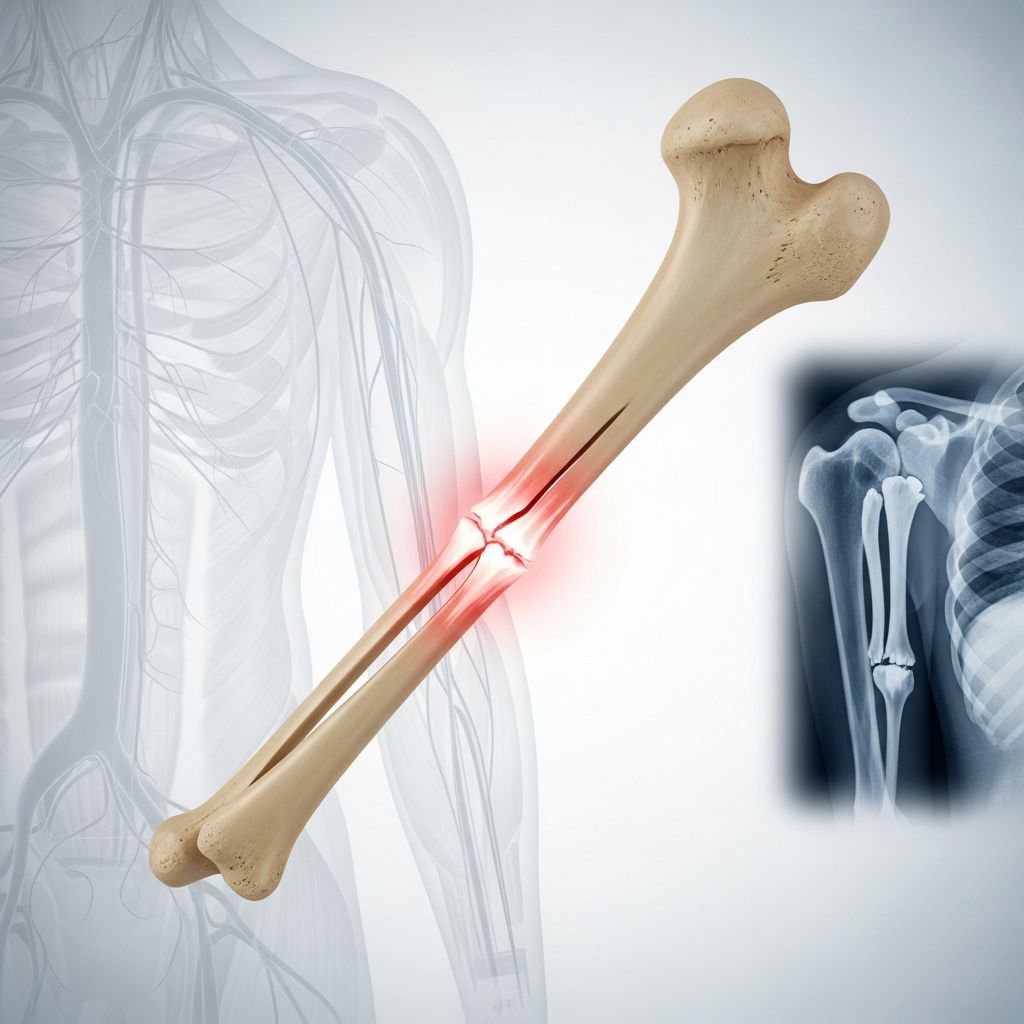
A humerus fracture is a break in the bone that extends from your shoulder joint to your elbow. The humerus is the largest bone in your upper arm and plays a crucial role in arm movement and function. When this bone breaks, it can significantly impact your ability to move your arm and perform daily activities. Humerus fractures can range from simple, uncomplicated breaks to complex fractures involving multiple bone fragments, and the treatment approach depends on the severity and location of the fracture.
Causes of Humerus Fractures
Humerus fractures typically result from traumatic injuries to the upper arm. Understanding the common causes can help you take preventive measures and seek immediate care when necessary.
- Falls from a height or onto an outstretched arm
- Direct blows to the upper arm from accidents or sports injuries
- Motor vehicle accidents involving significant force
- Sports-related collisions or impacts
- Pathological fractures from weakened bone due to osteoporosis or bone disease
Signs and Symptoms of Humerus Fractures
Recognizing the symptoms of a humerus fracture is essential for prompt medical attention. Common indicators include:
- Severe pain in the upper arm that worsens with movement
- Significant swelling around the injured area
- Visible bruising or discoloration of the skin
- Tenderness to touch at the fracture site
- Stiffness or inability to move the arm
- Visible deformity or an arm that appears abnormal in shape
- Numbness or tingling in the forearm or hand
- Weakness or complete inability to lift the arm
If you experience any of these symptoms following an injury, seek immediate medical attention to prevent complications.
Diagnosis of Humerus Fractures
Proper diagnosis is the foundation for effective treatment. Your healthcare provider will use a combination of physical examination and imaging studies to accurately diagnose a humerus fracture.
Physical Examination
During your initial evaluation, your physician will perform a thorough physical examination to assess the injury. This includes inspecting the affected arm for deformity, swelling, and bruising. Your doctor will also carefully evaluate nerve function by checking sensation and motor strength in your hand and forearm. Additionally, your healthcare provider will assess blood circulation to ensure adequate blood flow to the injured area and beyond.
Imaging Studies
Several imaging techniques are used to visualize the fracture and determine its exact nature:
- X-rays: Standard radiographs are typically taken from multiple angles to show the fracture clearly and assess the alignment of bone fragments
- CT Scans: Computed tomography provides detailed cross-sectional images, particularly useful for complex fractures involving multiple fragments
- MRI Scans: Magnetic resonance imaging helps evaluate soft tissue damage, including damage to muscles, tendons, and ligaments surrounding the fracture
Types of Humerus Fractures
Humerus fractures are classified based on their location and characteristics. The three main regions affected are:
Proximal Humerus Fractures
These fractures occur at the top of the humerus near the shoulder joint. Proximal humerus fractures are common in older adults, particularly those with osteoporosis, and can result from simple falls. These fractures may be further classified by the number of bone fragments involved and their displacement.
Related Stories



Mid-Shaft Humerus Fractures
Occurring in the middle section of the bone, mid-shaft fractures typically result from direct trauma or high-energy injuries. Many mid-shaft fractures can be successfully managed with conservative treatment, though some may require surgical intervention depending on the fracture pattern and alignment.
Distal Humerus Fractures
Distal fractures occur near the elbow joint and are more common in children, though adults can also sustain these injuries. Due to their proximity to the elbow joint, these fractures often require surgical correction to restore proper joint alignment and function.
Non-Surgical Treatment Options
Many humerus fractures, particularly those that are stable and well-aligned, can be successfully treated without surgery through conservative management.
Immobilization
The primary goal of non-surgical treatment is to immobilize the fracture site to allow the bone to heal. Treatment options include:
- Sling: A simple sling supports the arm against your body and is often used for minor fractures
- Hanging Cast: This specialized cast uses its own weight to apply gentle traction, helping to maintain fracture alignment
- Co-aptation Splint: This removable device wraps around the upper arm and torso, providing support while allowing some movement for rehabilitation
- Functional Brace: Used after the initial immobilization period, these braces allow progressive movement while protecting the healing fracture
Typically, the immobilization period lasts between one to three weeks initially, followed by transition to a functional brace that allows gradual return to activity.
Pain Management and Medication
Over-the-counter and prescription pain medications help manage discomfort during the healing process. Your doctor may recommend acetaminophen or nonsteroidal anti-inflammatory drugs (NSAIDs) to reduce pain and swelling. Additionally, anti-inflammatory medications can help minimize swelling around the fracture site.
Range of Motion Exercises
Even during the immobilization phase, gentle range of motion exercises are encouraged as soon as tolerated. These exercises focus on moving the joints below and above the fracture—including the fingers, wrist, and elbow—to prevent stiffness and maintain circulation. Your healthcare provider or physical therapist will provide specific instructions on which movements are safe during your particular stage of healing.
Surgical Treatment Options
When conservative treatment is insufficient or the fracture is unstable and displaced, surgical intervention becomes necessary. Open reduction and internal fixation (ORIF) is the most commonly used surgical technique for humerus fractures.
Open Reduction and Internal Fixation (ORIF)
This surgical procedure involves making an incision to access the fracture site, realigning the bone fragments to their proper anatomical position, and then securing them with internal fixation devices.
Fixation Methods
Several techniques are available for securing bone fragments:
| Fixation Method | Description | Advantages | Considerations |
|---|---|---|---|
| Plate and Screws | A metal plate is attached to the bone with screws holding fragments together | Rigid fixation; allows compression of fragments; enables early mobilization | Requires larger incision; may disturb blood supply; visible scar |
| Intramedullary Rod | A metal rod is inserted through the bone, crossing the fracture site | Preserves blood supply; strong mechanical support; minimal soft tissue damage | Rod removal often necessary; may cause shoulder irritation; technically demanding |
| External Fixation | Metal pins through bone fragments connected to an external frame | No general anesthetic required; allows arm mobility during healing | Pin tract infections possible; requires external hardware management |
Surgical Procedure
During ORIF surgery, performed under general anesthesia, your surgeon will make an incision to access the fracture site. The bone fragments are carefully realigned to restore normal anatomy, and internal fixation devices are applied to hold the fragments securely in place. The incision is then closed with sutures or staples, and a sterile dressing is applied.
Preparing for Surgery
If surgical treatment is recommended, your healthcare team will provide preoperative instructions to prepare you for the procedure:
- Complete preoperative blood tests and imaging studies
- Receive a tetanus shot if your immunizations are not current
- Discontinue certain medications as instructed by your surgeon
- Arrange for transportation home after surgery
- Discuss anesthesia options with the anesthesiologist
- Fast the night before surgery as instructed
Postoperative Care and Recovery
Proper postoperative care is crucial for optimal healing and functional recovery following humerus fracture surgery.
Immediate Post-Surgery Period
After surgery, you will experience some pain, which will be managed with prescribed pain medications. Your arm will be immobilized in a sling or cast to allow the fracture site to heal properly. You should keep the dressing clean and dry, following your surgeon’s instructions for dressing changes. Ice application can help reduce pain and swelling.
Activity Restrictions
During the initial healing phase, typically lasting several weeks, you should avoid heavy lifting, pushing, or pulling with the injured arm. Your surgeon will provide specific guidelines about when you can resume various activities. Most patients can return home the same day or after brief hospitalization, depending on the complexity of the fracture and your overall health.
Nutrition and Bone Healing
Adequate nutrition supports bone healing. Ensure your diet includes sufficient calcium and vitamin D, which are essential minerals for bone growth and repair. Your healthcare provider may recommend specific supplements to support healing. Maintaining adequate protein intake also promotes tissue repair and recovery.
Follow-up Appointments
Regular follow-up appointments are essential to monitor your healing progress. During these visits, your surgeon will examine your incision, assess bone healing through X-rays, and remove sutures or staples if needed. These appointments allow your healthcare team to address any concerns and adjust your rehabilitation plan as necessary.
Physical Therapy and Rehabilitation
Physical therapy is a critical component of recovery following a humerus fracture, whether treated surgically or conservatively. The timing and intensity of rehabilitation depend on the fracture type, treatment method, and individual healing rates.
Early Rehabilitation Phase
Your physical therapist will focus initially on pain management using modalities such as heat, ice, ultrasound, or electrical stimulation. Gentle range of motion exercises begin as soon as tolerated, typically focusing on the joints below and above the fracture. These exercises prevent stiffness and maintain circulation.
Progressive Strengthening
As healing progresses, your rehabilitation program advances to include strengthening exercises targeting the muscles around your shoulder, elbow, and arm. Progressive resistance exercises gradually increase in intensity as your bone heals and your tolerance improves. Your therapist may use specialized equipment and techniques to maximize functional recovery.
Functional Training
In the later stages of rehabilitation, your physical therapist will incorporate exercises that simulate real-world activities, helping you return to work, sports, and recreational pursuits. Sport-specific training may be included for athletes working toward return to competition.
Return to Normal Activities
The timeline for returning to normal activities varies depending on fracture severity, treatment method, and individual factors. Generally, patients can expect:
- Light activities and desk work: 4-6 weeks
- Gradual return to strength training: 3-4 months
- Full return to sport or strenuous activities: 4-6 months or longer
Always follow your surgeon’s and physical therapist’s guidance regarding activity progression, as returning too quickly to strenuous activities can compromise healing.
Complications and When to Seek Help
While most humerus fractures heal successfully, certain complications can occur. Seek immediate medical attention if you experience increased pain not controlled by medication, signs of infection around the incision, numbness or tingling that worsens, or loss of hand or finger function. Additionally, notify your physician if you develop fever, persistent swelling despite ice application, or any unusual symptoms during your recovery.
Frequently Asked Questions
Q: How long does it take for a humerus fracture to heal?
A: Most humerus fractures require 3-4 months for bone healing, with functional recovery taking longer. Complete healing and return to full activity may take 6 months or longer depending on fracture severity and individual factors.
Q: Can all humerus fractures be treated without surgery?
A: Many stable, well-aligned humerus fractures can be treated conservatively with immobilization and physical therapy. However, displaced, unstable, or complex fractures typically require surgical intervention for optimal outcomes.
Q: What is the difference between conservative and surgical treatment?
A: Conservative treatment uses immobilization devices like slings or casts to allow natural healing. Surgical treatment involves realigning bone fragments through an incision and securing them with metal devices, allowing earlier rehabilitation in many cases.
Q: Will I regain full function of my arm after a humerus fracture?
A: Most patients regain good to excellent arm function with appropriate treatment and rehabilitation. However, some fractures may result in minor limitations depending on severity and patient factors. Following your rehabilitation program is crucial for optimal outcomes.
Q: When can I resume physical activities and sports?
A: Return to sports typically occurs 4-6 months after injury, but this varies based on the specific sport and fracture severity. Always obtain clearance from your surgeon before resuming athletic activities.
References
- Humerus Fracture — Cleveland Clinic. 2025. https://my.clevelandclinic.org/health/diseases/22990-humerus-fracture
- ORIF of the Humerus Fractures — Bradley Smith MD, Orthopedic Surgery. 2024. https://www.bradleysmithmd.com/orif-of-humerus-fractures-orthopedic-surgeon-sports-medicine-murray-ut/
- Adult Humerus Fractures — Therapy Specialists Inc. 2024. https://www.therapy-specialists.com/Injuries-Conditions/Shoulder/Shoulder-Issues/Adult-Humerus-Fractures/a~3268/article.html
- Humerus (Bone): Anatomy, Location & Function — Cleveland Clinic. 2025. https://my.clevelandclinic.org/health/body/24612-humerus
- Bone Fractures: Types, Symptoms & Treatment — Cleveland Clinic. 2024. https://my.clevelandclinic.org/health/diseases/15241-bone-fractures
- Mid Humeral Fractures Treatment — Ari Youderian MD, Orthopedic Surgery. 2024. https://www.ariyouderianmd.com/mid-humeral-fracture-orthopedic-surgeon-irvine-ca/
Similar Articles








Read full bio of medha deb