Hydatid Disease: Causes, Symptoms & Treatment
Understanding hydatid disease: parasitic infection, symptoms, diagnosis, and effective treatment options.
Understanding Hydatid Disease
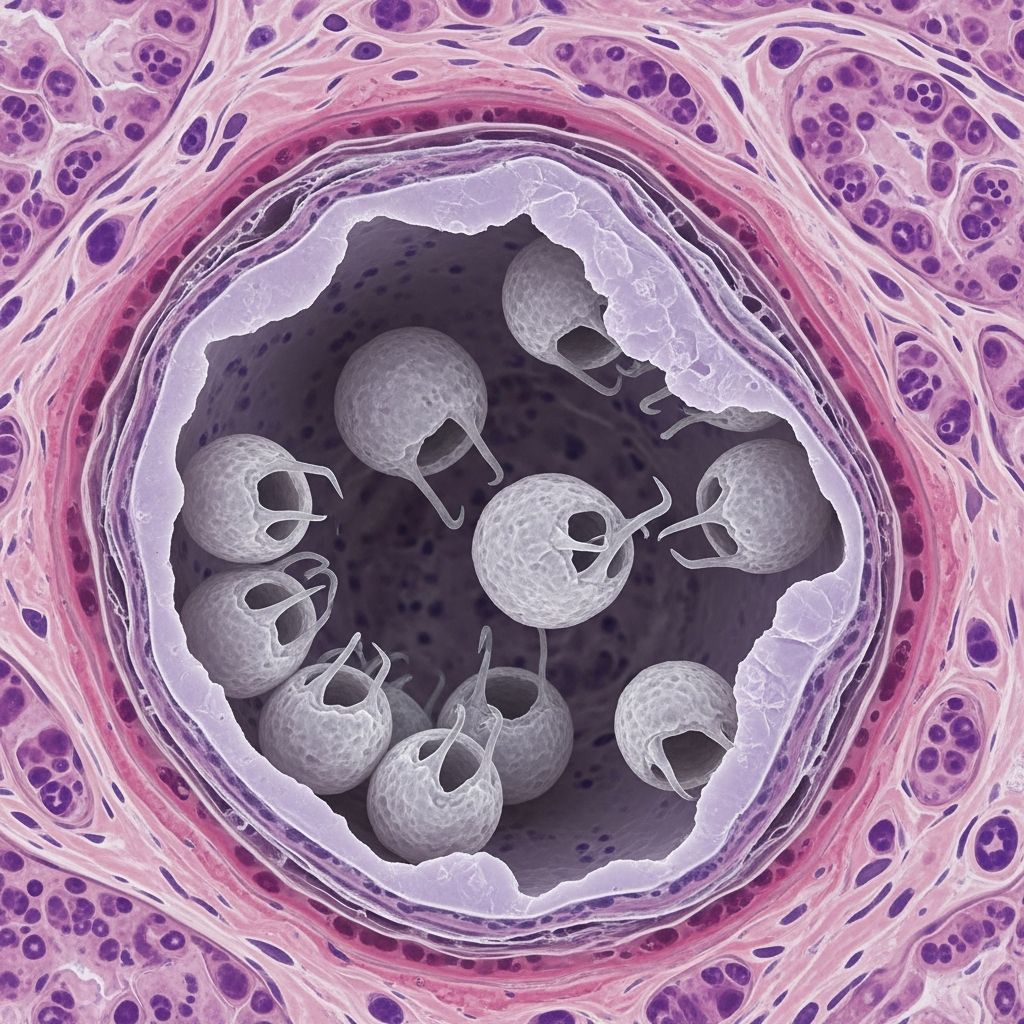
Hydatid disease, also known as cystic echinococcosis or hydatidosis, is a parasitic infection caused by tapeworms that can develop cysts (liquid-filled growths) in your liver or other organs. This cyclozoonotic disease represents a significant health concern in rural and underdeveloped areas where people maintain close contact with livestock. While the infection remains rare in North America, it continues to affect populations worldwide, particularly in regions where proper sanitation and animal control measures are limited.
The disease results from infection with parasitic organisms, most commonly Echinococcus granulosus or Echinococcus multilocularis. These parasites establish themselves within human organs, creating cysts that can remain dormant for years or grow progressively, potentially causing serious health complications if left untreated. Understanding this disease is crucial for at-risk populations and healthcare professionals working in endemic regions.
What Causes Hydatid Disease?
Hydatid disease transmission occurs through contact with contaminated material from infected animals. People contract hydatid disease when they come into contact with the feces (poop) of a dog that contains the parasite’s eggs. The infection mechanism involves several pathways:
– Consuming contaminated food or water containing parasite eggs- Handling infected animal feces without proper hygiene precautions- Direct contact with infected animals, particularly dogs- Ingesting undercooked meat from infected livestock- Environmental exposure in areas where infected animals roam freely
Over time, once ingested, the parasites grow larger and transform into cysts within the human body. Dogs serve as the primary definitive hosts, while livestock such as sheep and cattle act as intermediate hosts. Humans become accidental hosts when they consume eggs through contaminated sources or poor sanitation practices.
Symptoms and Clinical Manifestations
Hydatid disease may not cause any symptoms for many years. The asymptomatic incubation period can last many years until hydatid cysts grow to an extent that triggers clinical manifestations. However, as hydatid cysts grow in your liver, lungs or other organs, they may cause various symptoms depending on their location and size.
Common Symptoms
When symptoms develop, patients may experience:
– Abdominal pain or discomfort- Nausea and vomiting- Persistent cough and chest pain (when lungs are affected)- Shortness of breath- Feelings of abdominal fullness or bloating- General weakness and fatigue- Weight loss and loss of appetite- Palpable lumps or masses in the abdomen
Complications of Ruptured Cysts
The cysts can rupture, which can lead to life-threatening complications. Signs of a ruptured hydatid cyst may include:
– Sudden severe abdominal pain- Acute allergic reactions or anaphylaxis- Peritonitis (inflammation of abdominal lining)- Shock and systemic illness- Biliary tract complications causing cholangitis- Bronchial fistula formation- Infection leading to liver abscess formation
Related Stories



The cysts can grow large enough to prevent affected organs from working properly. In severe cases, untreated hydatid disease can be fatal, with cysts becoming so large that they cause the affected organ to stop functioning completely.
Organ Involvement and Disease Sites
Hydatid cysts most frequently develop in specific organs, with distribution patterns relatively consistent across affected populations. The liver remains the most common site, accounting for 50-70% of cases, while the lungs are affected in approximately 20% of patients. Understanding these patterns helps in diagnosis and treatment planning.
| Organ/Location | Frequency | Clinical Significance |
|---|---|---|
| Liver | 50-70% | Most common site; can cause hepatic dysfunction |
| Lungs | 20% | Second most common; causes respiratory symptoms |
| Spleen | 5-8% | Less common; may cause splenic infarction |
| Kidneys | Rare | Uncommon; affects renal function |
| Adrenal Glands | Rare | Unusual presentation; endocrine complications |
| Brain | Rare | Serious neurological manifestations |
| Soft Tissues | Rare | Subcutaneous or intramuscular cysts |
Diagnosis and Detection
Early diagnosis and detection of hydatid disease significantly improve treatment outcomes and reduce the risk of serious complications. Imaging exams and blood tests are the most common ways to diagnose hydatid disease, with healthcare providers using multiple diagnostic approaches to confirm the condition.
Diagnostic Methods
– Blood Tests: Can show elevated levels of antibodies to the echinococcal infection, providing serological confirmation- Imaging Exams: Healthcare providers use X-rays, CT scans, or ultrasound to examine the cysts- Epidemiologic Assessment: Geographical location and occupational history help identify risk factors- Clinical Manifestations: Symptoms and physical examination findings guide diagnosis- Advanced Imaging: MRI may be used for specific organ involvement evaluation
Imaging Characteristics
Hydatid cysts have specific characteristics that make them appear differently than simple liver cysts in imaging scans. These distinctive features include:
– Characteristic “daughter cysts” visible within larger cysts- Calcification of cyst walls on CT imaging- Specific density patterns on ultrasound examination- Location and morphology consistent with echinococcal origin- Size and growth pattern over time- Presence of internal septations or divisions
Differentiating hydatid cysts from simple liver cysts is essential, as these require vastly different treatment approaches. Hydatid cysts can grow large enough to affect liver function, whereas simple liver cysts rarely reach problematic sizes.
Treatment Options
Treatment for hydatid disease depends on the size and location of the cysts. Multiple therapeutic approaches are available, and the choice depends on individual patient factors, cyst characteristics, and clinical presentation.
Surgical Treatment
The most common and definitive treatment for hydatid disease is surgery. Surgical intervention remains the gold standard for removing accessible cysts and preventing complications. Surgeons carefully extract cysts while minimizing spillage of cystic fluid, which could lead to secondary infections or peritoneal dissemination. The surgical approach varies based on cyst location, size, and depth of involvement.
Chemotherapy and Medication
Chemotherapy with albendazole and mebendazole is currently indicated in patients who cannot undergo major operations or for the prevention of secondary echinococcosis after surgery. These anti-helminthic medications help control parasitic growth and prevent recurrence. However, chemotherapy is contraindicated for large, superficially situated, or infected cysts that are prone to rupture, as medication use in these cases may trigger dangerous spillage of cyst contents.
Aspiration and Drainage
Cyst aspiration (drainage) represents another treatment modality, particularly useful for specific cyst presentations. This minimally invasive approach involves percutaneous needle aspiration under imaging guidance, allowing drainage of cyst fluid and potential sclerotherapy to prevent recurrence.
Post-Treatment Management
Following surgical or drainage procedures, patients typically receive anti-helminthic therapy to eliminate any remaining parasitic material and prevent secondary echinococcosis. Close follow-up imaging and laboratory monitoring help detect any recurrence or complications.
Distinguishing Hydatid Cysts from Simple Liver Cysts
Understanding the differences between hydatid cysts and simple liver cysts is crucial for appropriate treatment and management. These two conditions have distinct origins, characteristics, and treatment requirements:
Hydatid Cysts result from parasitic infection and develop over time as parasites grow and establish themselves within organs. They are acquired infections that require intervention to prevent complications.
Simple Liver Cysts are usually present at birth as congenital lesions and are typically benign, asymptomatic findings that rarely require treatment unless they become unusually large or symptomatic.
The treatment approaches differ significantly: hydatid cysts often require surgical removal or chemotherapy, while simple cysts usually need only observation and monitoring.
Prevention and Risk Management
Preventing the spread of parasites is the only way to control hydatid disease. People at risk of contracting the infection should implement comprehensive preventive measures:
– Avoid contact with dogs that may be infected with echinococcus parasites- Practice thorough hand hygiene, especially after handling animals or soil- Ensure proper cooking of meat from potentially infected livestock- Use clean, safe water sources for drinking and cooking- Maintain proper sanitation and waste management- Avoid consuming raw or undercooked organ meats- Keep living areas clean and free from animal feces- Educate community members about disease transmission- Implement animal control and deworming programs- Seek immediate veterinary care for pet health concerns
When to Seek Medical Attention
If you experience any of the symptoms of hydatid disease, see your healthcare provider right away. Tell them if you’ve been in a high-risk environment for hydatid disease. This information can help them distinguish between hydatid cysts and simple cysts. Early diagnosis and treatment greatly lower the risk of serious health complications or death.
Individuals who have traveled to or lived in endemic regions should inform their healthcare providers about potential exposures. This historical context is invaluable for proper diagnosis and appropriate management.
Frequently Asked Questions
Q: How long can hydatid disease remain asymptomatic?
A: Hydatid disease can remain asymptomatic for many years, sometimes decades. The incubation period can last years until cysts grow sufficiently to trigger symptoms. However, approximately half of treated patients seek medical attention within a few years of initial infection.
Q: Is hydatid disease common in North America?
A: No, hydatid disease is rare in North America. It is most common in rural, underdeveloped areas where people raise livestock and maintain close contact with infected animals, particularly in Mediterranean regions and parts of South America, Africa, and Asia.
Q: Can hydatid disease be cured?
A: Yes, hydatid disease can be effectively treated through surgical removal, chemotherapy with anti-helminthic medications, or aspiration procedures. The success rate depends on early detection, cyst location, and appropriate treatment selection. Complete cure is possible with proper medical intervention.
Q: What happens if a hydatid cyst ruptures?
A: A ruptured cyst can cause serious, potentially life-threatening complications including anaphylaxis (severe allergic reaction), peritonitis, sepsis, and organ dysfunction. Immediate medical attention is required for any signs of cyst rupture.
Q: Can I get hydatid disease from eating meat?
A: Yes, you can contract hydatid disease from consuming undercooked or raw meat from infected animals. Proper cooking to safe temperatures kills the parasite and prevents infection. Additionally, direct contact with infected dog feces is a primary transmission route.
Q: How is hydatid disease different from other parasitic infections?
A: Hydatid disease is a cyclozoonotic infection involving tapeworms that form cysts in organs. Unlike some other parasitic infections that cause acute symptoms, hydatid disease often remains silent for years, making early detection through imaging important in at-risk populations.
References
- Echinococcosis — World Health Organization (WHO). 2023. https://www.who.int/news-room/fact-sheets/detail/echinococcosis
- Hydatid Disease: Causes, Symptoms & Treatment — Cleveland Clinic. 2022-07-28. https://my.clevelandclinic.org/health/diseases/23558-hydatid-disease
- Unexplainable development of a hydatid cyst — National Center for Biotechnology Information (NCBI/NIH). https://pmc.ncbi.nlm.nih.gov/articles/PMC2710789/
- Thoracic hydatid disease: A radiologic review of unusual cases — PubMed/NCBI. https://pubmed.ncbi.nlm.nih.gov/32337194/
- Zoonotic Diseases: Types, Transmission & Treatment — Cleveland Clinic. https://my.clevelandclinic.org/health/diseases/zoonotic-diseases
Similar Articles








Read full bio of medha deb