Best Hydration Drinks For Athletes: Expert Guide
Discover the top hydration drinks that keep athletes performing at their peak, from sports drinks to natural alternatives.
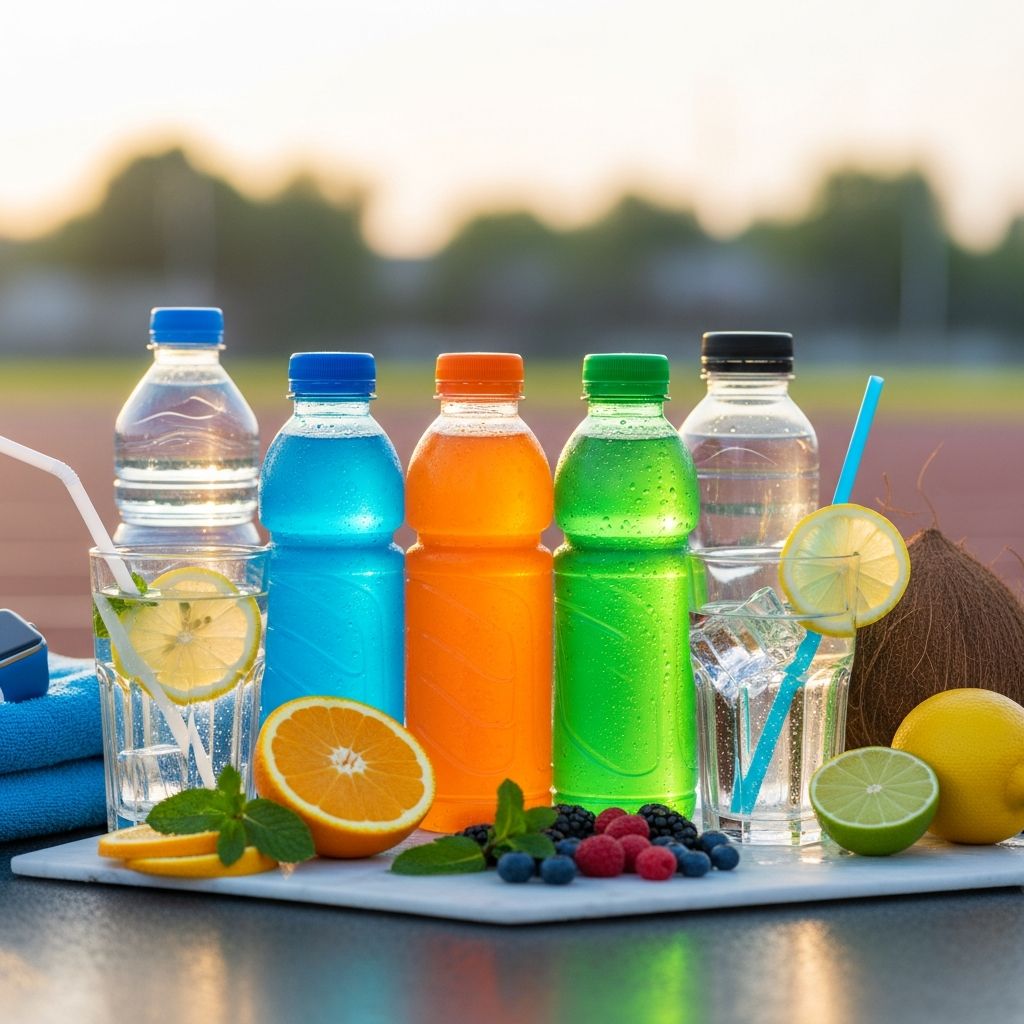
Athletes rely on proper hydration to maintain performance, support recovery, and prevent health risks during training and competition. Water forms the foundation, but for prolonged or intense sessions, specialized drinks provide essential electrolytes and carbohydrates. This guide covers the best options, when to use them, and expert recommendations to optimize hydration strategies.
Why Hydration Matters for Athletes
Hydration is crucial for athletes as it supports temperature regulation, nutrient transport, joint lubrication, and cognitive function. Even mild dehydration, such as 2% body weight loss, impairs endurance, strength, focus, and coordination, leading to fatigue, cramps, dizziness, and reduced reaction time.
For high-intensity or endurance activities lasting over 60 minutes, especially in hot, humid, or high-altitude conditions, sports drinks offer fluid, electrolytes like sodium, and carbohydrates to enhance absorption, delay fatigue, and maintain electrolyte balance. The 2016 joint position paper from the Academy of Nutrition and Dietetics, Dietitians of Canada, and the American College of Sports Medicine recommends matching fluid intake to sweat losses with added sodium and carbs for extended efforts.
When Water Is Enough—and When It’s Not
Water is the primary choice for hydration in most scenarios, particularly for activities under one hour. Experts like Dr. Andrew Nish from UnityPoint Health emphasize “water, water, and water” for routines lasting less than 60 minutes, before, during, and after exercise.
- Pre-hydration: Drink 16-20 ounces of water 2-3 hours before activity and 8-10 ounces 20-30 minutes prior.
- During short sessions: Water suffices to replace fluid losses without excess sugars or electrolytes.
- Post-short workout: Continue with water unless heavy sweating occurred.
For prolonged exercise over one hour, water alone falls short as it doesn’t replace lost electrolytes, potentially worsening imbalances. Sports drinks become beneficial here, providing sodium to retain fluid and stimulate thirst.
The Role of Electrolytes in Hydration
Electrolytes, primarily sodium and potassium, are lost through sweat and vital for hydration. Sodium, the most critical, aids fluid retention and is lost in highest amounts—standard sports drinks offer about 110 mg per 8 ounces, while heavy sweaters may need 300-500 mg servings.
Potassium supports muscle function with typical losses smaller; drinks provide 30-40 mg per 8 ounces. Trace magnesium and calcium play minor roles. Athletes needing more include:
- Those in hot/humid environments.
- “Salty sweaters” with salt stains on clothes.
- Frequent cramp sufferers.
- Endurance athletes over 90 minutes.
- High-altitude trainers.
| Electrolyte | Role | Typical Amount per 8 oz (Sports Drink) | Who Needs More |
|---|---|---|---|
| Sodium | Fluid retention, thirst drive | 110 mg (up to 500 mg for heavy sweaters) | Hot conditions, salty sweaters |
| Potassium | Muscle function | 30-40 mg | Endurance athletes |
| Magnesium/Calcium | Minor support | Trace | Most don’t need extra |
Top Sports Drinks for Athletes
Sports drinks are formulated for athletes, balancing carbs (for energy), electrolytes, and fluid. They outperform water in long sessions by improving absorption and sustaining performance. Popular options include:
- Gatorade Thirst Quencher: Classic with 14g carbs, 110mg sodium per 12 oz—ideal for moderate training.
- Powerade: Similar profile with added vitamins, suits team sports.
- BodyArmor Lyte: Lower sugar, higher potassium for lighter hydration.
- Liquid I.V. Hydration Multiplier: Powder packets with 500mg sodium for heavy sweaters.
Related Stories



Choose based on needs: standard for most, higher-sodium for intense conditions.
Alternatives to Traditional Sports Drinks
Beyond commercial sports drinks, alternatives offer variety but vary in efficacy.
Coconut Water
Coconut water provides natural potassium and sugars but lacks sufficient sodium for heavy sweat loss. A PMC study on endurance cycling found no significant performance differences versus sports drinks, with trivial effects on heart rate, lactate, and sweat loss, though blood glucose was slightly lower. It’s comparable for moderate use but not superior.
Milk as a Recovery Drink
Milk excels post-workout with carbs, protein, electrolytes, and vitamin D for muscle recovery—better than many sports drinks for rebuilding.
Pickle Juice and Others
Pickle juice’s high sodium may reduce cramp duration for “salty sweaters,” but its taste limits appeal. Flavored electrolyte waters offer light minerals but insufficient carbs/sodium for endurance.
Hydration Strategies by Activity Type
Tailor drinks to workout demands:
- Short/Moderate (<60 min): Water primary; sports drink if hot/heavy sweat.
- Endurance (>60 min): Sports drinks every 15-20 min.
- Strength Training: Water or low-sugar electrolytes.
- Hot Weather: Higher-sodium options.
Monitor urine color (pale yellow ideal) and weight pre/post-session to gauge needs.
Practical Hydration Tips for Athletes
- Pre-hydrate with 16-20 oz water 2-3 hours before, 8-10 oz closer.
- During: Sip 7-10 oz every 10-20 min; use sports drinks for long efforts.
- Post: Replace 16-24 oz per pound lost; milk or sports drink for recovery.
- Avoid overhydration; include sodium to prevent hyponatremia.
- Test in training: Note sweat rate, cramps to personalize.
Potential Downsides of Sports Drinks
High sugar (14-20g per serving) can cause GI upset if overconsumed. Not ideal for weight-conscious athletes—opt for low/no-sugar versions. Children should limit due to calories. Always prioritize whole foods for daily nutrition.
Frequently Asked Questions (FAQs)
Are sports drinks better than water for all workouts?
No, water is best for sessions under 60 minutes. Reserve sports drinks for prolonged, intense exercise.
Can coconut water replace sports drinks?
It matches performance in some endurance studies but lacks sodium for heavy sweaters.
How much sodium do athletes need?
110-500 mg per serving based on sweat rate and conditions.
Is milk good for hydration?
Yes, excellent for recovery with protein and electrolytes.
What about pickle juice for cramps?
Helpful for some due to sodium, but evidence is limited.
References
- Sports Drinks for Athletes: Are They Worth It? — NFHS. 2023. https://nfhs.org/stories/sports-drinks-for-athletes-are-they-worth-it-
- Water vs. Sports Drinks: What’s Best for our Bodies — UnityPoint Health. 2023. https://www.unitypoint.org/news-and-articles/water-vs-sports-drinks-whats-best-for-our-bodies
- Coconut Water: A Sports Drink Alternative? — PMC – NIH. 2023-10-01. https://pmc.ncbi.nlm.nih.gov/articles/PMC10534364/
Similar Articles








Read full bio of Sneha Tete