Hydroa Vacciniforme Pathology: Diagnosis & Treatment Insights
Exploring the histopathology, clinical features, and EBV association in this rare childhood photodermatosis.
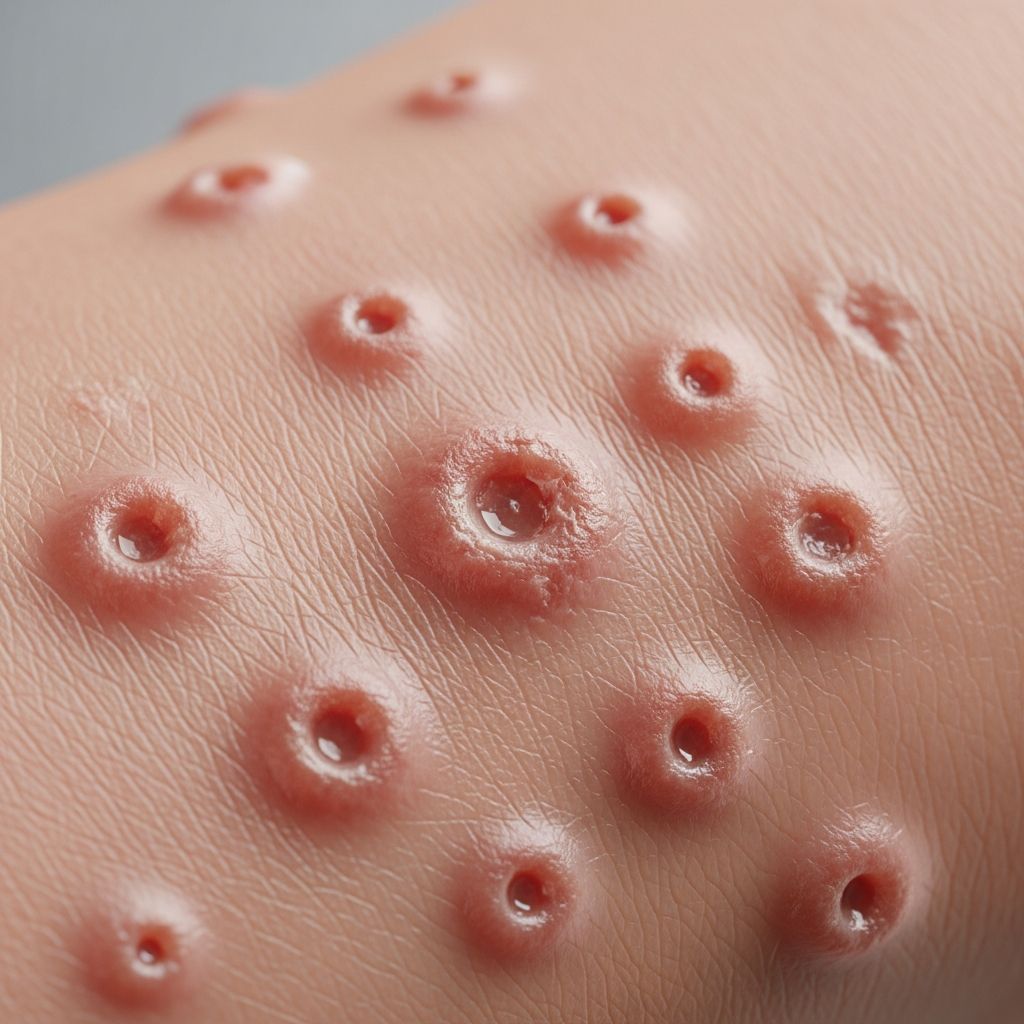
Hydroa vacciniforme is a rare photodermatosis primarily affecting children, characterized by recurrent vesicles on sun-exposed skin that heal with varioliform scarring. This condition’s pathology reveals distinctive epidermal and dermal changes, often linked to Epstein-Barr virus (EBV) infection.
What is hydroa vacciniforme?
Hydroa vacciniforme represents one of the rarest photosensitivity dermatoses, manifesting as fluid-filled blisters (hydroa) that evolve into pox-like scars (vacciniforme). It predominantly impacts sun-exposed areas like the face, ears, hands, and lower limbs, with lesions appearing 30 minutes to 2 hours post-sun exposure. The disease typically onset in children aged 3-15 years, more frequently in females, though males may experience later onset and prolonged course.
Pathologically, sections exhibit epidermal spongiosis, vesiculation, and necrosis overlying a dense dermal inflammatory infiltrate. Necrosis can be confluent, infiltrated by acute and chronic inflammatory cells, progressing to scarring in older lesions. This UVA-induced reaction underscores its photosensitive nature, though exact pathogenesis remains elusive.
Who gets hydroa vacciniforme?
This condition chiefly affects pediatric populations, with peak incidence between 3 and 15 years. Females are diagnosed more commonly, potentially due to behavioral sun exposure differences. Rare adult-onset cases exist, often with atypical features. Familial clustering suggests genetic predisposition in some instances, though most are sporadic.
Geographically, reports span global populations without strong ethnic bias, but underdiagnosis in non-Caucasian groups may skew data. Association with EBV elevates risk in immunocompromised or chronically infected individuals.
Clinical features of hydroa vacciniforme
Lesions emerge seasonally, primarily spring through summer, on photo-distributed sites. Initial erythematous papules progress to pruritic vesicles or bullae, crusting over 1-2 weeks and leaving depressed, varioliform scars. Ear involvement often yields characteristic notched helix scars.
Systemic symptoms are uncommon but include keratoconjunctivitis, photophobia, photo-onycholysis, fever, and malaise. Exaggerated insect bite reactions may cause necrosis. Severe EBV-linked cases risk lymphoproliferative disorders like NK-cell lymphoma.
- Sun-exposed predilection: Face (cheeks, nose), ears, dorsal hands, V-neck area.
- Lesion evolution: Papule → vesicle/bulla → umbilicated crust → varioliform scar.
- Recurrence: Annual flares, resolving by adolescence in most (80-90%).
- Associated findings: Ocular irritation, nail dystrophy, hypersensitivity to bites.
Pathology of hydroa vacciniforme
Histopathology is diagnostic, showing interface dermatitis with epidermal spongiosis, intraepidermal vesiculation, and apoptotic keratinocytes. Superficial necrosis overlies perivascular and interstitial dermal infiltrate of lymphocytes, histiocytes, and neutrophils. Older lesions display fibrosis and scarring.
EBV detection via EBER in-situ hybridization confirms viral role in dermal infiltrate, particularly in atypical cases. Dermal edema and vascular changes support photosensitive etiology.
Key histopathological features
| Feature | Description |
|---|---|
| Epidermis | Spongiosis, vesiculation, necrosis (confluent or focal) |
| Dermis | Dense mixed infiltrate (lymphs, plasma cells, neutrophils); perivascular |
| Chronic lesions | Scarring, fibrosis |
| Special stains | EBER+ in infiltrate (subset cases) |
Hydroa vacciniforme-like T cell lymphoma
This aggressive variant blurs spectrum boundaries with classical hydroa vacciniforme. Lesions are larger, persistent, involve non-sun-exposed sites, and infiltrate subcutis. Histology mirrors benign form but with denser, atypical lymphoid infiltrate comprising CD3+, CD8+, TIA1+ T-cells or CD56+ NK-cells. Clonality via TCR gene rearrangement and EBV positivity are frequent.
Prognosis is guarded; fatal outcomes from hemophagocytic syndrome or dissemination reported, especially in Latin American/Asian children. Differentiation relies on clinical persistence, depth of infiltrate, atypia, and molecular studies.
Related Stories



- Distinguishing features: Larger plaques, ulceration, extracutaneous spread.
- Immunophenotype: CD3+, CD8+, granzyme B+, EBV+.
- Progression risk: 10-20% of severe hydroa cases evolve to lymphoma.
Differential diagnosis
Clinically mimics polymorphic light eruption, solar urticaria, or erythropoietic protoporphyria. Pathologically, distinguishes from actinic reticuloid (eosinophilic infiltrate) or lupus (basement membrane thickening). EBV-associated hydroa requires exclusion of lymphoma via immunohistochemistry.
| Condition | Key Differentiator |
|---|---|
| Polymorphic light eruption | No scarring; self-resolves faster |
| Varicella zoster | Dermatomal; multinucleated cells |
| CTCL (mycosis fungoides) | Epidermotropism, cerebriform nuclei |
| EBV hydroa lymphoma | Clonality, subcutis involvement |
Investigations for hydroa vacciniforme
Diagnosis combines phototesting (minimal erythema dose to UVA), biopsy, and EBV serology/PCR. Monochromator phototesting reproduces lesions specifically to UVA (320-400nm). EBER-ISH detects latent EBV. Complete blood count monitors lymphoproliferation.
- Photopatch testing
- Skin biopsy (H&E, IHC)
- EBV IgM/IgG, DNA PCR
- Lymph node biopsy if systemic
Treatment of hydroa vacciniforme
First-line: Rigorous photoprotection (SPF50+ broad-spectrum sunscreens, UPF clothing, hats). Antimalarials (hydroxychloroquine 200-400mg/day) reduce flares in 60-70%. Thalidomide or cyclosporine for refractory cases.
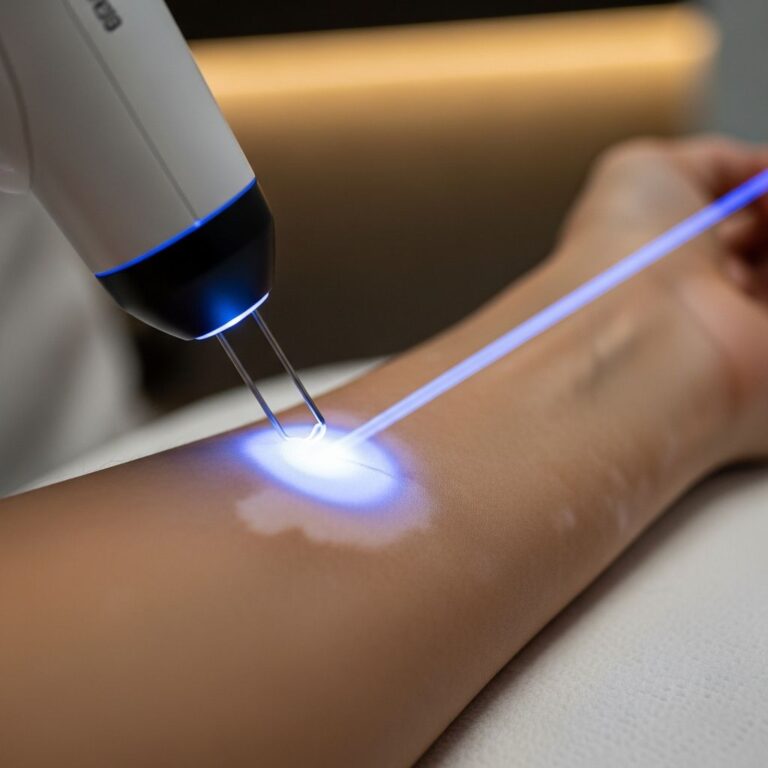
Photohardening with narrowband UVB/PUVA desensitizes skin. Severe EBV-driven disease warrants antivirals (aciclovir), immunosuppressants, or rituximab. Lymphoma requires chemotherapy (etoposide, asparaginase).
Frequently Asked Questions (FAQs)
Q: Is hydroa vacciniforme curable?
A: Most cases remit by adolescence, leaving scars. Persistent forms need vigilant management.
Q: What role does EBV play?
A: Detected in infiltrates; triggers lymphoproliferation in subset, linking to lymphoma.
Q: How to prevent outbreaks?
A: Strict sun avoidance, daily UVA-blockers, protective attire essential.
Q: Does it affect adults?
A: Rare; often atypical with EBV, higher lymphoma risk.
Q: Is biopsy always needed?
A: Yes, to confirm pathology and exclude malignancy.
This comprehensive overview synthesizes clinical, pathological, and therapeutic insights into hydroa vacciniforme, aiding dermatologists and patients. Early recognition prevents complications like scarring and rare malignant transformation.
References
- Hydroa vacciniforme pathology — DermNet NZ. 2013. https://dermnetnz.org/topics/hydroa-vacciniforme-pathology
- Hydroa vacciniforme — DermNet NZ. 2006. https://dermnetnz.org/topics/hydroa-vacciniforme
- Hydroa vacciniforme pathology image — DermNet NZ. Accessed 2026. https://dermnetnz.org/imagedetail/18692-hydroa-vacciniforme-pathology
- Hydroa Vacciniforme — StatPearls, NCBI Bookshelf. 2023-10-01. https://www.ncbi.nlm.nih.gov/books/NBK545312/
- Epstein-Barr virus — DermNet NZ. 2021-10. https://dermnetnz.org/topics/epstein-barr-virus
Similar Articles








Read full bio of medha deb