Hydroa Vacciniforme: Essential Guide To Diagnosis And Treatment
Rare childhood photodermatosis causing recurrent sun-induced blisters and scarring on exposed skin areas.
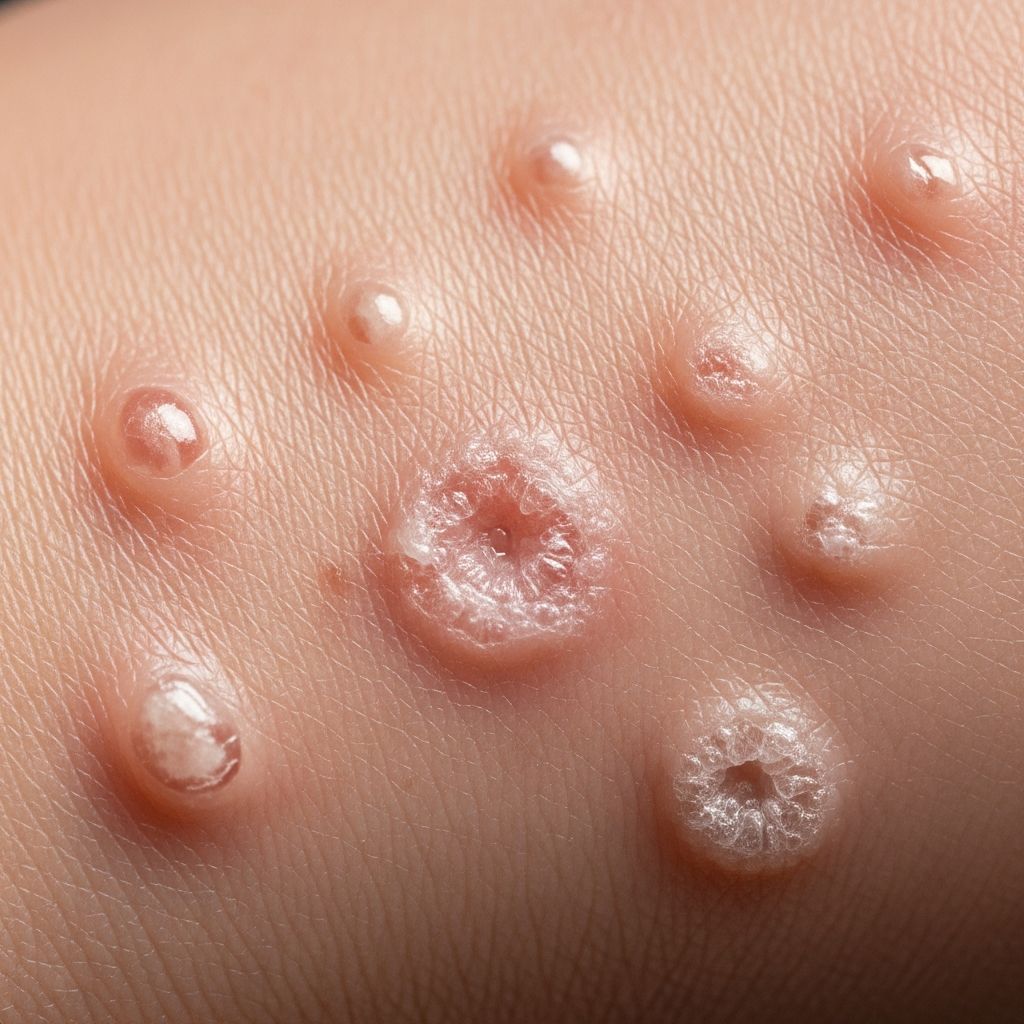
Hydroa vacciniforme is a rare, chronic photodermatosis primarily affecting children, characterized by recurrent fluid-filled blisters on sun-exposed skin that heal with distinctive pox-like (vacciniform) scars.
What is hydroa vacciniforme?
Hydroa vacciniforme (HV) is an exceptionally uncommon acquired photosensitivity disorder, typically manifesting in early childhood between ages 1 and 16, with a peak onset around 7 years. It predominantly impacts sun-exposed areas such as the face, ears, dorsal hands, and occasionally the lower limbs (V-shaped areas of the legs). The name derives from ‘hydroa’ (watery vesicles) and ‘vacciniforme’ (resembling smallpox vaccination scars due to the characteristic umbilicated, varioliform scarring).
The condition is idiopathic, with symptoms triggered specifically by ultraviolet A (UVA) light exposure, distinguishing it from other photodermatoses. Lesions appear symmetrically, often within hours of sun exposure, progressing from erythematous macules to papules, vesicles, and necrotic crusts over 1-6 weeks, ultimately healing with atrophic, depigmented varioliform scars. In temperate climates, exacerbations peak in spring and summer, improving during winter months.
Classic HV is benign and self-limited, frequently remitting spontaneously by adolescence or early adulthood in 80-90% of cases. However, a severe variant exists, associated with Epstein-Barr virus (EBV) infection, which may involve non-sun-exposed skin and carry risks of systemic complications or progression to hydroa vacciniforme-like lymphoma (HVLL), a rare EBV-positive T-cell or NK-cell lymphoproliferative disorder.
Who gets hydroa vacciniforme?
Hydroa vacciniforme is extremely rare, with an estimated incidence of less than 100 reported cases worldwide. It affects children equally across genders, with no strong racial or geographic predisposition, though more cases are documented from Europe, Asia, and New Zealand.
There is a familial tendency in approximately 10% of cases, suggesting possible genetic factors, though no specific mutations have been consistently identified. Associations include EBV infection (detected in lesional T-cells of many patients), hypersensitivity to mosquito bites (HMB) in severe forms, and rarely, chronic active EBV infection.
What causes hydroa vacciniforme?
The precise etiology remains unknown, but UVA light (320-400 nm) is the primary trigger, confirmed by phototesting in affected individuals. Histologically, lesions show epidermal reticular degeneration, perivascular lymphocytic infiltrates, and apoptotic keratinocytes, without vasculitis or significant atypia in classic cases.
EBV DNA and proteins are frequently identified in lesional skin (up to 97% of tested cases), particularly in atypical or severe HV, implicating viral-driven lymphoproliferation. Proposed pathogeneses include:
- Photo-induced cytotoxic T-cell response against epidermal antigens.
- Impaired DNA repair mechanisms leading to apoptotic cell death.
- EBV-associated immune dysregulation in severe variants.
Severe HV may overlap with HVLL, featuring systemic EBV+ T/NK-cell proliferations.
What are the clinical features of hydroa vacciniforme?
Symptoms onset 30 minutes to 2 hours post-UVA exposure with pruritus or burning in sun-exposed sites. Evolution includes:
- Erythematous macules (hours post-exposure).
- Papules and vesicles (clear or hemorrhagic, 1-2 mm, umbilicated).
- Necrotic crusts/ulcers (deep, painful).
- Healing with varioliform scars (white, depressed, 1-3 mm, persistent).
Sun-exposed areas (face, ears, hands, V-neck, forearms) are symmetrically involved; trunk and legs are spared in classic HV. Rare extracutaneous features: ocular (photophobia, conjunctivitis, keratitis), oral mucosal ulcers.
Related Stories



Severe HV: Larger lesions on covered skin, facial edema, fever, malaise, hepatosplenomegaly, lymphadenopathy, transaminitis, HMB.
Diagnosis of hydroa vacciniforme
Diagnosis relies on characteristic history, clinical morphology, phototesting, and histopathology.
Phototesting
Minimal erythema dose (MED) to UVA is reduced; repeated UVA exposures reproduce typical vesicles.
Histopathology
Early: Intraepidermal vesicles, reticular degeneration, apoptotic keratinocytes.
Late: Necrotic epidermis, perivascular lymphocytic infiltrate (CD4+/CD8+ T-cells), scant EBV+ cells in classic HV.
Differential diagnosis
| Condition | Key Distinguishing Features |
|---|---|
| Varicella zoster | Generalized, dermatomal possible, positive Tzanck smear. |
| Photocontact dermatitis | History of allergen, no scarring. |
| Epstein-Barr associated HVLL | Severe, systemic symptoms, atypical lymphoid infiltrate, high EBV load. |
| Porphyrias (e.g., erythropoietic protoporphyria) | Immediate burning, no vesicles, porphyrinuria. |
| Actinic prurigo | Cheilitis, no vesicles/scars. |
Investigations
- EBV serology/PCR (elevated in severe cases).
- Bloods: Normal in classic HV; abnormalities (thrombocytopenia, transaminitis) in HVLL.
- T-cell receptor gene rearrangement (monoclonal in lymphoma).
Treatment of hydroa vacciniforme
No curative therapy exists; management focuses on prevention and symptom control.
Prevention
- Strict UVA/UVB photoprotection: Broad-spectrum sunscreens (SPF 50+, PA++++), UPF 50+ clothing, hats, window tinting.
- Avoid peak sun hours (10 AM-4 PM).
Medical therapies
Evidence is anecdotal/small series:
- Antimalarials (hydroxychloroquine 200-400 mg/day): Reduce photosensitivity in 50-70%; mechanism unclear.
- Thalidomide (1-4 mg/kg/day): Effective for severe/recalcitrant cases, but teratogenic.
- Immunosuppressants (azathioprine, cyclosporine): Variable response.
- Other: Beta-carotene, fish oils, indomethacin (limited efficacy).
For HVLL: Immunomodulators initially; chemotherapy (CHOP) or stem cell transplant for progression.
What is the outcome for hydroa vacciniforme?
Classic HV remits spontaneously in most by age 18-20. Scars may persist lifelong. Severe/EBV+ forms risk progression to systemic lymphoma (5-10%), with fatal outcomes if untreated.
Regular monitoring (clinical, labs, biopsy if atypical) is essential for early lymphoma detection.
Related topics
- Hydroa vacciniforme-like lymphoma
- Hypersensitivity to mosquito bites
- Chronic active EBV infection
- Photodermatoses
- Actinic prurigo
Frequently Asked Questions
What is hydroa vacciniforme?
A rare childhood photodermatosis with sun-induced vesicles healing to varioliform scars.
Is hydroa vacciniforme contagious?
No, it is not infectious despite occasional EBV association.
Does hydroa vacciniforme go away?
Yes, classic form usually remits by adolescence; monitor severe cases.
Can hydroa vacciniforme turn into cancer?
Rarely; severe EBV+ variant may progress to HVLL.
How is hydroa vacciniforme diagnosed?
Clinical features, phototesting, skin biopsy.
References
- Hydroa vacciniforme-like lymphoma: a chronic EBV + lymphoproliferative disorder — Blood Journal (ASH Publications). 2013-10-31. https://ashpublications.org/blood/article/122/18/3101/31827/Hydroa-vacciniforme-like-lymphoma-a-chronic-EBV
- Hydroa vacciniforme — VisualDx. Accessed 2026. https://www.visualdx.com/visualdx/diagnosis/hydroa+vacciniforme?diagnosisId=53420&moduleId=101
- Hydroa Vacciniforme – StatPearls — NCBI Bookshelf (NCBI). 2023-07-17. https://www.ncbi.nlm.nih.gov/books/NBK545312/
- Hydroa Vacciniforme: Diagnosis and Therapy — JAMA Dermatology (JAMA Network). 1996-04-01. https://jamanetwork.com/journals/jamadermatology/fullarticle/543427
Similar Articles








Read full bio of medha deb