Hydrocortisone Butyrate for Severe Inflammatory Skin Conditions (Locoid)
Effective relief for severe eczema, dermatitis, and psoriasis flare-ups with potent topical corticosteroid Locoid cream and ointment.
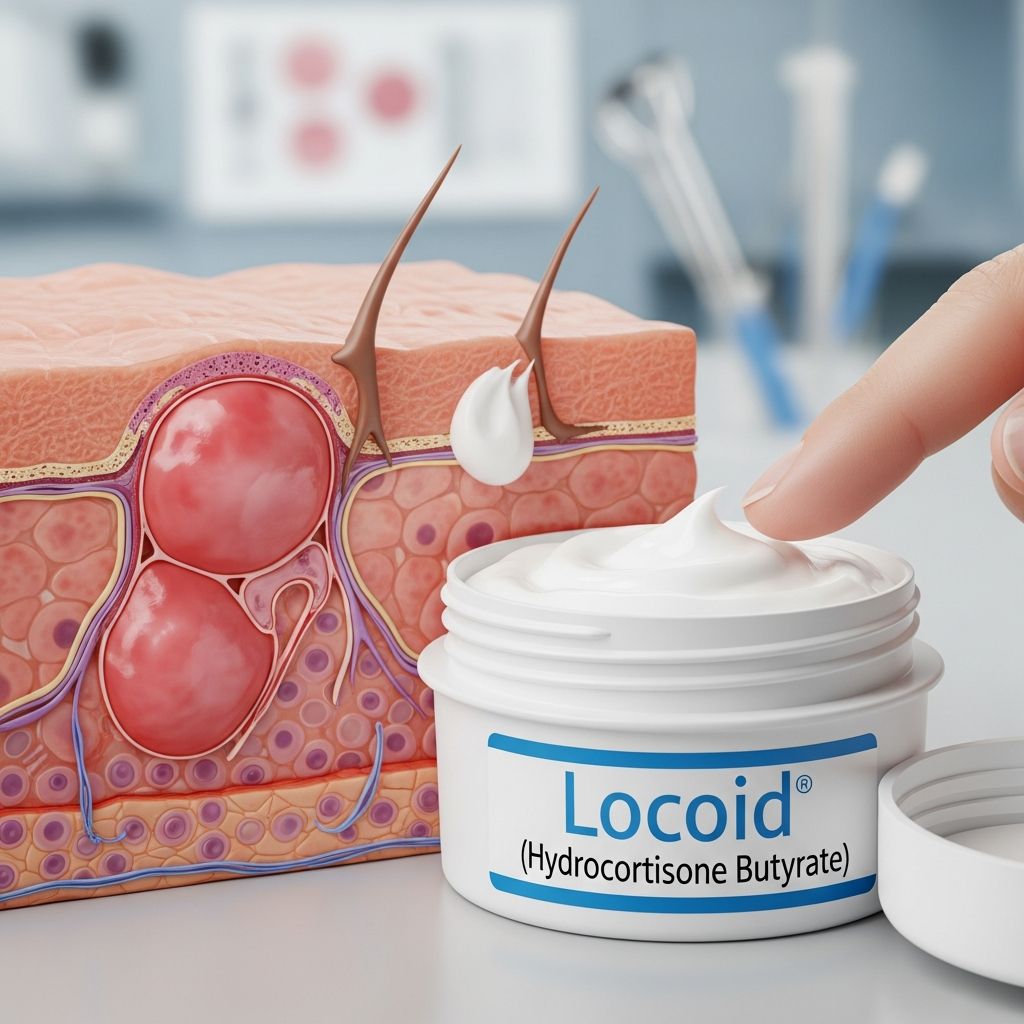
Hydrocortisone butyrate, commonly known by the brand name Locoid, is a potent topical corticosteroid designed to provide rapid relief from the symptoms of severe inflammatory skin conditions such as eczema and dermatitis. It works by reducing inflammation, itching, and redness during flare-ups, though it does not cure the underlying condition. Available in forms like cream, ointment, lotion, and scalp lotion, it is typically used alongside moisturizers for optimal results. Short courses are recommended to minimize risks, particularly in children.
About hydrocortisone butyrate
Hydrocortisone butyrate belongs to the class of potent topical corticosteroids, often simply called topical steroids. These medications are essential for managing inflammatory skin disorders when standard moisturizers alone prove insufficient. They are particularly effective during acute flare-ups of conditions like severe eczema, dermatitis, and certain cases of psoriasis affecting small areas such as the scalp, palms, or soles.
| Type of medicine | Details |
|---|---|
| Potent topical corticosteroid | Used for severe eczema, dermatitis, and psoriasis flare-ups |
| Also called | Locoid® |
| Available as | Cream (for moist/weeping skin), ointment (for dry skin), lotion (for larger/hairy areas), scalp lotion |
The choice of formulation depends on the skin’s condition: creams suit weeping areas, ointments dry scaly patches, lotions cover broader or hairier regions, and scalp lotions target the head effectively. Unlike milder hydrocortisone options, this potent version is reserved for more severe cases and is not routinely recommended for children unless prescribed by a dermatologist for short durations up to two weeks.
In clinical settings, hydrocortisone butyrate lotion 0.1% has demonstrated efficacy in pediatric patients aged 3 months and older with mild to moderate atopic dermatitis. A multicenter trial showed 49% treatment success (clear or almost clear skin with at least two-grade improvement) after 28 days of twice-daily application, compared to 24% with vehicle alone.
Before using hydrocortisone butyrate
Consult your doctor before starting treatment to ensure suitability. Key considerations include:
- Presence of skin infections, which require separate treatment.
- Conditions like rosacea or acne, where topical steroids may worsen symptoms.
- Pregnancy or breastfeeding status, as absorption could affect the fetus or infant.
- History of allergic reactions to corticosteroids or skin preparations.
Avoid application on the face unless specifically directed by a skin specialist, and keep it away from the eyes. Do not use occlusive dressings or bandages unless instructed, as they increase absorption and side-effect risks. Inform your doctor of any broken or inflamed skin, large treatment areas, or prolonged use plans, which heighten systemic absorption risks.
How to use hydrocortisone butyrate
Apply a thin layer to affected areas only, gently massaging until absorbed. Use sparingly—typically twice daily for adults. Treatment duration is short: up to 7 days for adults and 5 days for children unless otherwise advised. Discontinue once the flare-up resolves, usually within 7-14 days. If no improvement after 2 weeks, reassess with your doctor; extension to 4 weeks requires weighing benefits against HPA axis suppression risks.
Related Stories



- For lotion: Thin layer twice daily, rub gently, discontinue upon control.
- Scalp use: Part hair, apply to lesions, avoid healthy scalp.
- Children: Specialist oversight only, minimal amounts.
Continue moisturizing throughout and after treatment to maintain skin barrier function. Treatment success in studies for atopic dermatitis showed significant improvements over placebo, supporting its role in short-term management.
Getting the most from your treatment
Combine with regular emollient use to enhance efficacy and prevent rebounds. Stop upon symptom resolution; prolonged use risks tolerance, where skin reacts worse upon cessation. If rebound occurs (severe redness, burning post-stop), consult a professional—it may indicate overuse. Use on clean, dry skin; wash hands post-application unless treating hands. For best outcomes, adhere strictly to prescribed duration and amount.
Side-effects
Most side effects are mild and transient, but awareness is crucial, especially with potent steroids.
| Common Side Effects | Description |
|---|---|
| Burning/stinging | May occur initially but improves within days |
| Itching, dryness, irritation | Usually resolves with continued use |
Rarer effects from overuse include skin thinning, stretch marks, acne, rosacea worsening, or excess hair growth. Systemic effects like HPA axis suppression (adrenal issues), Cushing’s syndrome, or high blood sugar are possible with large-area, long-term use. Pediatric studies noted no HPA suppression in most cases under controlled dosing, but caution prevails.
Monitor for infections; discontinue if they develop and treat accordingly. Fire risk is low with proper small-area use.
How to store hydrocortisone butyrate
Store below 25°C, away from children. Do not use past expiry; discard unused portions after treatment. Ointments and creams maintain stability under recommended conditions.
Date of last review
This information reflects guidelines as of recent updates; consult healthcare providers for personalized advice.
Frequently Asked Questions (FAQs)
Can children use hydrocortisone butyrate?
Not generally recommended, but short courses (up to 2 weeks) may be prescribed by specialists for severe cases. Limit to 5 days continuously without advice.
How long should I use Locoid?
Typically 7-14 days or until flare-up clears. Do not exceed 4 weeks without reassessment due to side-effect risks.
Is it safe on the face?
Avoid unless directed by a dermatologist; short-term only, away from eyes.
What if I get no improvement?
See your doctor after 2 weeks; may need diagnosis review or alternative treatment.
Does it cure eczema?
No, it relieves symptoms during flares; ongoing moisturizing is key for management.
References
- Hydrocortisone butyrate for severe inflammatory skin conditions (Locoid) — Patient.info. 2023-05-12. https://patient.info/medicine/hydrocortisone-butyrate-for-severe-inflammatory-skin-conditions-locoid
- Hydrocortisone Butyrate Lotion – DailyMed — NIH. 2024-01-15. https://dailymed.nlm.nih.gov/dailymed/drugInfo.cfm?setid=97d35248-b28b-18b0-98a6-2d93476fb4a3
- Hydrocortisone butyrate: Uses, Interactions, Mechanism of Action — DrugBank. 2025-03-20. https://go.drugbank.com/drugs/DB14540
- Hydrocortisone Butyrate Lotion Prescription & Dosage Information — MPR. 2024-11-05. https://www.empr.com/drug/hydrocortisone-butyrate-lotion/
- Hydrocortisone for skin: steroid for skin conditions — NHS. 2024-07-18. https://www.nhs.uk/medicines/hydrocortisone-for-skin/
Similar Articles








Read full bio of Sneha Tete