Hydroxyurea: Expert Guide To Uses, Dosage, And Side Effects
Comprehensive guide to hydroxyurea: uses in dermatology, especially psoriasis, mechanisms, dosing, side effects, and monitoring.
Authoritative facts about the skin from DermNet New Zealand Trust. Published . Support DermNet NZ with an annual membership from only NZ$4.50.
What is hydroxyurea?
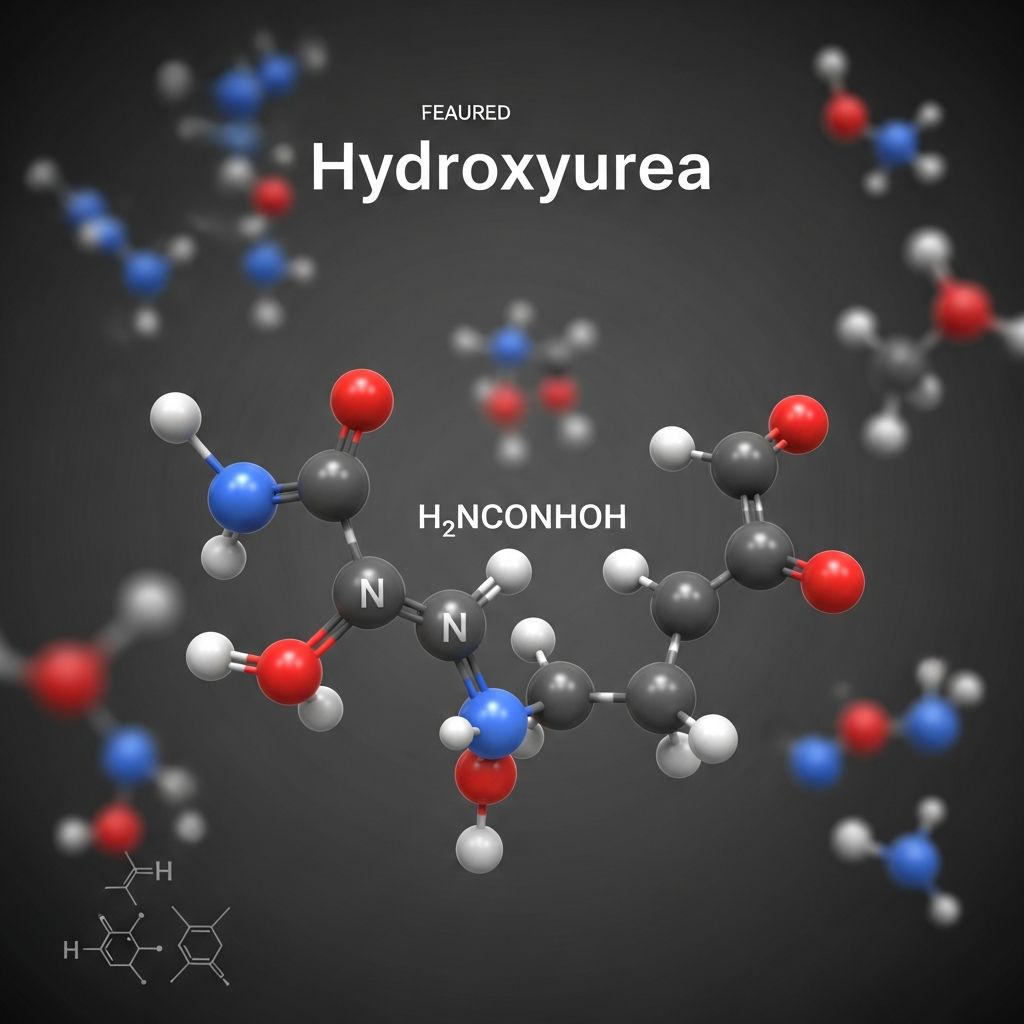
Hydroxyurea, also known as hydroxycarbamide, is an oral cytotoxic medication that inhibits DNA synthesis by blocking the enzyme ribonucleotide reductase. This action primarily affects rapidly dividing cells, making it useful in oncology and dermatology for conditions like severe psoriasis where epidermal hyperproliferation occurs. Originally developed in the late 1800s as an antineoplastic agent, hydroxyurea has demonstrated efficacy in psoriasis since the 1960s, with studies showing improvement in 60-80% of patients with refractory disease. Its dual effects on hyperproliferative skin cells and potential antiviral properties also make it valuable for psoriasis in HIV patients.
The medication is available as 500 mg capsules (brand names include Hydrea® and Droxia®) and requires careful monitoring due to risks of bone marrow suppression and secondary malignancies.
Who should use hydroxyurea?
Hydroxyurea is indicated for patients with severe plaque psoriasis unresponsive to or contraindicated for standard therapies such as phototherapy, methotrexate, ciclosporin, acitretin, or biologics. It serves as a valuable option in treatment-resistant cases or when other agents are unsuitable.
It may also be considered for other dermatoses involving rapid cell turnover, though evidence is strongest for psoriasis. Use is particularly relevant in HIV-associated psoriasis due to hydroxyurea’s antiviral effects against HIV when combined with certain antiretrovirals.
- Contraindications: Pregnancy (teratogenic), breastfeeding, severe renal/hepatic impairment, active infection, recent live vaccines, or history of severe bone marrow suppression.
- Caution: Elderly patients, those with prior radiation therapy (risk of radiation recall dermatitis), or concurrent use of myelosuppressive drugs.
What does hydroxyurea treat?
- Severe chronic plaque psoriasis: Multiple studies confirm 60-80% response rates. For example, a study of 85 patients showed good/moderate response in 80% over 3-96 months.
- HIV-associated psoriasis: Dual benefit from anti-psoriatic and anti-HIV effects.
- Oncology uses (relevant for dermatologists): Chronic myeloid leukaemia, head/neck squamous cell carcinoma (with radiation).
- Off-label dermatology: Limited evidence for erythrodermic psoriasis, ichthyosis, or hyperkeratotic disorders.
How does hydroxyurea work?
Hydroxyurea diffuses into cells and is converted to free radicals that inactivate ribonucleotide reductase, the rate-limiting enzyme in deoxyribonucleotide synthesis. This selectively inhibits DNA replication in S-phase cells without affecting RNA or protein synthesis, explaining its efficacy against hyperproliferative keratinocytes in psoriasis.
Additional mechanisms include:
- Reduction of intracellular iron, decreasing oxidative stress.
- Promotion of fetal haemoglobin production (relevant in sickle cell disease).
- Antiviral effects via depletion of deoxynucleotides needed for retroviral reverse transcription.
Clinical studies in psoriasis
Decades of data support hydroxyurea’s role in psoriasis:
| Study | Dose/Duration | Response Rate |
|---|---|---|
| Rosten (1970) | 1.5-2g/day, 8 weeks | 50% considerable improvement (6/12) |
| Hunter et al (1973) | 1g/day, 4-40 weeks | 67% very substantial (16/24) |
| Layton et al (1991) | 0.5-1.5g/day, 3-96 months | 80% good/moderate (68/85) |
| Kumar et al (2001) | 1-1.5g/day, 12 weeks | 43% PASI75 (6/14 completers) |
These open-label studies consistently demonstrate maximal clearance by 6-8 weeks with good tolerability.
What is the dosage of hydroxyurea?
Initial dose: 500 mg daily (10-15 mg/kg/day), increase by 500 mg weekly to 1-2.5 g/day based on response and tolerance.
Related Stories



Maintenance: Lowest effective dose, typically 1-1.5 g/day. Intermittent dosing (e.g., 3-5 days/week) may reduce toxicity while maintaining efficacy.
- Adjust for renal impairment: Reduce by 50% if CrCl <30 mL/min.
- Take with food to minimize GI upset.
- Capsules must not be chewed or opened due to cytotoxicity.
Monitoring for hydroxyurea
Pre-treatment: FBC, U&E, LFTs, ferritin, hepatitis B/C serology, pregnancy test (women of childbearing potential).
Ongoing: Weekly FBC for first 8 weeks, then fortnightly for 3 months, then monthly. Discontinue if neutrophils <1.0, platelets <100, Hb drops >20%.
Additional: Annual dermatological exam for skin cancer, renal/hepatic function 3-monthly.
| Parameter | Frequency | Action levels |
|---|---|---|
| Neutrophils | Weekly initially | <1.0 x10⁹/L: hold |
| Haemoglobin | Monthly | Drop >20%: investigate |
| LFTs | 3-monthly | 3x ULN: reduce dose |
What are the side effects of hydroxyurea?
Common (>10%):
- Mucocutaneous: Nail pigmentation (50%), leg ulcers (non-healing), hyperpigmentation, mucositis, alopecia (reversible).
- GI: Nausea, anorexia, diarrhoea.
- Haematological: Mild anaemia, leucopenia (dose-dependent).
Serious (<1%):
- Bone marrow failure (monitor FBC).
- Secondary malignancies: Skin cancers (squamous cell > basal cell > melanoma), increased leukaemia risk with long-term use.
- Pulmonary fibrosis (rare, dyspnoea).
Leg ulcers typically occur after 6+ months and heal 3-6 months post-discontinuation.
Drug interactions
- Myelosuppressives: Methotrexate, azathioprine, trimethoprim – increased cytopenias.
- Antiretrovirals: Synergy with didanosine (HIV); monitor for lactic acidosis.
- Live vaccines: Contraindicated.
- Smoking: Reduces efficacy.
Alternatives to hydroxyurea
| Agent | Advantages | Disadvantages |
|---|---|---|
| Methotrexate | Cheaper, faster onset | Hepatotoxicity, more monitoring |
| Ciclosporin | Rapid action | Renal toxicity, short-term |
| Acitretin | No blood monitoring | Teratogenic, mucocutaneous |
| Biologics | Best efficacy | Costly, infection risk |
Frequently asked questions about hydroxyurea
Q: How quickly does hydroxyurea work for psoriasis?
A: Improvement typically starts within 2-4 weeks, reaching maximum effect by 6-8 weeks. Continued improvement may occur up to 12 weeks.
Q: Does hydroxyurea cause hair loss?
A: Mild reversible alopecia affects ~20% of patients, usually after prolonged use.
Q: Can hydroxyurea cause skin cancer?
A: Yes, long-term use increases risk of squamous cell carcinoma (most common), basal cell carcinoma, and melanoma. Annual skin exams are essential.
Q: Is hydroxyurea safe in pregnancy?
A: No – absolutely contraindicated (category D). Teratogenic effects demonstrated. Use reliable contraception during and 6 months after treatment.
Q: What if my blood counts drop?
A: Dose reduction or temporary cessation. Notify your doctor immediately for unexplained bruising, infections, or fatigue.
Q: Can I drink alcohol on hydroxyurea?
A: Moderate alcohol is generally safe but avoid binge drinking due to liver effects. Discuss with your dermatologist.
Q: How do I store hydroxyurea capsules?
A: Room temperature, away from moisture and children. Do not use if expired or discoloured.
References
- Hydroxyurea for the Treatment of Psoriasis including in HIV-infected — PMC/NCBI. 2014-10-15. https://pmc.ncbi.nlm.nih.gov/articles/PMC4205952/
- HYDREA U.S. Prescribing Information — Bristol Myers Squibb. 2023-01-01. https://packageinserts.bms.com/pi/pi_hydrea.pdf
- Hydroxyurea (oral route) – Mayo Clinic — Mayo Clinic. 2025-06-01. https://www.mayoclinic.org/drugs-supplements/hydroxyurea-oral-route/description/drg-20068109
- Hydroxyurea: MedlinePlus Drug Information — MedlinePlus/NIH. 2024-01-01. https://medlineplus.gov/druginfo/meds/a682004.html
- HYDROXYCARBAMIDE (Hydroxycarbamide) — British Association of Dermatologists. 2016-10-01. https://www.skinhealthinfo.org.uk/wp-content/uploads/2018/11/Hydroxycarbamide-Update-October-2016-lay-reviewed-September-20162.pdf
Similar Articles








Read full bio of Sneha Tete