Hyoscine For Travel Sickness: Dosage & Side Effects Guide
Effective relief from motion sickness with hyoscine: tablets, patches, dosages, side effects, and expert advice for safe travel.
Hyoscine hydrobromide, also known as scopolamine, is widely regarded as the most effective medication for preventing and treating motion sickness, commonly experienced during travel by car, boat, plane, or even on fairground rides. This anticholinergic drug works by blocking confusing nerve signals from the inner ear to the brain, reducing symptoms like nausea, vomiting, dizziness, and sweating. Available in brands such as Joy Rides, Kwells (tablets), and Scopoderm (patches), it offers flexible options for short trips or multi-day voyages, suitable for adults and children above certain ages.
About hyoscine for travel sickness
Motion sickness arises when there’s a mismatch between visual cues and sensations from the inner ear’s balance organs, leading to symptoms including nausea, vomiting, pallor, cold sweats, hypersalivation, hyperventilation, and headaches. Hyoscine addresses this by acting on the brain and inner ear to control vomiting and relax stomach muscles. A Cochrane review confirms scopolamine’s superiority over placebo in preventing nausea and vomiting, with risk ratios showing significant efficacy (RR 0.48, 95% CI 0.32-0.73). It’s the first-line treatment for adults, outperforming many antihistamines, though some studies note comparable effectiveness with fewer side effects in alternatives.
Forms include chewable tablets for quick action (20-30 minutes onset) and transdermal patches for prolonged release up to 72 hours. Tablets suit journeys under 4 hours, while patches are ideal for longer travel, applied 5-6 hours prior. Unlike hyoscine butylbromide (Buscopan) for IBS cramps, hydrobromide targets travel nausea.
Before taking hyoscine tablets or patches
Consult a doctor or pharmacist before use, especially if you have glaucoma, prostate issues, myasthenia gravis, or gut blockages, as hyoscine can worsen these due to its anticholinergic effects. Avoid if allergic to hyoscine or recent gut surgery. Inform about other medications like antidepressants or antipsychotics, which amplify side effects. Not suitable for driving or machinery operation due to drowsiness risk; avoid alcohol. Pregnant or breastfeeding individuals should seek advice—limited data exists, but it’s generally used if benefits outweigh risks.
- Pregnancy and breastfeeding: Use only if necessary; tablets may pass into breast milk causing baby drowsiness.
- Driving: Drowsiness and blurred vision impair safety—do not drive.
- Alcohol: Increases sedation—avoid combination.
How and when to take hyoscine tablets
Take tablets 20-60 minutes before travel for optimal effect. Chew or suck for faster absorption; effects last 4-6 hours, repeatable if needed.
| Age Group | Dosage | Frequency |
|---|---|---|
| Adults and children over 10 years | 300 micrograms (1 tablet) | Every 6 hours if needed, max 1.2 mg/day |
| Children 6-10 years | 150-300 micrograms (half to 1 tablet) | Every 6 hours |
| Children 3-6 years (soluble Kwells Junior) | 150 micrograms | Every 6 hours |
| Under 3 years | Not recommended | – |
If symptoms persist beyond dosing, combine with behavioral strategies. Swallow whole if chewing upsets stomach.
How to use hyoscine patches
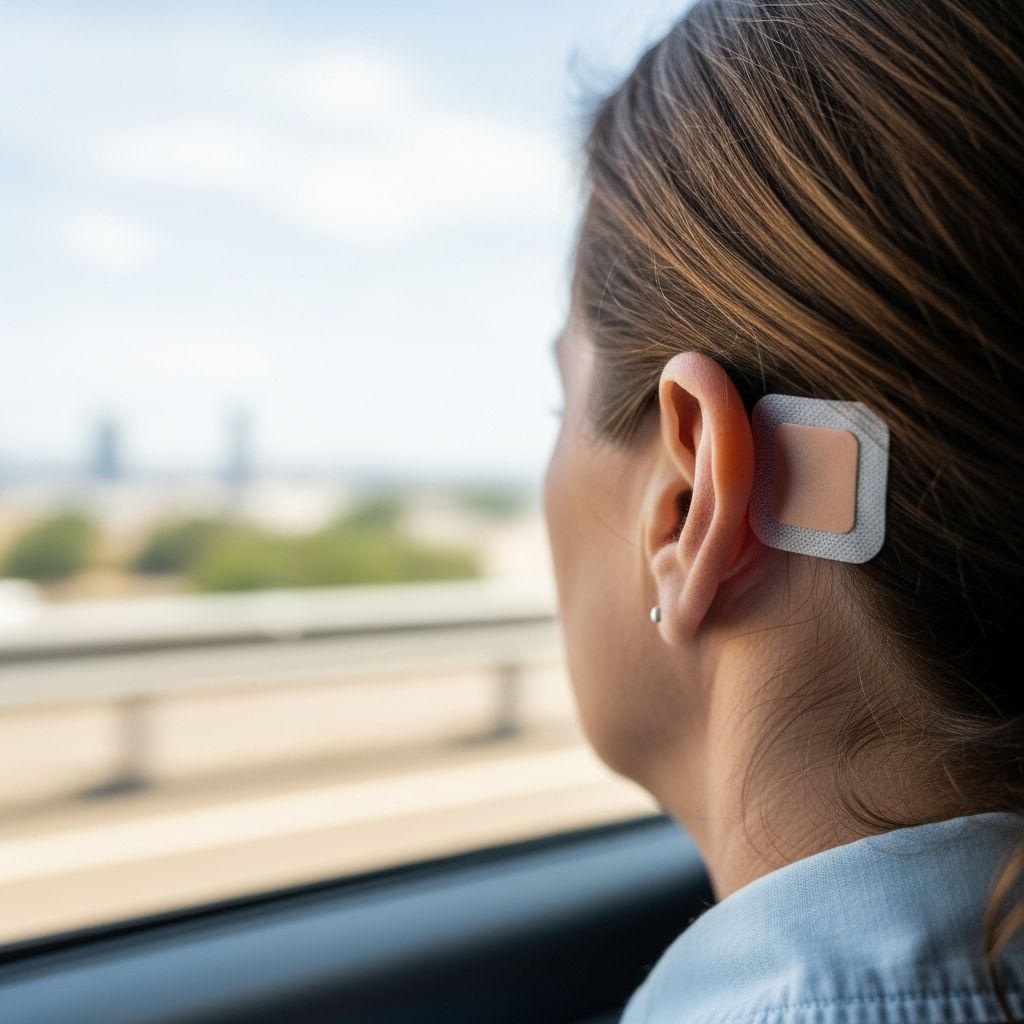
Scopoderm patches are prescription-only for ages 10+. Apply one patch to clean, dry skin behind the ear 5-6 hours before travel (e.g., night before); it activates slowly via skin absorption, lasting 72 hours. Do not cut patches. Remove post-journey; wash hands and application site to avoid eye contact causing dilation/blurred vision. If wet (swimming), cover with waterproof dressing but replace if loose. One patch per journey; no evidence of superior efficacy over tablets, but useful for gastric stasis.
Side-effects of hyoscine tablets and patches
Common anticholinergic effects: dry mouth (26-36%), drowsiness, blurred vision, constipation, urinary retention. Patches cause fewer oral effects but similar systemic ones. Rare: hallucinations, confusion (especially elderly), tachycardia. Cochrane data shows higher drowsiness vs. some antihistamines (e.g., 60% vs. 35% in calm seas). Effects peak early; tolerance may develop. Overdose: severe dry mouth, fever—seek emergency care.
Related Stories



- Common (>1/100): Dry mouth, drowsiness, blurred vision.
- Less common: Constipation, difficulty urinating.
- Rare: Allergic reactions, psychosis.
Report persistent issues to doctor; most resolve post-treatment.
How to cope with side effects of hyoscine
Mitigate dry mouth with sugar-free gum/lozenges; stay hydrated. For drowsiness, time doses for sleep (e.g., night patch). Blurred vision: avoid reading/driving; effects temporary. Constipation: high-fiber diet, laxatives if needed. If severe, switch to less sedating antihistamines like cinnarizine. Wash hands after patch handling.
Pregnancy and breastfeeding while taking hyoscine
Limited safety data; use only if essential, under medical supervision. Tablets may enter breast milk, risking infant sedation—express and discard milk during peak effect. Patches: systemic absorption concerns similar. Alternatives like ginger may be safer first-line.
Hyoscine and other medicines
Potentiates anticholinergics (e.g., tricyclics, antipsychotics like chlorpromazine), increasing dry mouth/drowsiness. Avoid with MAOIs. No major interactions with paracetamol but monitor sedatives. Check with pharmacist for polypharmacy.
Common questions about hyoscine for travel sickness
Is hyoscine the best for motion sickness?
Yes, often most effective, especially vs. placebo.
Does the patch work better than tablets?
No superior evidence; patches suit long trips without redosing.
Can children use hyoscine?
Tablets from age 3 (junior); patches 10+.
How long before travel to take?
Tablets: 20-60 min; patches: 5-6 hours.
Alternatives if drowsy?
Cinnarizine, cyclizine (less sedating).
Other travel sickness medicines
Antihistamines: Cinnarizine (4-8 hr trips), promethazine (24 hr, drowsy). Xyzine rarely used due to abuse. Non-drug: ginger, acupressure bands, positioning (front seat, horizon gaze).
Non-drug treatments for motion sickness
- Choose forward-facing seats, fresh air.
- Fix gaze on horizon; avoid screens.
- Acupressure wristbands (P6 point).
- Ginger: 1g/day effective in some.
- Hydrate, light meals; avoid heavy/spicy food.
About motion sickness
Affects 25-30% travelers; worse in children 2-12, pregnant women. Triggers: boats (seasickness high), simulators. Prevention key for enjoyment.
References
- Motion Sickness: Prevention and Treatment — Patient.info. 2023. https://patient.info/travel-and-vaccinations/health-advice-for-travel-abroad/motion-travel-sickness
- Scopolamine (hyoscine) for preventing and treating motion sickness — Cochrane Database Syst Rev (PMC). 2011-06-15. https://pmc.ncbi.nlm.nih.gov/articles/PMC7138049/
- Motion sickness: causes, prevention and management — The Pharmaceutical Journal. 2023. https://pharmaceutical-journal.com/article/ld/motion-sickness-causes-prevention-and-management
- About hyoscine hydrobromide — NHS.uk. 2024. https://www.nhs.uk/medicines/hyoscine-hydrobromide/about-hyoscine-hydrobromide/
- Buscopan (Hyoscine Butylbromide) — Patient.info. 2023. https://patient.info/medicine/hyoscine-butylbromide-tablets-buscopan
- Prevention and Treatment of Motion Sickness — AAFP. 2014-07-01. https://www.aafp.org/pubs/afp/issues/2014/0701/p41.html
Similar Articles








Read full bio of Sneha Tete