The Hype on Hyaluronic Acid: Separating Fact from Fiction
Discover the truth about hyaluronic acid: what it does, what it doesn't, and how to use it effectively.
Hyaluronic acid has become one of the most talked-about ingredients in skincare, adorning countless product labels and featured prominently in beauty advertisements. From serums and moisturizers to injectable fillers, hyaluronic acid appears everywhere in the cosmetic industry. But with all the marketing hype, many consumers find themselves wondering: Is hyaluronic acid really as miraculous as it’s portrayed? What does the science actually say? And most importantly, will it work for your skin? This comprehensive guide separates the marketing claims from the scientific reality, helping you understand what hyaluronic acid can and cannot do for your skin.
Understanding Hyaluronic Acid: What Is It?
Hyaluronic acid, commonly referred to as HA or hyaluronan, is a naturally occurring polysaccharide polymer that plays a crucial role in maintaining connective tissue throughout the body. This remarkable molecule is not exclusive to skincare products; rather, it exists naturally in virtually every person’s body, with the average adult containing approximately 15 grams of hyaluronic acid at any given time.
The structure of hyaluronic acid is truly unique among biological molecules. Its chain-like molecular composition allows it to bind with and retain enormous amounts of water—up to one thousand times its own weight. This exceptional water-holding capacity is what makes hyaluronic acid so valuable in both biological functions and cosmetic applications. To put this in perspective, just a quarter teaspoon of pure hyaluronic acid can hold approximately one and a half gallons of water.
Where Hyaluronic Acid Naturally Occurs
Within the human body, hyaluronic acid is primarily found in three key locations: the skin, the joints, and the eyes. In the skin, hyaluronic acid comprises approximately one-third of the body’s total hyaluronic acid supply, making skin one of the primary reservoirs of this essential substance. In the joints, it serves as a key component of synovial fluid, providing lubrication and enabling smooth movement by preventing friction between bones and absorbing shock from physical activity. In the eyes, hyaluronic acid contributes to maintaining proper hydration and optical clarity.
Beyond these primary locations, hyaluronic acid also plays important roles in neural tissues and various other connective tissues throughout the body. It functions as an essential component of the extracellular matrix, the gel-like substance that surrounds and supports cells.
The Natural Lifecycle of Hyaluronic Acid in Your Body
One of the most important facts about hyaluronic acid is that it is not a static substance. The body is constantly producing and degrading hyaluronic acid in a continuous cycle. The average person replaces approximately 5 grams of hyaluronic acid daily through natural biological processes. This represents about one-third of the total hyaluronic acid content being replaced each day.
However, this natural production and degradation process becomes increasingly problematic as we age. Several factors contribute to the breakdown of hyaluronic acid:
- UV radiation from sun exposure accelerates degradation
- Free radicals from oxidative stress break down hyaluronic acid molecules
- Environmental pollutants contribute to molecular breakdown
- Natural enzymatic processes degrade hyaluronic acid through hyaluronidases
- Chemical reactions such as acid/alkaline hydrolysis damage HA molecules
Related Stories



Most significantly, the body’s natural production of hyaluronic acid decreases substantially with age. This age-related decline in hyaluronic acid production is one of the primary factors contributing to visible signs of aging, including loss of skin volume, decreased elasticity, and increased dryness.
Beyond Beauty: The Multiple Roles of Hyaluronic Acid
While hyaluronic acid is primarily marketed for its skincare benefits, this molecule performs numerous critical functions throughout the body that extend far beyond cosmetic concerns. Understanding these additional roles provides important context for appreciating why maintaining adequate hyaluronic acid levels matters for overall health, not just appearance.
In joint health, hyaluronic acid serves as an essential lubricant within synovial fluid, enabling smooth movement and reducing friction between bones. This function becomes increasingly important as people age and joint wear and tear accumulates. In wound healing, hyaluronic acid’s unique molecular structure acts as a scaffold for tissue regeneration, allowing wounds to heal faster and more effectively while reducing inflammation. The molecule also plays a significant role in the immune system, contributing to the body’s innate immune response and helping coordinate immune function.
Additionally, hyaluronic acid participates in cell division and differentiation, supporting the growth and renewal of various cell types throughout the body. These multifaceted roles underscore that hyaluronic acid is far more than a simple moisturizing ingredient—it is a fundamental component of human biology.
The History of Hyaluronic Acid in Cosmetics
The use of hyaluronic acid in skincare and cosmetic products is a relatively recent development in the history of beauty products. The cosmetic industry first began incorporating hyaluronic acid into beauty and skincare formulations in 1996. This adoption came after initial medical applications of hyaluronic acid demonstrated its remarkable properties for tissue hydration and regeneration.
The first clinical applications of hyaluronic acid actually emerged during the 1970s and 1980s, when medical researchers developed it for use in ophthalmic surgery. Following these successful medical applications, dermatologists and cosmetic chemists recognized the potential for hyaluronic acid in treating skin conditions and addressing cosmetic concerns.
Laboratory-produced hyaluronic acid is typically manufactured through bio-fermentation, utilizing Streptococcus bacteria to create the molecule in controlled laboratory environments. This biotechnological approach allows manufacturers to produce hyaluronic acid at scale while maintaining consistent quality and purity. The effective hydrating properties of this lab-produced hyaluronic acid quickly captured the cosmetic industry’s attention, and it became one of the most talked-about and popularized ingredients in skincare within a remarkably short timeframe.
How Hyaluronic Acid Works: The Science of Hydration
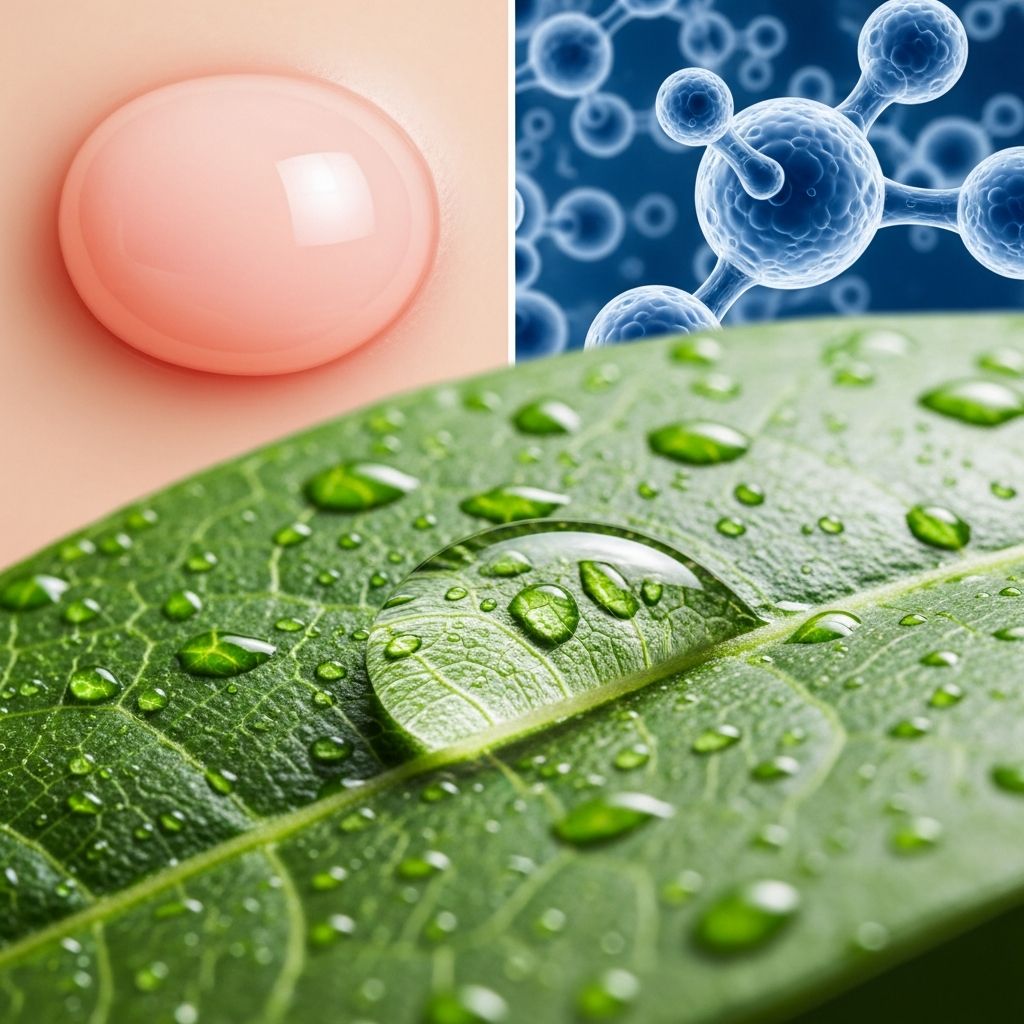
Hyaluronic acid functions as a humectant, meaning it is a substance specifically designed to attract and retain moisture. Unlike occlusive moisturizers that seal moisture into the skin, or emollients that soften skin by filling gaps between cells, humectants work through a different mechanism: they draw moisture from both the air and from deeper layers of skin, helping the outer layers absorb and retain more moisture more effectively.
When applied topically, hyaluronic acid molecules bond with water molecules, creating a hydrating film that plumps the skin and temporarily reduces the appearance of fine lines and wrinkles. This hydration effect improves skin elasticity, making the skin appear more supple and youthful. The increased hydration also helps reduce dryness, one of the most common skin complaints, particularly among individuals with aging skin or those living in dry climates.
An important characteristic of hyaluronic acid is its biocompatibility with human skin. Since hyaluronic acid is a naturally occurring substance within the body, topical application generally does not cause irritation or negative side effects. This makes it an appropriate choice for most skin types, including sensitive skin.
Molecular Weight: The Critical Factor
One of the most important—and often overlooked—aspects of hyaluronic acid in skincare is molecular weight. Not all hyaluronic acid molecules are created equal, and their size dramatically affects their ability to penetrate the skin and deliver benefits. This distinction between high molecular weight and low molecular weight hyaluronic acid is crucial for understanding whether products will actually deliver on their promises.
High Molecular Weight Hyaluronic Acid
High molecular weight hyaluronic acid (HMW-HA) has very limited permeability through the skin. These large molecules cannot penetrate beyond the outermost layer of skin, the stratum corneum. Instead, HMW-HA remains on the skin’s surface, forming a thin protective hydration layer. While this surface hydration can temporarily plump the skin and improve appearance, the effects are largely superficial. However, high molecular weight hyaluronic acid is still valuable for surface hydration and for creating a moisture barrier that helps prevent transepidermal water loss.
Low Molecular Weight Hyaluronic Acid
Low molecular weight hyaluronic acid (LMW-HA) has significantly better permeability characteristics compared to its larger counterparts. LMW-HA can penetrate through the stratum corneum and into the epidermis, and even into the deeper dermal layers. This superior penetration allows low molecular weight hyaluronic acid to deliver hydration benefits deeper within the skin, potentially providing more substantial and longer-lasting moisturizing effects. Products containing low molecular weight hyaluronic acid may therefore deliver more meaningful benefits than those using only high molecular weight versions.
Many advanced skincare formulations now incorporate multiple molecular weights of hyaluronic acid—combining both high and low molecular weight versions—to deliver hydration at multiple levels of the skin. This layered approach potentially maximizes both surface protection and deeper hydration benefits.
Clinical Evidence: What Does Research Really Show?
Beyond marketing claims and anecdotal testimonials, what does rigorous scientific research reveal about hyaluronic acid’s effectiveness? Several well-designed clinical studies have investigated the actual benefits of topical hyaluronic acid products.
Aging Skin and Wrinkle Reduction
One randomized controlled trial involving 40 females with mild-to-moderate clinical signs of skin aging demonstrated significant improvement in skin appearance compared to placebo after just 30 days of using topical hyaluronic acid formulations of different molecular weights. Improvements were measured specifically in wrinkle volume, with the hyaluronic acid group showing notable reductions compared to the control group.
Another randomized controlled trial investigated 65 females with periocular wrinkles (commonly called crow’s feet) around the eyes. After 60 days of using 0.1% sodium hyaluronate formulations with various molecular weights, participants showed significant improvement in skin hydration and elasticity compared to placebo.
Long-term Benefits
One particularly compelling study tracked participants using hyaluronic acid-filler serum over an extended 24-week period. Results showed sustained improvement in multiple parameters of skin quality, with significant improvements in fine lines (approximately 16%), crow’s feet wrinkles (17%), skin tone (14%), skin texture (24%), radiance (24%), and skin elasticity (20%), all compared to the control group. These differences were statistically significant, with p-values less than 0.05, indicating the results were not due to chance.
Overall, clinical literature demonstrates that hyaluronic acid-containing products are well-tolerated, effective, and can provide meaningful benefits as adjuvants to both postsurgical procedures and facial rejuvenation treatments.
Understanding Hyaluronic Acid’s Limitations
While hyaluronic acid offers genuine benefits, it is important to understand its limitations and what it cannot do. Recognizing these boundaries helps consumers maintain realistic expectations and avoid disappointment.
Half-Life and Persistence
Hyaluronic acid has a half-life of less than one day in the skin. This means that the hyaluronic acid you apply today will be partially broken down and cleared from the skin within 24 hours. While the body continuously replaces hyaluronic acid through natural processes, the hyaluronic acid from topical products is relatively short-lived, meaning consistent, ongoing application is necessary to maintain benefits.
Penetration Challenges
As previously discussed, many hyaluronic acid molecules in skincare products are too large to penetrate the outer layers of skin effectively. While companies are developing increasingly sophisticated formulations with lower molecular weights, many conventional products may not deliver hyaluronic acid deep enough to provide substantial benefits beyond surface hydration.
Age-Related Changes in Binding Capacity
In intrinsically aged skin, the body’s production of hyaluronic acid-binding proteins (HABPs) significantly decreases compared with younger skin. These binding proteins are crucial because they trigger cellular signaling pathways that regulate cell proliferation, migration, and differentiation. With fewer binding proteins available, the skin cannot use hyaluronic acid as effectively, even when hyaluronic acid levels are present. This suggests that simply applying hyaluronic acid may not fully address age-related skin changes, since the underlying problem is not just hyaluronic acid availability but also the body’s reduced ability to utilize it effectively.
Forms and Applications of Hyaluronic Acid
Hyaluronic acid is available in numerous formulations and delivery methods, each with different applications and efficacy profiles:
- Topical formulations: Serums, lotions, gels, and creams represent the most accessible and popular form for consumers
- Injectable fillers: Medical professionals inject hyaluronic acid directly into tissues for immediate volumization and wrinkle reduction
- Dietary supplements: Oral hyaluronic acid supplements are marketed to support skin health from within
- Eye drops: Hyaluronic acid is used in eye drops to reduce irritation and maintain ocular hydration
- Personal lubricants: Due to its gentle lubricating properties, hyaluronic acid is incorporated into intimate wellness products
- Medical applications: Hyaluronic acid is used in surgical procedures and wound healing applications
Combination with Other Ingredients
Hyaluronic acid frequently appears in formulations combined with other active ingredients that enhance its effectiveness. Common complementary ingredients include vitamins (particularly vitamins C and E), ceramides, glycerin, thermal or volcanic water, and herbal extracts. These combinations may provide synergistic benefits, with different ingredients addressing different aspects of skin aging and hydration.
Frequently Asked Questions
Q: Can hyaluronic acid help with all skin types?
A: Yes, hyaluronic acid is generally well-tolerated across all skin types, including sensitive skin, because it is a naturally occurring substance in the body that rarely causes irritation. However, individuals with specific allergies or sensitivities should patch test any new product before full application.
Q: How long does it take to see results from hyaluronic acid products?
A: Clinical studies show visible improvements in skin hydration and appearance within 30-60 days of consistent use, with more substantial long-term improvements developing over 24 weeks or longer. Results vary based on product formulation, molecular weight composition, and individual skin characteristics.
Q: Is injectable hyaluronic acid different from topical hyaluronic acid?
A: Yes, injectable hyaluronic acid delivers immediate volumization by physically filling space beneath the skin, providing instant wrinkle reduction. Topical hyaluronic acid works gradually through hydration and is less dramatic but also less invasive. Both have legitimate applications.
Q: Does hyaluronic acid work in dry climates?
A: Hyaluronic acid works as a humectant by drawing moisture from both the air and deeper skin layers. In very dry climates with low humidity, hyaluronic acid may draw moisture from deeper skin layers without sufficient atmospheric moisture to replace it, potentially causing net dehydration. In these situations, layering with occlusives may be beneficial.
Q: Can I use hyaluronic acid with other active ingredients?
A: Yes, hyaluronic acid is generally compatible with most skincare ingredients, including retinoids, vitamin C, niacinamide, and alpha hydroxy acids. In fact, combinations often enhance overall efficacy. However, always introduce new products gradually and monitor for any adverse reactions.
Q: Does my body produce enough hyaluronic acid on its own?
A: The body does produce hyaluronic acid naturally, but production decreases significantly with age. Additionally, daily degradation of existing hyaluronic acid from UV exposure and environmental factors means that supplementation through topical products or other methods may be beneficial for maintaining optimal skin hydration and function.
The Bottom Line: Hype Versus Reality
Hyaluronic acid is not a miracle ingredient, but it is a well-researched, genuinely effective skincare component when formulated and used appropriately. The scientific evidence supports its ability to improve skin hydration, enhance elasticity, and reduce visible signs of aging. However, hyaluronic acid cannot completely reverse aging, cannot work if molecular weight is too large for skin penetration, and requires consistent ongoing use to maintain benefits.
The most realistic expectations for hyaluronic acid are that it provides meaningful but incremental improvements in skin quality, works best as part of a comprehensive skincare regimen that includes sun protection and other active ingredients, and may be particularly beneficial for individuals with dry or aging skin. When choosing hyaluronic acid products, prioritize formulations that include multiple molecular weights to ensure both surface and deeper hydration benefits.
Ultimately, while hyaluronic acid deserves its position as a popular skincare ingredient, the most important skincare practices remain basic: consistent sun protection, adequate moisturization, a healthy diet, proper sleep, and stress management. Hyaluronic acid is one valuable tool in an overall skin health strategy, not a standalone solution.
References
- Hyaluronic Acid in Skincare: Drawing the Line Between Marketing and Reality — Scienceholic. Accessed December 2025. https://www.scienceholic.org/post/hyaluronic-acid-in-skincare-drawing-the-line-between-marketing-and-reality
- Benefits of topical hyaluronic acid for skin quality and signs of aging — National Center for Biotechnology Information (NIH). 2023. https://pmc.ncbi.nlm.nih.gov/articles/PMC10078143/
- Hyaluronic Acid: Research Overview — EBSCO Research Starters Health and Medicine. 2020. https://www.ebsco.com/research-starters/health-and-medicine/hyaluronic-acid
- Why You Might Want to Add Hyaluronic Acid to Your Skincare Routine — Curology. Accessed December 2025. https://curology.com/blog/tip-of-the-month-try-hyaluronic-acid-in-your-skincare-routine/
Similar Articles








Read full bio of Sneha Tete