Hyperbaric Oxygen Therapy: Evidence-Based Uses and Unproven Claims
Separating fact from fiction: What science says about hyperbaric oxygen therapy's real benefits and limitations.
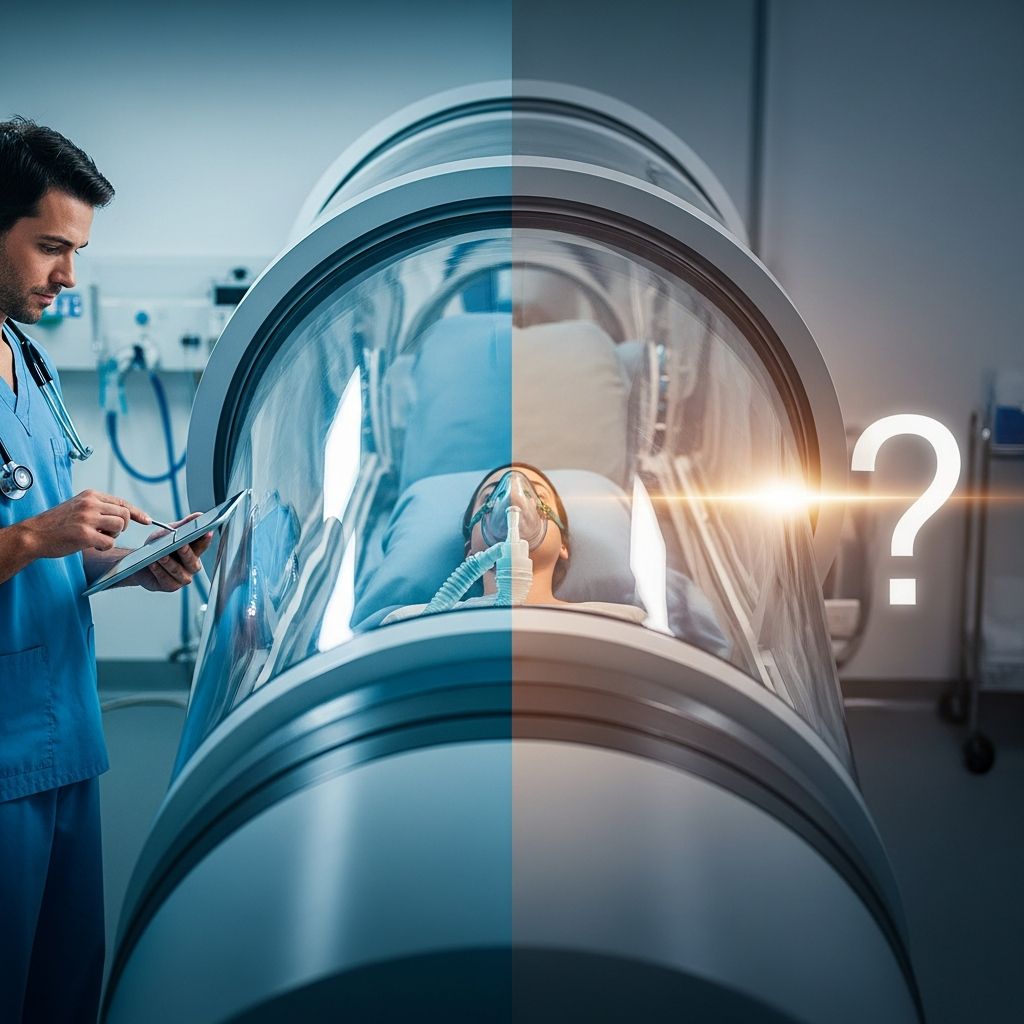
Hyperbaric oxygen therapy (HBOT) has gained considerable attention in recent years as both a legitimate medical treatment and a popular wellness trend. While the therapy does have genuine clinical applications backed by rigorous scientific evidence, many claims about its effectiveness lack sufficient research support. Understanding the distinction between proven uses and unsubstantiated claims is essential for patients considering this treatment.
What Is Hyperbaric Oxygen Therapy?
Hyperbaric oxygen therapy involves breathing pure oxygen in a pressurized chamber, typically set at pressures greater than atmospheric pressure at sea level. During treatment sessions, patients enter a specialized chamber where the air pressure is gradually increased to 2 to 3 times normal atmospheric pressure. At these elevated pressures, the lungs can absorb significantly more oxygen than would be possible under normal conditions. This excess oxygen dissolves directly into the blood plasma, allowing it to reach tissues throughout the body, even areas with compromised blood circulation.
The treatment typically involves sessions lasting 60 to 120 minutes, often repeated over several weeks or months depending on the medical condition being treated. Most hyperbaric chambers accommodate a single patient, though larger multiplace chambers can treat multiple individuals simultaneously.
How Hyperbaric Oxygen Therapy Works
The mechanism of HBOT centers on increasing oxygen partial pressure in the blood. Under normal atmospheric conditions, oxygen is primarily transported by hemoglobin in red blood cells. In a hyperbaric chamber, oxygen becomes dissolved in blood plasma itself, bypassing the need for red blood cells as the sole transport mechanism. This phenomenon is particularly beneficial for tissues with restricted blood flow or compromised oxygenation.
The enhanced oxygen availability triggers several physiological responses:
– Angiogenesis: The formation of new blood vessels to improve circulation to oxygen-starved tissues- Collagen synthesis: Essential for tissue repair and wound healing- Enhanced immune response: Increased oxygen availability supports immune cell function- Reduced inflammation: Hyperoxygenation can help modulate inflammatory processes- Activation of growth factors: Signals that promote tissue regeneration and healing
FDA-Approved Uses: The Evidence-Based Foundation
The Food and Drug Administration has approved hyperbaric oxygen therapy for 13 specific medical conditions based on substantial clinical evidence. These approved indications represent the conditions where HBOT has demonstrated clear therapeutic benefit through rigorous clinical trials.
Approved Medical Applications
– Air or gas embolism- Carbon monoxide poisoning- Decompression sickness (the bends)- Gangrene (gas gangrene)- Chronic, non-healing wounds- Severe anemia- Intracranial abscess- Necrotizing soft tissue infections- Osteomyelitis- Radiation tissue injury- Compromised grafts and flaps- Diabetic wounds of the lower extremities- Acute thermal burn injury
The Most Compelling Evidence: Chronic Wound Healing
Among HBOT’s approved uses, the treatment of chronic, non-healing wounds—particularly diabetic foot ulcers—represents one of the most extensively researched and well-documented applications. Patients with diabetes frequently develop foot ulcers due to poor circulation and neuropathy. These wounds often progress to serious infections and may ultimately require amputation if left untreated.
Related Stories



Hyperbaric oxygen therapy works in this context by increasing oxygen delivery to tissues that are profoundly oxygen-deprived due to compromised blood flow. The enhanced oxygenation stimulates the body’s natural wound healing processes, promoting cell growth, new blood vessel formation, and immune function. Multiple clinical studies have demonstrated that HBOT significantly improves healing outcomes in diabetic foot ulcers and reduces the need for amputation. This represents one of the clearest examples of the therapy’s clinical value.
Carbon Monoxide Poisoning: A Proven Emergency Treatment
Hyperbaric oxygen therapy is a critical intervention for acute carbon monoxide poisoning. Carbon monoxide binds to hemoglobin with an affinity approximately 200 times greater than oxygen, preventing normal oxygen transport to tissues. In severe poisoning cases, this can result in tissue death, particularly in the brain.
HBOT accelerates the removal of carbon monoxide from the body and improves oxygen delivery to affected tissues. The high pressure forces oxygen into tissues despite the presence of carbon monoxide, while simultaneously accelerating the rate at which carbon monoxide is eliminated from hemoglobin. Early treatment with hyperbaric oxygen significantly reduces mortality and prevents long-term neurological complications associated with carbon monoxide poisoning.
Traumatic Brain Injury and Stroke: Where Evidence Is Mixed
Hyperbaric oxygen therapy has generated considerable interest as a potential treatment for traumatic brain injury (TBI) and stroke, conditions affecting millions of people annually. The theoretical rationale is compelling: increased oxygen delivery might reduce secondary brain injury, promote neuroplasticity, and accelerate cognitive recovery.
However, the clinical evidence remains inconsistent and inconclusive. While some studies have reported improvements in cognitive function and neurological outcomes, other well-designed clinical trials have failed to demonstrate significant benefits. A systematic review of HBO2 for traumatic brain injury found that while some quality studies reported better consciousness recovery in HBO2 groups compared with standard care, the overall evidence base remains limited and heterogeneous.
For acute ischemic stroke, research has been particularly disappointing. A notable pilot study comparing hyperbaric oxygen treatment with sham treatment found that at 90 days, a significantly higher percentage of patients in the sham group had good outcomes, raising questions about the therapy’s efficacy for this indication. The timing of treatment appears critical—animal studies suggest HBO may be beneficial when initiated within hours of stroke onset but potentially harmful when delayed beyond 12 hours.
Unproven and Controversial Uses
Beyond its FDA-approved applications, HBOT is increasingly marketed for conditions lacking substantial scientific support. These unproven claims often appear in wellness contexts and alternative medicine settings, sometimes attracting patients seeking treatments for serious conditions without adequate evidence.
Autism Spectrum Disorder
Despite aggressive marketing claims, clinical evidence does not support the use of hyperbaric oxygen therapy for autism spectrum disorder. While some parents and practitioners have advocated for HBOT based on anecdotal reports, well-designed clinical trials have failed to demonstrate meaningful improvements in core autism symptoms. The FDA has never approved HBOT for autism treatment.
Long COVID and Post-Viral Syndromes
As Long COVID has affected millions of people worldwide, HBOT has been promoted as a potential treatment. Some emerging research suggests hyperbaric oxygen therapy may offer benefits for certain symptoms, but the overall evidence remains preliminary and insufficient to justify widespread clinical adoption. Patients considering HBOT for Long COVID should consult with qualified healthcare providers and avoid making treatment decisions based on preliminary or anecdotal evidence.
Anti-Aging and Athletic Performance
Marketing of HBOT in wellness and sports medicine contexts often emphasizes anti-aging effects and enhanced athletic performance. While some studies have examined cognitive and physical performance enhancements in healthy aging adults, the evidence remains limited. The use of HBOT as a performance-enhancement tool in healthy individuals lacks FDA approval and substantial clinical support.
Fibromyalgia, Chronic Fatigue, and Autoimmune Conditions
Patients with fibromyalgia, chronic fatigue syndrome, and various autoimmune conditions have sometimes turned to HBOT based on promotional claims. However, rigorous clinical trials demonstrating efficacy for these conditions are lacking. While patients might report subjective improvements, these could reflect placebo effects or natural disease fluctuation rather than true therapeutic benefit from hyperbaric oxygen therapy.
Safety Profile and Adverse Effects
Hyperbaric oxygen therapy is generally considered a safe treatment when administered according to established protocols by trained medical professionals. However, it is not without risks, and certain adverse effects warrant consideration.
Common Side Effects
– Ear and sinus barotrauma (pressure-related injury)- Temporary myopia (nearsightedness)- Oxygen toxicity if pressure protocols are exceeded- Claustrophobia or anxiety in chamber environments- Fatigue following treatment sessions
Serious but Rare Complications
Severe adverse events are uncommon when HBOT is properly administered but can include oxygen-induced seizures, pulmonary barotrauma, and in rare cases, chamber fires or explosions. Certain medications and medical conditions may contraindicate HBOT or require modified treatment protocols.
Cost, Access, and Treatment Burden
Hyperbaric oxygen therapy can be expensive, with individual sessions ranging from several hundred to over a thousand dollars. Approved medical uses are typically covered by insurance, but off-label and unproven uses may require out-of-pocket payment. Full treatment courses can involve 20 to 40 sessions or more, representing a substantial financial commitment.
Access to HBOT also varies geographically, with some regions having multiple treatment centers and others having limited or no facilities. Treatment typically requires travel to a specialized medical center and significant time commitment, which may be burdensome for patients.
Distinguishing Marketing Claims from Medical Evidence
The proliferation of HBOT marketing has created confusion among patients about the therapy’s true efficacy. Several strategies can help distinguish evidence-based information from promotional claims:
– Verify FDA approval status: Check whether the condition is among the 13 FDA-approved uses- Review peer-reviewed literature: Look for evidence published in medical journals rather than promotional websites- Consult qualified healthcare providers: Physicians with experience in hyperbaric medicine can provide evidence-based guidance- Be skeptical of miracle cure claims: Extraordinary claims require extraordinary evidence- Consider the source: Information from commercial HBOT centers should be viewed with awareness of potential financial incentives
Current Research Directions
Scientists continue investigating potential applications of hyperbaric oxygen therapy for various conditions. Ongoing research examines HBOT’s role in radiation tissue injury recovery, complex wound healing scenarios, and selected neurological conditions. However, this research remains preliminary, and patients should not assume that investigational uses will prove effective.
Rigorous clinical trial methodologies, including sham-controlled designs and appropriate statistical analysis, are essential for establishing whether emerging applications truly benefit from HBOT or whether apparent improvements reflect placebo effects or natural disease progression.
Recommendations for Patients
Patients considering hyperbaric oxygen therapy should follow these evidence-based recommendations:
– Seek treatment at accredited facilities: Ensure the center meets established medical standards and has trained personnel- Verify medical indication: Confirm that your condition is among FDA-approved uses or is being treated as part of a rigorous clinical trial- Consult multiple healthcare providers: Obtain independent medical opinions, particularly if HBOT is recommended for off-label uses- Understand realistic expectations: Recognize that HBOT is a complement to, not a replacement for, conventional medical care for most conditions- Ask about clinical evidence: Request information about the specific evidence supporting HBOT for your condition- Consider financial implications: Ensure you understand costs and insurance coverage before beginning treatment
Frequently Asked Questions
Q: Is hyperbaric oxygen therapy painful?
A: HBOT is generally not painful, though patients may experience ear pressure or temporary discomfort during pressure changes. Most discomfort is manageable through equalization techniques taught by trained technicians.
Q: How long does a typical HBOT session last?
A: Standard sessions typically last 60 to 120 minutes, including time for gradual pressurization and depressurization. Total time in the facility often exceeds the actual treatment duration.
Q: Can anyone receive hyperbaric oxygen therapy?
A: Most people can safely receive HBOT, but certain medical conditions, medications, and circumstances may contraindicate treatment. A thorough medical evaluation is necessary before beginning therapy.
Q: How many sessions are typically needed?
A: The number of sessions varies by condition, ranging from 10 to 60 or more for approved medical uses. Treatment protocols are individualized based on the specific medical indication and treatment response.
Q: Does insurance cover hyperbaric oxygen therapy?
A: Most insurance plans cover HBOT for FDA-approved medical uses when prescribed by a physician. Off-label uses may not be covered and could require out-of-pocket payment.
Q: Can hyperbaric oxygen therapy cure autism or Long COVID?
A: Current scientific evidence does not support the use of HBOT as a cure for autism or Long COVID. Claims of efficacy for these conditions lack substantial clinical validation and should be viewed skeptically.
Q: What are the most serious risks of hyperbaric oxygen therapy?
A: Severe complications are rare but can include oxygen toxicity seizures and pulmonary barotrauma. More common side effects include ear barotrauma and temporary myopia, which typically resolve without intervention.
References
- Hyperbaric Oxygen Therapy — Indication and Results — U.S. Food and Drug Administration. 2024. https://www.fda.gov/medical-devices/general-hospital-devices/hyperbaric-oxygen-therapy
- Is Hyperbaric Oxygen Therapy Effective for Traumatic Brain Injury? A Systematic Review and Meta-Analysis — National Center for Biotechnology Information (NCBI/PubMed Central). 2017. https://pmc.ncbi.nlm.nih.gov/articles/PMC5426690/
- Hyperbaric Oxygen Therapy for Carbon Monoxide Poisoning — American Academy of Clinical Toxicology. 2024. https://www.acct.org
- Hyperbaric Oxygen and Regenerative Medicine: Non-Traditional and Emerging Applications — Journal of Investigative and Clinical Dentistry. 2022. https://www.liebertpub.com
- The Effect of Hyperbaric Oxygen Therapy on Cognition and Physical Performance in Aging Adults — Frontiers in Neurology. 2022. https://www.frontiersin.org/journals/neurology/articles/10.3389/fneur.2022.949536/full
- Hyperbaric Oxygen Therapy for Chronic Wounds — Brigham and Women’s Hospital Health Library. 2024. https://healthlibrary.brighamandwomens.org
Similar Articles








Read full bio of Sneha Tete