Hypercalcemia: 5 Acute Treatments And Key Causes
Discover the causes, signs, risks, and effective strategies for managing elevated blood calcium levels to protect your health.
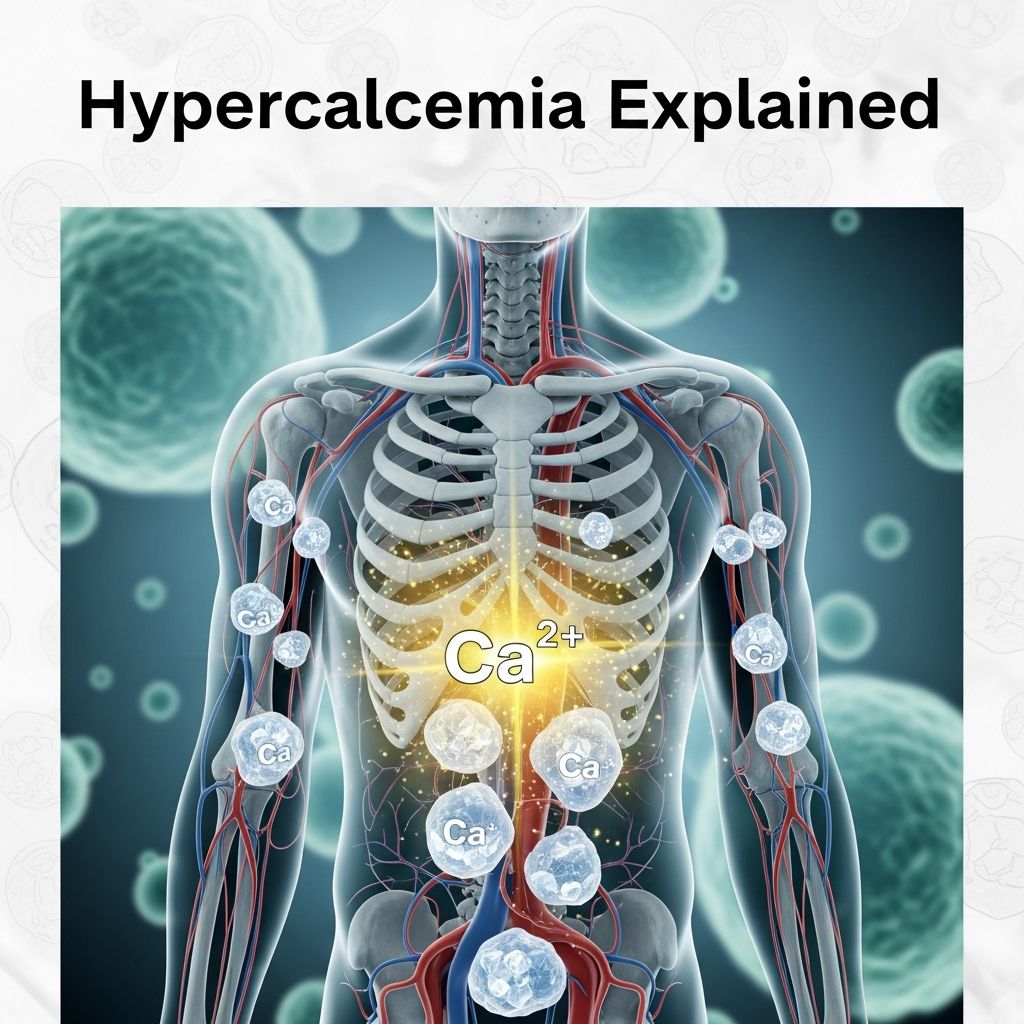
Hypercalcemia refers to elevated calcium concentrations in the bloodstream, surpassing the typical range of 8.5 to 10.2 mg/dL. This imbalance disrupts vital functions, including nerve signaling, muscle activity, and bone integrity, primarily regulated by parathyroid hormone (PTH), calcitonin, and vitamin D.
The Role of Calcium in the Body
Calcium serves as a cornerstone mineral, comprising about 99% of the body’s bone mass while the remaining 1% circulates in blood to support cellular processes. It facilitates muscle contractions, blood clotting, nerve transmission, and hormone secretion. The kidneys, intestines, and bones maintain equilibrium: intestines absorb dietary calcium, kidneys excrete excess, and bones store or release it as needed.
When levels rise abnormally, it signals underlying issues rather than dietary excess alone, as the body tightly controls absorption.
Primary Causes of Elevated Calcium Levels
The most frequent triggers are primary hyperparathyroidism and malignancy-associated hypercalcemia, accounting for over 90% of cases. Other contributors include granulomatous diseases, medications, and familial conditions.
- Primary Hyperparathyroidism: A benign parathyroid gland tumor (adenoma) overproduces PTH, prompting bone calcium release and kidney reabsorption. It affects women over 50 more commonly and often presents asymptomatically.
- Cancer-Related: Malignancies like multiple myeloma, breast cancer, or lung cancer release PTH-related protein (PTHrP) or directly erode bone, flooding blood with calcium. This impacts 20-30% of advanced cancer patients.
- Vitamin D Excess: Over-supplementation or conditions like sarcoidosis increase intestinal absorption.
- Medications and Other: Thiazide diuretics, lithium, or prolonged immobilization reduce excretion.
Recognizing the Warning Signs
Mild elevations (<12 mg/dL) may produce no noticeable effects, detected incidentally via routine tests. Moderate to severe cases (>12 mg/dL) manifest through multi-system involvement, summarized as ‘stones, bones, groans, thrones, and psychiatric overtones.’
| System Affected | Common Symptoms |
|---|---|
| Kidneys | Excessive thirst (polydipsia), frequent urination (polyuria), kidney stones, dehydration |
| Gastrointestinal | Constipation, nausea, vomiting, abdominal pain, anorexia |
| Musculoskeletal | Bone pain, muscle weakness, aches, fractures from weakened bones |
| Neurological/Psychiatric | Fatigue, confusion, depression, irritability, memory issues, severe cases: delirium, coma |
| Cardiovascular | Arrhythmias, bradycardia, ECG changes |
Symptom severity correlates loosely with calcium levels; chronic mild cases can erode health over time.
How Hypercalcemia Progresses and Complications Arise
Unchecked, hypercalcemia impairs kidney function by reducing concentrating ability, leading to nephrolithiasis or acute kidney injury. Bones demineralize, fostering osteoporosis and pathologic fractures. Gastrointestinal stasis risks pancreatitis or ulcers. Neurologically, it progresses from lethargy to seizures or coma. Cardiovascular risks include arrhythmias or failure.
In cancer contexts, it exacerbates fatigue and cachexia, signaling poor prognosis if untreated.
Diagnostic Approaches
Diagnosis starts with serum total or ionized calcium measurement; ionized is more accurate in protein abnormalities. Confirm with PTH: suppressed in non-PTH causes, elevated/inappropriately normal in hyperparathyroidism.
- Lab Tests: Electrolytes, BUN/creatinine, phosphate, 25(OH)D, alkaline phosphatase, SPEP for myeloma.
- Imaging: Chest X-ray for malignancy/granulomas, ultrasound/Sestamibi scan for parathyroid adenoma, skeletal survey for bone lesions.
- Severity Classification:
- Mild: 10.5-11.9 mg/dL
- Moderate: 12-13.9 mg/dL
- Severe: ≥14 mg/dL
Differentiate from pseudohypercalcemia (e.g., hyperalbuminemia, dehydration).
Effective Treatment Strategies
Management targets the cause while lowering calcium rapidly in symptomatic/severe cases.
Acute Interventions
- Hydration: IV normal saline (200-300 mL/hr) promotes calciuresis; monitor for fluid overload.
- Diuretics: Loop diuretics (furosemide) post-hydration to enhance excretion.
- Bisphosphonates: Pamidronate or zoledronate inhibit osteoclasts, effective in malignancy (reduces calcium in 70-90%).
- Calcitonin: Rapid onset for hyperacute cases, though tachyphylaxis limits duration.
- Denosumab: For bisphosphonate-refractory cancer hypercalcemia.
Related Stories



Long-Term Management
- Surgical parathyroidectomy for adenoma.
- Discontinue offending drugs; treat granulomatous disease with steroids.
- Cancer therapy addresses underlying malignancy.
Preventive Measures and Lifestyle Adjustments
Stay hydrated (2-3L/day) to support kidney function. Limit calcium/vitamin D supplements unless prescribed. For at-risk groups (cancer patients, elderly), monitor levels routinely. Encourage mobility to prevent immobilization hypercalcemia. A balanced diet with moderate dairy suffices for most.
When to Seek Immediate Medical Attention
Consult a doctor for persistent thirst, unexplained fatigue, constipation, or confusion. Cancer patients with nausea or bone pain warrant urgent evaluation. Blood tests guide intervention; delays risk irreversible damage.
Frequently Asked Questions (FAQs)
What triggers hypercalcemia most often?
Primary hyperparathyroidism and cancers like myeloma or metastases.
Can diet alone cause it?
Rarely; usually requires over-supplementation combined with other factors.
Is it curable?
Yes, treating the root cause (e.g., surgery for parathyroid issues) often resolves it.
How quickly does treatment work?
Hydration shows effects in hours; bisphosphonates in 1-3 days.
Does it affect children differently?
Similar symptoms, but growth impacts possible; rarer causes like genetic disorders.
Monitoring and Follow-Up Care
Post-treatment, regular calcium/PTH checks ensure stability. Annual imaging for hyperparathyroidism recurrence. Nephrology input for stone-formers. Multidisciplinary care optimizes outcomes, especially in oncology.
References
- Hypercalcemia: What Is It, Symptoms, Causes and Treatment — Medpark Hospital. 2024. https://www.medparkhospital.com/en-US/disease-and-treatment/hypercalcemia
- Hypercalcemia — MedlinePlus, U.S. National Library of Medicine (NIH). 2023-10-01. https://medlineplus.gov/ency/article/000365.htm
- Hypercalcemia – Endocrine and Metabolic Disorders — Merck Manual Professional Edition. 2024. https://www.merckmanuals.com/professional/endocrine-and-metabolic-disorders/electrolyte-disorders/hypercalcemia
- Hypercalcemia — Children’s Hospital of Philadelphia. 2023. https://www.chop.edu/conditions-diseases/hypercalcemia
- Hypercalcemia (High Calcium Level in the Blood) and Cancer — University of Rochester Medical Center. 2024. https://www.urmc.rochester.edu/encyclopedia/content?contenttypeid=34&contentid=18379-1
- Hypercalcemia — StatPearls, NCBI Bookshelf (NIH). 2023-08-08. https://www.ncbi.nlm.nih.gov/books/NBK430714/
Similar Articles








Read full bio of Sneha Tete