Hyperhidrosis: Causes, Symptoms, And Effective Treatments
Comprehensive guide to excessive sweating: causes, diagnosis, treatments, and management strategies for primary and secondary hyperhidrosis.
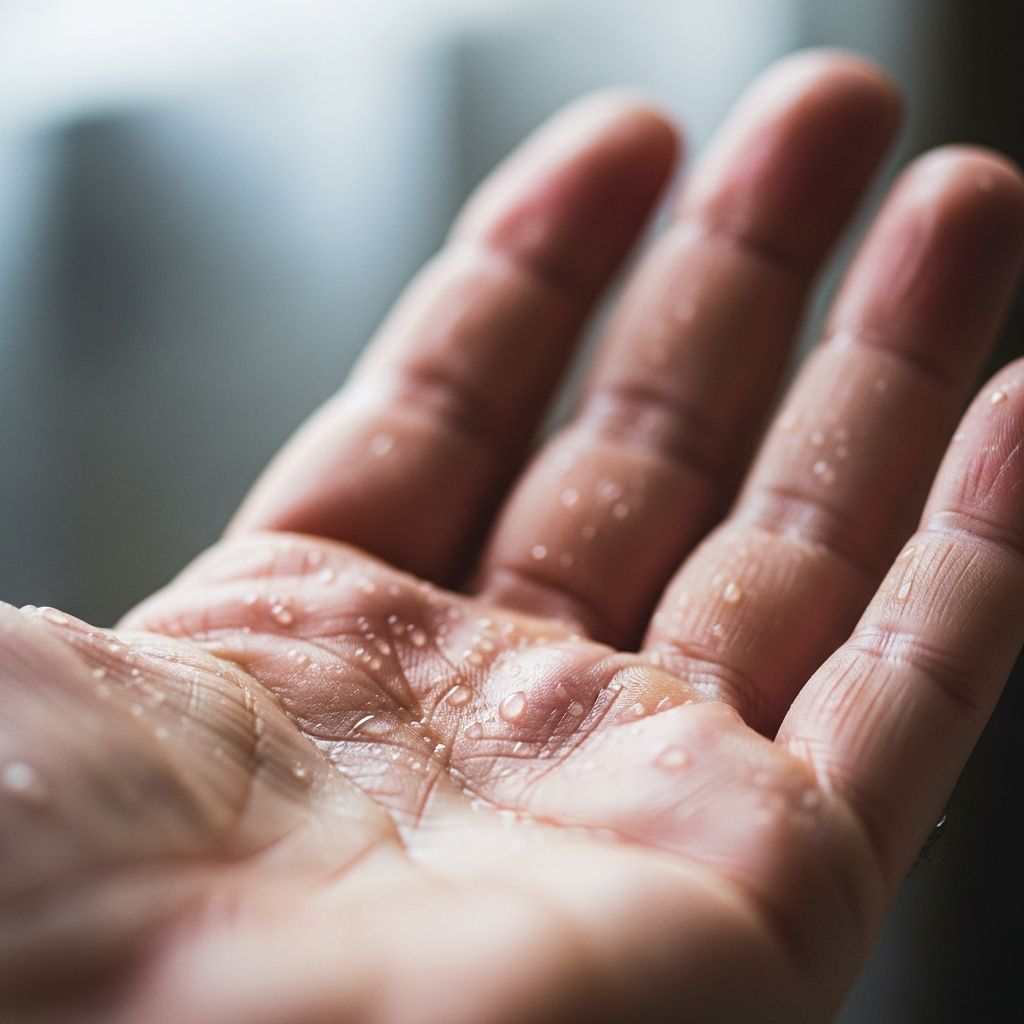
Hyperhidrosis is a medical condition characterised by excessive sweating beyond what is necessary for normal body temperature regulation. It affects specific body areas (focal) or the entire body (generalised), impacting 1–3% of the population and often starting in childhood or adolescence. This sweating occurs with or without triggers like heat or exercise and can significantly impair daily activities, work, and social interactions.
What is hyperhidrosis?
Hyperhidrosis involves overactive sweat glands producing sweat in amounts greater than needed for thermoregulation. Normal sweating cools the body, but in hyperhidrosis, it persists excessively, leading to wet palms, soles, underarms, or widespread moisture. It is classified into primary (idiopathic, focal) and secondary (due to underlying conditions). Primary hyperhidrosis affects 1–5% globally, often bilaterally and symmetrically on palms, soles, axillae, or face.
Who gets hyperhidrosis?
Hyperhidrosis impacts individuals of all ages, races, and sexes equally, though primary focal types are more common in younger people (under 25) with family history. It affects about 3% of the population, with higher prevalence in certain ethnic groups like Japanese populations. Secondary hyperhidrosis is more common in adults due to comorbidities. Risk factors include genetic predisposition, as up to 65% report family history.
What causes hyperhidrosis?
Primary hyperhidrosis results from overactive sympathetic cholinergic fibres stimulating eccrine glands without identifiable cause, possibly genetic. Secondary hyperhidrosis stems from medical conditions (e.g., hyperthyroidism, diabetes, menopause, infections, malignancies, neurologic disorders) or medications (antidepressants, opioids). Triggers for primary include emotional stress, though it can be spontaneous.
What are the clinical features of hyperhidrosis?
- Focal primary hyperhidrosis: Localised to palms, soles, axillae, face, or craniofacial area; bilateral, symmetric, episodic, worse with stress; no night sweating.
- Palmar: Wet, slippery hands affecting grip, writing, handling objects.
- Plantar: Soles and toes slippery, prone to fungal infections like tinea pedis.
- Axillary: Underarm staining on clothes, odour from bacterial breakdown.
- Facial/gustatory: Sweating on face, scalp, or with eating spicy foods.
- Generalised secondary: Whole body, night sweating, indicates systemic disease.
Severity impairs social life (e.g., avoiding handshakes), work (e.g., typing), and causes anxiety or depression.
How is hyperhidrosis diagnosed?
Diagnosis relies on history and physical exam. For primary focal hyperhidrosis, criteria include bilateral sweating for ≥6 months in typical sites, ≥1 episode/week, no secondary causes, family history, onset ≤25 years, and nocturnal anhidrosis. Visual inspection suffices; starch-iodine test confirms areas (turns purple with sweat). Lab tests (blood, urine, TSH) rule out secondary causes like hyperthyroidism or diabetes. No imaging usually needed.
What is the treatment for hyperhidrosis?
Treatment is stepwise, starting conservatively. For secondary, treat underlying cause. Primary requires symptom control.
General measures
- Wear breathable fabrics (cotton, wool); change socks/clothes frequently.
- Use antiperspirants nightly on dry skin; avoid triggers like caffeine.
- Clinical-strength antiperspirants (20% aluminium chloride).
Topical treatments
- Aluminium chloride hexahydrate 20–25%: First-line for mild cases; apply nightly, occlude if needed. Irritation common, resolves with use.
- Glycopyrronium tosylate wipes: Approved for axillae; reduces sweat.
Systemic medications
- Anticholinergics (oxybutynin, glycopyrrolate): Reduce sweating body-wide; side effects: dry mouth, constipation, blurred vision.
- Antidepressants: Some reduce anxiety-induced sweating.
- Beta-blockers: For emotional triggers.
Iontophoresis
Device passes mild current through water-soaked hands/feet (20–40 min, 2–3x/week). Effective for palms/soles; maintenance 1x/week. Side effects: mild discomfort.
Related Stories



Botulinum toxin injections
Botox blocks acetylcholine release; lasts 6–12 months. Effective for axillae (50–100 units), palms (50 units/hand). Pain managed with ice/lidocaine.
Microwave therapy (miraDry)
Destroys axillary glands; 2 sessions, 3 months apart. Reduces sweat 82%; side effects: swelling, numbness.
Surgery
- Curettage/liposuction: Removes axillary glands.
- Sympathectomy: Endoscopic thoracic for palms (clips T2–T4 nerves); 98% effective but risks compensatory sweating.
| Treatment | Site | Duration | Side Effects |
|---|---|---|---|
| Aluminium chloride | All focal | Days | Irritation |
| Iontophoresis | Palms/soles | Weeks | Discomfort |
| Botox | Axillae/palms | 6–12 mo | Pain, weakness |
| miraDry | Axillae | Permanent | Swelling |
| Sympathectomy | Palms | Permanent | Compensatory sweat |
Prevention of complications
Manage skin infections (antifungals for tinea), avoid irritants, treat promptly to prevent psychosocial issues.
Hyperhidrosis in children
Often primary focal; diagnose after ruling out secondary. Treatments: topical, iontophoresis safe; Botox/surgery for severe cases.
Secondary hyperhidrosis
Due to diseases (diabetes, TB, lymphoma), drugs, or menopause. Investigate with labs/imaging.
Complications of hyperhidrosis
- Skin maceration, infections (bacterial, fungal).
- Odour (bromhidrosis).
- Psychosocial: anxiety, depression, social withdrawal.
What is the outcome for hyperhidrosis?
Primary persists lifelong but manageable; 30–50% improve spontaneously. Secondary resolves with cause treatment. Treatments control symptoms effectively.
Frequently Asked Questions
Is hyperhidrosis curable?
No permanent cure for primary, but treatments provide long-term control. Surgery offers permanence but with risks.
Does hyperhidrosis worsen with age?
Primary often stable; secondary may with comorbidities.
Can diet affect hyperhidrosis?
Spicy foods, caffeine may trigger; no direct cause.
Is Botox safe for hyperhidrosis?
Yes, FDA-approved; temporary side effects.
Does insurance cover treatments?
Often for severe cases impacting quality of life.
References
- Hyperhidrosis – Diagnosis and treatment — Mayo Clinic. 2023-10-12. https://www.mayoclinic.org/diseases-conditions/hyperhidrosis/diagnosis-treatment/drc-20367173
- Hyperhidrosis — Children’s Hospital of Philadelphia. 2024-01-15. https://www.chop.edu/conditions-diseases/hyperhidrosis
- Hyperhidrosis — StatPearls, NCBI Bookshelf, NIH. 2023-07-17. https://www.ncbi.nlm.nih.gov/books/NBK459227/
- Hyperhidrosis: Diagnosis and treatment — American Academy of Dermatology. 2024-05-20. https://www.aad.org/public/diseases/a-z/hyperhidrosis-treatment
- Hyperhidrosis: Types, Causes, Symptoms & Treatment — Cleveland Clinic. 2023-11-08. https://my.clevelandclinic.org/health/diseases/17113-hyperhidrosis
- Hyperhidrosis — UCSF Health. 2023-09-05. https://www.ucsfhealth.org/conditions/hyperhidrosis
Similar Articles








Read full bio of Sneha Tete