Hyperopia (Farsightedness): Symptoms, Causes & Treatment
Understanding hyperopia: Learn about symptoms, causes, and effective treatment options for farsightedness.
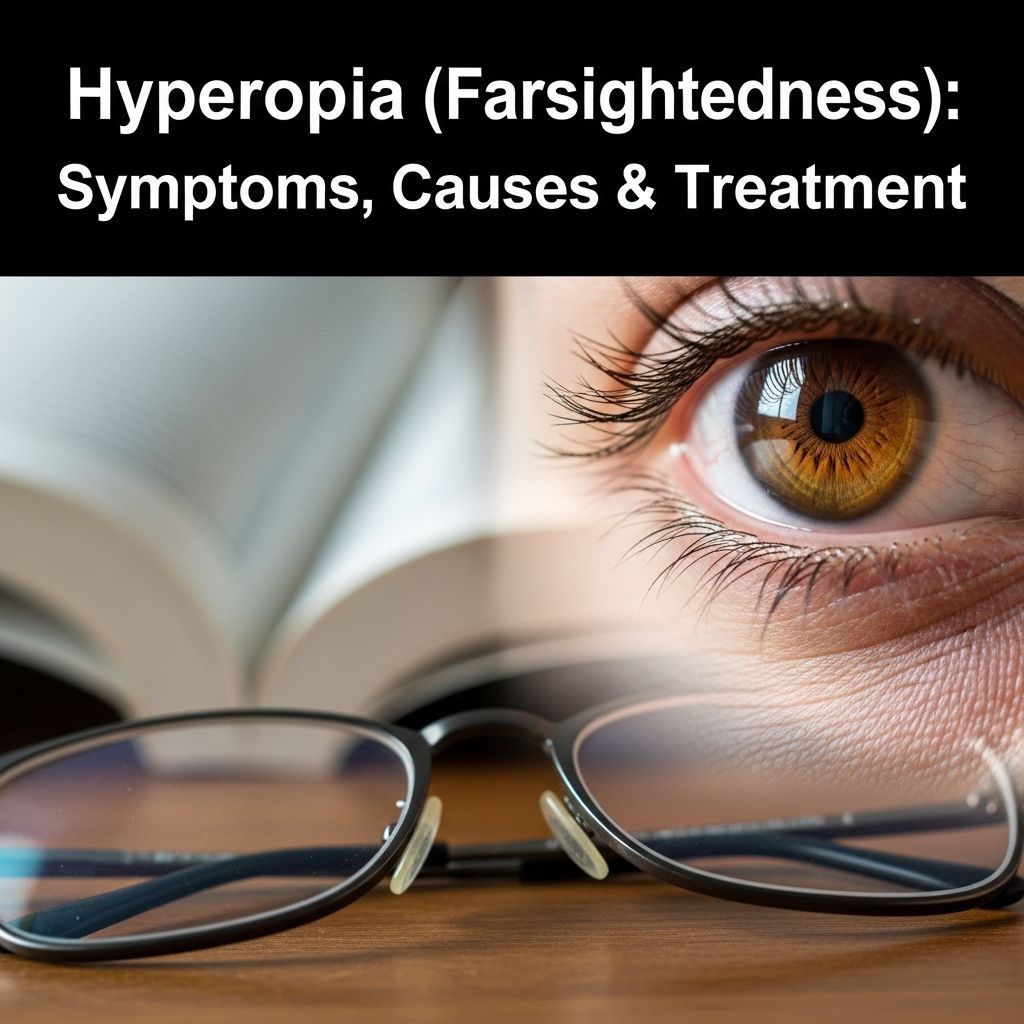
Understanding Hyperopia: A Common Eye Condition
Hyperopia, more commonly known as farsightedness, is one of the most prevalent refractive errors affecting millions of people worldwide. This eye condition makes it difficult to focus on objects that are close to you, such as words in a book or text on your phone. While distant objects may appear relatively clear, the challenge of seeing nearby items can significantly impact your daily activities, from reading to working on a computer. The good news is that hyperopia is highly manageable and correctable through various treatment methods. If you’re experiencing symptoms of blurry close-up vision, understanding this condition is the first step toward better eye health.
What Is Hyperopia and How Does It Occur?
Hyperopia is classified as a refractive error, which means it involves problems with how your eye bends and focuses light rays. In a normal eye, light enters through the cornea (the clear front “window” of your eye) and passes through the lens, which focuses the light onto the retina at the back of your eye. The retina then sends this focused image to your brain, allowing you to see clearly.
In hyperopic eyes, the light rays do not focus correctly on the retina. Instead, they focus at a point behind the retina, a condition called under-focusing. This happens for one of two reasons: either your eye is too short from front to back (axial length), or your cornea is too flat and doesn’t bend light rays sufficiently. Because the corneal curvature or eye shape isn’t optimal, the focusing power of your eye is too weak, requiring your internal eye muscles to work harder to compensate and bring the image into focus.
How Common Is Hyperopia?
Hyperopia is remarkably common across different age groups. Globally, approximately 4.6% of children and 30.9% of adults are affected by this condition. In the United States alone, about 5% to 10% of the population experiences farsightedness. The exact prevalence varies depending on research methodology and the age groups studied. For instance, studies that include people over age 40 tend to report higher prevalence rates, partly because this age group also develops presbyopia, an age-related vision condition that causes similar symptoms but results from different underlying causes.
Recognizing the Symptoms of Hyperopia
The primary symptom of hyperopia is blurry vision when looking at objects close to you. However, the range and severity of symptoms depend on the degree of your hyperopia and your age. People with mild hyperopia may experience no symptoms at all, while those with moderate to severe hyperopia may notice several uncomfortable effects:
– Blurry close-up vision when reading books, using phones, or viewing computer screens
– Eye strain and discomfort after prolonged focus on nearby objects
– Headaches that may develop during or after visual tasks requiring close-up focus
– Difficulty with near vision that may worsen as the day progresses
– Blurry vision at all distances in cases of high-degree hyperopia
In children, particularly those with high degrees of hyperopia, there is a risk of developing amblyopia (lazy eye) or strabismus (a condition where the eyes appear to look in different directions). Regular eye exams during childhood can identify these refractive errors before they lead to complications.
Related Stories



Causes and Risk Factors
Unlike some eye diseases that develop due to injury or disease, hyperopia is primarily determined by your eye’s inherent structure. The shape of your eye—specifically the axial length (the distance from the front to the back of your eye) and the curvature of your cornea—determines whether you have hyperopia. These structural characteristics are largely inherited, meaning your genetics play a significant role in determining your risk of developing farsightedness.
It’s important to note that hyperopia is not an eye disease but rather a focusing disorder. You cannot control the shape of your eye, and developing hyperopia is not indicative of any underlying disease process. Instead, it simply means your eye needs additional optical help to focus light properly on the retina. Several factors may increase your likelihood of having hyperopia, including family history and certain genetic conditions, though specific modifiable risk factors are limited.
How Is Hyperopia Diagnosed?
Diagnosing hyperopia requires a professional eye examination performed by an ophthalmologist or optometrist. Common vision screenings used in schools or routine check-ups may not effectively detect hyperopia, so a comprehensive vision care exam is necessary for accurate diagnosis.
During a comprehensive eye examination, your eye care provider will:
– Shine lights into your eye and use various instruments to assess eye health
– Perform refraction testing to determine the exact degree of hyperopia
– Check for refractive errors and screen for other eye conditions like glaucoma and cataracts
– Evaluate your overall visual function and how well your eyes focus together
– Review your symptoms and how they affect your daily activities
If you notice difficulty seeing things up close or experience symptoms such as eye strain and headaches, it’s important to schedule an eye exam. Some symptoms of hyperopia can signal more serious eye conditions, so timely evaluation is crucial for maintaining eye health.
Treatment Options for Hyperopia
The good news is that hyperopia is highly correctable through several treatment methods. Your eye care provider will help you choose the best option based on your specific needs, lifestyle, and preferences.
Eyeglasses
Eyeglasses are the most common and simplest solution for correcting hyperopia. With hyperopia, your prescription will be a positive number, such as +3.00, with higher numbers indicating stronger correction needed. The type of lenses prescribed depends on the severity of your hyperopia and how often you need to wear them. Some people with mild hyperopia only need glasses for reading or close-up work, while those with moderate to severe hyperopia may need to wear glasses all the time.
When selecting frames for hyperopic correction, it’s best to choose shorter, narrower frames that minimize distorted magnification at the lens edges. Avoid rimless and semi-rimless frames when possible, as the thin outer edges of these lenses can create distortion.
Contact Lenses
Contact lenses correct hyperopia in the same way that eyeglasses do, by bending light rays to focus them properly on the retina. Many people prefer contact lenses because they provide a wider field of vision and don’t have the frame-related distortions that glasses can create. Depending on your personal preference, work environment, and lifestyle, contact lenses may be a better solution than glasses. However, contact lenses require proper care, maintenance, and regular lens replacement.
Refractive Surgery
For those who prefer not to wear glasses or contact lenses, refractive surgery offers a more permanent solution. The most common procedures to correct hyperopia include LASIK (Laser-Assisted In Situ Keratomileusis) and PRK (Photorefractive Keratectomy). These surgical procedures reshape your cornea to improve its focusing power, reducing or even eliminating your dependence on corrective lenses. However, it’s important to understand that even after surgery, your vision can change over time due to natural aging processes, and you may eventually need reading glasses for close-up work.
Important Considerations About Hyperopia Treatment
Hyperopia does not go away unless you have surgery, and even surgical correction may not be permanent. When you’re not wearing glasses or contacts, your symptoms of hyperopia will return. Additionally, your vision can change and become progressively blurrier over time due to aging. You may notice that your current glasses don’t help as much as they used to, requiring an updated prescription.
Regular eye examinations are essential for monitoring your vision and ensuring your prescription remains accurate. An annual eye exam can help catch vision problems early and keep your eyes healthy for years to come.
When to See an Eye Care Provider
If you notice that it’s difficult to see things up close or experience symptoms like headaches and eye strain, contact an ophthalmologist or optometrist for a comprehensive eye exam. Even if you think your eyes are simply tired, it’s worth scheduling a checkup because blurry vision and other symptoms can sometimes signal more serious eye conditions requiring timely treatment.
Frequently Asked Questions About Hyperopia
Q: What percentage of the population has hyperopia?
A: Globally, approximately 4.6% of children and 30.9% of adults have hyperopia. In the United States, about 5% to 10% of the population experiences farsightedness.
Q: Can hyperopia be cured permanently?
A: Hyperopia can only be corrected through glasses, contacts, or surgery. Refractive surgery can provide long-term correction, but your vision may still change over time due to aging.
Q: Is hyperopia hereditary?
A: Yes, hyperopia is largely determined by your eye’s structure, which is inherited. If your family members have hyperopia, you’re more likely to develop it as well.
Q: Can children develop hyperopia?
A: Yes, children can have hyperopia. Regular eye exams during childhood can identify refractive errors before they lead to complications like amblyopia (lazy eye).
Q: What’s the difference between hyperopia and presbyopia?
A: Both conditions cause blurry close-up vision, but hyperopia is a refractive error determined by eye shape, while presbyopia is an age-related condition caused by changes to your lens that typically develops after age 40.
Q: How do I know if I have hyperopia?
A: The primary symptom is difficulty seeing objects up close clearly. If you experience blurry vision when reading or using your phone, or if you have eye strain and headaches, schedule a comprehensive eye exam to determine if you have hyperopia.
References
- Hyperopia (Farsightedness): Symptoms, Causes & Treatment — Cleveland Clinic. 2023-03-30. https://my.clevelandclinic.org/health/diseases/hyperopia-farsightedness
- Farsightedness — Cleveland Clinic Abu Dhabi. 2017. https://www.clevelandclinicabudhabi.ae/en/health-hub/health-resource/diseases-and-conditions/farsightedness
- A Closer Look at Farsightedness (Focus on Hyperopia) — VBA Plans. 2021-09. https://www.vbaplans.com/hubfs/VBA%20Plans/Pdf%20Files/vba_focuson_hyperopia.pdf
- What Causes Farsightedness? — Cleveland Clinic. 2022-10-28. https://www.youtube.com/watch?v=-SESSogPdH4
- Contact Lenses: Types and How They Work — Cleveland Clinic. https://my.clevelandclinic.org/health/articles/10737-contacts
Similar Articles








Read full bio of Sneha Tete