Hyperreflective Dots: Clues to Retinal Therapy Success
Discover how tiny bright spots on eye scans predict and track responses to treatments for retinal conditions like macular edema and vein occlusions.
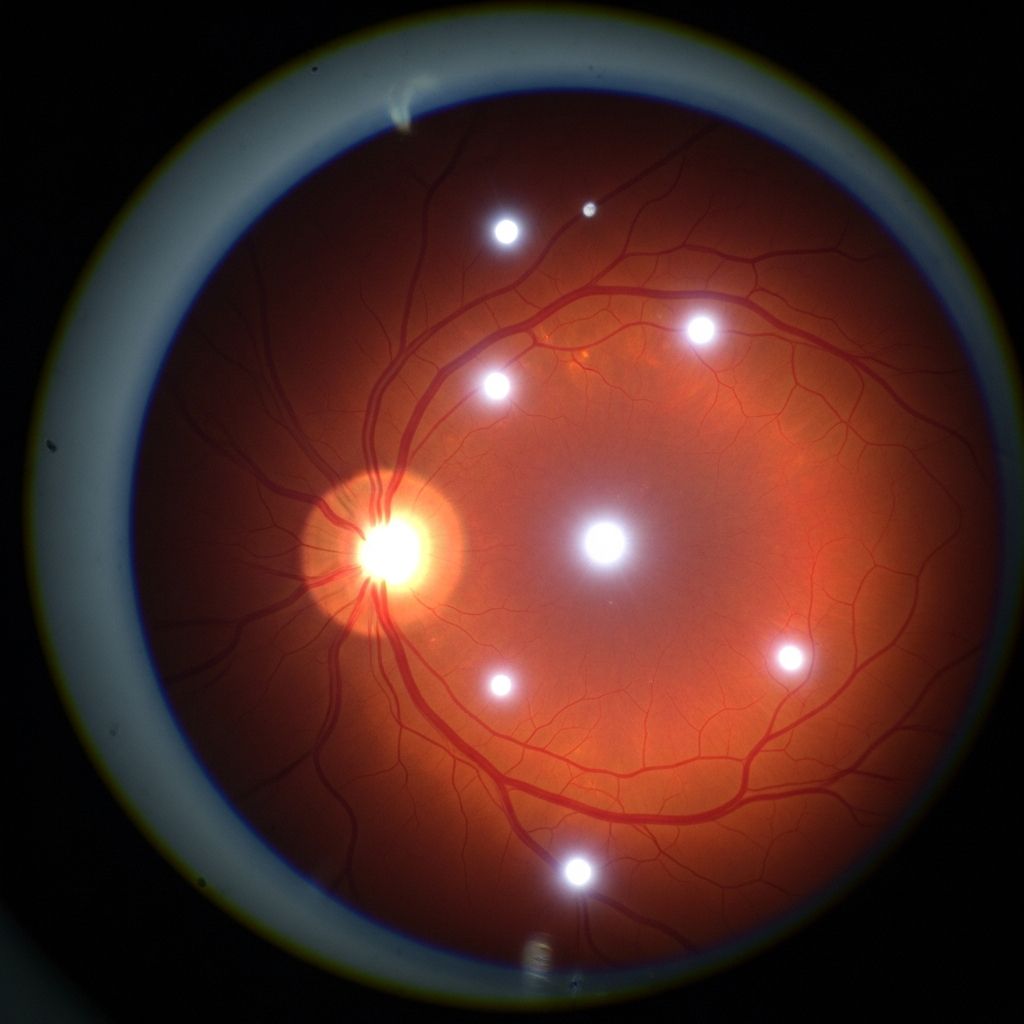
Hyperreflective dots, also known as hyperreflective retinal foci (HRF), are small, bright spots visible on optical coherence tomography (OCT) scans of the retina. These features often signal underlying inflammation and have emerged as valuable markers for assessing disease progression and therapeutic outcomes in various retinal disorders.
Understanding Hyperreflective Dots in Retinal Imaging
OCT is a non-invasive imaging technique that provides high-resolution cross-sectional views of the retina, allowing clinicians to detect subtle changes invisible to the naked eye. Hyperreflective dots appear as discrete, punctate hyperintensities scattered across retinal layers, typically measuring 20-30 microns in diameter. They are distinguished from other lesions like hard exudates by their size, location, and lack of lipid content.
These foci are not artifacts but represent biological entities, most commonly activated microglial cells or inflammatory infiltrates. In healthy retinas, they are rare, but their presence surges in pathological states involving blood-retina barrier disruption or immune activation.
- Key characteristics: Small size, high reflectivity, variable distribution across inner, outer, or choroidal layers.
- Detection method: Spectral-domain or swept-source OCT for precise localization.
- Differentiation: Unlike drusen or cysts, HRF lack shadowing and move with retinal layers during eye motion.
Pathophysiological Origins of Hyperreflective Foci
The exact composition of HRF remains under investigation, but evidence points to inflammatory cells. Studies suggest they arise from microglia activation, a response to retinal stress, ischemia, or leakage. In diabetic retinopathy, for instance, they correlate with subclinical lipoprotein extravasation due to inner blood-retina barrier breakdown.
In non-diabetic maculopathies, HRF persist even without hard exudates, supporting an inflammatory etiology over lipid deposition. Researchers have excluded cases with exudates to isolate this effect, confirming HRF as independent markers of retinal immune response.
| Condition | HRF Location | Likely Composition |
|---|---|---|
| Diabetic Macular Edema (DME) | Outer retina, ELM | Microglia, lipoproteins |
| Retinal Vein Occlusion (RVO) | Outer layers, confluent types | Inflammatory cells |
| Uveitis | All layers initially | Immune infiltrates |
| Retinal Dystrophies | Inner/outer migration | RPE debris |
This table summarizes common distributions and hypothesized origins, highlighting HRF’s adaptability to different pathologies.
HRF in Diabetic Macular Edema: A Biomarker of Inflammation
In DME, HRF are prevalent from early stages, appearing as punctiform lesions on OCT. Their density correlates with disease severity and central macular thickness. Post-treatment with anti-VEGF agents or steroids, HRF numbers decline, mirroring reduced inflammation and microglial deactivation.
A systematic review confirmed HRF reduction after therapy but noted ongoing debate on their predictive power for individual response. Nonetheless, baseline HRF count aids in tailoring treatments, such as favoring steroids over anti-VEGF in high-burden cases.
Role in Retinal Vein Occlusion Management
Related Stories



RVO patients exhibit two HRF types: fine foci in edematous areas and confluent forms in non-affected zones. Elevated baseline counts predict suboptimal anti-VEGF responses, prompting shifts to dexamethasone implants for better anatomical and visual gains.
Outer retinal HRF may herald complications like type 3 neovascularization, switching therapies from ranibizumab to aflibercept has shown benefits in such scenarios.
Hyperreflective Foci Across Inflammatory Retinopathies
Beyond vascular diseases, HRF feature in uveitic macular edema, distributing across all layers at onset and persisting innerly post-edema resolution. Their count positively associates with macular thickness, responding to corticosteroids or immunosuppressants.
In radiation or post-surgical maculopathy, rising HRF precede edema development, serving as early warning signs of severity. Choroidal HRF in diabetic eyes link to DR progression and DME, possibly from migrating retinal cells through disrupted zones.
Prognostic Insights from HRF Dynamics
HRF evolution offers prognostic clues. Decreasing counts post-therapy indicate favorable responses, while persistence signals ongoing inflammation or resistance. In retinal dystrophies like retinitis pigmentosa, inner-to-outer migration coincides with ellipsoid zone loss and choroidal involvement, tracking photoreceptor demise.
Stargardt disease shows choroidal HRF correlating with foveal atrophy, underscoring their utility in inherited conditions.
HRF as Predictors
- High baseline count: Poorer anti-VEGF response, better steroid outcomes.
- Outer layer dominance: Risk of neovascularization.
- Choroidal extension: Advanced disease, DME likelihood.
- Post-treatment reduction: Improved visual acuity prognosis.
Clinical Applications and Treatment Implications
Integrating HRF analysis into routine OCT enhances personalized care. Clinicians quantify foci using automated software, tracking changes over visits. In DME trials, HRF-guided regimens optimize anti-VEGF dosing or adjunctive steroids.
For RVO, confluent HRF prompt early implant consideration, reducing injection frequency. Uveitis management benefits from HRF monitoring to escalate to immunomodulators if foci linger.
Future directions include AI-driven HRF detection for real-time prognosis and multi-modal imaging fusion with fundus autofluorescence or ICGA for comprehensive assessment.
Challenges in HRF Interpretation
Despite promise, challenges persist. Variability in OCT devices affects detection, and conflating HRF with exudates or calcifications risks misdiagnosis. Standardization of quantification and prospective trials are needed to solidify predictive roles.
Choroidal HRF add complexity, requiring enhanced-depth imaging. Longitudinal studies will clarify causality versus correlation in disease progression.
Frequently Asked Questions (FAQs)
What causes hyperreflective dots on OCT?
They stem from activated microglia or inflammatory cells responding to retinal injury, leakage, or ischemia.
Do HRF always indicate poor prognosis?
No, their reduction after treatment signals positive response; persistent high counts may predict resistance.
Can HRF guide treatment choices?
Yes, high outer retinal HRF in RVO or DME favor steroids over anti-VEGF.
Are HRF seen in non-inflammatory diseases?
Yes, in dystrophies they represent RPE migration, but inflammatory contexts dominate.
How are HRF quantified?
Manual counting or AI software assesses density per retinal layer on serial OCTs.
Hyperreflective dots revolutionize retinal care by bridging imaging and pathophysiology, enabling precise, responsive therapies.
References
- Hyperreflective Retinal Foci (HRF): Definition and Role of an … – PMC — PMC. 2024. https://pmc.ncbi.nlm.nih.gov/articles/PMC12072632/
- Hyperreflective Foci in Optical Coherence Tomography – EyeWiki — EyeWiki (AAO). 2023-10-01. https://eyewiki.org/Hyperreflective_Foci_in_Optical_Coherence_Tomography
- WHITE DOT SYNDROMES – the retina institute — The Retina Institute. 2023. https://theretinainstitute.org/white-dot-syndromes
Similar Articles








Read full bio of Sneha Tete