Hypersomnia Vs. Narcolepsy: Symptoms, Diagnosis & Treatment
Understand the key differences between hypersomnia and narcolepsy, from symptoms and causes to diagnosis and effective treatments.
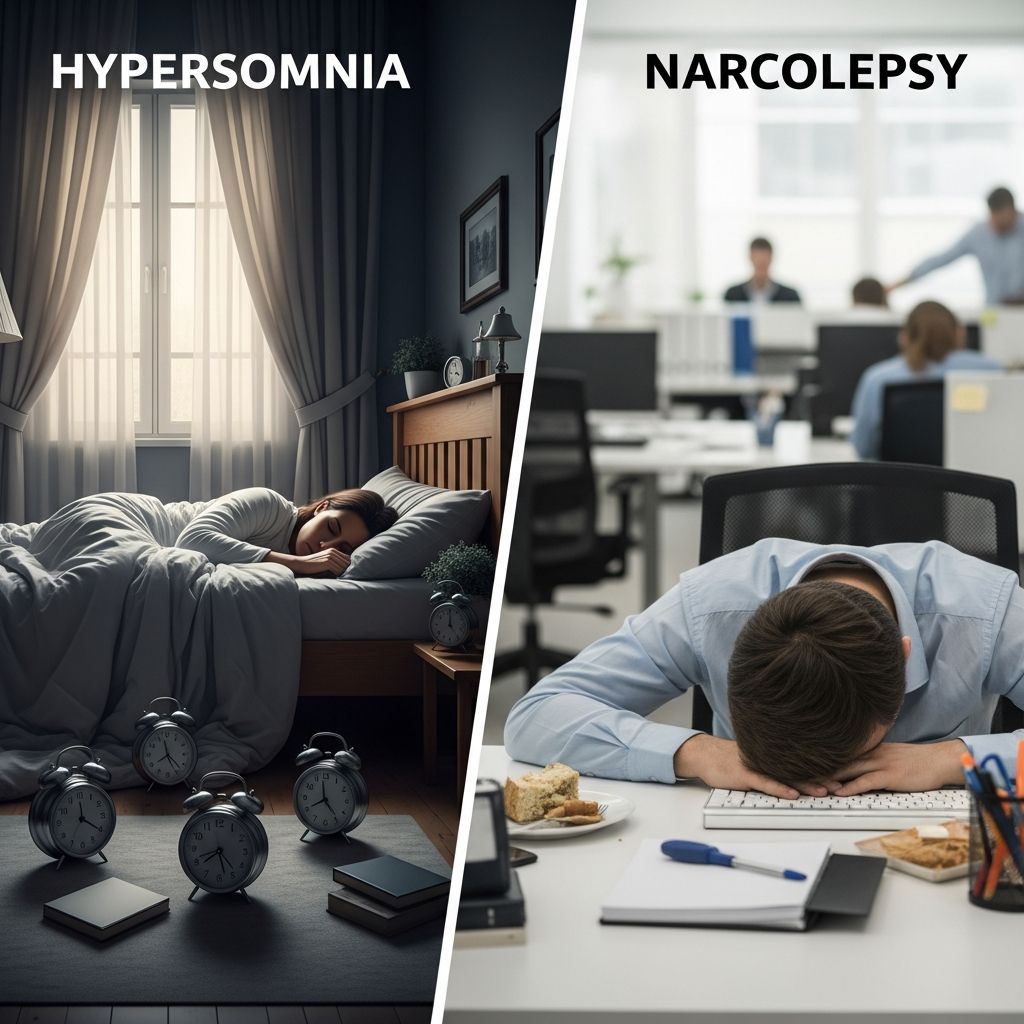
Both hypersomnia and narcolepsy are central disorders of hypersomnolence, characterized by excessive daytime sleepiness that persists despite adequate nighttime sleep. While they share core symptoms like overwhelming fatigue and unintended sleep episodes, key distinctions in additional symptoms, underlying causes, and diagnostic markers set them apart.
What Is Narcolepsy?
Narcolepsy is a chronic neurological disorder that disrupts the brain’s ability to regulate sleep-wake cycles, leading to excessive daytime sleepiness and sudden intrusions of REM sleep into wakefulness. It is divided into type 1, which includes cataplexy, and type 2, without it.
People with narcolepsy often experience fragmented nighttime sleep, frequent awakenings, and rapid entry into REM sleep within 15 minutes of falling asleep, unlike the typical 90-minute delay. This disruption contributes to daytime symptoms and can severely impact daily functioning, work, and safety.
Symptoms of Narcolepsy
The hallmark symptom of narcolepsy is excessive daytime sleepiness, often manifesting as irresistible sleep attacks lasting seconds to minutes. Other common symptoms include:
- Cataplexy: Sudden loss of muscle tone triggered by strong emotions, ranging from slurred speech to full-body collapse, exclusive to type 1 narcolepsy.
- Sleep paralysis: Temporary inability to move or speak while falling asleep or waking up.
- Hypnagogic/hypnopompic hallucinations: Vivid, dream-like hallucinations at sleep onset or upon waking.
- Disrupted nighttime sleep: Frequent awakenings despite total sleep time appearing normal.
- Automatic behaviors: Performing routine tasks without full awareness, like continuing to drive while drowsy.
Additional issues may include obesity, anxiety, depression, and early puberty, linked to hypothalamic dysfunction.
What Is Hypersomnia?
Hypersomnia, specifically idiopathic hypersomnia (IH), is a sleep disorder marked by prolonged yet non-restorative sleep and persistent daytime sleepiness not alleviated by naps. Unlike narcolepsy, it lacks REM sleep intrusions and cataplexy.
Individuals with IH often sleep 10-11 hours or more per night, plus naps, but wake up feeling unrefreshed with profound grogginess. This condition is rarer and harder to diagnose due to overlapping symptoms with other disorders.
Symptoms of Hypersomnia
Core symptoms of idiopathic hypersomnia mirror narcolepsy’s sleepiness but emphasize sleep duration and inertia over REM disruptions:
- Excessive daytime sleepiness: Constant urge to sleep, though less abrupt than narcolepsy’s attacks.
- Long, non-refreshing sleep: Extended nighttime sleep (over 10 hours) and naps that do not revitalize.
- Sleep drunkenness (sleep inertia): Severe difficulty waking, confusion, and grogginess lasting 30 minutes to hours.
- Brain fog: Impaired concentration, memory, and cognitive function due to unrelenting fatigue.
- Automatic behaviors: Rare, but possible during drowsy states.
Sleep paralysis or hallucinations may occur occasionally but are milder and less frequent than in narcolepsy.
Hypersomnia vs. Narcolepsy: Key Differences
While both conditions cause hypersomnolence—sleeping more or feeling excessively sleepy despite normal sleep opportunities—narcolepsy features REM-related symptoms, whereas hypersomnia emphasizes prolonged, unrefreshing sleep. The table below summarizes the main distinctions:
| Symptom/Feature | Narcolepsy Type 1 | Idiopathic Hypersomnia |
|---|---|---|
| Excessive daytime sleepiness | Yes | Yes |
| Sleep attacks | Yes (sudden) | Yes (persistent tiredness) |
| Brain fog | Yes | Yes |
| Cataplexy | Yes | No |
| Sleep paralysis | Yes | Sometimes (mild) |
| Hallucinations | Yes | Sometimes (mild) |
| Nighttime awakenings | Yes (fragmented) | No |
| Automatic behaviors | Yes | Yes |
| Refreshing naps | Sometimes | No |
| Sleep drunkenness | Sometimes | Yes (severe) |
| Sleep duration | Normal/fragmented | Prolonged (>10 hrs) |
| REM onset | Rapid | Normal |
Related Stories



Causes of Narcolepsy and Hypersomnia
Narcolepsy: Primarily caused by loss of hypocretin (orexin)-producing neurons in the hypothalamus, often due to autoimmune destruction. Genetic factors (HLA-DQB1*06:02 gene) and triggers like infections increase risk. Type 1 features low cerebrospinal fluid hypocretin levels; type 2 does not.
Hypersomnia: Idiopathic, meaning cause unknown, though possible links to immune responses or neurotransmitter imbalances exist. No hypocretin deficiency, and REM sleep architecture is typically normal.
Diagnosis
Diagnosis for both requires ruling out other causes via clinical history, Epworth Sleepiness Scale, and polysomnography (PSG) followed by multiple sleep latency test (MSLT). Narcolepsy shows mean sleep latency <8 minutes, ≥2 sleep-onset REM periods (SOREMPs), and low hypocretin in type 1. Hypersomnia diagnosis needs MSLT latency <8 minutes but <2 SOREMPs, plus prolonged sleep or high sleep efficiency on PSG.
Differential diagnosis is challenging; about 20-30% of suspected narcolepsy cases are reclassified as IH after further testing.
Treatment
Treatments focus on symptom management, as neither is curable.
Narcolepsy:
- Stimulants: Modafinil, armodafinil, solriamfetol, or amphetamines for wakefulness.
- Sodium oxybate: Improves nighttime sleep and cataplexy.
- Antidepressants: For cataplexy, hallucinations (e.g., venlafaxine).
- Lifestyle: Scheduled naps, good sleep hygiene.
Hypersomnia:
- Stimulants: Similar to narcolepsy, but clarithromycin or flumazenil sometimes trialed off-label.
- Lifestyle: Consistent sleep schedules, avoiding triggers.
Both benefit from behavioral therapy and support groups.
When to See a Doctor
Seek medical help if daytime sleepiness causes accidents, impairs work/school, or persists despite 7-9 hours of sleep. Warning signs include near-misses while driving or sudden muscle weakness. Early diagnosis prevents complications like depression or injury.
Frequently Asked Questions (FAQs)
Is hypersomnia the same as narcolepsy?
No, hypersomnia lacks cataplexy and REM intrusions characteristic of narcolepsy, featuring instead prolonged unrefreshing sleep and sleep inertia.
Can you have both hypersomnia and narcolepsy?
Rarely; they are distinct, but misdiagnosis occurs until confirmatory tests like MSLT clarify.
Do naps help with hypersomnia or narcolepsy?
Naps may briefly help narcolepsy but worsen hypersomnia due to non-restorative nature.
Is narcolepsy genetic?
Genetic predisposition exists (e.g., HLA genes), but environmental triggers are key.
Living with Hypersomnia or Narcolepsy
Both conditions demand lifestyle adaptations: safe driving practices, workplace accommodations, and emotional support. Ongoing research into hypocretin therapies for narcolepsy and novel wake-promoters offers hope. Patients report improved quality of life with tailored treatment and awareness.
References
- Hypersomnia vs. Narcolepsy: Symptoms, Causes, and Treatments — Healthline. 2023. https://www.healthline.com/health/narcolepsy/hypersomnia-vs-narcolepsy
- Narcolepsy vs. Idiopathic Hypersomnia: What to Know — Chattanooga Sleep Medicine. 2024. https://www.chattsleep.com/narcolepsy-vs-idiopathic-hypersomnia
- Hypersomnia vs. Narcolepsy: What’s the Difference? — Revive Research. 2024. https://www.reviveresearch.org/blog/hypersomnia-vs-narcolepsy/
- Hypersomnia vs Narcolepsy — Sleep Foundation. 2025-01-10. https://www.sleepfoundation.org/hypersomnia/hypersomnia-vs-narcolepsy
- Idiopathic Hypersomnia vs Narcolepsy: Which One Do You Have? — Good Health Psych. 2023. https://goodhealthpsych.com/blog/idiopathic-hypersomnia-vs-narcolepsy-which-one-do-you-have/
Similar Articles








Read full bio of Sneha Tete