Hypertensive Crisis: Types, Causes & Symptoms
Understanding hypertensive crises: Learn about emergencies, urgencies, and critical warning signs.
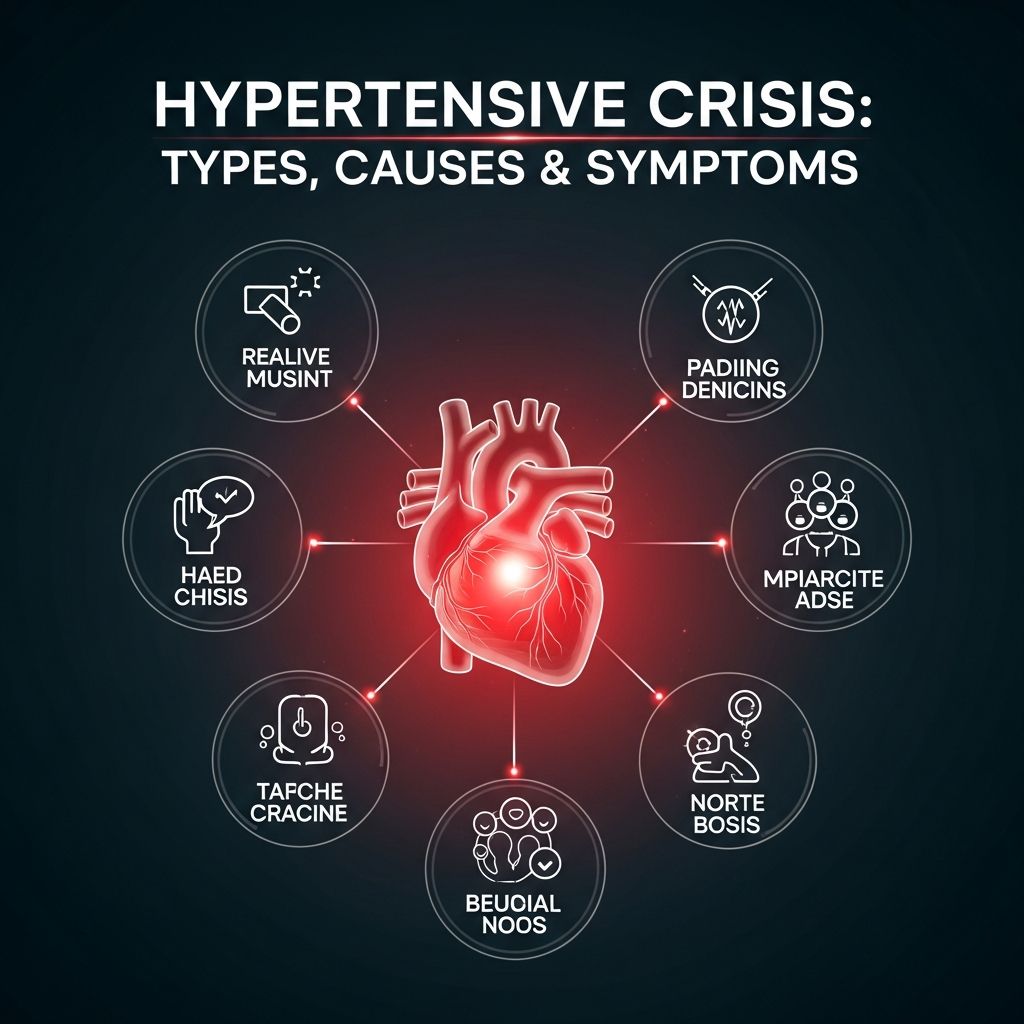
Understanding Hypertensive Crisis
A hypertensive crisis occurs when blood pressure rises to dangerously high levels, typically 180/120 millimeters of mercury (mm Hg) or higher, often without warning. This severe elevation in blood pressure represents a medical emergency that requires immediate attention and can pose serious risks to your health. Unlike chronic high blood pressure that develops gradually over time, a hypertensive crisis strikes suddenly and demands urgent intervention to prevent life-threatening complications.
Hypertensive crises are not uncommon, and understanding the distinction between different types can help you recognize when you need emergency care. Blood pressure is measured in two numbers: the systolic pressure (top number) and diastolic pressure (bottom number). When either or both of these numbers reach extreme levels, your body’s organs and blood vessels face immediate danger from the excessive force of blood flow.
Types of Hypertensive Crisis
Hypertensive crises fall into two main categories: hypertensive emergencies and hypertensive urgencies. While both involve severely elevated blood pressure, the key difference lies in whether target organ damage has occurred.
Hypertensive Emergency
A hypertensive emergency is defined as blood pressure exceeding 180/120 mm Hg that is accompanied by evidence of progressive or impending acute target organ damage. This represents the most serious form of hypertensive crisis and requires immediate hospitalization and intensive care unit admission. In a hypertensive emergency, the extreme blood pressure is actively damaging vital organs including the brain, heart, kidneys, and eyes.
Hypertensive emergencies are characterized by complications such as encephalopathy, pulmonary edema, acute coronary syndrome, cerebrovascular accidents, and acute kidney injury. These conditions indicate that the elevated blood pressure is causing immediate harm, and emergency treatment with intravenous medications is necessary to prevent death or permanent organ damage. The treatment goal in hypertensive emergencies involves careful, controlled reduction of blood pressure to prevent further deterioration while avoiding complications from overly aggressive treatment.
Hypertensive Urgency
Hypertensive urgency is defined as severely elevated blood pressure of at least 180/120 mm Hg without evidence of progressive target organ damage. In other words, while the blood pressure reading is dangerously high, there are no acute signs of organ system failure or immediate tissue damage occurring. This distinction is critical because it changes the treatment approach and setting.
Patients with hypertensive urgency can often be managed in an outpatient or office setting rather than requiring emergency hospitalization. Treatment typically involves oral antihypertensive medications rather than intravenous therapy. However, hypertensive urgency still requires prompt medical evaluation and treatment to prevent progression to a true hypertensive emergency and to establish long-term blood pressure control.
Common Causes of Hypertensive Crisis
Hypertensive crises are largely preventable and usually result from specific underlying factors. Understanding these causes can help you take preventive measures and recognize situations that may put you at risk.
Medication Noncompliance: The most common cause of hypertensive crisis is failure to take blood pressure medications as prescribed. Patients may stop taking medications due to cost, side effects, or simply forgetting doses. Running out of medications without refilling prescriptions is another frequent contributor.
Related Stories



Untreated or Inadequately Treated Hypertension: Many people with hypertension do not receive adequate treatment, either because they are unaware of their condition or because their current medication regimen is insufficient to control their blood pressure.
Secondary Hypertension: In some cases, severely elevated blood pressure results from an underlying condition such as kidney disease, adrenal tumors, thyroid disorders, or sleep apnea that has not been identified or treated.
Substance Use: Stimulant drugs including cocaine and amphetamines can trigger acute, severe increases in blood pressure. Even over-the-counter decongestants and certain herbal supplements can elevate blood pressure significantly.
Acute Illness or Stress: Infections, injuries, surgical procedures, severe emotional stress, or pain can precipitate temporary but severe elevations in blood pressure, particularly in individuals with underlying hypertension.
Medication Interactions: Combining certain medications can cause dangerous blood pressure elevations. Nonsteroidal anti-inflammatory drugs combined with blood pressure medications or stimulants can significantly increase blood pressure.
Warning Signs and Symptoms
Recognizing the symptoms of a hypertensive crisis is crucial for getting timely treatment. However, it is important to note that not all people experiencing dangerously high blood pressure will have noticeable symptoms, which is why regular blood pressure monitoring is essential.
Common warning signs of a hypertensive crisis include severe headache, often described as throbbing or pounding, particularly at the back of the head. Patients may experience chest pain or pressure, shortness of breath, severe anxiety, nosebleeds, and visual disturbances such as blurred vision or seeing spots. Some individuals report confusion, difficulty speaking, or weakness on one side of the body, which could indicate a stroke.
Additional symptoms may include heart palpitations, a sense of impending doom, severe sweating, and numbness or tingling in the extremities. Nausea and vomiting can accompany a hypertensive crisis, as can difficulty breathing or a feeling of tightness in the chest. If you experience any combination of these symptoms along with a blood pressure reading of 180/120 mm Hg or higher, seek emergency medical care immediately.
When to Seek Emergency Care
You should call 911 or your local emergency services immediately if your blood pressure reading is 180/120 mm Hg or higher and you are experiencing any symptoms. Do not wait or attempt to treat this at home with rest alone, as you may be experiencing a hypertensive emergency with active organ damage.
Even without symptoms, if your blood pressure measures 180/120 mm Hg or higher during multiple readings taken 20 to 30 minutes apart, contact your healthcare provider urgently. Your doctor may have you come to the office or emergency department for evaluation and treatment. If you cannot reach your regular provider or if symptoms are severe, call 911.
Do not ignore persistently elevated readings just because you feel fine. Silent hypertension complications can develop without obvious symptoms, making regular monitoring and professional evaluation essential.
Diagnosis and Evaluation
When you present with suspected hypertensive crisis, healthcare providers will confirm your blood pressure reading using proper technique. Blood pressure should be measured in both arms, and readings may be repeated after a brief rest period to rule out white coat hypertension, where anxiety in a medical setting temporarily elevates readings.
Your doctor will perform a thorough physical examination to assess for signs of target organ damage. This evaluation includes listening to your heart and lungs, checking for swelling, assessing neurological function, and evaluating kidney function. Laboratory tests may include blood work to assess kidney function, electrolyte levels, and cardiac markers. An electrocardiogram (EKG) may be performed to evaluate heart function, and imaging studies such as chest X-rays or CT scans may be ordered depending on your symptoms and examination findings.
The presence or absence of target organ damage determines whether you are experiencing a hypertensive emergency or urgency, which directly affects treatment decisions and whether hospitalization is necessary.
Treatment Approaches
Hypertensive Emergency Treatment
Hypertensive emergencies require immediate hospitalization in an intensive care unit with continuous blood pressure monitoring and intravenous antihypertensive medications. The treatment goal is to reduce systolic blood pressure to less than 140 mm Hg, or to less than 120 mm Hg in specific patient populations.
Critical to emergency treatment is the principle that blood pressure should not be reduced too rapidly. Initial reduction in mean arterial pressure should not exceed 20 to 25 percent below the pretreatment blood pressure within the first hour. Excessively rapid reductions in blood pressure have been associated with acute kidney injury, ischemic cardiac events, cerebral ischemia, and even acute blindness from retinal artery occlusion.
Intravenous medications used in hypertensive emergencies include labetalol, nicardipine, esmolol, hydralazine, and nitroprusside, selected based on the underlying cause and organ systems involved. The initial goal is to achieve a mean arterial pressure of 110 to 115 mm Hg within the first 30 to 60 minutes. If this is well-tolerated and the patient remains stable, further gradual reductions toward normal blood pressure can proceed over the next 24 to 48 hours.
Hypertensive Urgency Treatment
Hypertensive urgency can typically be managed in an outpatient setting or office with oral antihypertensive medications. After confirming that blood pressure remains elevated following 20 to 30 minutes of quiet rest, a rapid-acting oral agent such as immediate-release nifedipine or clonidine may be administered.
Adjustments to your long-acting antihypertensive medications should be made to prevent future episodes. This may include adding a new medication, increasing the dose of existing medications, or switching to a more effective agent. Follow-up medical evaluation should be scheduled within one to seven days to assess blood pressure response and make additional adjustments as needed.
Prevention of Hypertensive Crisis
Most hypertensive crises are preventable through appropriate management of blood pressure. Taking prescribed antihypertensive medications exactly as directed is the single most important preventive measure. Set reminders, use pill organizers, and work with your pharmacy to make medication adherence easier.
Regular blood pressure monitoring allows you to detect increases early before they reach crisis levels. Keep appointments with your healthcare provider for ongoing blood pressure management and medication adjustments. Maintain a healthy lifestyle including regular physical activity, a diet low in sodium and rich in fruits and vegetables, limiting alcohol consumption, and managing stress effectively.
Avoid stimulants such as cocaine, amphetamines, and excessive caffeine, as these can trigger dangerous blood pressure elevations. Be cautious with over-the-counter medications, herbal supplements, and nonsteroidal anti-inflammatory drugs that can increase blood pressure, particularly if you have hypertension.
Long-Term Management After Crisis
After experiencing a hypertensive crisis, establishing confirmed follow-up care is critical. Patients who are discharged without confirmed follow-up appointments or who continue to be noncompliant with medications will often return to the emergency department within weeks. Some may progress to another hypertensive emergency if not adequately managed.
Work with your healthcare provider to identify and address the underlying cause of your crisis. If medication noncompliance was a factor, discuss barriers to taking your medications and develop strategies to improve adherence. If an underlying secondary cause was identified, appropriate treatment of that condition is essential.
Gradual intensification of antihypertensive therapy should be emphasized to achieve and maintain target blood pressure levels. Regular follow-up appointments, consistent medication use, and lifestyle modifications form the foundation of long-term prevention.
Frequently Asked Questions
Q: What is the difference between high blood pressure and a hypertensive crisis?
A: High blood pressure develops gradually over time and is typically asymptomatic. A hypertensive crisis is a sudden, severe elevation in blood pressure that occurs without warning and may cause immediate organ damage. High blood pressure readings are typically lower than 180/120 mm Hg, whereas hypertensive crises involve readings of 180/120 mm Hg or higher.
Q: Can I treat a hypertensive crisis at home?
A: No. If you have symptoms with a blood pressure of 180/120 mm Hg or higher, you need immediate emergency medical care. Call 911. Do not attempt to treat this condition at home, as complications can develop rapidly and silently. Even without symptoms, persistently elevated readings require urgent medical evaluation.
Q: How quickly does a hypertensive emergency damage organs?
A: Organ damage in a hypertensive emergency can begin within minutes to hours of the blood pressure elevation. This is why immediate treatment is essential. Target organs most commonly affected include the brain, heart, kidneys, and eyes. Complications can include stroke, heart attack, kidney failure, and vision loss.
Q: Will I need to stay in the hospital after a hypertensive crisis?
A: If you have a hypertensive emergency with evidence of organ damage, you will be admitted to an intensive care unit for continuous monitoring and intravenous medication management. If you have hypertensive urgency without organ damage, you may be treated in an office or emergency department setting and discharged home with follow-up arranged within days.
Q: Can I prevent hypertensive crisis?
A: Yes. Most hypertensive crises are preventable through consistent use of prescribed blood pressure medications, regular monitoring, maintaining a healthy lifestyle, managing stress, avoiding stimulants, and keeping regular appointments with your healthcare provider to adjust medications as needed.
Q: What should I do if my blood pressure is very high but I feel fine?
A: Contact your healthcare provider or seek medical evaluation. Some people do not have symptoms with dangerously high blood pressure, but organ damage can still be occurring silently. Do not assume you are fine based on lack of symptoms. If your reading is 180/120 mm Hg or higher on repeated measurements, seek medical attention promptly.
References
- Hypertensive Urgency in the Office Setting — JAMA Internal Medicine. 2016. https://jamanetwork.com/journals/jamainternalmedicine/fullarticle/2527389
- Hypertensive Crises: Emergencies and Urgencies — National Center for Biotechnology Information. 2007. https://pmc.ncbi.nlm.nih.gov/articles/PMC8109569/
- Hypertensive Crises — PubMed. 2008. https://pubmed.ncbi.nlm.nih.gov/18710665/
- Inpatient Hypertension Management: Emergencies Need IV Therapy — Cleveland Clinic Journal of Medicine. 2021. https://www.ccjm.org/page/acp-2021/hypertension-management
- Hypertensive Crisis: Types, Causes & Symptoms — Cleveland Clinic. 2025. https://my.clevelandclinic.org/health/diseases/24470-hypertensive-crisis
Similar Articles








Read full bio of Sneha Tete