Hypomelanosis Of Ito: Guide To Symptoms, Diagnosis, And Care
Rare neurocutaneous disorder with hypopigmented skin streaks, neurological issues, and multisystem involvement.
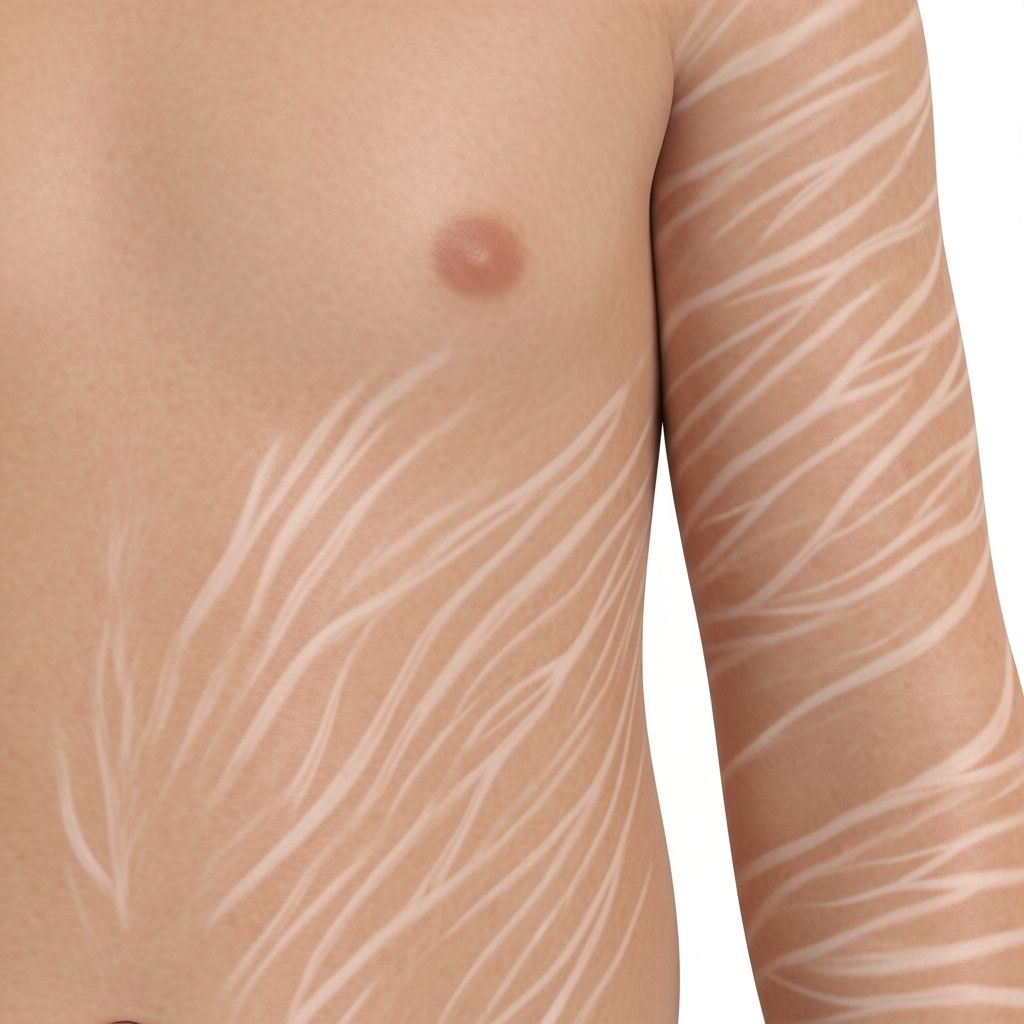
Hypomelanosis of Ito is a rare neurocutaneous disorder characterized by hypopigmented streaks, whorls, or patches of skin following the lines of Blaschko, often accompanied by neurological, musculoskeletal, ocular, and other systemic abnormalities. It typically manifests at birth or in early infancy and affects multiple organ systems in approximately 30-94% of cases, necessitating thorough multidisciplinary evaluation.
What is hypomelanosis of Ito?
Hypomelanosis of Ito (HOI), also known as incontinentia pigmenti achromians, is a sporadic condition defined by macular hypopigmentation in a whorled, linear, or streak-like pattern along Blaschko’s lines, frequently associated with extracutaneous manifestations such as seizures, developmental delays, and skeletal anomalies. Blaschko’s lines represent patterns of skin cell development arising from genetic mosaicism, where postzygotic mutations lead to two distinct cell populations in the skin and other tissues. The disorder is not inherited in a classical Mendelian pattern but results from somatic mosaicism, explaining its unpredictable presentation and lack of familial recurrence. Prevalence is unknown due to underdiagnosis, but it is estimated to occur in 1 in 20,000 to 1 in 100,000 individuals, with no sex or racial predilection.
Who gets hypomelanosis of Ito?
Hypomelanosis of Ito primarily affects infants, becoming evident at birth or within the first two years of life, often detected by dermatologists, pediatricians, or neurologists during routine examinations. It occurs sporadically without familial predisposition, though rare familial cases linked to specific chromosomal anomalies have been reported. Both males and females are equally impacted, and skin lesions may be more conspicuous in individuals with darker skin tones due to contrast with hypopigmented areas. Early recognition is crucial as associated abnormalities may influence neurodevelopment and require prompt intervention.
What causes hypomelanosis of Ito?
The precise etiology remains elusive, but hypomelanosis of Ito arises from genetic mosaicism due to postzygotic somatic mutations during embryonic development, resulting in two cell lines: one normal and one mutated. Chromosomal mosaicism, particularly involving sex chromosomes (e.g., 45,X/46,XY) or autosomal abnormalities, is identified in many cases via skin biopsy fibroblasts or keratinocytes from hypopigmented areas. No single causative gene has been pinpointed; instead, it represents a phenotype of diverse cytogenetic alterations, including trisomies, monosomies, and structural rearrangements. This mosaicism explains the Blaschkoid distribution and variable multisystem involvement.
What are the clinical features of hypomelanosis of Ito?
The hallmark is cutaneous hypopigmentation presenting as linear, whorled, or streaky pale macules along Blaschko’s lines, affecting the trunk, limbs, and occasionally the face, sparing palms, soles, and mucous membranes. Lesions are present at birth or appear in infancy and may darken, fade, or repigment over time without intervention. Extracutaneous features occur in 30-94% of patients, with neurological abnormalities in up to 90%.
Neurological abnormalities
- Seizures (50-75%), often infantile spasms or focal epilepsy
- Developmental delays and intellectual disability (30-75%), including autism spectrum features
- Microcephaly or macrocephaly
- Hemispheric asymmetry, corpus callosum agenesis, cerebral malformations
- Motor delays, hypotonia, ataxia, spasticity
Musculoskeletal abnormalities
- Scoliosis and kyphosis (common, ~70%)
- Limb asymmetry or hemihypertrophy
- Skeletal dysplasias, clinodactyly, syndactyly
- Muscle hypotonia or hypertonia
Related Stories



Ocular abnormalities
- Strabismus, nystagmus, hypertelorism (~25%)
- Retinal hypopigmentation, coloboma, cataracts
- Miscellaneous: ptosis, epicanthal folds, corneal anomalies
Other features
- Genitourinary: renal agenesis/dysplasia, hypospadias, cryptorchidism (~10-20%)
- Cardiac: septal defects, vascular anomalies (10%)
- Dental: hypodontia, malformed teeth
- Endocrine: precocious puberty
- Hair/scalp: poliosis, alopecia
- Other: hearing loss, hirsutism
Diagnosis of hypomelanosis of Ito
Diagnosis relies on clinical criteria: major features include non-hereditary hypopigmentation in Blaschkoid pattern affecting >2 body segments from birth/infancy, plus neurological/musculoskeletal involvement. Thorough history, physical exam focusing on neuro-ophthalmic signs, and Wood’s lamp examination enhance lesion visibility. Investigations include:
- Skeletal X-rays (routine for all)
- Brain MRI/CT if neurological symptoms
- EEG for seizures
- Skin biopsy for chromosomal analysis (fibroblasts/keratinocytes from lesional skin)
- Eye exam, renal ultrasound, echocardiogram as indicated
Chromosomal mosaicism confirms diagnosis in many but is absent in some. Differential includes other mosaic disorders (e.g., McCune-Albright, pigmentary mosaicism).
Treatment of hypomelanosis of Ito
No cure exists; management is symptomatic and multidisciplinary involving dermatology, neurology, orthopedics, ophthalmology, etc.. Skin lesions require no treatment and often improve spontaneously.
- Neurological: Anticonvulsants (e.g., levetiracetam) for seizures; may be refractory, requiring surgery. Early intervention for developmental delays/special education.
- Musculoskeletal: Orthotics/bracing for scoliosis; surgery if progressive. Physical/occupational therapy.
- Ocular: Strabismus surgery, monitoring for vision threats.
- Cosmetic: Camouflage makeup for persistent hypopigmentation.
- Supportive: Genetic counseling, regular multidisciplinary follow-up.
What is the outcome for hypomelanosis of Ito?
Prognosis varies widely based on extracutaneous involvement severity. Skin changes often fade by adolescence/adulthood. Neurological outcomes range from normal intellect to profound disability; seizures may remit but cognitive/motor deficits persist in many. Musculoskeletal deformities can progress, requiring lifelong monitoring. Multidisciplinary care improves quality of life, with better outcomes via early seizure control and developmental support. Life expectancy is typically normal absent severe complications.
Frequently Asked Questions
Q: Is hypomelanosis of Ito inherited?
A: No, it is sporadic due to postzygotic mosaicism, not germline mutations; familial recurrence is exceedingly rare.
Q: Do skin lesions in hypomelanosis of Ito fade?
A: Yes, hypopigmentation often darkens or blends with time, requiring no treatment.
Q: What percentage have neurological issues?
A: Up to 90%, including seizures (50-75%) and developmental delays.
Q: How is it diagnosed?
A: Clinical Blaschkoid hypopigmentation plus associated features, confirmed by skin biopsy karyotyping.
Q: Is there a cure?
A: No, treatment targets symptoms via multidisciplinary team.
References
- Hypomelanosis of Ito – MD Searchlight — MD Searchlight. 2023. https://mdsearchlight.com/genetic-disorders/hypomelanosis-of-ito/
- Hypomelanosis of Ito – Symptoms, Causes, Treatment | NORD — National Organization for Rare Disorders (NORD). 2024-01-15. https://rarediseases.org/rare-diseases/hypomelanosis-of-ito/
- Hypomelanosis of Ito | Handouts – MedLink Neurology — MedLink Neurology. 2023. https://www.medlink.com/handouts/hypomelanosis-of-ito
- Hypomelanosis of Ito – DermNet — DermNet NZ. 2024. https://dermnetnz.org/topics/hypomelanosis-of-ito
- Hypomelanosis of Ito – UF Health — University of Florida Health. 2023. https://ufhealth.org/conditions-and-treatments/hypomelanosis-of-ito
- Hypomelanosis of Ito (HMI) – MalaCards — MalaCards. 2024. https://www.malacards.org/card/hypomelanosis_of_ito
- Hypomelanosis of Ito – StatPearls – NCBI Bookshelf — NCBI Bookshelf (StatPearls). 2023-08-08. https://www.ncbi.nlm.nih.gov/books/NBK538268/
Similar Articles








Read full bio of Sneha Tete