Hypothyroidism: Causes, Symptoms, and Treatment
Understand hypothyroidism, its symptoms, causes, and effective treatment options for managing this common thyroid disorder.
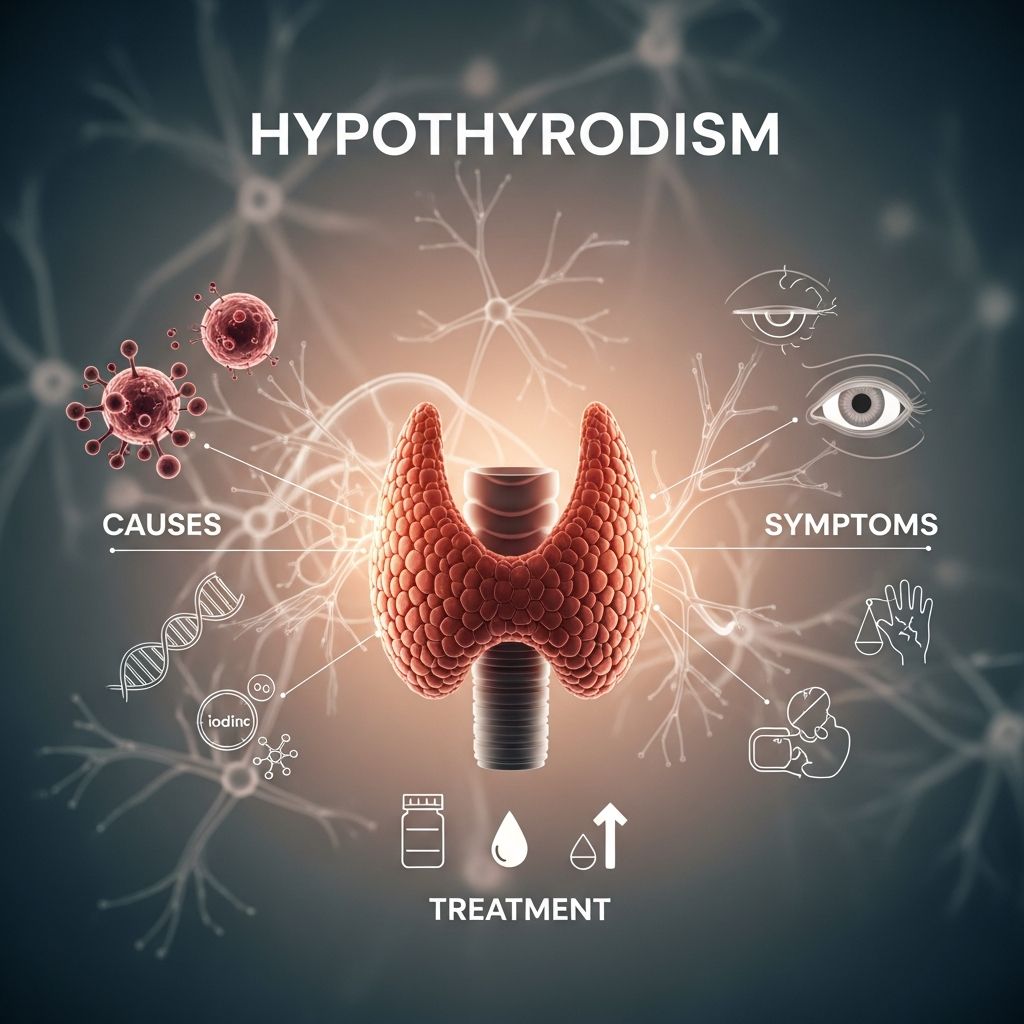
What is Hypothyroidism?
Hypothyroidism, commonly referred to as an underactive thyroid, is a medical condition in which your thyroid gland does not produce sufficient thyroid hormones to meet your body’s metabolic needs. The thyroid is a small, butterfly-shaped gland located in the front of your neck that plays a crucial role in regulating your metabolism, energy levels, and overall body functions. When the thyroid fails to produce adequate amounts of thyroid hormones—primarily thyroxine (T4) and triiodothyronine (T3)—your metabolism slows down significantly, leading to a cascade of symptoms that can affect nearly every system in your body.
This condition is quite common and affects millions of people worldwide, with women being more susceptible than men. Hypothyroidism can develop at any age, but the risk increases as you get older. If left untreated, hypothyroidism can lead to serious complications, making early diagnosis and treatment essential for maintaining good health and quality of life.
Symptoms of Hypothyroidism
The symptoms of hypothyroidism develop gradually over time, which means many people may not recognize they have the condition immediately. Early symptoms are often subtle and can be mistaken for other health issues or simply attributed to aging or stress. Understanding these symptoms is critical for seeking timely medical attention.
Early Symptoms
In the initial stages of hypothyroidism, you may experience:
– Fatigue and persistent tiredness- Weight gain without significant changes in diet or exercise- Slowed metabolism- Dry skin- Constipation- Feeling cold more easily than others- Joint and muscle pain- Difficulty concentrating or “brain fog”- Depression or mood changes- Thinning hair
Later-Stage Symptoms
If hypothyroidism remains untreated for an extended period, more pronounced symptoms may develop:
– Puffiness in the face, hands, and feet- A hoarse or raspy voice- Reduced ability to smell and taste- Thickening and coarsening of the skin- Thinning of the eyebrows, particularly the outer third- A significantly slowed heart rate (bradycardia)- Decreased body temperature- Unusually slow speech- Reduced cognitive function
Symptoms in Infants
Congenital hypothyroidism, which is hypothyroidism present at birth, requires special attention as untreated cases can lead to severe developmental problems. Infants with hypothyroidism may display:
– Feeding difficulties- Poor growth and development- Insufficient weight gain- Jaundice (yellowing of skin and eyes)- Constipation- Poor muscle tone- Dry skin- Hoarse crying- Enlarged tongue- Umbilical hernia
Causes of Hypothyroidism
Hypothyroidism can result from various underlying conditions and factors that impair the thyroid’s ability to produce hormones. Understanding the cause is important for determining the most appropriate treatment approach.
Autoimmune Disease (Hashimoto’s Thyroiditis)
The most common cause of hypothyroidism is Hashimoto’s thyroiditis, an autoimmune disease affecting approximately 90% of hypothyroidism cases. In this condition, your immune system mistakenly produces antibodies that attack your thyroid gland, causing chronic inflammation and gradually destroying the cells responsible for hormone production. Over time, the thyroid’s ability to manufacture thyroid hormones diminishes significantly.
Thyroiditis and Inflammation
Thyroiditis refers to inflammation of the thyroid gland, which can occur due to various causes including:
Related Stories



– Viral or respiratory infections- Postpartum thyroiditis (occurring after pregnancy)- Autoimmune disorders- Other medical conditions affecting the thyroid
Thyroiditis can trigger an initial release of stored thyroid hormones, causing temporary hyperthyroidism, which is typically followed by a period of hypothyroidism as the gland becomes depleted of its hormone reserves.
Surgical Removal or Radiation
Thyroid surgery performed to treat conditions such as hyperthyroidism, thyroid cancer, or nodules can reduce or eliminate the thyroid’s hormone-producing capacity. Similarly, radiation therapy used to treat cancers of the head and neck can damage thyroid tissue and lead to hypothyroidism, sometimes developing years after the initial treatment.
Medications
Certain medications can interfere with thyroid function or reduce hormone production, including:
– Lithium (used for bipolar disorder)- Beta-blockers- Interferon-alpha- Interleukin-2- Amiodarone- Anti-thyroid medications used excessively
Other Causes
Additional causes of hypothyroidism include:
– Congenital hypothyroidism (present at birth due to thyroid underdevelopment)- Iodine deficiency or excess (rare in the United States)- Pituitary gland disorders- Hypothalamic disorders- Sheehan syndrome (occurring during pregnancy)- Pituitary tumors or surgery
Diagnosis of Hypothyroidism
Accurate diagnosis of hypothyroidism involves blood tests that measure thyroid hormone levels and thyroid-stimulating hormone (TSH). Your healthcare provider will typically order a TSH test first, as elevated TSH levels often indicate hypothyroidism. Additional testing may include measurements of free thyroxine (FT4) levels. Some patients may require imaging tests of the thyroid, such as ultrasound, to assess the gland’s structure and function.
Treatment Options
Hormone Replacement Therapy
The standard and most effective treatment for hypothyroidism is hormone replacement therapy using levothyroxine (brand names include Synthroid, Levo-T, and others). Levothyroxine is a synthetic form of the thyroid hormone thyroxine (T4) that replaces the hormones your thyroid can no longer produce naturally.
Medication Administration
Levothyroxine is taken orally, typically in tablet form, and is best absorbed on an empty stomach. Most patients take their dose in the morning before breakfast to maximize absorption and effectiveness. The standard starting dose ranges from 1.5 to 1.8 micrograms per kilogram of body weight daily, though dosages are individualized based on factors such as age, weight, other medical conditions, and other medications.
Timeline for Symptom Relief
Most patients begin noticing improvement in their symptoms within one to two weeks of starting levothyroxine treatment. However, it may take several weeks to months for all symptoms to fully resolve and for hormone levels to stabilize completely. Your healthcare provider will monitor your progress through regular blood tests to ensure your dosage is optimal.
Long-Term Management
Levothyroxine treatment is typically lifelong, as the thyroid gland cannot restore its normal function once damaged by autoimmune disease, surgery, radiation, or other causes. Stopping medication will result in the return of hypothyroidism symptoms. However, with proper treatment and dosage adjustment, you can maintain normal hormone levels and live a completely normal, healthy life.
Dosage Adjustments
Your healthcare provider will check your TSH levels regularly—typically annually—to ensure your dosage remains appropriate. Adjustments may be necessary due to changes in your health status, other medications, or life circumstances. If you change brands of levothyroxine, inform your healthcare provider, as different formulations may require dosage adjustments.
Special Considerations
If you have coronary artery disease or severe hypothyroidism, your healthcare provider may start treatment with a lower dose and gradually increase it to allow your heart to adjust to the rise in your body’s metabolism. Certain substances can interfere with levothyroxine absorption and should be separated from your medication dose, including:
– Iron supplements or multivitamins containing iron- Aluminum hydroxide (found in some antacids)- Calcium supplements
Subclinical Hypothyroidism
Subclinical hypothyroidism is characterized by mildly elevated TSH levels with normal free thyroxine levels. Treatment for this condition depends on the degree of TSH elevation and individual symptoms. For mild cases, medication may not be necessary, but if TSH levels are higher within the subclinical range, thyroid hormone replacement may improve symptoms.
Potential Complications of Untreated Hypothyroidism
When hypothyroidism remains untreated for extended periods, serious health complications can develop:
– Female infertility and reduced fertility- Male infertility- Peripheral neuropathy (nerve damage causing pain, numbness, and tingling)- Heart problems and increased risk of heart disease- Enlarged thyroid gland (simple goiter)- Myxedema coma (a life-threatening condition)- Cognitive decline and memory problems
Frequently Asked Questions
Q: Can hypothyroidism be cured?
A: Currently, there is no cure for hypothyroidism, but it can be effectively managed with lifelong hormone replacement therapy using levothyroxine. With proper treatment, you can maintain normal hormone levels and live a healthy, normal life.
Q: What are the side effects of levothyroxine?
A: Levothyroxine typically causes no side effects when taken at the correct dose. However, if the dose is too high, side effects may include tiredness, increased appetite, sleep problems, shakiness, and heart palpitations. If you experience any of these symptoms, contact your healthcare provider to discuss dosage adjustments.
Q: Is hypothyroidism more common in women?
A: Yes, hypothyroidism is more prevalent in women than men, particularly as women age. Women are at higher risk, especially if they have a family history of autoimmune thyroid disease or other autoimmune disorders.
Q: Can I stop taking levothyroxine if my symptoms improve?
A: No, you should not stop taking levothyroxine without consulting your healthcare provider. Treatment is typically lifelong, and stopping medication will cause your symptoms to return. Consistent, uninterrupted therapy is essential for maintaining health.
Q: How long does it take for levothyroxine to work?
A: You may begin noticing improvement in symptoms within one to two weeks of starting treatment, but it may take several weeks to months for all symptoms to fully resolve. Your healthcare provider will monitor your progress through regular blood tests.
Q: Can dietary changes help manage hypothyroidism?
A: While a healthy diet is important for overall health, hypothyroidism cannot be cured through diet alone. However, ensuring adequate iodine intake and maintaining a nutritious diet can support your overall treatment plan alongside medication.
References
- Hypothyroidism – Symptoms and Causes — Penn Medicine. 2024. https://www.pennmedicine.org/conditions/hypothyroidism
- Hypothyroidism (underactive thyroid) – Diagnosis and treatment — Mayo Clinic. 2024. https://www.mayoclinic.org/diseases-conditions/hypothyroidism/diagnosis-treatment/drc-20350289
- Hypothyroidism (underactive thyroid) – Symptoms and causes — Mayo Clinic. 2024. https://www.mayoclinic.org/diseases-conditions/hypothyroidism/symptoms-causes/syc-20350284
- Hypothyroidism (Underactive Thyroid) — National Institute of Diabetes and Digestive and Kidney Diseases (NIDDK). 2024. https://www.niddk.nih.gov/health-information/endocrine-diseases/hypothyroidism
- Hypothyroidism (Underactive Thyroid): Symptoms & Treatment — Cleveland Clinic. 2024. https://my.clevelandclinic.org/health/diseases/12120-hypothyroidism
- Hypothyroidism: Diagnosis and Treatment — American Academy of Family Physicians. 2021. https://www.aafp.org/pubs/afp/issues/2021/0515/p605.html
- Underactive thyroid (hypothyroidism) — National Health Service (NHS). 2024. https://www.nhs.uk/conditions/underactive-thyroid-hypothyroidism/
Similar Articles








Read full bio of medha deb