Hypothyroidism: Symptoms, Diagnosis, Treatment, And Skin Signs
Comprehensive guide to hypothyroidism: causes, skin manifestations, diagnosis, and lifelong management strategies.
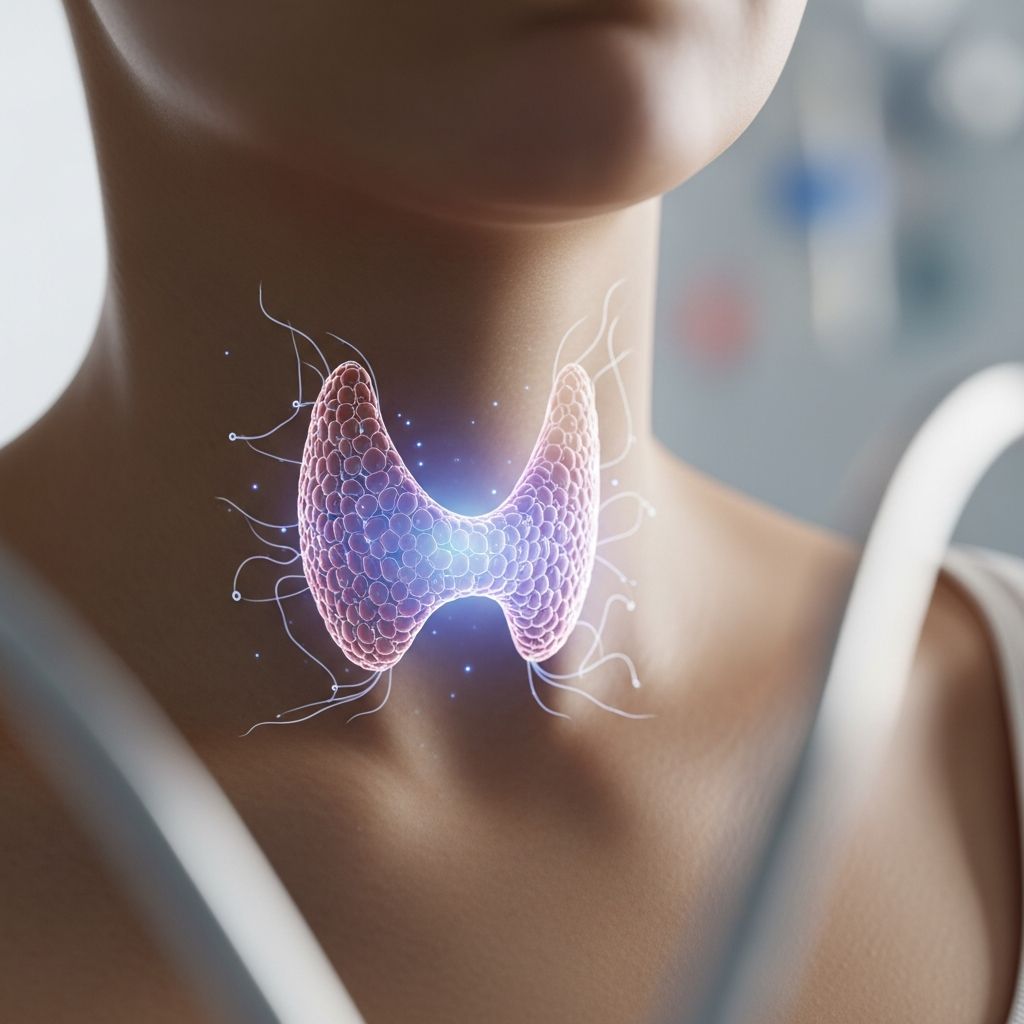
Hypothyroidism occurs when the thyroid gland is underactive, resulting in insufficient thyroxine (T4) production. This condition slows the body’s metabolic rate, profoundly impacting skin, hair, nails, and overall health. While systemic symptoms like fatigue and weight gain are common, dermatological changes are often the presenting features, making it crucial for dermatologists to recognize these signs.
Who gets hypothyroidism?
Hypothyroidism affects individuals of all ages but is more prevalent in women, with a ratio of 8:1 compared to men, and incidence increases with age, particularly after 60 years. It impacts approximately 2% of the population in iodine-sufficient regions, rising to 10% in those over 65. Risk factors include family history of autoimmune diseases, previous thyroid surgery or radiation, type 1 diabetes, and pregnancy. Congenital hypothyroidism occurs in 1 in 2,000–4,000 newborns, often due to thyroid dysgenesis or dyshormonogenesis.
Causes
The thyroid gland, located in the lower neck, produces thyroxine (T4) and triiodothyronine (T3), regulated by thyroid-stimulating hormone (TSH) from the pituitary gland. Hypothyroidism arises from disrupted production, conversion, or action of these hormones. Causes are categorized as primary (thyroid gland itself), secondary (pituitary), or tertiary (hypothalamus).
Primary hypothyroidism
The most common form (95% of cases) in iodine-replete areas stems from chronic autoimmune thyroiditis (Hashimoto’s thyroiditis), where anti-thyroid peroxidase (TPO) and anti-thyroglobulin antibodies destroy thyroid tissue. Other causes include:
- Iodine deficiency: Rare in developed countries but leads to endemic goitre and myxoedema in severe cases.
- Postpartum thyroiditis: Affects 5–10% of women within a year after delivery, often transient.
- Drugs: Lithium, amiodarone, and interferon-alpha inhibit hormone synthesis.
- Iatrogenic: Thyroidectomy, radioiodine therapy (causes hypothyroidism in 55% post-toxic nodular goitre), or external radiation.
- Rare: Infiltrative diseases (e.g., amyloidosis, sarcoidosis), congenital defects, or transient thyroiditis.
Secondary (central) hypothyroidism
Rare (1/20,000–1/100,000), caused by pituitary or hypothalamic dysfunction, leading to low TSH and low free T4. Common etiologies include pituitary adenomas, surgery, radiation, or infiltrative lesions like haemochromatosis. It affects both sexes equally and requires MRI evaluation.
Peripheral hypothyroidism
Extremely rare, due to defects in thyroid hormone transport, metabolism, or resistance. Consumptive hypothyroidism from deiodinase 3 overexpression in tumours (e.g., hepatic haemangiomas, gastrointestinal stromal tumours) inactivates T4 and T3.
Clinical features
Hypothyroidism reduces basal metabolic rate by 40–50%, causing multisystem effects. Symptoms develop insidiously, often misattributed to aging, especially in subclinical cases (elevated TSH, normal T4).
Systemic symptoms
- Fatigue, lethargy, and weakness.
- Cold intolerance and weight gain despite poor appetite.
- Constipation, bradycardia, and slow reflexes.
- Depression, cognitive impairment (poor memory, concentration).
- Menstrual irregularities (menorrhagia, oligomenorrhoea); infertility.
- In severe cases (myxoedema coma): Hypothermia, hypotension, coma, pericardial effusion.
Congenital hypothyroidism
Related Stories



Presents in neonates with prolonged jaundice, feeding difficulties, hypotonia, large fontanelles, macroglossia, hoarse cry, and umbilical hernia. Untreated, it causes cretinism: developmental delay, dwarfism, and intellectual disability.
Skin features
Cutaneous changes are prominent and often the first noticed:
- Dry, coarse, thickened skin (myxoedema) due to mucopolysaccharide deposition in dermis; non-pitting oedema, especially pretibial.
- Pale, cool skin from reduced blood flow and anaemia.
- Hyperkeratosis of palms/soles; xerosis leading to pruritus and eczema craquelé.
- Nail changes: Brittle, slow-growing nails; ridging.
Hair and nail changes
- Hair: Dry, brittle, coarse; diffuse non-scarring alopecia (eyebrows, scalp); loss of outer third of eyebrows (Queen Anne’s sign).
- Nails: Slow growth, brittleness, onycholysis, ridging; rarely, yellow discoloration.
| Feature | Description | Pathophysiology |
|---|---|---|
| Dry skin | Generalized xerosis | Reduced sebaceous/sweat gland activity |
| Myxoedema | Non-pitting oedema | Mucopolysaccharide accumulation |
| Alopecia | Diffuse thinning | Prolonged telogen phase |
| Nail dystrophy | Brittle, ridged | Slow keratinization |
Diagnosis
Diagnosis relies on clinical suspicion and lab confirmation. Initial test: serum TSH (sensitive for primary hypothyroidism). Elevated TSH with low free T4 confirms overt hypothyroidism; elevated TSH with normal T4 is subclinical. Free T4 is preferred over total T4. Low TSH with low T4 suggests central hypothyroidism.
- Antibodies: TPO and thyroglobulin antibodies positive in 90–95% of Hashimoto’s.
- Other tests: Anaemia (normocytic/normochromic), hypercholesterolaemia, elevated CK, hyponatraemia.
- Imaging: Thyroid ultrasound for nodules/goitre; MRI pituitary for central causes.
- Subclinical thresholds: TSH >10 mIU/L usually treated; 4.5–10 mIU/L based on risks (e.g., antibodies, pregnancy).
Treatment
Lifelong levothyroxine (L-T4) replacement is standard, aiming for normal TSH (0.4–4.0 mIU/L). Start low (25–50 mcg/day) in elderly/cardiac patients, titrate every 4–6 weeks.
- Dosing: 1.6 mcg/kg ideal body weight; higher in younger patients.
- Monitoring: TSH 6–8 weeks post-initiation/adjustment; annually once stable.
- Special cases: Pregnancy (increase 30–50%), myxoedema coma (IV T3/T4), central (target free T4).
- Persistent symptoms: 10–15% despite normal TSH; consider adherence, malabsorption, or combination therapy (controversial).
Skin and hair improvement
Dermatological features improve gradually with thyroxine: skin hydration returns in weeks, hair regrowth in months. Pretibial myxoedema may persist; moisturizers and keratolytics aid symptom relief. Avoid over-replacement to prevent hyperthyroidism-related exacerbation.
Complications
Untreated: Cardiovascular disease, osteoporosis, myxoedema coma (mortality 30–60%). Overtreatment risks atrial fibrillation, fractures. Subclinical links to dyslipidaemia, progression to overt (2–5%/year).
Prevention
Iodine supplementation in deficient areas; newborn screening prevents congenital cretinism. Monitor high-risk groups (postpartum, post-radiation).
Prognosis
Excellent with treatment; normal life expectancy if compliant. Skin changes resolve, though hair may thin permanently in severe longstanding cases.
Frequently Asked Questions
Q: What is the most common cause of hypothyroidism?
A: Chronic autoimmune thyroiditis (Hashimoto’s), present in most primary cases.
Q: Can hypothyroidism cause skin problems?
A: Yes, dry coarse skin, myxoedema, hair loss, and brittle nails are classic.
Q: How is hypothyroidism diagnosed?
A: Elevated TSH with low free T4 on blood tests.
Q: Is treatment lifelong?
A: Yes, daily levothyroxine replacement is typically required.
Q: Does hypothyroidism affect fertility?
A: Yes, it causes menstrual irregularities and infertility; treatment restores fertility.
References
- Hypothyroidism — The Lancet (via PMC). 2019-07-27. https://pmc.ncbi.nlm.nih.gov/articles/PMC6619426/
- Hypothyroidism (underactive thyroid) – a patient’s guide — Family Doctor NZ. 2023-01-15. https://www.familydoctor.co.nz/categories/hormone-and-endocrine-problems/hypothyroidism-underactive-thyroid-a-patients-guide/
- Hypothyroidism — DermNet NZ. 2024-05-10. https://dermnetnz.org/topics/hypothyroidism
- The History and Future of Treatment of Hypothyroidism — Endocrine Reviews (via PMC). 2016-10-12. https://pmc.ncbi.nlm.nih.gov/articles/PMC4980994/
- Hypothyroidism: Causes, Symptoms, and Treatment — Patient.info. 2024-02-20. https://patient.info/doctor/endocrine-disorders/hypothyroidism
- Underactive thyroid — Healthify NZ. 2023-11-05. https://healthify.nz/health-a-z/u/underactive-thyroid
Similar Articles








Read full bio of Sneha Tete