IBS Overview: Symptoms, Types, Causes, and Treatment
Complete guide to Irritable Bowel Syndrome: Understanding IBS types, symptoms, diagnosis, and management strategies.
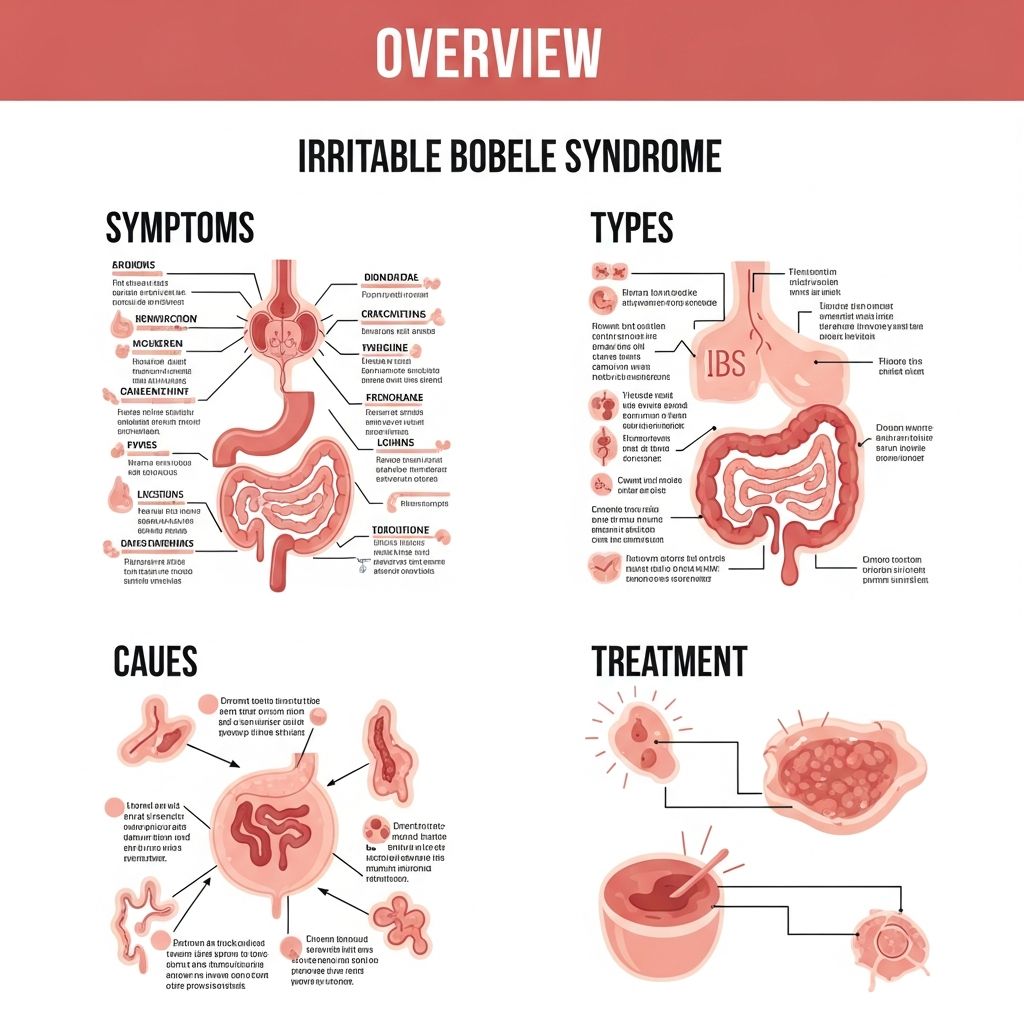
Irritable Bowel Syndrome, commonly known as IBS, is one of the most prevalent gastrointestinal disorders affecting millions of people worldwide. This functional disorder impacts the digestive system, causing a range of uncomfortable symptoms that can significantly affect daily life and overall well-being. Despite its prevalence, many people with IBS struggle to understand their condition and find effective management strategies. This comprehensive guide explores what IBS is, its various types, symptoms, underlying causes, diagnostic approaches, and available treatment options to help you better manage this condition.
What Is Irritable Bowel Syndrome?
Irritable Bowel Syndrome is a functional gastrointestinal disorder characterized by a group of symptoms that occur together. Unlike inflammatory bowel diseases such as Crohn’s disease or ulcerative colitis, IBS does not cause inflammation or permanent damage to the digestive tract. Instead, it affects how the intestines function, leading to various digestive symptoms that can be unpredictable and bothersome.
The condition is termed a “functional disorder” because the digestive system appears normal when examined, yet it doesn’t work as efficiently as it should. This means that standard imaging tests or endoscopy procedures typically reveal no structural abnormalities, which is why IBS can be challenging to diagnose and manage.
Types of IBS
IBS is classified into three main subtypes based on the predominant bowel movement pattern. Understanding which type you have is crucial for determining the most appropriate treatment approach.
IBS with Diarrhea (IBS-D)
IBS-D is characterized by frequent loose stools and the predominance of diarrheal symptoms. People with this subtype experience recurring episodes of diarrhea, often accompanied by urgency and abdominal discomfort. This form of IBS can significantly impact quality of life, particularly in social situations and work environments where bathroom access may be limited.
IBS with Constipation (IBS-C)
IBS-C involves persistent constipation as the primary symptom. Individuals with this subtype experience infrequent bowel movements, often accompanied by hard stools and straining during defecation. This type of IBS can cause significant abdominal discomfort and bloating, which may persist until bowel movements occur.
IBS with Mixed Bowel Habits (IBS-M)
IBS-M, also referred to as IBS with alternating bowel habits, involves a combination of both constipation and diarrhea. People with this subtype experience alternating patterns of loose and hard stools, making symptom management particularly challenging and unpredictable.
Common Symptoms of IBS
The symptoms of IBS can vary significantly from person to person and may fluctuate over time. However, certain symptoms are commonly reported across the IBS population:
- Abdominal pain and cramping: This is often the most bothersome symptom, ranging from mild to severe and typically relieved by bowel movements.
- Bloating and gas: Many people with IBS experience persistent bloating, flatulence, and a sensation of abdominal distension.
- Diarrhea or constipation: Depending on the IBS subtype, individuals may experience either predominant diarrhea or constipation.
- Mucus in stool: Some people notice visible mucus in their bowel movements, which is common in IBS.
- Fatigue: Chronic symptoms can lead to fatigue and reduced energy levels.
- Sleep disturbances: Nighttime symptoms may interrupt sleep patterns, affecting overall rest quality.
- Symptoms during menstruation: Many women report worsening of IBS symptoms during their menstrual cycle.
Related Stories



Causes and Risk Factors
The exact causes of IBS remain not fully understood; however, researchers have identified several factors that may contribute to its development and symptom severity.
Gut-Brain Axis Dysfunction
The gut-brain axis refers to the bidirectional communication between the central nervous system and the gastrointestinal tract. Disruption in this communication can lead to abnormal intestinal motility and increased sensitivity to normal stimuli, contributing to IBS symptoms.
Intestinal Motility Issues
Abnormal contractions of the intestinal muscles can result in either accelerated or slowed movement of food through the digestive tract, leading to both diarrhea and constipation symptoms characteristic of IBS.
Increased Intestinal Sensitivity
People with IBS often have heightened sensitivity to normal gut sensations, perceiving mild discomfort as significant pain. This visceral hypersensitivity is a hallmark feature of the condition.
Infections and Post-Infectious IBS
Some individuals develop IBS following a gastrointestinal infection, known as post-infectious IBS (PI-IBS). Bacterial, viral, or parasitic infections may trigger persistent changes in gut function and immune response.
Bacterial Overgrowth
Small intestinal bacterial overgrowth (SIBO) may contribute to IBS symptoms in some individuals, though the relationship between SIBO and IBS remains an area of ongoing research.
Psychological Factors
Stress, anxiety, and depression are strongly associated with IBS symptom exacerbation. Psychological stress can directly affect gut function and increase symptom severity in susceptible individuals.
Risk Factors
Several factors increase the likelihood of developing IBS, including:
- Female gender (women are approximately twice as likely to develop IBS as men)
- Age (typically develops before age 50)
- Family history of IBS
- History of gastrointestinal infections
- Hormonal changes related to menstrual cycles
- History of physical or emotional trauma
- Certain dietary components and food sensitivities
Diagnosis of IBS
IBS is diagnosed based on clinical symptoms rather than laboratory or imaging findings. Healthcare providers use specific diagnostic criteria to identify the condition and determine its subtype.
Rome IV Criteria
The Rome IV criteria are the internationally recognized diagnostic standards for IBS. According to these criteria, a diagnosis of IBS requires recurrent abdominal pain occurring at least one day per week for the past three months, with symptom onset at least six months before diagnosis. Additionally, the abdominal pain must be associated with at least two of the following features:
- Related to defecation
- Associated with a change in stool frequency
- Associated with a change in stool appearance
Medical History and Physical Examination
Your healthcare provider will take a detailed medical history, asking about symptom patterns, triggers, dietary habits, and psychological stressors. A physical examination may be performed to rule out other conditions, though physical findings are typically normal in IBS patients.
Diagnostic Tests
While no specific test confirms IBS, certain tests may be recommended to exclude other conditions:
- Blood tests: To check for celiac disease, anemia, or inflammatory markers
- Stool tests: To rule out infections or malabsorption issues
- Colonoscopy: To examine the colon and rule out inflammatory bowel disease or colorectal cancer
- Hydrogen breath test: To identify lactose intolerance or SIBO
Treatment and Management Options
While there is no cure for IBS, various treatment approaches can effectively manage symptoms and improve quality of life. Treatment plans are typically individualized based on symptom type and severity.
Dietary Modifications
Diet plays a significant role in IBS management. The low FODMAP diet has shown considerable effectiveness for many IBS patients by reducing fermentable carbohydrates that can trigger symptoms. Other dietary strategies include increasing fiber gradually, limiting fatty foods, and identifying personal food triggers.
Medications
Several medications can help manage specific IBS symptoms:
- Antispasmodic medications: Help reduce intestinal muscle contractions and abdominal cramping
- Laxatives: Used for IBS-C to promote bowel movements
- Anti-diarrheal agents: Help manage IBS-D symptoms
- Antidepressants: Low-dose tricyclic or SSRI antidepressants can reduce pain and improve mood
- Specialized IBS medications: Such as lubiprostone or linaclotide for IBS-C
Stress Management and Psychological Therapies
Since stress significantly impacts IBS symptoms, psychological interventions are crucial:
- Cognitive-behavioral therapy (CBT): Helps modify negative thought patterns and coping strategies
- Hypnotherapy: Has shown effectiveness in reducing IBS symptoms in some patients
- Mindfulness and meditation: Promote relaxation and stress reduction
- Yoga and breathing exercises: Help manage stress and improve gut-brain communication
Lifestyle Changes
Simple lifestyle modifications can significantly impact symptom management:
- Regular physical exercise
- Adequate sleep and consistent sleep schedules
- Stress reduction techniques
- Limiting caffeine and alcohol intake
- Staying well-hydrated
- Establishing regular meal patterns
Living with IBS
Managing IBS requires a comprehensive approach combining medical treatment, lifestyle modifications, and psychological support. Many people with IBS successfully manage their symptoms and maintain good quality of life through persistent effort and the right support system. Working closely with healthcare providers, including gastroenterologists, dietitians, and mental health professionals, can help optimize your treatment plan and achieve better outcomes.
Frequently Asked Questions
Q: Is IBS the same as inflammatory bowel disease (IBD)?
A: No. While both affect the digestive system, IBS is a functional disorder without inflammation or structural damage, whereas IBD includes conditions like Crohn’s disease and ulcerative colitis that cause inflammation and tissue damage in the digestive tract.
Q: Can IBS be cured?
A: There is currently no cure for IBS, but symptoms can be effectively managed through dietary changes, medications, stress reduction, and lifestyle modifications tailored to individual needs.
Q: What triggers IBS symptoms?
A: Common triggers include specific foods, stress, hormonal changes, infections, and certain medications. Triggers vary significantly between individuals, so identifying personal triggers is essential for effective management.
Q: Is IBS hereditary?
A: IBS tends to run in families, suggesting a genetic component. However, having a family history of IBS doesn’t guarantee you’ll develop the condition, as environmental and lifestyle factors also play important roles.
Q: Can IBS lead to serious complications?
A: IBS itself does not cause permanent damage to the digestive tract or lead to serious complications like cancer. However, it can significantly affect quality of life and may be associated with other conditions like anxiety or depression.
Q: How long does it take for IBS treatment to work?
A: The timeline varies depending on the treatment approach. Dietary changes may take several weeks to show effects, while medications often work more quickly. Most people begin seeing improvements within 4-8 weeks of starting a comprehensive treatment plan.
References
- Irritable Bowel Syndrome (IBS) — National Institute of Diabetes and Digestive and Kidney Diseases (NIDDK), U.S. Department of Health & Human Services. 2024. https://www.niddk.nih.gov/health-information/digestive-diseases/irritable-bowel-syndrome
- Rome IV Diagnostic Criteria for Functional Gastrointestinal Disorders — Gastroenterology. 2016. https://doi.org/10.1053/j.gastro.2016.02.013
- Low FODMAP Diet for Irritable Bowel Syndrome: A Systematic Review and Meta-Analysis — American Journal of Clinical Nutrition. 2024. https://academic.oup.com/ajcn
- Psychological Treatments for Irritable Bowel Syndrome: A Systematic Review and Meta-Analysis — Journal of Gastroenterology and Hepatology. 2023. https://onlinelibrary.wiley.com/journal/14406
- IBS: An Overview and Clinical Approach — Mayo Clinic Staff. 2024. https://www.mayoclinic.org/diseases-conditions/irritable-bowel-syndrome/symptoms-causes/syc-20360016
Similar Articles








Read full bio of Sneha Tete