IBS vs IBD: Guide to Key Symptoms, Causes, and Treatments
Understand the critical differences between IBS and IBD, including symptoms, causes, diagnosis, and treatment options for better management.
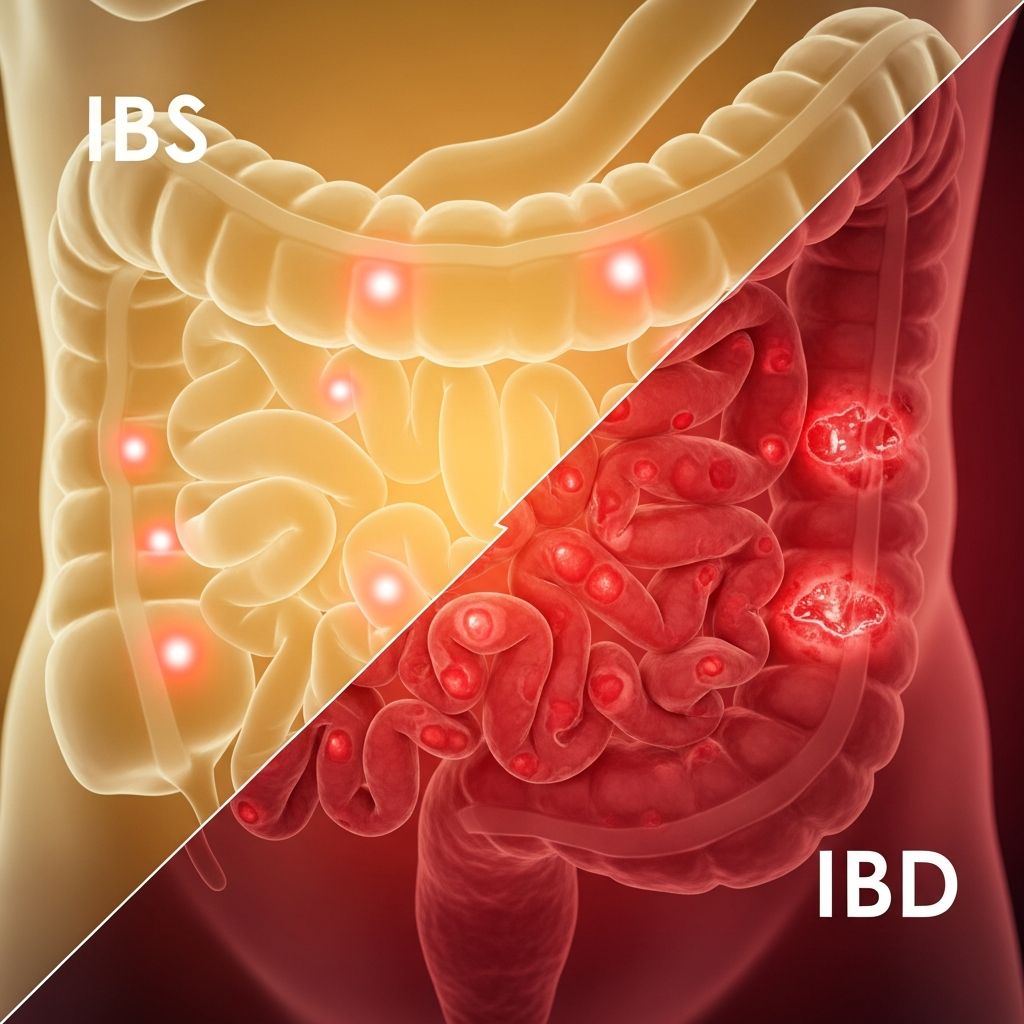
Irritable bowel syndrome (IBS) and inflammatory bowel disease (IBD) are often confused due to overlapping symptoms like abdominal pain and changes in bowel habits, but they are distinct conditions requiring different approaches to diagnosis and management.
What Is IBS?
Irritable bowel syndrome (IBS) is a common functional gastrointestinal disorder characterized by recurrent abdominal pain at least one day per week in the last three months, associated with defecation or changes in stool frequency or form. Unlike IBD, IBS does not involve structural damage or inflammation in the intestines; tests often show a healthy gut despite symptoms.
IBS affects the large intestine and is considered non-progressive, meaning it does not lead to permanent tissue damage or complications like cancer. It impacts 10-15% of the population, more commonly women, and is triggered by factors such as stress, diet, or hormones.
What Is IBD?
Inflammatory bowel disease (IBD) encompasses chronic inflammatory conditions, primarily Crohn’s disease and ulcerative colitis, causing mucosal inflammation and potential damage to the digestive tract. Crohn’s can affect any part from mouth to anus, penetrating deep layers, while ulcerative colitis is limited to the colon and rectum’s superficial lining.
IBD is autoimmune-driven, progressive if untreated, and raises risks for complications like strictures, fistulas, bowel obstructions, and colon cancer. It affects men and women equally and may require hospitalization, surgery, or aggressive therapy.
IBS vs. IBD: Similarities and Differences
Both IBS and IBD are chronic, affect the gut, cause abdominal pain, bloating, diarrhea, or constipation, and often start in younger people with no definitive cure—only symptom management. Up to 20-30% of IBD patients may have co-occurring IBS-like symptoms (IBD-IBS).
Key differences lie in pathology: IBS is functional (no inflammation or damage), while IBD is structural and inflammatory. IBD symptoms are often more severe, with systemic effects; IBS does not increase cancer risk.
| Aspect | IBS | IBD |
|---|---|---|
| Pathology | Functional disorder, no inflammation | Chronic inflammation, tissue damage |
| Common Types | N/A (syndrome) | Crohn’s disease, Ulcerative colitis |
| Progression | Non-progressive | Progressive, complications possible |
| Cancer Risk | No increased risk | Increased colon cancer risk |
| Demographics | More women | Equal men/women |
Symptoms of IBS vs. IBD
Overlapping symptoms include abdominal pain/cramping, bloating, diarrhea, constipation, and urgent bowel movements. However, IBD often presents with red flags absent in IBS.
IBS Symptoms
- Abdominal pain relieved by defecation
- Changes in stool frequency or appearance (e.g., IBS-D diarrhea-dominant, IBS-C constipation-dominant, IBS-M mixed)
- Bloating and gas
- Mucus in stool
- Symptoms worsened by stress or certain foods
IBS pain is typically crampy and linked to bowel movements without systemic signs.
IBD Symptoms
- Bloody diarrhea or rectal bleeding
- Persistent diarrhea with urgency
- Unintentional weight loss
- Fever
- Fatigue, anemia
- Joint pain, eye inflammation, skin issues
IBD symptoms like blood in stool, fever, and weight loss signal inflammation and warrant immediate care.
Causes and Risk Factors
Neither has a single known cause, but factors differ.
IBS Causes
IBS arises from gut-brain axis dysfunction, visceral hypersensitivity, altered motility, microbiome changes, or post-infectious triggers (e.g., 70% of cases linked to food poisoning). Stress, diet (FODMAPs), and hormones exacerbate it.
Related Stories



IBD Causes
IBD results from genetic predisposition, immune dysregulation, environmental triggers (smoking, diet), and microbiome imbalances. No single gene, but family history increases risk.
Diagnosis: IBS vs. IBD
Diagnosis starts with history and physical exam, ruling out other conditions.
IBS Diagnosis: Rome IV criteria: recurrent pain ≥1 day/week for 3 months tied to defecation/stool changes, with no alarming features. Tests (blood, stool, colonoscopy) are normal, confirming no inflammation.
IBD Diagnosis: Involves blood tests (inflammation markers like CRP, calprotectin), stool tests, imaging (CT/MRI), and endoscopy with biopsy showing inflammation/ulcers. Colonoscopy distinguishes Crohn’s (skip lesions) from ulcerative colitis (continuous).
Overlap (IBD-IBS) requires careful evaluation.
Treatment Options for IBS
IBS management is symptomatic and lifestyle-based:
- Diet: Low-FODMAP diet, fiber supplementation
- Medications: Antispasmodics (e.g., hyoscyamine), laxatives, antidiarrheals, low-dose antidepressants for pain
- Lifestyle: Stress reduction (CBT, mindfulness), exercise, probiotics
- Therapies: Gut-directed hypnotherapy
No surgery needed; focus on quality of life.
Treatment Options for IBD
IBD aims to induce/maintain remission, prevent complications:
- Medications: Aminosalicylates, corticosteroids, immunomodulators, biologics (anti-TNF like infliximab), JAK inhibitors
- Surgery: Colectomy for severe ulcerative colitis, resection for Crohn’s strictures
- Support: Nutrition therapy, smoking cessation
Tailored by disease location/severity; monitoring via calprotectin.
IBS vs. IBD: Complications and Prognosis
IBS rarely causes complications but impacts mental health and daily life. IBD risks include malnutrition, fistulas, cancer, requiring lifelong monitoring.
Prognosis: IBS manageable long-term; IBD variable but improved with biologics.
When to See a Doctor
Seek care for persistent symptoms, especially alarms: blood in stool, unexplained weight loss, fever, family history of IBD/cancer, age >50, night waking from pain. Early IBD diagnosis prevents damage.
Frequently Asked Questions (FAQs)
Can you have IBS and IBD at the same time?
Yes, some IBD patients develop IBS-like symptoms (IBD-IBS), affecting 20-30%.
Does IBS increase colon cancer risk?
No, IBS does not damage tissue or raise cancer risk, unlike IBD.
Is IBS or IBD more common?
IBS is more prevalent (10-15% population) than IBD (0.5-1%).
How is IBD different from colitis?
Colitis is colon inflammation (e.g., from IBD, infection); IBD is chronic, including Crohn’s beyond colon.
Can diet cure IBS or IBD?
Diet helps manage symptoms (e.g., low-FODMAP for IBS) but does not cure either; IBD needs meds.
References
- Inflammatory Bowel Disease and Irritable Bowel Syndrome — PMC/NCBI. 2021-05-20. https://pmc.ncbi.nlm.nih.gov/articles/PMC8134625/
- IBD vs IBS vs Colitis: What’s the Difference? — CoxHealth. 2023-10-01. https://www.coxhealth.com/content-hub/ibd-vs-ibs-vs-colitis-whats-the-difference/
- How do I know if my symptoms are IBS or IBD? — WellMed Healthcare. 2024-01-15. https://www.wellmedhealthcare.com/patients/healthyliving/conditions-diseases/how-do-i-know-if-my-symptoms-are-ibs-or-ibd/
- IBS vs. IBD: Here’s why it matters — Oshi Health. 2023-11-10. https://oshihealth.com/ibs-vs-ibd-heres-why-it-matters/
- Bowel Basics: Is it IBS or IBD? — Premier Health. 2022-06-05. https://www.premierhealth.com/your-health/articles/women-wisdom-wellness-/bowel-basics-is-it-ibs-or-ibd
- What’s the difference between IBS and IBD? — Cedars-Sinai. 2024-02-28. https://www.cedars-sinai.org/stories-and-insights/healthy-living/is-it-ibs-or-ibd
- Understanding the Difference Between IBS and IBD — Orlando Health. 2023-08-20. https://www.orlandohealth.com/content-hub/understanding-the-difference-between-ibs-and-ibd/
Similar Articles








Read full bio of Sneha Tete